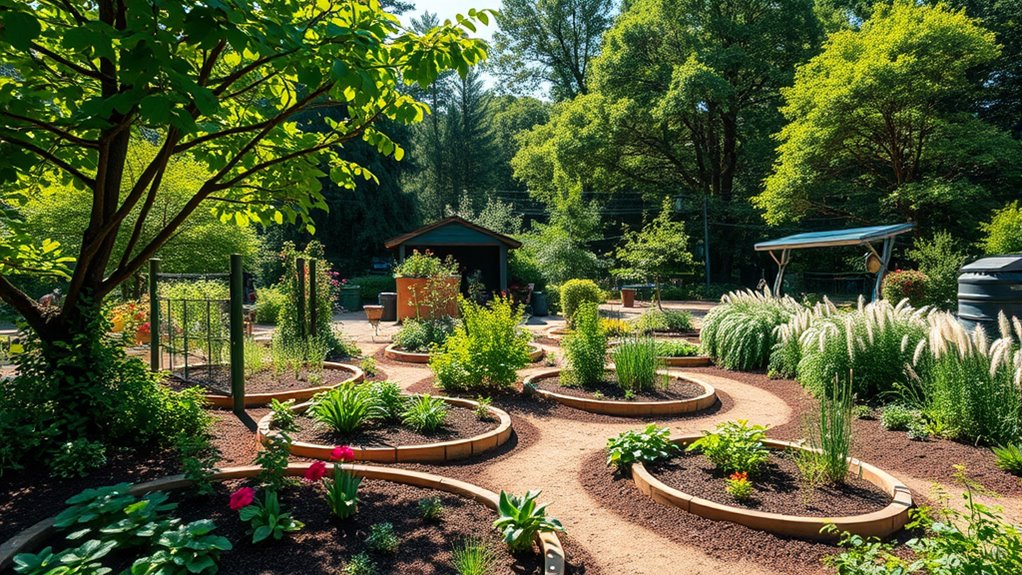

Permaculture is a holistic approach to designing sustainable gardens and communities by mimicking natural ecosystems. It emphasizes working with nature, promoting biodiversity, and creating resilient, resource-efficient systems. You’ll learn to observe land, select suitable plants, and arrange them thoughtfully for mutual support. By implementing regenerative practices like composting and mulching, you can build a healthy, self-sustaining environment. Explore further to discover how these principles can transform your outdoor space into a thriving, eco-friendly oasis.

Get gifts for the two of you delivered free with Prime
- Fast, free delivery on millions of items
- Prime Video, Amazon Music and more included
- Member-only deals all year
Key Takeaways
- Permaculture emphasizes designing gardens and communities that work harmoniously with natural ecosystems.
- It involves land observation and site analysis to optimize plant placement and resource flow.
- Promotes biodiversity through diverse, companion planting and resilient plant choices.
- Focuses on creating self-sustaining, regenerative systems like composting and natural soil enrichment.
- Aims for sustainable management by reducing external inputs and conserving resources for long-term productivity.
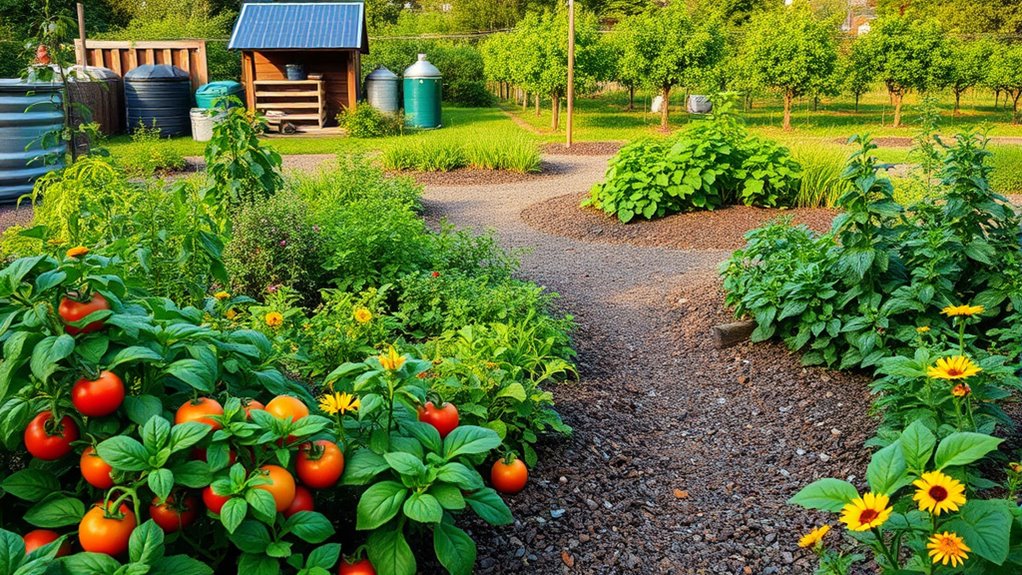
Have you ever wondered how to create a sustainable and self-sufficient outdoor space? The secret lies in understanding how to implement principles of permaculture, which focuses on designing gardens and communities that work harmoniously with nature. When you start planning your garden design, think beyond just planting a few flowers or vegetables. Instead, aim to mimic natural ecosystems by applying ecological principles that promote biodiversity, resilience, and resource efficiency. This means selecting plants suited to your local climate and soil, and arranging them thoughtfully to support each other’s growth. By doing so, you reduce the need for external inputs like fertilizers and pesticides, creating a healthier environment for both your plants and yourself.
A successful permaculture garden begins with observing and understanding your land’s unique characteristics. Pay attention to how sunlight, shade, wind, and water move across your space. This knowledge helps you position plants and features in ways that maximize natural benefits and minimize problems. For instance, placing water catchments or swales can help manage runoff and improve water availability, while planting windbreaks can shield your garden from harsh weather. Incorporating ecological principles into your garden design also means creating zones of activity—areas for intensive planting close to your home, with more wilderness or less-maintained zones farther out. This zoning reduces effort and resource use while maintaining ecological balance.
Another fundamental concept is diversity. Instead of planting monocultures, you choose a variety of plants that complement each other. This not only reduces pest problems but also boosts soil health and provides a continuous harvest. Companion planting is a simple yet effective technique rooted in ecological principles: for example, growing basil near tomatoes can deter pests and improve flavor. Incorporating perennials alongside annuals ensures that your garden becomes more resilient over time, requiring less replanting and soil disturbance.
Designing with ecological principles in mind means creating systems that are regenerative rather than extractive. Think of your garden as an ecosystem that sustains itself through natural processes. Composting organic waste, mulching to conserve moisture, and planting nitrogen-fixing species are all ways to build soil fertility naturally. By aligning your garden design with these principles, you develop a space that supports both your needs and the health of the planet. Ultimately, applying ecological principles to your garden design empowers you to cultivate a thriving, sustainable outdoor space that benefits everyone involved.
As an affiliate, we earn on qualifying purchases.
Frequently Asked Questions
How Can Beginners Start Their Permaculture Journey Effectively?
To start your permaculture journey effectively, focus on garden planning by observing your site’s natural features and climate. Improve soil health by adding organic matter and avoiding chemicals. Begin with small projects like a vegetable patch or herb garden, and gradually expand. Educate yourself through books, workshops, or online resources. Remember, patience and observation are key—adjust your plan as you learn what works best for your environment.
What Are the Common Mistakes to Avoid in Permaculture Design?
Are you aware that soil disturbance and monoculture pitfalls can sabotage your permaculture success? To avoid these mistakes, you should minimize soil disturbance by practicing no-till methods and diversify your plantings to prevent monoculture issues. Relying on a single crop can lead to pests and soil depletion. Instead, design your system with layered plants and resilient, diverse species to create a sustainable, thriving environment.
How Does Permaculture Adapt to Different Climate Zones?
Permaculture adapts to different climate zones through zone-specific strategies that consider local conditions. You should observe your climate’s unique features, like rainfall and temperature, and select plants and design elements suited for those conditions. Climate adaptability involves using native plants, creating microclimates, and incorporating appropriate water management. By tailoring your approach to your zone, you guarantee your garden’s resilience and productivity, making your permaculture design sustainable and effective.
Can Urban Spaces Be Transformed Using Permaculture Principles?
You can definitely transform urban spaces using permaculture principles, and did you know that urban greening can reduce city temperatures by up to 5°C? By incorporating rooftop farming and creating diverse, resilient ecosystems, you improve air quality and promote local food production. This approach maximizes limited space, enhances biodiversity, and fosters community connection. With permaculture, your city becomes a sustainable, thriving environment that benefits everyone.
What Are the Economic Benefits of Implementing Permaculture?
Implementing permaculture offers you significant economic benefits and financial savings. By designing efficient, sustainable systems, you reduce your need for external inputs like water, fertilizers, and energy, lowering ongoing costs. Plus, growing your own food and creating local resources can cut grocery bills and increase self-sufficiency. Over time, these savings add up, making permaculture a cost-effective choice that benefits your wallet and the environment alike.
composting bin for outdoor garden
As an affiliate, we earn on qualifying purchases.
As an affiliate, we earn on qualifying purchases.
Conclusion
You might think creating a sustainable garden or community is too complex or time-consuming, but permaculture simplifies the process by working with nature, not against it. With small, intentional steps, you can transform your space into a thriving, eco-friendly environment that benefits everyone. Embracing permaculture isn’t just good for the planet—it’s accessible and rewarding. Start today, and you’ll see how easy and fulfilling designing sustainably can truly be.
As an affiliate, we earn on qualifying purchases.
As an affiliate, we earn on qualifying purchases.
Fall Picks
fall essentials
As an affiliate, we earn on qualifying purchases.