
To combat blue light damage, you can protect your skin by using antioxidant-rich skincare products like vitamin C and E daily. Applying broad-spectrum SPF helps create a barrier against environmental stressors, including blue light. Limit screen time, take regular breaks, and wear blue light blocking glasses or filters to reduce exposure. A consistent routine that emphasizes hydration, gentle cleansing, and antioxidant use will strengthen your skin’s resilience—keeping your skin healthier over time. Continue exploring how to better shield your skin from blue light effects.
Key Takeaways
- Use blue light filters or glasses during screen time to reduce skin exposure.
- Incorporate antioxidants like vitamin C and E in skincare to neutralize free radicals.
- Maintain a consistent skincare routine with SPF and thorough cleansing for protection.
- Limit screen time and take regular breaks to minimize blue light impact on skin.
- Prioritize overall skin health through hydration, a balanced diet, and adequate sleep.
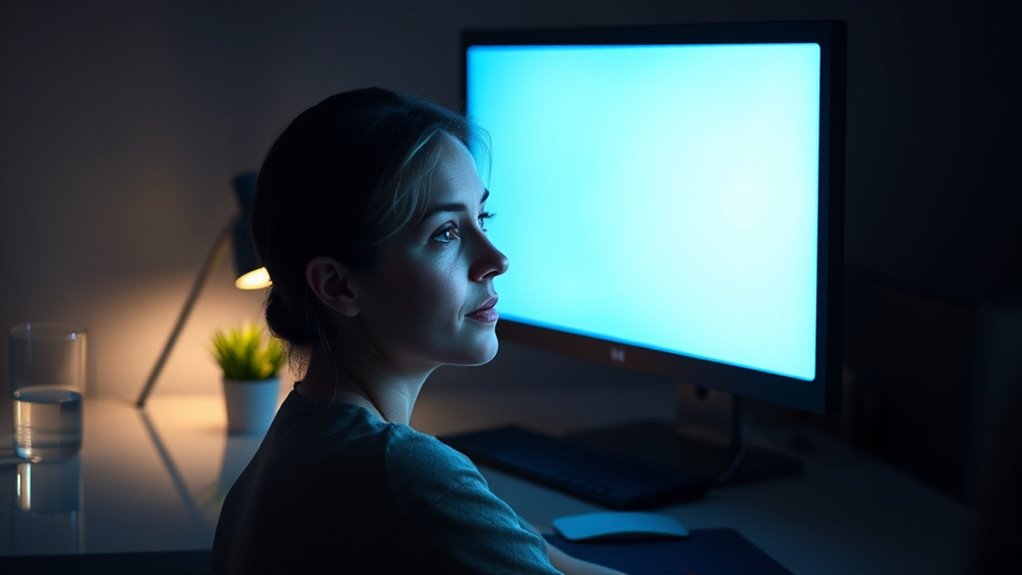
In today’s digital age, spending extended periods on screens can impact your skin in surprising ways. One of the lesser-known effects is how blue light from screens can contribute to skin aging and damage. Blue light effects penetrate deep into your skin, generating free radicals that can accelerate the breakdown of collagen and elastin. This process leads to fine lines, wrinkles, and dullness over time. If you spend hours scrolling on your phone or working at a computer, it’s essential to understand how this exposure can compromise your skin’s health. Developing effective skincare routines is key to counteracting these effects and protecting your skin from the potential harm caused by blue light.
Blue light from screens can accelerate skin aging by damaging collagen and elastin.
Your skincare routines should include products with antioxidants, such as vitamin C and E, which neutralize free radicals produced by blue light exposure. Incorporating a broad-spectrum moisturizer with SPF into your daily routine is also *fundamental*, even indoors, as some blue light can penetrate glass and windows. These ingredients create a barrier that helps protect your skin from environmental stressors, including blue light effects. It’s equally important to cleanse your face thoroughly at the end of each day to remove any pollutants, makeup, and excess oil that can exacerbate skin stress caused by screen time. Regular exfoliation, but not too harsh, can also promote cell turnover and help your skin stay fresh and resilient against damage. Additionally, understanding personal finance management can help you allocate resources towards high-quality skincare products and protective accessories that support your skin health goals.
In addition to topical products, consider adjusting your screen habits. Use blue light filters or glasses that block blue light emissions during prolonged screen sessions. These accessories can *considerably* reduce the amount of blue light reaching your skin and eyes. Setting boundaries for your screen time can also give your skin a much-needed break, allowing it to recover and regenerate naturally. Remember, consistency is key—integrate these practices into your daily routine and stay committed to protecting your skin.
Finally, don’t forget to prioritize overall skin health by maintaining hydration, eating a balanced diet rich in antioxidants, and getting enough sleep. Proper rest helps your skin repair and recover from daily stressors, including blue light exposure. By being mindful of your screen habits and reinforcing your skincare routines, you can effectively combat blue light damage and preserve your skin’s youthful *energy*. Staying proactive and informed about blue light effects empowers you to make smarter choices, ensuring your skin remains healthy and radiant despite the digital age’s challenges.
Frequently Asked Questions
Can Blue Light Exposure Cause Premature Skin Aging?
Yes, blue light can cause premature skin aging. It penetrates your skin and generates free radicals, which damage collagen, leading to wrinkles and sagging. Over time, exposure to blue light accelerates the aging process by weakening the skin’s structural support. To protect your skin, consider using antioxidants that neutralize free radicals and products that support collagen production, reducing the visible signs of aging caused by blue light.
Does Blue Light Affect Skin Hydration Levels?
Think of your skin’s hydration balance as a delicate garden needing just the right amount of water. Blue light can disrupt this balance, leading to decreased skin moisture. It triggers oxidative stress that damages skin cells and hampers your skin’s ability to retain hydration. As a result, your skin may feel drier, less plump, and more prone to fine lines. To protect your skin, prioritize hydration and limit prolonged exposure to blue light.
Are There Specific Skincare Ingredients That Block Blue Light?
Yes, there are specific skincare ingredients that block blue light. Look for products with blue light filters or ingredients like antioxidants, niacinamide, and zinc oxide, which help protect your skin from blue light damage. These ingredients are often incorporated into advanced skincare formulations designed to shield your skin during prolonged screen time. Using such products regularly can help minimize the harmful effects of blue light exposure on your skin.
How Does Blue Light Impact Skin Pigmentation?
Blue light acts like a painter splashing pigment unevenly across your skin, leading to hyperpigmentation over time. It disrupts your circadian rhythm and increases free radical formation, which can accelerate dark spots and uneven skin tone. The more screen time you have, the more these effects can build up. Protect your skin by using antioxidants and blue light-blocking skincare, helping to maintain your natural glow and even skin pigmentation.
Is Blue Light Exposure Harmful During Daytime or Nighttime?
Blue light exposure can be harmful both during daytime and nighttime because it causes circadian disruption and eye strain. During the day, it can interfere with your natural sleep cycle, leading to fatigue and skin issues. At night, blue light from screens suppresses melatonin production, increasing eye strain and disrupting sleep patterns. To protect your skin and eyes, limit screen time, especially in the evening, and consider using blue light filters.
Conclusion
To protect your skin from blue light damage, limit your screen time whenever possible and take regular breaks. Using blue light filters or wearing protective glasses can also help reduce exposure. Remember, research shows that prolonged blue light exposure may contribute to skin aging and damage, but by staying mindful and adopting these habits, you can enjoy your devices without compromising your skin’s health. Take control today for healthier skin tomorrow.