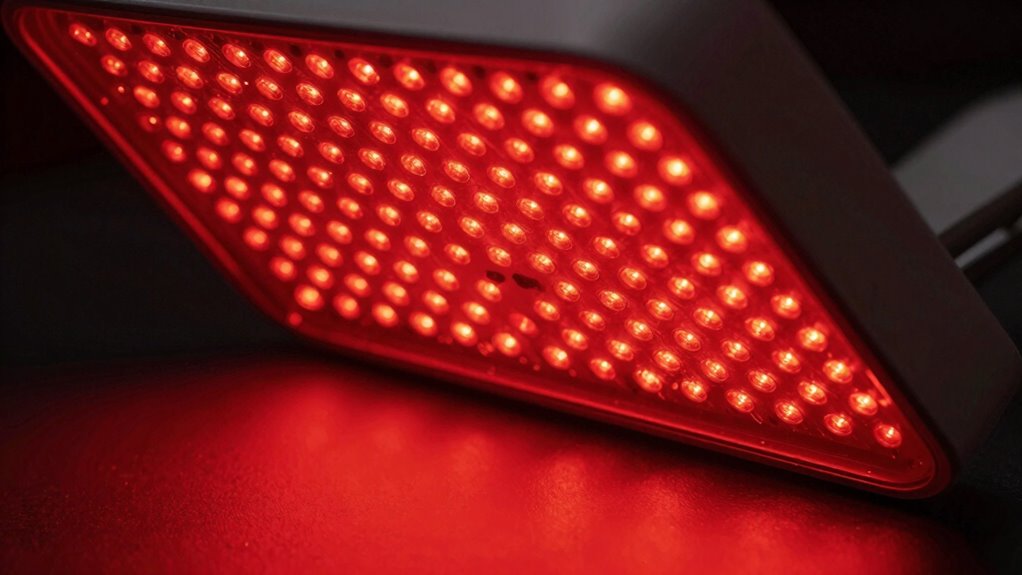

Wavelength is vital in red light therapy because it determines how deeply light penetrates tissues and targets specific cellular processes for healing and skin benefits. Different wavelengths, like 620-700 nm for skin surface and 800-880 nm for deeper tissues, are suited for different goals. Using the wrong wavelength can make treatments ineffective or even risky. If you want to choose the right options and guarantee your device works properly, there’s more to discover below.
Key Takeaways
- Wavelength determines tissue penetration depth, directly affecting the therapy’s effectiveness for specific skin or deeper tissues.
- Precise wavelength selection is essential to target cellular mechanisms like collagen production or inflammation reduction.
- Mismatched wavelengths can lead to ineffective treatment or safety risks, emphasizing the need for accurate device calibration.
- Common effective wavelengths include 620–700 nm for skin and 800–880 nm for deeper tissue pain relief.
- Verifying emitted wavelengths with measurement tools ensures therapy accuracy and optimal safety over time.
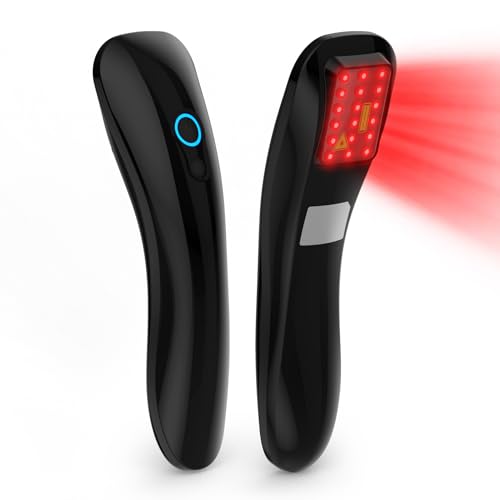
Handheld Red Light Therapy Device, Portable Pain Relief Device for Body Joints Shoulders Elbows Knees Back Muscle&Tissue 18pcs 620nm
【18PCS Powerful Red Light】The handheld red light therapy device integrated a total of 18 red light holes on…
As an affiliate, we earn on qualifying purchases.
As an affiliate, we earn on qualifying purchases.
What Is Wavelength in Red Light Therapy and Why Is It Important?
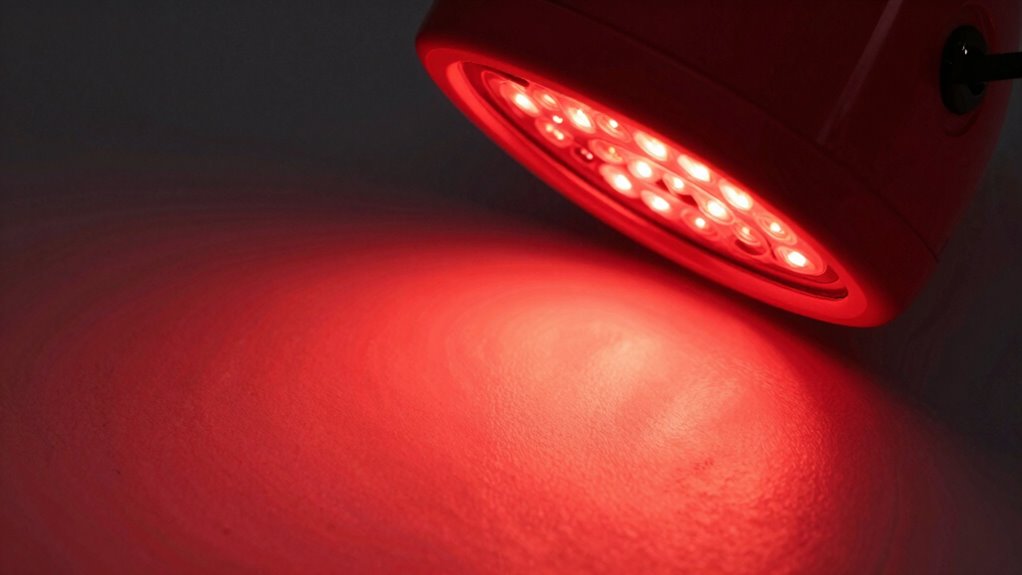
Wavelength refers to the distance between successive peaks of light waves, and in red light therapy, it plays a crucial role in determining how the light interacts with your body. The wavelength affects how well your tissues absorb the light, influencing the overall tissue response. Shorter wavelengths tend to be absorbed more superficially, targeting surface-level skin cells. Longer wavelengths penetrate deeper, reaching muscles, cartilage, and bones. This variation in light absorption means different wavelengths can be used for specific therapeutic goals. Understanding tissue penetration helps you choose the right red light therapy device for your needs. When the light reaches your tissues effectively, it stimulates cellular activity, promoting healing and reducing inflammation. Wavelengths influence tissue penetration, which is a key factor in maximizing the benefits of red light therapy. Additionally, selecting the appropriate wavelength can optimize tissue response for various health conditions. Moreover, the choice of wavelength can determine the efficacy of treatment by targeting specific depths within the body. Recognizing the importance of wavelength accuracy can further enhance treatment outcomes and ensure safety.

Red Light Therapy for Shoulder with Heat & Massage, 6 Modes 5000mAh Cord-Free Controller Infrared Light with 216 Beads 660nm & 850nm Portable Heated Shoulder Pad, Last 110-240mins
【Portable & Longer Runtime】ROMISA Red Light Therapy Pad is designed to perfectly fit the curves of your shoulder….
As an affiliate, we earn on qualifying purchases.
As an affiliate, we earn on qualifying purchases.
How Do Different Red Light Wavelengths Penetrate Your Skin and Target Tissues?
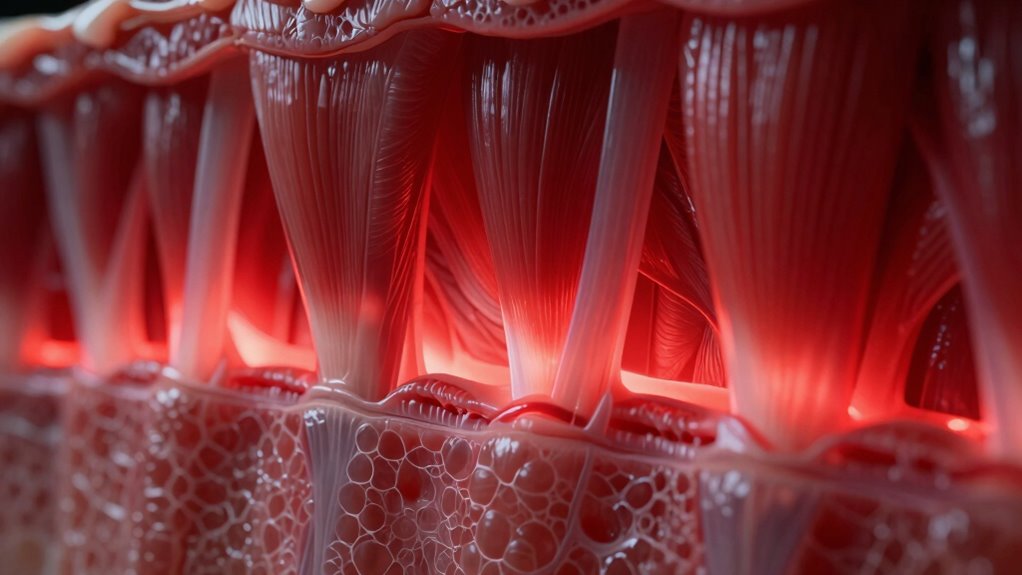
Different red light wavelengths penetrate your skin to varying depths, directly affecting which tissues they target. Wavelength precision determines how deeply the light reaches, influencing skin absorption and the specific benefits you experience. Shorter wavelengths tend to stay closer to the surface, affecting surface tissues and skin cells. Longer wavelengths penetrate deeper, reaching muscles and joints. To visualize this:
- Imagine a narrow beam of light that gently brushes your skin’s surface.
- Picture a more extended wavelength diving deeper into your tissues.
- Think of how skin absorption varies, with some wavelengths soaking in quickly and others reaching farther.
Understanding wavelength properties helps in selecting the right therapy for your specific needs. Your choice of wavelength impacts how effectively the light interacts with your tissues, allowing targeted therapy based on depth and desired outcome.

Red Light Therapy for Face and Body, Red Infrared Light Therapy Lamp with Stand Led 660nm Red Light-Therapy& 850nm Infrared Light Device for Body
RED LIGHT THERAPY LAMPS DEVICE: Viconor red light therapy lamp has 120 LEDs light, each light includes 1…
As an affiliate, we earn on qualifying purchases.
As an affiliate, we earn on qualifying purchases.
What Are the Benefits of Using Specific Wavelengths for Skin Rejuvenation?
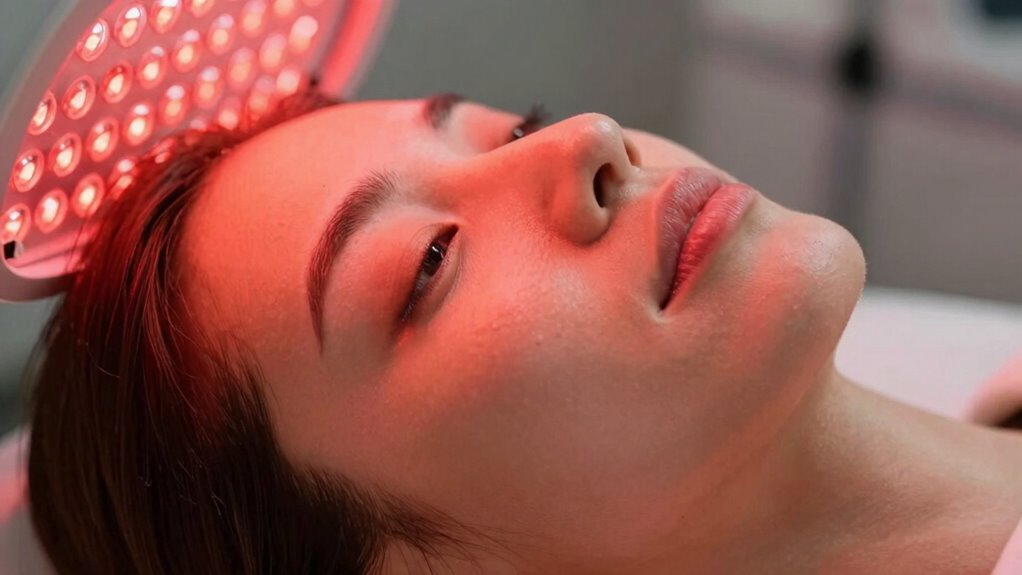
Using specific red light wavelengths can markedly enhance your skin’s appearance by stimulating collagen production and improving cellular function. These targeted wavelengths boost collagen synthesis, which helps reduce wrinkles and fine lines, leaving your skin firmer and more elastic. Additionally, they promote better skin hydration by improving cellular repair and barrier function. The precise tuning of wavelengths ensures deeper penetration, maximizing rejuvenation benefits. Here’s a breakdown of how different wavelengths contribute: affiliate marketing

INTEO Red Light Therapy for Face, 3 Modes Portable Led Face Mask Light Therapy with Remote, Near-infrared 850 Red Light Mask with Timing Function, Led Light Therapy At Home 180 LED Beads
【3 Modes Red Light Therapy for Face】red light (630nm) + near-infrared light (830nm), blue light (460nm) and yellow…
As an affiliate, we earn on qualifying purchases.
As an affiliate, we earn on qualifying purchases.
Which Wavelengths Are Commonly Used in Red Light Therapy and What Are Their Purposes?
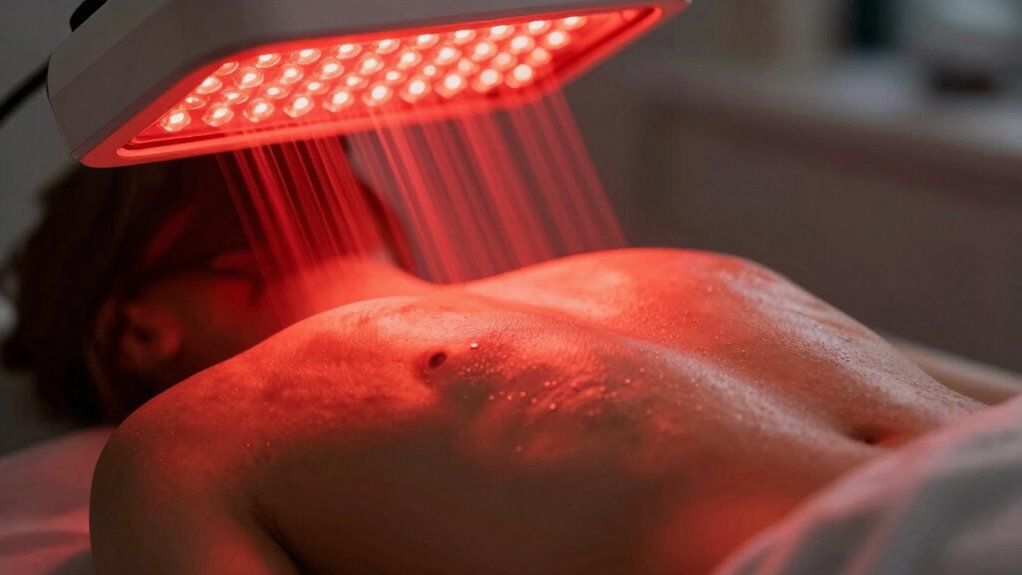
You’ll find that red light therapy typically uses wavelengths between 620 and 700 nanometers, while near-infrared ranges from about 700 to 1100 nanometers. Each wavelength serves a specific purpose, like stimulating collagen production or reducing inflammation. Understanding these ranges helps you choose the right treatment for your needs.
Common Wavelength Ranges
Red light therapy typically employs specific wavelength ranges that target different cellular functions and tissue depths. By understanding wavelength measurement through light spectrum analysis, you can identify the most effective options. Common ranges include:
- 620-750 nm: Visible red light, ideal for superficial skin treatments and improving circulation.
- 760-900 nm: Near-infrared light, penetrating deeper tissues like muscles and joints.
- 900-1100 nm: Longer near-infrared wavelengths, reaching internal organs and supporting cellular repair.
Visualize these ranges as distinct beams: a vibrant red for surface layers, a gentle near-infrared for muscles, and a deeper reach for internal tissues. Knowing these common wavelength ranges helps you select the right therapy for your needs.
Purpose of Specific Wavelengths
Different wavelengths in red light therapy serve distinct purposes by targeting specific tissues and cellular processes. Wavelength science helps determine therapy specificity, ensuring you get the right treatment for your needs. For example, 630 nm wavelengths promote skin healing, while 810 nm penetrate deeper for pain relief. The table below shows common wavelengths and their purposes:
| Wavelength (nm) | Targeted Tissue/Process | Main Benefit |
|---|---|---|
| 630 | Surface skin cells | Skin regeneration |
| 660 | Superficial tissues | Wound healing |
| 810 | Deeper tissues, muscles | Pain and inflammation relief |
| 850 | Mitochondrial stimulation | Cellular energy production |
| 940 | Deep tissue penetration | Chronic pain relief |
This clarity helps you choose wavelengths that match your therapy goals. Wavelength specificity is crucial for optimizing treatment outcomes.
How Does Using the Wrong Wavelength Reduce Therapy Effectiveness?
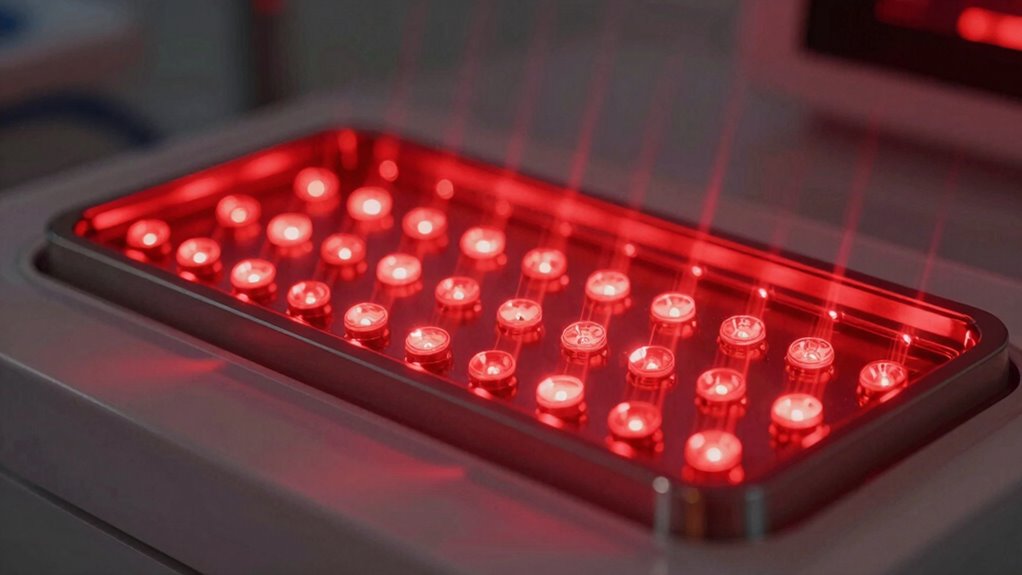
Using the wrong wavelength in red light therapy can considerably diminish its effectiveness because different wavelengths penetrate tissues to varying depths and target specific cellular processes. When wavelength accuracy isn’t maintained, your body may not absorb enough light where it’s needed most. This mismatch reduces the therapy’s benefits and wastes your time and effort. Imagine:
- Light that barely reaches surface tissues, missing deeper muscle repair
- Wavelengths that target irrelevant cellular pathways, offering no real benefit
- Inconsistent results due to poor therapy customization, leaving you unsure if it works
Choosing an incorrect wavelength can also interfere with your goals, whether pain relief or skin rejuvenation. Wavelength precision in selecting the right light spectrum helps ensure your therapy is effective, tailored to your needs, and delivers the maximum benefits. Additionally, understanding how different wavelengths affect tissue penetration is essential for optimizing treatment outcomes, allowing for better customization and results. Proper wavelength selection ensures that the light reaches the intended cellular targets, maximizing therapeutic effectiveness. Moreover, tissue interaction varies with wavelength, emphasizing the importance of precise targeting for successful therapy.
How Can You Choose the Right Wavelength for Your Goals?
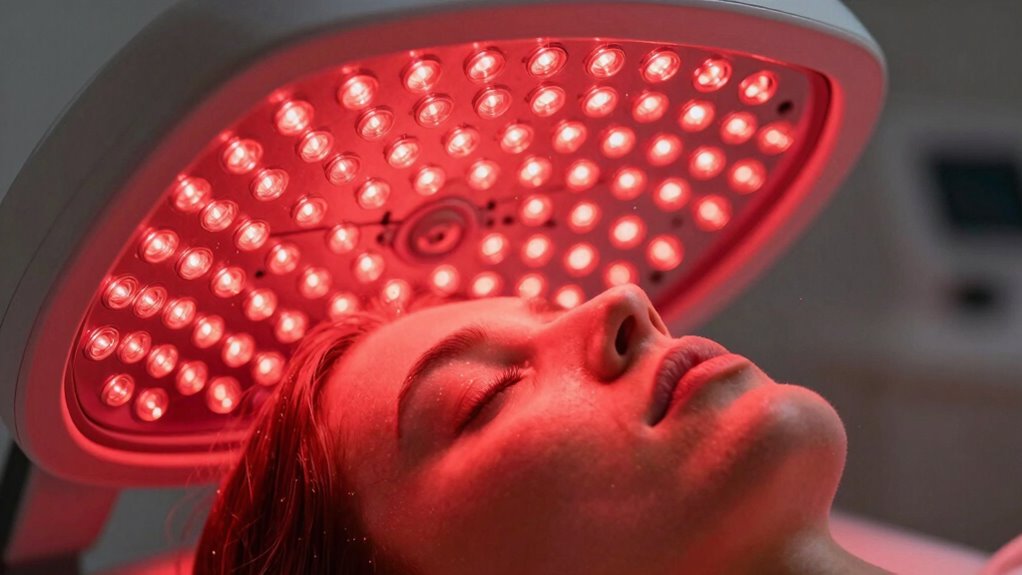
To choose the right wavelength for your goals, start by clearly defining what you want to achieve with red light therapy—whether it’s pain relief, skin rejuvenation, or muscle recovery. Wavelength selection is key to effective therapy customization. Consider that different wavelengths penetrate tissues differently; for example, lower wavelengths target surface issues, while higher ones reach deeper tissues. Use this table to guide your choice:
| Goal | Suitable Wavelength Range |
|---|---|
| Skin rejuvenation | 620–700 nm |
| Pain relief | 800–880 nm |
| Muscle recovery | 810–850 nm |
| Inflammation reduction | 600–700 nm |
Matching your goals with the correct wavelength ensures you maximize benefits and personalize your therapy effectively. Additionally, understanding tissue penetration depth can help optimize your device selection for specific outcomes. Recognizing how tissue absorption properties vary across wavelengths can further refine your approach to treatment. Knowing the wavelength-specific tissue interactions allows for more precise targeting of therapy to achieve optimal results, and considering tissue response variability can help tailor treatments to individual needs. Incorporating [tissue penetration depth] insights can enhance your ability to select the most effective wavelengths for your desired results.
Are There Risks or Downsides to Certain Wavelengths?
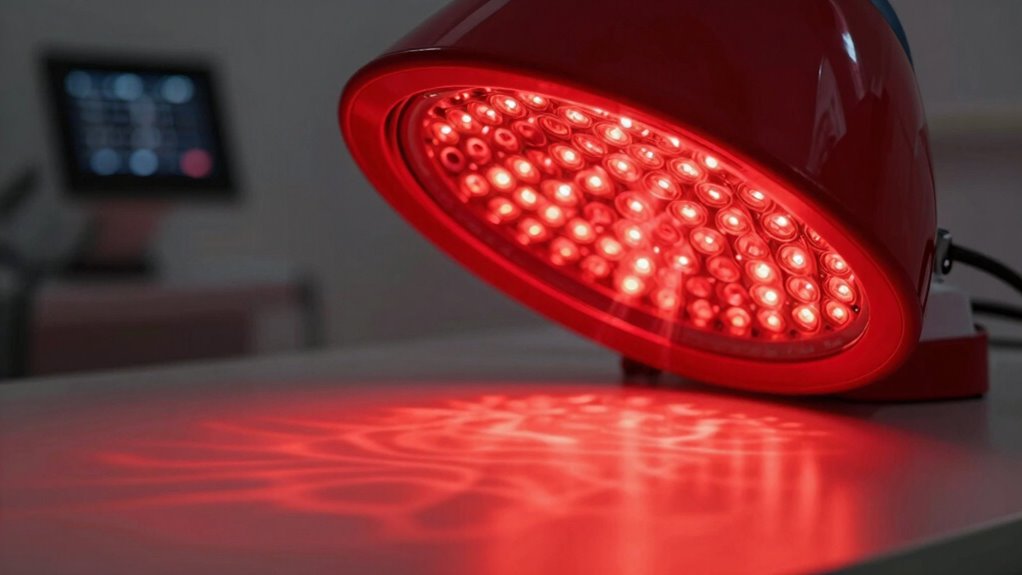
While red light therapy is generally safe, certain wavelengths can pose risks if used improperly. If you don’t follow proper guidelines, you might encounter safety concerns or potential side effects, especially with specific wavelengths. These include:
- Eye damage from exposure to intense or unfiltered light, as direct exposure can harm your vision if not properly protected.
- Skin irritation or burns from prolonged or high-intensity sessions, particularly when using devices with high power outputs.
- Interference with medications or underlying health conditions that make your skin or eyes more sensitive. Consulting a healthcare professional can help identify contraindications before use.
- Using inappropriate crafting techniques can also increase the risk of adverse effects, emphasizing the importance of proper device calibration and expert supervision.
Being aware of these risks helps you use the therapy safely. Avoid looking directly into intense light sources, limit exposure time, and consult a professional if you have existing health issues. Proper usage minimizes safety concerns and reduces the chance of adverse side effects.
Which Red Light Devices Offer the Best Wavelength Options?
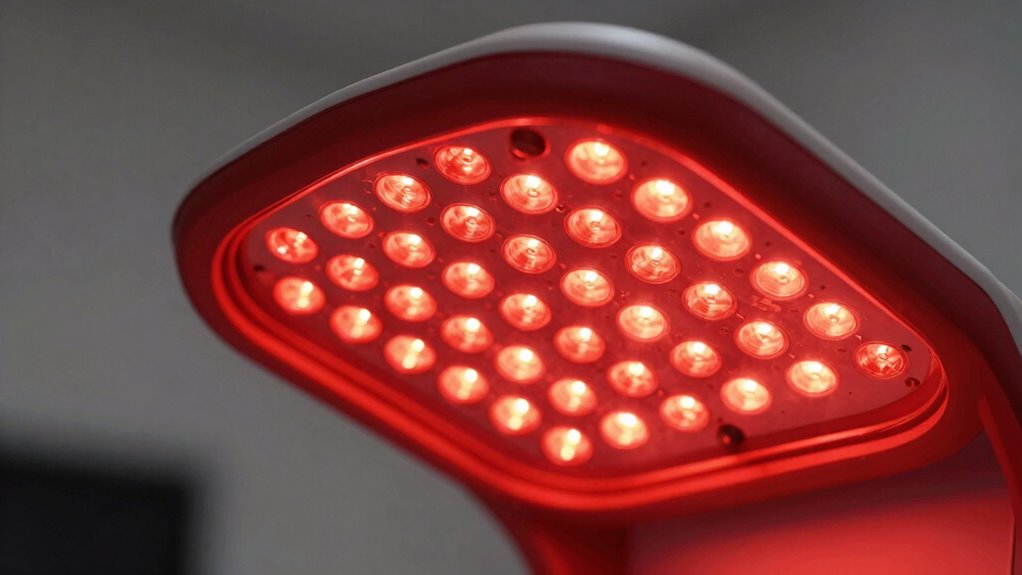
When selecting a red light device, choosing one that offers ideal wavelength options can considerably impact your results and safety. Look for devices that emit wavelengths in the 620-700 nm range, as these are best for maximum light absorption in skin and tissues. High-quality devices often feature precise device calibration, ensuring the emitted wavelengths stay accurate over time. Devices with adjustable settings give you control over wavelength options, allowing you to target specific issues effectively. Avoid cheap or poorly calibrated units, which may deliver inconsistent or inaccurate wavelengths, reducing their effectiveness. The best devices clearly specify their wavelength output and undergo regular calibration to maintain accuracy. Device calibration is essential for ensuring consistent therapeutic wavelengths over time, especially when considering wavelength stability for reliable treatment sessions. Prioritizing these features ensures you’re getting reliable, effective red light therapy tailored to your needs.
How Can You Verify That Your Red Light Therapy Device Has Accurate Wavelengths?
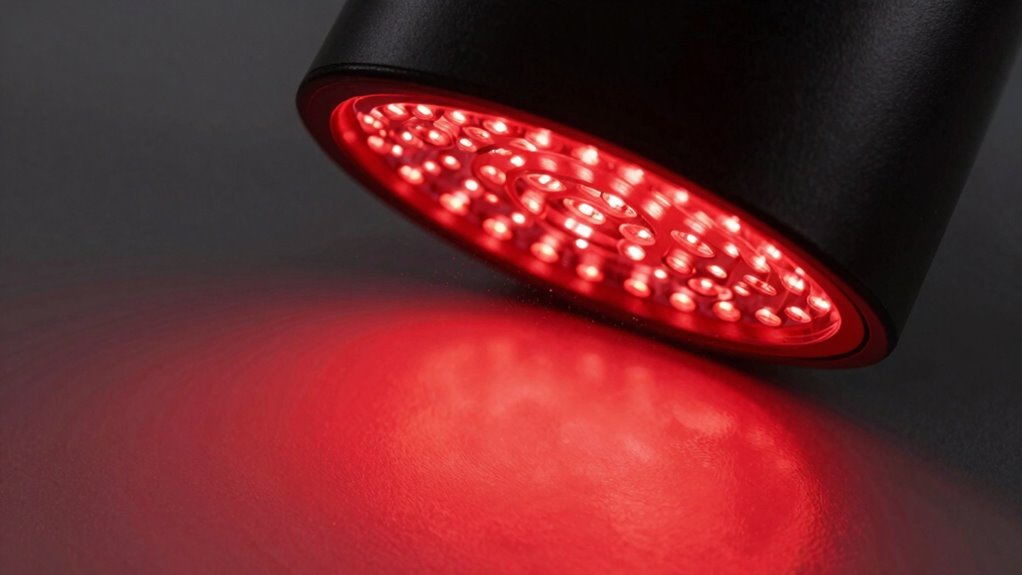
Verifying that your red light therapy device emits accurate wavelengths is essential to guarantee effective treatment and safety. To do this, you need to focus on proper device calibration and precise wavelength measurement. Start by using a spectrometer or a specialized light measurement tool designed for wavelength testing. This equipment helps you verify if your device’s emitted wavelength matches the specified value. Imagine seeing a clear reading that confirms:
- The device emits close to the targeted wavelength
- The readings are consistent across different sessions
- Any deviations are within acceptable calibration tolerances
Regularly checking these measurements ensures your device remains accurate over time. Performing periodic wavelength measurement and calibration maintains the efficacy of your therapy sessions and safeguards your health.
Frequently Asked Questions
Can Different Skin Tones Affect the Efficacy of Specific Wavelengths?
Yes, different skin tones can affect how effective specific wavelengths are during red light therapy. Skin pigmentation influences absorption, making darker skin tones absorb more light, which might reduce penetration depth. That’s why treatment customization is essential; adjusting wavelengths or intensity guarantees everyone benefits equally. You should consult a professional to tailor your sessions, especially if you have darker skin, so you get the best results without risking over-absorption.
How Does Wavelength Influence the Depth of Tissue Penetration?
Did you know that wavelengths around 630-670 nm penetrate tissue up to 10 millimeters deep? Wavelengths influence tissue absorption and light scattering, which determine how far the light reaches. Shorter wavelengths are absorbed more superficially, while longer wavelengths penetrate deeper. So, choosing the right wavelength helps target specific layers, maximizing therapy effectiveness by controlling how deep the light can go into your tissues.
Are Certain Wavelengths More Effective for Pain Relief Than Others?
Yes, certain wavelengths are more effective for pain relief because of wavelength specificity and therapeutic selectivity. You’ll find that wavelengths around 630-670 nm target superficial tissues, easing surface pain, while 810-850 nm penetrate deeper, targeting chronic or deep tissue pain. By choosing the right wavelength, you optimize therapy effectiveness, ensuring your treatment is more precise and beneficial for your specific pain relief needs.
Do Wavelength Variations Impact the Duration of Therapy Sessions?
Wavelength variations can impact the duration of your therapy sessions because maintaining wavelength consistency allows for more effective session customization. When the wavelength stays stable, you don’t have to extend sessions unnecessarily, and you can target specific issues more precisely. Adjusting session length based on wavelength helps maximize benefits without overexposure. So, understanding how different wavelengths influence your treatment guarantees you get the most efficient and personalized therapy experience.
Can Multiple Wavelengths Be Combined for Enhanced Results?
Think of combining multiple wavelengths like blending colors to create a vibrant painting—it’s called wavelength synergy. You can definitely combine different wavelengths for enhanced results, allowing therapy customization to target specific issues more effectively. This approach taps into the unique properties of each wavelength, boosting overall benefits. By customizing your therapy, you optimize healing, reducing treatment time and maximizing outcomes—making your red light experience truly personalized and powerful.
Conclusion
Choosing the right wavelength is key to maximizing red light therapy benefits. Did you know that wavelengths between 630-670nm are most effective for skin rejuvenation, penetrating just enough to stimulate collagen without damaging tissue? With over 60% of users reporting visible improvements, understanding wavelength details helps you get the most out of your device. So, research carefully, select the right spectrum, and enjoy safer, more effective results tailored to your goals.