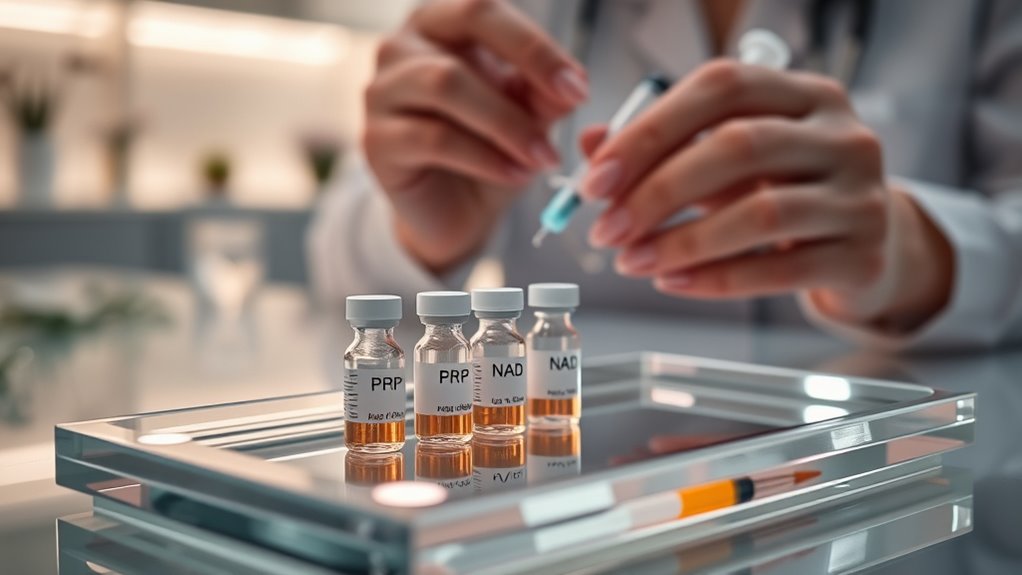

Regenerative skin care uses your body’s natural healing processes through treatments like PRP, which concentrates your blood’s platelets to boost collagen and skin health. NAD therapy replenishes cellular energy, enhancing repair and youthful glow. Emerging treatments are exploring cellular technologies and biomaterials to improve outcomes further. These minimally invasive options offer natural, safe ways to rejuvenate your skin. If you want to discover how these innovative therapies can help you achieve radiant, healthier skin, keep exploring the possibilities.
Key Takeaways
- Regenerative skin care utilizes PRP and stem cells to stimulate collagen production and skin rejuvenation naturally and minimally invasively.
- Platelet-Rich Plasma (PRP) involves concentrating platelets from blood to release growth factors that promote tissue repair.
- NAD therapy replenishes cellular energy, enhancing skin repair, responsiveness, and accelerating healing processes.
- Emerging treatments incorporate biomaterials and bioactive compounds to amplify regenerative effects of PRP and stem cell therapies.
- These innovative approaches offer personalized, safe, and effective alternatives to traditional invasive skin rejuvenation procedures.
Have you ever wondered how your skin can repair itself and stay youthful longer? The answer lies in the incredible potential of regenerative skin care, which harnesses your body’s natural healing mechanisms. Techniques like platelet therapy and stem cell treatments are revolutionizing how we approach skin rejuvenation. Platelet therapy, often called PRP (platelet-rich plasma), involves drawing your blood, processing it to concentrate platelets, and then injecting it into targeted skin areas. These platelets release growth factors that stimulate collagen production, improve skin texture, and reduce fine lines. It’s like giving your skin a potent boost from within, encouraging your body to heal and regenerate more efficiently. Stem cell treatments take this concept further by introducing or activating undifferentiated cells capable of transforming into various tissue types. When applied to the skin, stem cells can promote the regeneration of damaged tissue, enhance elasticity, and restore a youthful glow. Both these therapies work by tapping into your body’s innate regenerative abilities, making them a natural, minimally invasive alternative to traditional cosmetic procedures. Additionally, advances in cellular regeneration are opening new avenues for skin repair, making these therapies more effective and personalized.
These treatments are often combined with other advanced approaches, such as NAD therapy, which replenishes your body’s levels of nicotinamide adenine dinucleotide. NAD is a vital coenzyme involved in energy production and cellular repair, and boosting it can enhance the effectiveness of regenerative treatments. When NAD levels are optimized, your skin’s cells become more responsive to growth signals, accelerating healing and improving overall skin health. Emerging treatments in regenerative skin care are continuously evolving, with scientists exploring new ways to activate and harness your body’s repair systems. For instance, innovative biomaterials and bioactive compounds are being developed to work synergistically with platelet therapy and stem cell treatments, amplifying their effects.
If you’re considering regenerative skin care, you’ll find that these therapies are typically performed in a clinical setting by trained professionals. The procedures are generally safe, with minimal downtime, and they offer a more natural alternative to invasive surgeries. As research progresses, expect to see more personalized and targeted treatments designed to address specific skin concerns, from aging to scars and pigmentation issues. The future of regenerative skin care is promising, emphasizing your body’s remarkable ability to heal and renew itself. By understanding and utilizing these advanced therapies, you can support your skin’s health from within, maintaining a youthful, vibrant appearance for years to come.

The Ultimate Skin Tag Removal Kit with Post Treatment Serum – FDA-Cleared Cryo Treatment – Safe, Painless and Effective Treatment for Skin Tags – Includes 12 Applications and One-Handed Skin Guard
SMOOTH, TAG-FREE SKIN: The Ultimate Skin Tag Remover uses our 30 years of cryo-skin care experience and is…
As an affiliate, we earn on qualifying purchases.
As an affiliate, we earn on qualifying purchases.
Frequently Asked Questions
How Long Do Regenerative Skin Treatments Typically Last?
Regenerative skin treatments usually last between 6 to 18 months, depending on factors like your skin type and treatment frequency. To maintain their benefits, you’ll need regular maintenance procedures. For example, PRP or NAD therapies might require touch-ups every few months. Consistent upkeep helps prolong treatment longevity, ensuring your skin stays refreshed and youthful. Always follow your practitioner’s recommendations for ideal results and long-lasting improvements.
Are There Any Risks or Side Effects Involved?
While regenerative skin treatments are generally safe, you should be aware of potential side effects and treatment risks. You might experience mild discomfort, swelling, or redness, which usually fade quickly. Rarely, there could be slight bruising or infection. To minimize these risks, make certain your provider follows proper protocols. Always discuss your medical history thoroughly, so your practitioner can tailor the treatments safely and help you avoid any unnecessary complications.
Can These Treatments Be Combined With Traditional Skincare?
Yes, you can combine these regenerative treatments with traditional skincare. Combining strategies enhances treatment synergy, offering better overall results. Many practitioners recommend integrating PRP, NAD, or emerging therapies with your existing skincare routine to maximize benefits. Just consult your specialist to develop a personalized plan, ensuring the combination is safe and effective for your unique skin needs. This approach helps you achieve healthier, more youthful skin faster.
What Is the Optimal Age to Start Regenerative Skin Therapy?
The early bird catches the worm, so starting regenerative skin therapy in your late 20s or early 30s is ideal for preventative timing. Age considerations matter, as early intervention can slow aging signs and enhance skin health. While there’s no one-size-fits-all, beginning treatments before significant aging sets in helps maintain a youthful glow. Consult a specialist to determine the best age for your skin’s unique needs and goals.
How Soon Will I See Noticeable Results After Treatment?
You can expect to see visible improvements within a few weeks after your regenerative skin treatment. Timing expectations vary depending on the specific procedure and individual factors, but most clients notice subtle changes as early as 2 to 4 weeks. Full results typically develop over 3 to 6 months. Stay consistent with follow-up treatments, and you’ll likely enjoy smoother, rejuvenated skin with continued progress over time.

Ncduyde NAD+ Supplement, Liposomal NAD Nicotinamide Riboside Resveratrol 1500 mg – Anti-Aging & Brain Health, Improve Energy – Specifically for Women and Men, 120 Capsules
Advanced NAD+ Support with Resveratrol: Experience the advanced synergy of Nicotinamide Riboside and Resveratrol in our NAD supplement….
As an affiliate, we earn on qualifying purchases.
As an affiliate, we earn on qualifying purchases.
Conclusion
Imagine your skin as a canvas waiting to be revitalized. With regenerative treatments like PRP, NAD, and emerging therapies, you hold the brush to restore your natural glow. These innovations aren’t just trends—they’re your path to healthier, younger-looking skin. Don’t let time steal your radiance; seize the opportunity to turn back the clock. After all, isn’t your best skin yet to come? Embrace these advances and reveal your skin’s true potential today.

Platelet-Rich Plasma in Dermatologic Practice
As an affiliate, we earn on qualifying purchases.
As an affiliate, we earn on qualifying purchases.

Stem-Cell Exosome Skin Booster Kit Booster Ampoule| Exosome, PDRN, Peptide, Collagen | Rejuvenation, Hydration, Anti-Aging | Korean Skincare 30ml (Solutions 0.01 oz x 5 Vials/Ampoule 1.01 fl.oz)
Stem-Cell Exosome Skin Booster Kit
As an affiliate, we earn on qualifying purchases.
As an affiliate, we earn on qualifying purchases.