
The rise of scalp and hair skin care emphasizes how a healthy scalp is key to strong, beautiful hair. By using gentle cleansers, nourishing treatments, and scalp massages, you can keep hair follicles clear and well-regulated. Balanced sebum production prevents dryness or excess oil, supporting ideal growth. Taking care of your scalp also benefits your overall hair quality and reduces future issues. Keep exploring to discover how prioritizing scalp health can transform your entire hair journey.
Key Takeaways
- Increasing focus on scalp and hair skin health highlights their role in overall hair appearance and growth.
- Innovative products target scalp cleansing, nourishment, and sebum regulation for healthier hair follicles.
- Scalp care routines, including massages and proper hygiene, are becoming essential parts of beauty regimens.
- Emphasis on lifestyle factors like diet and hydration supports optimal scalp and hair skin health.
- The trend promotes viewing scalp and hair skin health as foundational for long-term hair strength and shine.
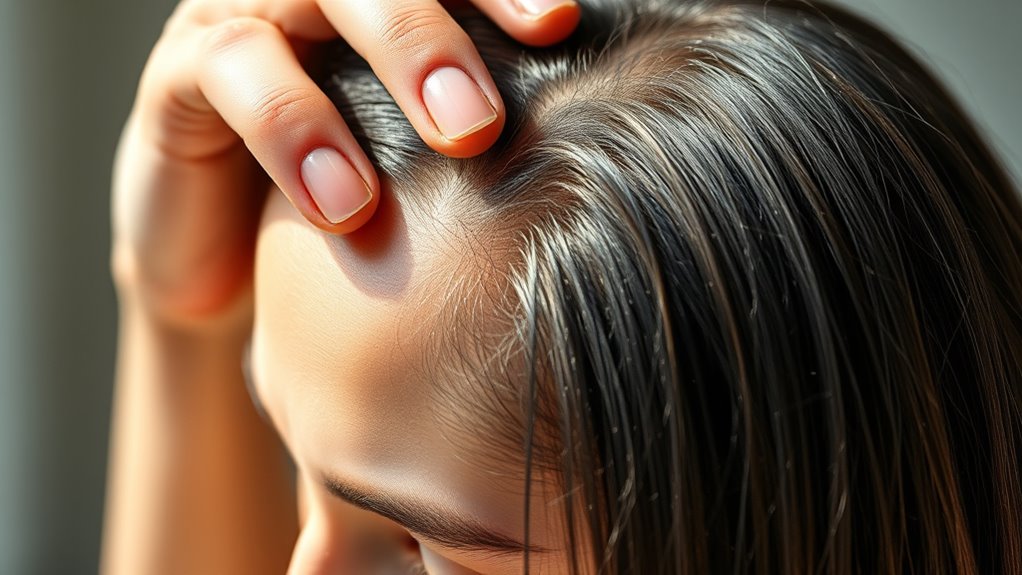
Your scalp and hair skin are vital to healthy hair growth and overall hair appearance. When you pay attention to these areas, you’re supporting the foundation of your hair’s health. One key aspect is maintaining healthy hair follicles, which are responsible for producing new hair strands. If your hair follicles become damaged or blocked, hair growth can slow down or become uneven. Proper scalp care ensures these follicles stay clear and function at their best. Regular cleansing with gentle shampoos helps remove excess dirt, oil, and product buildup that can clog follicles. But it’s not just about cleaning; you need to nurture your scalp to keep hair follicles resilient. This means avoiding harsh chemicals that can strip away natural oils, leading to dryness and irritation. Instead, opt for products that promote scalp hydration and nourishment.
Sebum regulation plays a vital role in this process. Your scalp naturally produces sebum, an oily substance that keeps your hair and skin moisturized. When sebum production is balanced, your scalp remains neither too oily nor too dry. Excess sebum can lead to greasy hair and clogged follicles, which increases the risk of scalp conditions like seborrheic dermatitis or folliculitis. On the other hand, too little sebum results in dry, flaky scalp skin, which can cause itching and irritation. You can help regulate sebum by choosing appropriate hair care products and avoiding over-washing, which strips away natural oils. Incorporating scalp massages into your routine can also stimulate sebum production, promoting a healthy balance. Additionally, understanding hair follicle health and how it impacts overall hair quality helps you adopt better care practices.
Furthermore, paying attention to your diet and hydration levels influences sebum regulation and overall scalp health. Eating nutrient-rich foods, especially those high in omega-3 fatty acids, vitamins A, E, and D, supports the skin’s barrier function. Staying well-hydrated ensures your scalp skin remains supple and less prone to dryness and irritation. When your scalp skin is healthy, it creates an ideal environment for hair follicles to thrive. This reduces the likelihood of hair thinning and promotes stronger, shinier hair.
Ultimately, understanding the importance of hair follicle health and sebum regulation empowers you to take proactive steps. Consistent, gentle cleansing paired with nourishing treatments can transform your scalp into a fertile ground for healthy hair growth. When you prioritize your scalp and hair skin care, you’re not just improving how your hair looks today, but setting the stage for healthier hair in the future.
Frequently Asked Questions
How Often Should I Wash My Scalp to Prevent Oil Buildup?
You should wash your scalp about two to three times a week to prevent oil buildup. Regular scalp cleansing helps remove excess oil, dirt, and product residue, keeping your scalp healthy and balanced. If you have oily hair or sweat a lot, consider washing more frequently. Just avoid over-washing, as it can strip natural oils and cause your scalp to produce more oil. Adjust the frequency based on your scalp’s needs.
Can Scalp Treatments Improve Hair Growth Naturally?
Yes, scalp treatments can improve hair growth naturally by maintaining scalp pH balance and supporting hair follicle health. When you use targeted treatments, they help reduce inflammation, unblock hair follicles, and enhance circulation. This creates a healthier environment for hair to grow stronger and thicker. Regular use of these treatments can boost your hair’s energy, making it look fuller and more vibrant over time.
What Ingredients Should I Avoid in Scalp Care Products?
Think of your scalp as a garden; avoid harmful chemicals like sulfates, parabens, and synthetic fragrances that can strip natural oils and cause irritation. These ingredients are like weeds choking your plants. Stay away from products containing these toxins, as they can disrupt your scalp’s health and hinder hair growth. Instead, opt for gentle, natural formulas to keep your scalp nourished and thriving.
Is It Necessary to Use Separate Products for Scalp and Hair?
You don’t necessarily need separate products for your scalp and hair, but using scalp-specific formulations can benefit your hair skincare routines. If you have scalp issues like dandruff or oiliness, targeted treatments help address those concerns directly. For healthy hair, a balanced approach with gentle shampoos and conditioners works well, but incorporating scalp-specific products can boost overall scalp health and improve your hair’s appearance and growth.
How Can I Identify Scalp Conditions Early?
You can spot scalp conditions early by paying attention to signs like persistent itchiness, redness, or unusual flakes. Investigate the common theory that dandruff is just dry scalp—sometimes, it’s a sign of scalp infection. Regularly check for dandruff detection and other symptoms, and if you notice swelling or pain, see a dermatologist promptly. Early detection helps prevent more serious issues and keeps your scalp healthy.
Conclusion
As you embrace scalp and hair skin care, you’re opening a secret garden where healthy hair begins at the roots. Think of your scalp as the fertile soil that nurtures every strand, and by giving it proper attention, you’re cultivating a lush, vibrant crown. Remember, treating your scalp well isn’t just maintenance – it’s the foundation for hair that shines from head to toe. Nurture it, and watch your confidence bloom like a well-tended garden.