CADR, or Clean Air Delivery Rate, shows how efficiently an air purifier cleans specific pollutants like dust, smoke, and pollen. It measures the amount of filtered air it delivers per minute and helps you compare models for your room size and air quality needs. A higher CADR means faster cleaning, but it’s important to balance performance with noise and maintenance. Keep exploring to understand how to choose the best purifier for your space.
Key Takeaways
- CADR stands for Clean Air Delivery Rate, measuring how effectively an air purifier filters pollutants like dust, smoke, and pollen.
- Higher CADR indicates faster and more thorough air cleaning, useful for matching device performance to room size.
- CADR is determined through controlled tests that evaluate pollutant reduction, reflecting real-world air quality improvement.
- When choosing an air purifier, consider CADR alongside noise levels, filter quality, and room size for optimal performance.
- Balancing CADR with maintenance and energy use ensures effective, efficient, and comfortable air purification tailored to your needs.
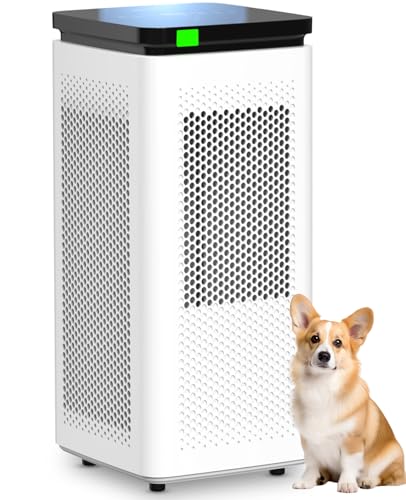
Air Purifiers for Home Large Rooms up to 3500 Ft², H13 True HEPA 0.1 Micron 99.97% Filtration with Carbon Filter, 235 CFM CADR, Removes Allergens, Pet Odor, Smoke, VOCs, 30dB Sleep Mode, PM2.5 Display
H13 True HEPA + Carbon Filter – Removes Allergens, Odors & Smoke: Equipped with H13 True HEPA (0.1μm,…
As an affiliate, we earn on qualifying purchases.
As an affiliate, we earn on qualifying purchases.
Why Understanding CADR Is Important When Choosing an Air Purifier
Understanding CADR, or Clean Air Delivery Rate, is essential because it directly measures how effectively an air purifier filters out pollutants in a given space. When you know a device’s CADR, you can better assess its impact on air quality. A higher CADR indicates that the purifier is more efficient at cleaning the air quickly, which improves overall air quality in your home or office. This knowledge helps you choose a device that matches your room size and pollution levels, ensuring ideal performance. Without understanding CADR, you might select an air purifier that underperforms or wastes energy. In short, knowing a purifier’s CADR helps you make smarter decisions, improving device efficiency and ensuring you get the clean air you need. Additionally, matching CADR with the room size ensures optimal purification efficiency. Furthermore, understanding air quality standards can help you evaluate and compare different models more effectively. Recognizing how CADR values relate to specific pollutants can guide you toward more precise filtration choices. A clear understanding of filter types also aids in selecting the right purifier for your particular needs. Being aware of emission sources can help you choose a purifier that effectively targets the pollutants most relevant to your environment.

MOOKA Air Purifiers for Home Large Room up to 1076ft², H13 True HEPA Air Filter Cleaner, Odor Eliminator, Remove Smoke Dust Pollen Pet Dander, Night Light, B-D02L White
MOOKA B-D02L AIR PURIFIER FOR LARGE ROOM: With the high-efficiency filtration system, the air purifier covers an area…
As an affiliate, we earn on qualifying purchases.
As an affiliate, we earn on qualifying purchases.
What Is CADR and How Does It Work?
CADR measures how effectively an air purifier cleans the air in your space. It’s calculated based on the amount of purified air produced and the removal rate of pollutants. Higher CADR scores mean better performance and cleaner air faster. Incorporating performance parts like high-quality filters can further enhance your air purifier’s efficiency. Additionally, understanding air quality metrics can help you choose the right model for your needs. Monitoring pollutant removal rates can also provide insights into your air purifier’s effectiveness over time. Recognizing indoor air quality standards can guide you in selecting devices that meet recommended safety levels.
Measuring Air Cleanliness
Ever wonder how to tell if an air purifier is truly effective? Measuring air cleanliness helps you do just that. The key is understanding CADR, or Clean Air Delivery Rate, which shows how well an air purifier improves air quality. It considers both filtration efficiency and airflow, indicating how much filtered air is circulated in a room. Higher CADR numbers mean better performance in removing pollutants like dust, smoke, and pollen. Unlike just looking at filter type or size, CADR provides a clear, standardized way to compare air purifiers’ ability to clean the air. So, when shopping, focus on CADR ratings to gauge how effectively a device will improve your air quality. This ensures you choose an air purifier that truly makes a difference. Regular maintenance, such as checking and replacing filters, can also influence the device’s performance and effectiveness.
How CADR Is Calculated
To determine how effectively an air purifier cleans the air, manufacturers use a specific formula to calculate CADR. This calculation considers how well the purifier improves air quality by filtering out particles like dust, smoke, and pollen. Filtration efficiency plays a key role, as it shows how much of these particles the device can remove within a certain time. The CADR score combines three ratings: for smoke, dust, and pollen, reflecting the purifier’s overall ability to improve air quality. Fundamentally, higher CADR numbers mean more particles are filtered out faster, leading to cleaner indoor air. This calculation helps you understand a purifier’s performance in real-world conditions, ensuring it meets your needs for a healthier environment. Additionally, understanding the filtration process can help you select the right device for your specific indoor air quality concerns.
Significance of CADR Scores
Understanding the significance of CADR scores is key to choosing an air purifier that effectively improves your indoor air quality. Higher CADR ratings mean better pollutant removal and faster cleaning. Think of CADR as a measure of how well an air purifier can clear the air in different areas. To visualize, consider this:
| Room Size | CADR Score | Air Quality Impact |
|---|---|---|
| Small | 100-150 | Quick pollutant removal |
| Medium | 150-250 | Effective for most rooms |
| Large | 250+ | Suitable for larger spaces |
A higher score indicates the purifier can handle more pollutants efficiently, ensuring cleaner air faster and reducing allergy or asthma symptoms. Additionally, understanding air exchange rates can help you appreciate the importance of selecting the right materials for specific needs, similar to choosing the appropriate CADR score for your room size. Recognizing the pollutant types that are most common in your environment can further help in selecting an air purifier with the right CADR ratings. In particular, considering the filter technology can significantly impact the overall effectiveness of your air purifier. Moreover, being aware of air quality standards can guide you in setting realistic expectations for your air purification system.

Air Purifiers for Office with H13 Quiet HEPA Filter Up to 1076 Ft² for Pet Family, Pollen, Smoke, Compact Air Cleaner with 3 Speeds, Timer, Aroma Quiet, 360°Intake, for Home Bedroom, Black
Effortless Operation: Simplified control panel with intuitive design makes it easy to operate. No complicated setup—just one tap,…
As an affiliate, we earn on qualifying purchases.
As an affiliate, we earn on qualifying purchases.
How Is CADR Calculated?
How is CADR calculated? It’s based on how well an air purifier improves air quality by measuring its filtration efficiency. The calculation considers the volume of air the purifier processes per minute and how effectively it removes specific particles like dust, pollen, or smoke. Fundamentally, CADR reflects the actual amount of clean air the device delivers. To determine this, testers run the purifier in a controlled environment, measuring particle reduction over time. The higher the filtration efficiency, the more particles the purifier can remove, leading to a higher CADR score. This score helps you compare different models to see which one performs best at cleaning the air in your space. It’s a straightforward way to gauge air purifier effectiveness based on real-world air quality improvements. Additionally, filtering efficiency is a key factor that influences a purifier’s CADR score. Understanding the testing process and how it simulates real-life conditions can also give consumers better insight into a device’s performance. Moreover, the type of particles tested can affect the CADR results, making it important to consider what specific pollutants you want to target. Knowing how manufacturers conduct testing procedures can further clarify the reliability of the CADR ratings provided. Furthermore, air quality standards set by regulatory agencies help ensure that the testing remains consistent and trustworthy.

LEVOIT Air Purifiers for Bedroom Home Dorm, AHAM Verified, 3-in-1 Filter Cleaner With Aroma Pad, Filters Smoke, Allergens, Pet Dander, Odor, Dust, Office, Desktop, Core Mini-P, White
𝗥𝗘𝗠𝗢𝗩𝗘 𝗣𝗢𝗟𝗟𝗨𝗧𝗔𝗡𝗧𝗦 𝗘𝗩𝗘𝗥𝗬𝗪𝗛𝗘𝗥𝗘: Our Pre-Filter and Main Filter capture allergens as lint, hair, pet dander, pet hair, fine…
As an affiliate, we earn on qualifying purchases.
As an affiliate, we earn on qualifying purchases.
What Do CADR Ratings for Particles, Dust, and Smoke Mean?
CADR ratings for particles, dust, and smoke provide specific measures of how effectively an air purifier removes these common indoor pollutants. Higher ratings mean the device can clean the air more quickly and efficiently. For you, understanding these ratings helps you choose a purifier suited to your needs. Keep in mind that filter maintenance is vital; if filters aren’t changed regularly, performance drops, regardless of CADR. Noise levels also matter—some purifiers with high CADR ratings can be noisy, which might bother you during sleep or work. So, while a high CADR indicates better pollutant removal, balance it with noise levels and maintenance requirements to find the best fit for your environment. This way, you guarantee cleaner air without unnecessary inconvenience.
How to Use CADR to Pick the Right Air Purifier for Your Room
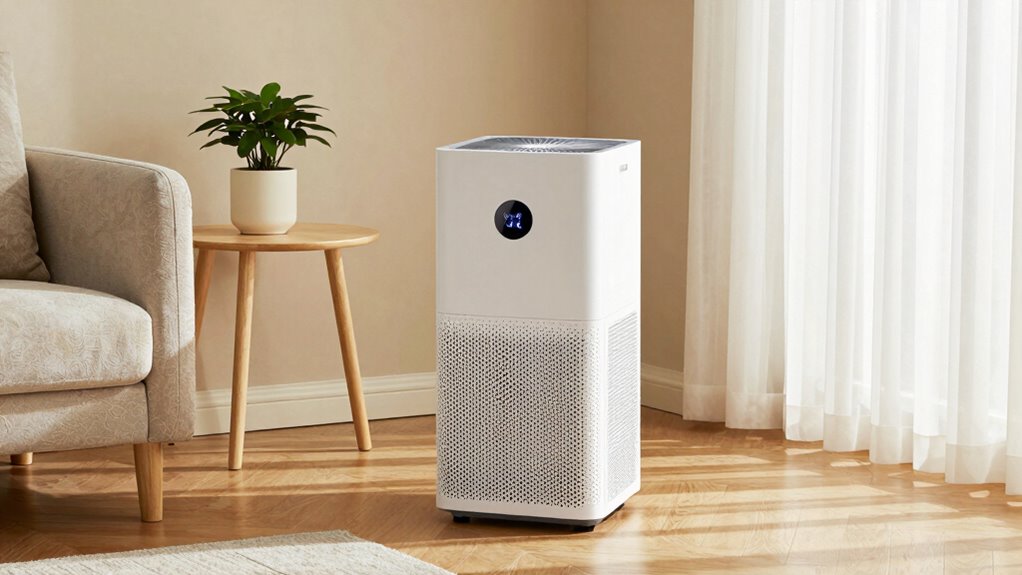
Choosing the right air purifier for your room starts with considering its CADR ratings in relation to your space size and specific air quality concerns. To guarantee effective purification, match the purifier’s CADR with your room’s dimensions. Use air quality sensors to monitor real-time air conditions, helping you decide if you need a device with higher CADR for better performance. Keep in mind that a higher CADR typically means more frequent filter replacement, so plan accordingly. Additionally, consider the type of pollutants you’re targeting—dust, smoke, or allergens—and select a model with suitable CADR ratings. Regular filter replacement maintains peak performance. Finally, verify that the unit’s CADR aligns with your room’s size for efficient air cleaning without overworking the device. Microplastics in dust can also impact indoor air quality, so choosing a purifier capable of filtering such particles can further improve your environment. Understanding air quality sensors can help you optimize your air purification strategy for a healthier indoor space.
Incorporating features like removable filters and easy maintenance options can ensure your purifier remains effective over time.
What’s a Typical CADR Range for Home Use?
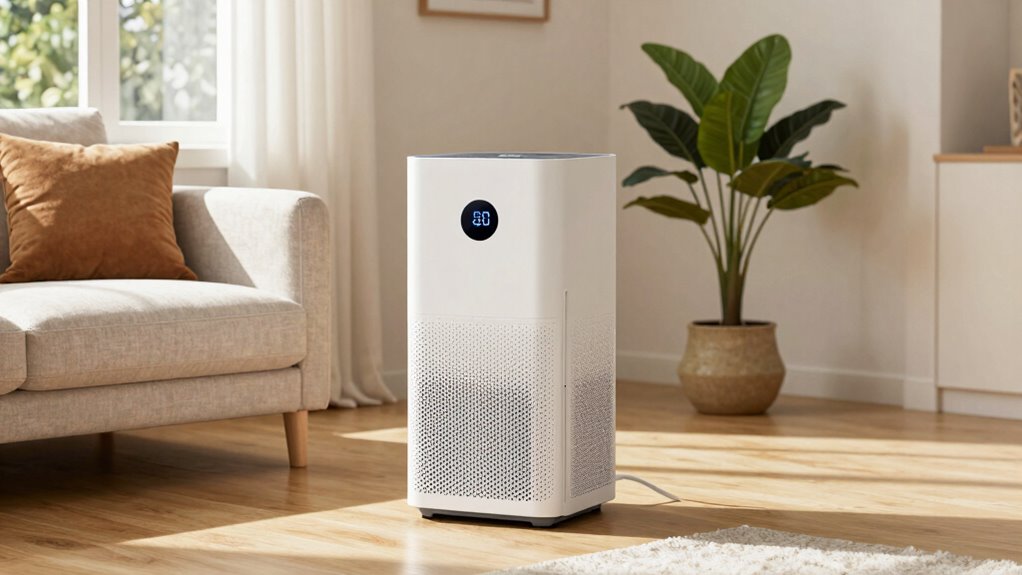
Most home air purifiers have a CADR range between 100 and 300, which suits rooms of various sizes. Factors like room size, purifier design, and air quality needs influence the ideal CADR for your space. Understanding these points helps you choose a purifier that effectively clears the air in your home.
Typical CADR Range
Wondering what a typical CADR range for home air purifiers looks like? Most models fall between 100 and 300 CADR, suitable for different room sizes. A higher CADR indicates better airflow efficiency, meaning cleaner air faster. Keep in mind that increased airflow can impact filter lifespan, so balance is key. Smaller rooms may only need a CADR around 100-150, while larger spaces benefit from 200-300. Choosing a device within this range ensures efficient air cleaning without overworking the filter. Remember, a device with a higher CADR isn’t always better if it compromises filter longevity or energy use. Knowing these ranges helps you select an air purifier that fits your needs and maintains excellent performance over time.
Factors Affecting CADR
What factors influence the CADR of a home air purifier? Primarily, air quality and filter efficiency play key roles. Better air quality means more pollutants for the purifier to handle, which can impact its CADR rating. Filter efficiency determines how well the device captures particles; higher efficiency filters usually yield higher CADR scores because they clean air more effectively. The size of the room also matters—larger spaces require higher CADR units to keep air fresh. Additionally, the design and motor power of the purifier affect airflow and filtration speed. Keep in mind that a purifier’s CADR is a good indicator of performance, but actual results depend on maintaining filters and choosing a unit suited to your specific air quality needs.
Does a Higher CADR Always Mean a Better Purifier?
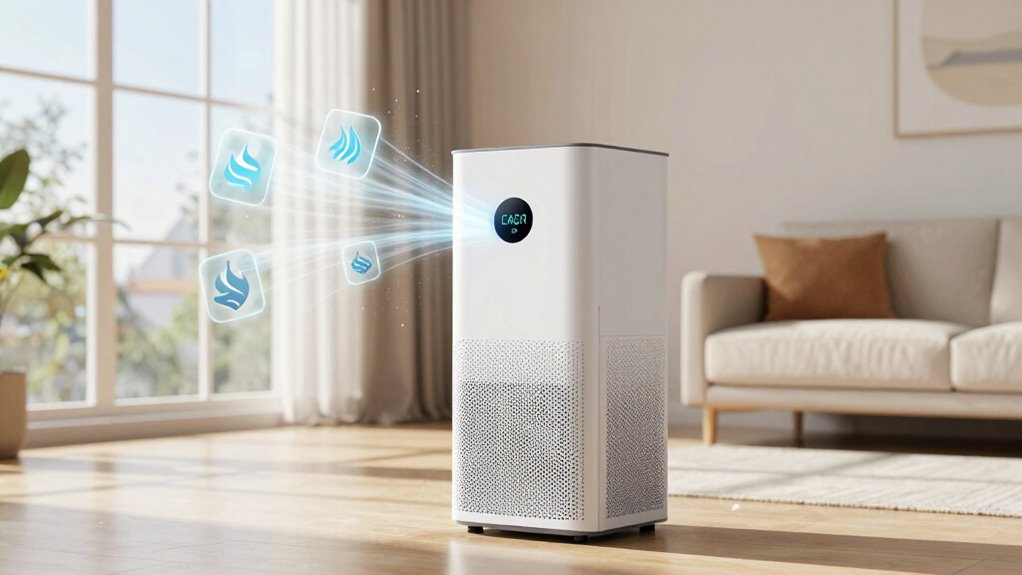
While a higher CADR (Clean Air Delivery Rate) generally indicates that an air purifier can filter air more quickly, it doesn’t automatically mean it’s the best choice for your needs. A high CADR might improve your air quality faster, but other factors matter. For example, noise levels can increase with higher CADR models, potentially disturbing your environment. Additionally, some purifiers with high CADR are larger and less portable. You should also consider the purifier’s effectiveness for specific pollutants, like allergens or odors. Finally, a high CADR doesn’t guarantee energy efficiency, which impacts long-term use. Consequently, balancing CADR with noise, size, pollutant targeting, and energy consumption helps you choose an air purifier that truly fits your needs.
How Do I Know What CADR Size I Need?
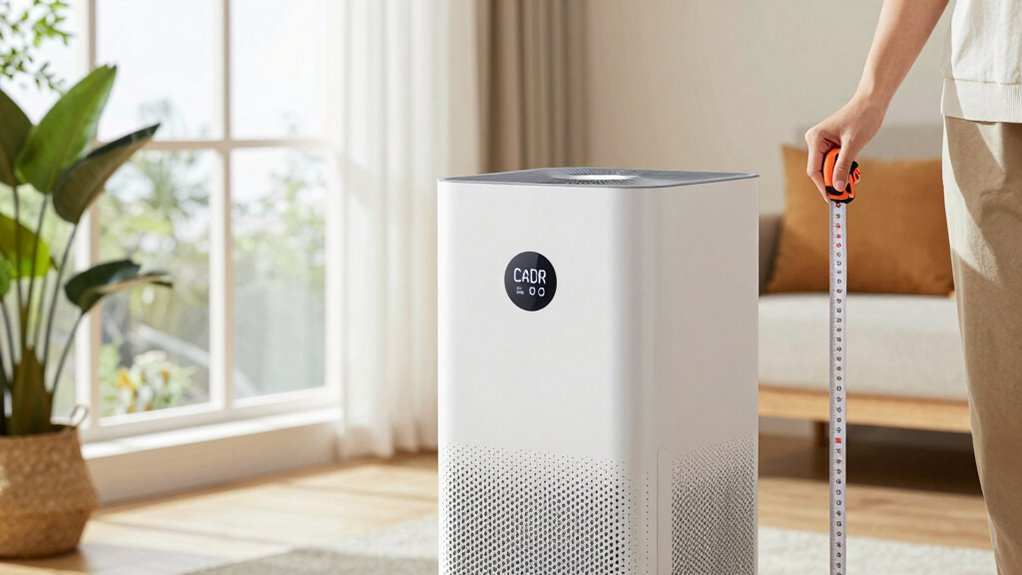
Choosing the right CADR size depends on the specific space you want to purify. To determine your needs, consider your room’s size and desired air quality level. Larger rooms require higher CADR ratings for effective purification, while smaller spaces can use lower ratings. Keep in mind that a higher CADR often means more frequent filter replacements, affecting filter lifespan. Use this table to match room size with CADR:
| Room Size | Recommended CADR | Notes |
|---|---|---|
| Up to 200 sq ft | 100-150 | Suitable for bedrooms, offices |
| 200-400 sq ft | 150-250 | Living rooms, small apartments |
| Over 400 sq ft | 250+ | Large spaces, open areas |
Matching CADR to your space guarantees ideal air quality without unnecessary filter changes.
Common Mistakes When Interpreting CADR Ratings
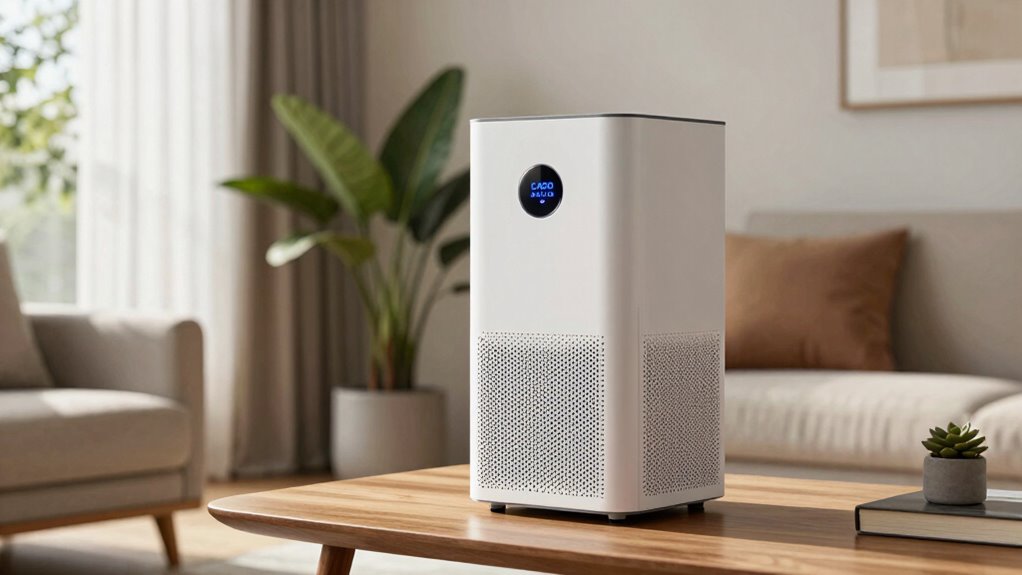
Many people misinterpret CADR ratings by focusing solely on the number without considering how well it matches their specific room size or air quality needs. Relying only on the CADR number ignores important factors like filter efficiency, which impacts how effectively the purifier removes pollutants over time. Additionally, noise levels can vary even with high CADR ratings, affecting your comfort during use.
- Overlooking filter efficiency can lead to buying an air purifier that doesn’t perform as expected in real-world conditions.
- Ignoring noise levels might result in choosing a device that’s too loud for your living space.
- Misjudging room size compatibility can cause underperformance or unnecessary energy consumption.
- Focusing solely on CADR ignores the importance of maintenance and filter replacement costs.
Frequently Asked Questions
Can CADR Ratings Be Compared Across Different Brands?
You can’t reliably compare CADR ratings across different brands because of inconsistent testing methods, which affect rating consistency. Each brand might use slightly different standards, making direct comparisons misleading. Instead, focus on comparing models within the same brand or look for independent reviews and tests. This approach helps guarantee you’re making a more accurate brand comparison and selecting an air purifier that truly meets your needs.
How Does Room Humidity Affect CADR Performance?
Humidity impact can affect CADR performance because higher moisture levels cause particles to clump together, making them larger and easier for purifiers to filter. Conversely, low humidity may reduce particle size, potentially lowering CADR effectiveness. Moisture effects can also lead to increased mold spores or bacteria, which a purifier might struggle to remove efficiently. Keeping room humidity balanced guarantees your air purifier performs at its best and maintains healthier indoor air quality.
Does CADR Account for Noise Levels of Air Purifiers?
Ever wonder if CADR considers noise levels? It doesn’t directly account for noise impact, focusing instead on measurement accuracy of airflow and particle removal. While a higher CADR means better purification, it doesn’t tell you how loud the purifier might be. So, you should balance CADR with noise levels to find a device that cleans effectively without disturbing your peace. Wouldn’t you prefer a purifier that’s both powerful and quiet?
Are There Industry Standards for Measuring CADR?
Yes, there are industry standards for measuring CADR to guarantee testing consistency. Organizations like AHAM (Association of Home Appliance Manufacturers) set testing standards that manufacturers follow, providing reliable and comparable measurements. These standards specify testing procedures, airflow rates, and particle concentrations, so you can trust that CADR ratings reflect real-world performance. This consistency helps you compare air purifiers accurately and choose the best one for your needs.
How Often Should I Check or Update My Air Purifier’s CADR Rating?
Think of your air purifier’s CADR as its heartbeat—regular check-ins keep it strong. You should review your filter replacement schedule every 6 to 12 months, depending on usage, and perform air quality monitoring regularly. If you notice a decline in air quality or reduced airflow, it’s time to update your CADR info. Maintaining an eye on these details ensures your purifier continues to breathe fresh, clean air into your space.
Conclusion
Understanding CADR is like revealing a secret map to cleaner air. By knowing what those numbers mean, you can steer your choice toward a purifier that truly clears the fog from your space. Remember, a higher CADR isn’t always better, but the right size makes all the difference. With this knowledge, you’re equipped to breathe easier—like opening a window to fresh, sunlit clarity in your own home.