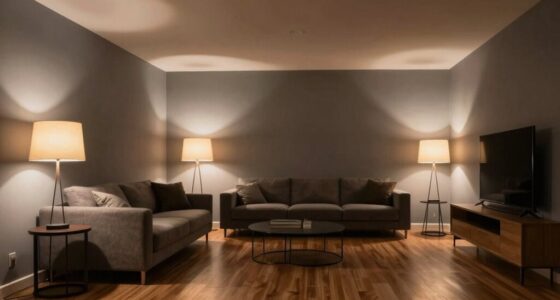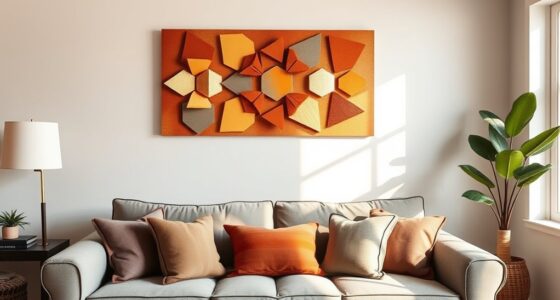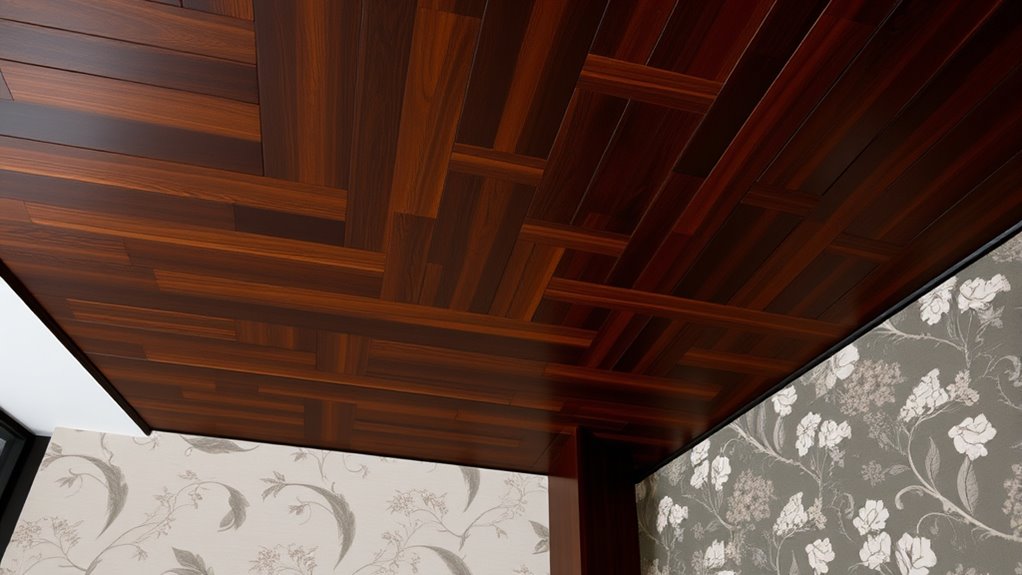

To add visual interest to your ceiling, consider using wood paneling, wallpaper, and strategic lighting. Light-colored wood or textured wallpaper can brighten your space, while darker finishes add richness and depth. Incorporate accent strips or borders to create contrast, and use layered lighting to emphasize these features. Combining these elements transforms a plain ceiling into a stunning focal point, making your room feel more dynamic and stylish—if you keep exploring, you’ll discover even more inspiring ideas.
Key Takeaways
- Use wood paneling in light shades for an airy feel or darker tones for sophistication, enhancing texture and depth.
- Incorporate bold wallpaper patterns or textured finishes to create focal points and add visual interest to ceilings.
- Combine contrasting paint colors or painted borders with wood paneling to introduce dynamic design elements.
- Enhance ceiling features with strategic lighting accents like recessed or cove lighting to highlight textures and patterns.
- Select ceiling colors and treatments that complement wall decor and room ambiance for a cohesive and striking look.
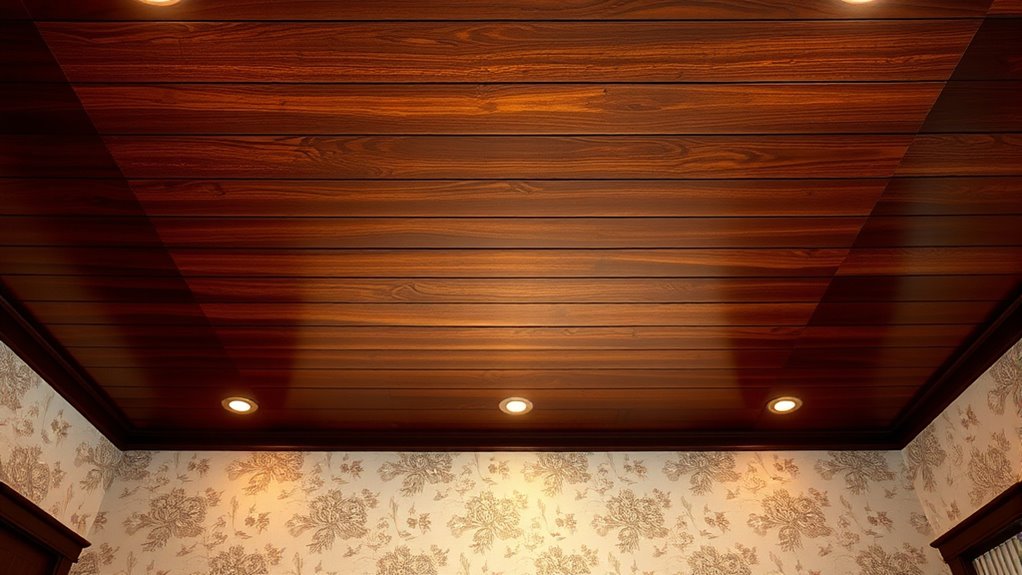
A well-designed ceiling treatment can instantly elevate the look of any room, adding style and character to your space. When you’re considering how to make your ceiling stand out, lighting accents play a fundamental role. Strategic placement of recessed lighting, pendant fixtures, or even cove lighting can highlight the texture and depth of your chosen treatment. For instance, installing dimmable lights alongside wood paneling creates warm, inviting shadows that enhance the natural beauty of the wood. Similarly, accent lighting can draw attention to wallpaper patterns or visual interest features, making your ceiling a focal point rather than just a surface overhead. Incorporating lighting accents thoughtfully can significantly enhance the overall effect of your ceiling design. Choosing the right ceiling color options is equally important. Bright, neutral shades like white or soft beige can make a room feel larger and more open, providing a clean backdrop that complements various ceiling treatments. If you want to add coziness or intimacy, darker hues like charcoal or navy can create a dramatic effect, particularly when paired with lighting accents that cast subtle shadows. Bold colors might also serve as a statement, especially when combined with textured treatments like wood slats or patterned wallpaper. Remember, the color you opt for influences the entire room’s ambiance, so consider how it interacts with your wall colors and overall decor. When exploring wood paneling, you have a wide range of ceiling color options. Light oak or pine can brighten a space and keep the room feeling airy, while richer, darker woods like mahogany add sophistication. Painting the wood panels or the ceiling itself in contrasting shades can add visual interest, making your ceiling a standout feature. If you prefer wallpaper, the options are endless—from subtle textures to dramatic patterns. You can choose wallpaper with metallic accents or textured finishes to add depth and shine when illuminated by the right lighting accents. This combination creates a layered look that keeps the eye moving and makes your ceiling more than just a flat surface. Visual interest can also be achieved through various patterns and textures. For example, a ceiling with wallpaper featuring geometric designs or bold prints paired with focused lighting can transform a simple room into a stylish retreat. If you’re using wood paneling, consider adding a painted border or accent stripe in a contrasting color to break up the surface and bring visual dynamism to the room. No matter which treatment you choose, integrating lighting accents and carefully selecting your ceiling color options ensures your ceiling becomes a mesmerizing design element that enhances the overall aesthetic of your space.

Rockin' Wood Real Wood Nail Up Application Rustic Reclaimed Naturally Weathered Barn Wood Accent Paneling Board Planks for Home Walls (8 Square feet)
RECLAIMED WOOD ACCENT: Real reclaimed and recycled wood, naturally-weathered wood paneling adds a beautiful, rustic accent to your…
As an affiliate, we earn on qualifying purchases.
As an affiliate, we earn on qualifying purchases.
Frequently Asked Questions
How Do Ceiling Treatments Impact Room Acoustics?
Ceiling treatments substantially impact room acoustics by enhancing sound absorption and reducing noise. When you choose materials like wood paneling or textured wallpaper, you help absorb sound waves, minimizing echo and creating a quieter environment. These treatments can also prevent sound from bouncing around, improving clarity and comfort in your space. By thoughtfully selecting ceiling designs, you actively control noise levels and foster a more pleasant and acoustically balanced room.
What Are the Best Lighting Options for Decorated Ceilings?
Don’t worry about your decorated ceiling feeling dark; ceiling lighting and decorative fixtures can brighten it beautifully. Opt for recessed lighting to highlight the details without clutter, or add pendant lights or chandeliers for a statement. Use dimmable fixtures to adjust ambiance easily. This way, your ceiling becomes a focal point while ensuring the room remains well-lit and inviting, no matter the design complexity.
Can Ceiling Treatments Increase a Room’s Perceived Height?
Yes, ceiling treatment styles can make a room feel taller. Light-colored wood paneling or wallpaper with vertical patterns draw the eye upward, creating an illusion of increased height. When choosing design considerations, opt for treatments that emphasize height, like elongated lines or subtle textures. Avoid heavy, dark treatments that can shrink the space visually. Your goal is to enhance vertical lines and keep the ceiling feeling airy and open.
Are There Eco-Friendly Materials Suitable for Ceiling Treatments?
Think of eco-friendly ceiling treatments as a revitalizing gust for your space. You can choose sustainable options like bamboo, reclaimed wood, or cork, which act as natural finishes that bring warmth and character. These materials are not only kind to the environment but also add visual interest without sacrificing style. By selecting eco-conscious options, you create a beautiful, sustainable ceiling that reflects your commitment to a greener world.
How Do I Maintain and Clean Textured Ceiling Surfaces?
To maintain and clean textured ceiling surfaces, you should regularly dust with a soft brush or vacuum using a brush attachment to prevent dirt buildup. For textured ceiling cleaning, gently spot clean with a damp cloth or sponge, avoiding excessive moisture that could damage the texture. Use mild soap if needed, and always dry the area thoroughly afterward. Regular upkeep keeps your textured ceiling looking fresh and preserves its visual interest.

Livelynine Anaglypta Wallpaper Peel and Stick Paintable Vinyl Off White Textured Peel and Stick Wallpaper for Bathroom Ceiling Bedroom Removable Contact Paper for Walls Kids Room Lining 15.8X78.8 Inch
🏠Details: 15.8×78.8 Inch, total 8.65 sq.ft (40cmX2m) Made of durable vinyl, peel and stick (No extra adhesive needed),…
As an affiliate, we earn on qualifying purchases.
As an affiliate, we earn on qualifying purchases.
Conclusion
Now that you’ve explored these ceiling treatments, imagine your ceiling transforming into a canvas of endless possibilities. Whether you choose warm wood paneling, vibrant wallpaper, or eye-catching details, you’re elevating your space from ordinary to extraordinary. Think of your ceiling as the sky above—a hidden treasure waiting to be decorated. With these ideas, you’ll turn a simple overhead surface into a stunning focal point, adding character and charm that truly elevates your home’s style.

Gold Recessed Lighting Fixtures 3inch – 7W Canless CCT Selectable Gimbal Ceiling LED Recessed Lights,Dimmable Indoor Swivel Downlight for Accent Lighting,360° Adjustable 90° Tilt Spotlights 6Pack Gold
Multiple Unique Finishes: Available in exclusive finishes like Gold, Brushed Nickel, and Oil-Rubbed Bronze, offering a stylish touch…
As an affiliate, we earn on qualifying purchases.
As an affiliate, we earn on qualifying purchases.
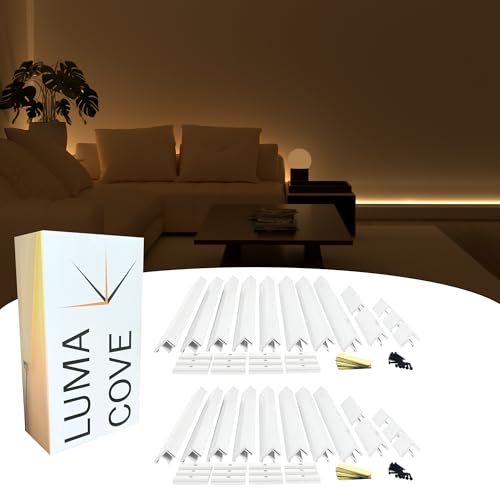
Luma Cove The 16.4FT/5M Modular Channel Assembly Kit for The Concealment of LED Strip Lighting Renter Friendly Cove Light Wall Washer Lighting Decor for Renters (Covers 16 ft / 5 m)
[SAY NO TO EXPOSED LED STRIPS] The Luma Cove is a renter friendly modular channel assembly kit for…
As an affiliate, we earn on qualifying purchases.
As an affiliate, we earn on qualifying purchases.