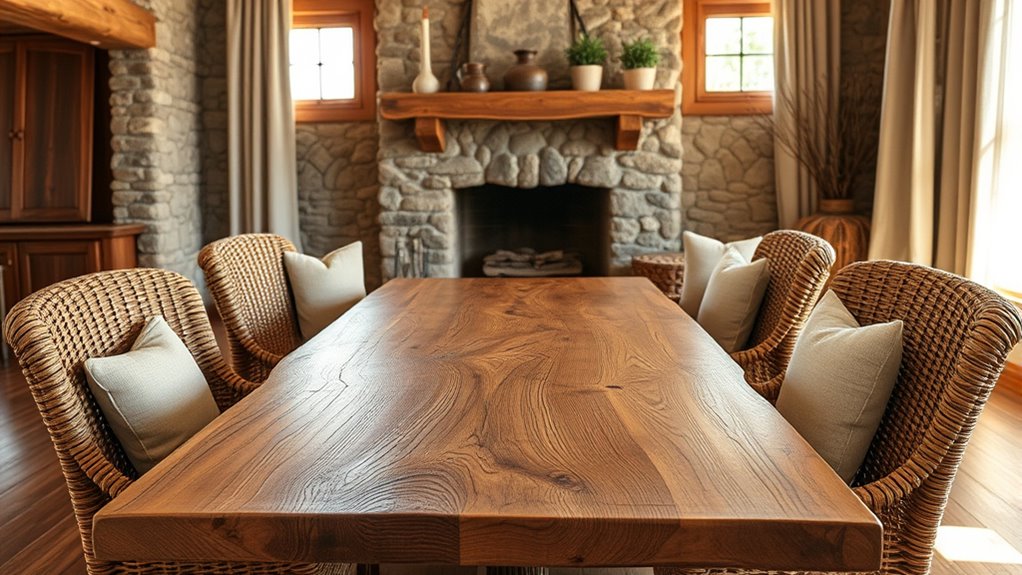

In interior design, using natural materials like wood, stone, and wicker helps you create authentic, sustainable spaces that feel warm and inviting. Wood adds texture and character, especially when reclaimed, while stone provides a grounded, earthy vibe. Wicker introduces softness and tactile interest, blending seamlessly with other textures. By choosing eco-friendly options and thoughtful pairings, you can design a beautiful, environmentally responsible home. Keep exploring how these materials can transform your space and support your sustainability goals.
Key Takeaways
- Natural materials like wood, stone, and wicker enhance aesthetic appeal and create warm, inviting interiors.
- Sourcing these materials responsibly supports sustainability through FSC or PEFC certifications.
- Combining textures such as smooth stone with rough wood or wicker adds visual and tactile interest.
- Reclaimed wood and eco-friendly wicker promote environmental conservation and unique interior character.
- Thoughtful use of natural materials fosters harmony, tranquility, and a connection with nature in home designs.
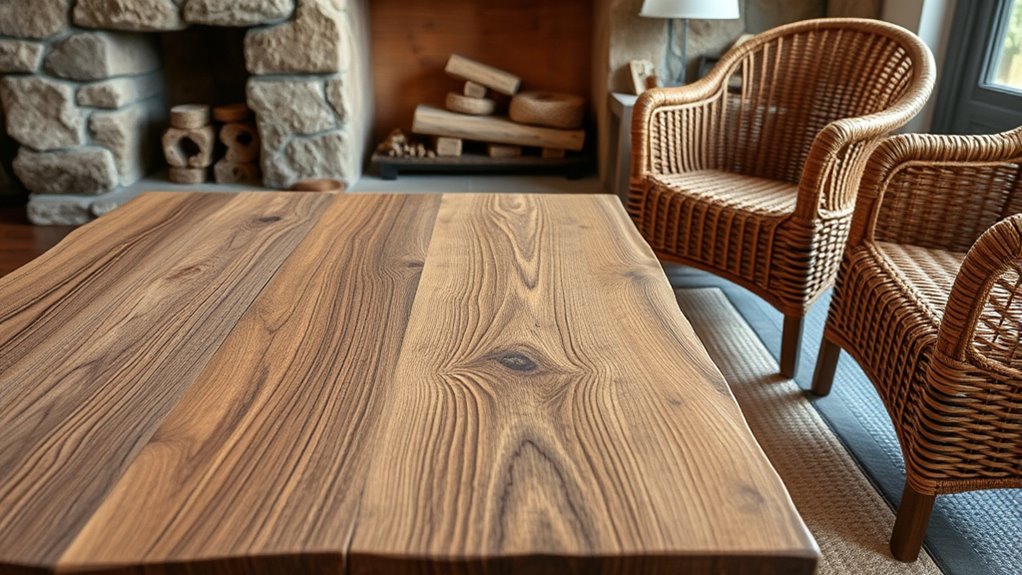
Have you ever considered how natural materials can transform your living space? Incorporating elements like wood, stone, and wicker not only adds aesthetic appeal but also creates a warm, inviting atmosphere. These materials, when sourced sustainably, allow you to build a home that’s both beautiful and environmentally responsible. Sustainable sourcing ensures that the resources used don’t deplete natural ecosystems or harm local communities. When selecting wood, look for certifications such as FSC or PEFC, which guarantee responsibly managed forests. Using eco-friendly materials minimizes your carbon footprint and promotes a healthier planet, all while enhancing your interior design. Additionally, choosing sustainable materials supports conservation efforts and helps maintain biodiversity.
Texture pairing is vital when working with natural materials. For example, smooth stone surfaces can be contrasted with rough-hewn wooden beams, creating a balanced and dynamic space. Wicker, with its intricate weave, pairs beautifully with softer textiles like linen or cotton, adding tactile interest without overwhelming the senses. When you combine these textures thoughtfully, you create a layered environment where each element complements the others. For instance, a sleek stone fireplace can be softened with a cozy wicker armchair and a plush throw, making the room feel both sophisticated and comfortable. The key is to mix textures intentionally, so they work together harmoniously, emphasizing the natural feel of these materials.
Mix smooth stone with rough wood and soft textiles for a balanced, natural home environment.
Wood is incredibly versatile, offering warmth and character to any room. You might opt for reclaimed wood for flooring or furniture, which not only supports sustainable sourcing but also adds unique history and charm. Pair it with matte stone countertops or wall accents to ground the space and introduce a natural, earthy vibe. Wicker furniture or accessories can soften the overall look, especially when paired with other organic textures. You could combine a wicker pendant light with a wooden dining table and stoneware dishes, creating a cohesive aesthetic that celebrates nature’s simplicity.
When you thoughtfully select natural materials and pay attention to how textures interact, you craft a space that feels authentic and alive. These elements encourage a sense of harmony and tranquility, connecting you with nature every time you step inside. Plus, by prioritizing sustainable sourcing, you’re making a conscious choice that benefits the environment and future generations. Natural materials are more than just design trends—they’re a meaningful way to elevate your space while respecting the planet. By pairing textures and choosing eco-friendly options, you turn your home into a sanctuary that’s both stylish and sustainable.

Working Reclaimed Wood: A Guide for Woodworkers, Makers & Designers
As an affiliate, we earn on qualifying purchases.
As an affiliate, we earn on qualifying purchases.
Frequently Asked Questions
How Do Natural Materials Impact Indoor Air Quality?
Using natural materials can improve your indoor air quality by reducing indoor air pollutants often emitted by synthetic options. These materials typically emit fewer volatile organic compounds (VOCs), lowering your risk of allergic reactions and respiratory issues. Plus, their breathability helps regulate humidity, creating a healthier living environment. Choosing wood, stone, or wicker guarantees you enjoy a stylish space without compromising your health or air quality.
What Are Maintenance Tips for Natural Material Furniture?
Imagine you’ve just bought a beautiful oak dining table. To maintain it, follow simple cleaning routines—wipe spills promptly with a damp cloth. Apply protective finishes like wax or oil regularly to prevent damage and keep the surface looking fresh. Avoid harsh chemicals, and reapply protective coats as needed, especially in high-use areas. Proper maintenance guarantees your natural material furniture remains durable and stunning for years to come.
Are Natural Materials Suitable for Humid Climates?
Natural materials can be suitable for humid climates if you choose the right types and take proper precautions. Humidity effects can impact material durability, causing wood to swell or develop mold, and wicker to weaken. To protect your furniture, guarantee good ventilation, use dehumidifiers, and apply sealants or protective finishes. Regular maintenance helps preserve their beauty and longevity, making natural materials a viable option in humid environments.
How Do Natural Materials Influence Room Acoustics?
Ever wondered how natural materials influence your room’s acoustics? They play a crucial role by enhancing sound absorption and reducing echo, creating a warmer, more inviting space. Wood, stone, and wicker naturally dampen sound waves, preventing harsh reflections. This acoustic enhancement makes conversations clearer and music more enjoyable. So, incorporating these materials helps you craft a cozy environment where sound feels balanced, not overwhelming or dull.
What Are Eco-Friendly Sourcing Options for Natural Materials?
You can choose eco-friendly sourcing options by prioritizing suppliers that practice sustainable harvesting and ethical sourcing. Look for certifications like FSC or Fair Trade, which guarantee responsible management of resources. Ask about their harvesting methods and supply chain practices to confirm they minimize environmental impact. Supporting local artisans and opting for reclaimed or recycled natural materials also helps promote sustainability and reduces your ecological footprint in interior design.

Weiman Stone & Granite Countertop Cleaner and Sealer Kit – Clean, Polish & Protect Natural Stone & Granite Sealer – Streak-Free – Safe for Granite, Marble & Quartz – 2 Pack (24 oz Each)
Complete clean & protect system: This stone & quartz cleaner countertop kit includes a cleaner and a stone…
As an affiliate, we earn on qualifying purchases.
As an affiliate, we earn on qualifying purchases.
Conclusion
Embracing natural materials like wood, stone, and wicker is like inviting the outdoors inside, turning your space into a warm, earthy sanctuary. These elements weave stories of nature’s artistry, creating a sanctuary that’s both timeless and soulful. By choosing organic textures, you’re not just decorating—you’re crafting a living, breathing masterpiece that echoes the beauty of the natural world. Let these materials be the heartbeat of your home, grounding you in authentic, effortless elegance.

Devoko Patio Porch Furniture Sets 3 Pieces PE Rattan Wicker Chairs with Table Outdoor Garden Furniture Sets (Brown/Beige)
– Sturdy & Durable: Devoko rattan patio furniture set is made of brown PE rattan and strong steel…
As an affiliate, we earn on qualifying purchases.
As an affiliate, we earn on qualifying purchases.

MIULEE Neutral Linen Pillow Covers Pack of 4 Decorative Natural Solid Throw Pillow Covers Soft Accent Boho Farmhouse Couch Pillowcases Modern Spring Home Decors for Living Room Bed Sofa 18×18 Inch
【Natural Linen Fabric】Our pillow covers are made of grade ramie linen and cotton. The natural linen material contributes…
As an affiliate, we earn on qualifying purchases.
As an affiliate, we earn on qualifying purchases.