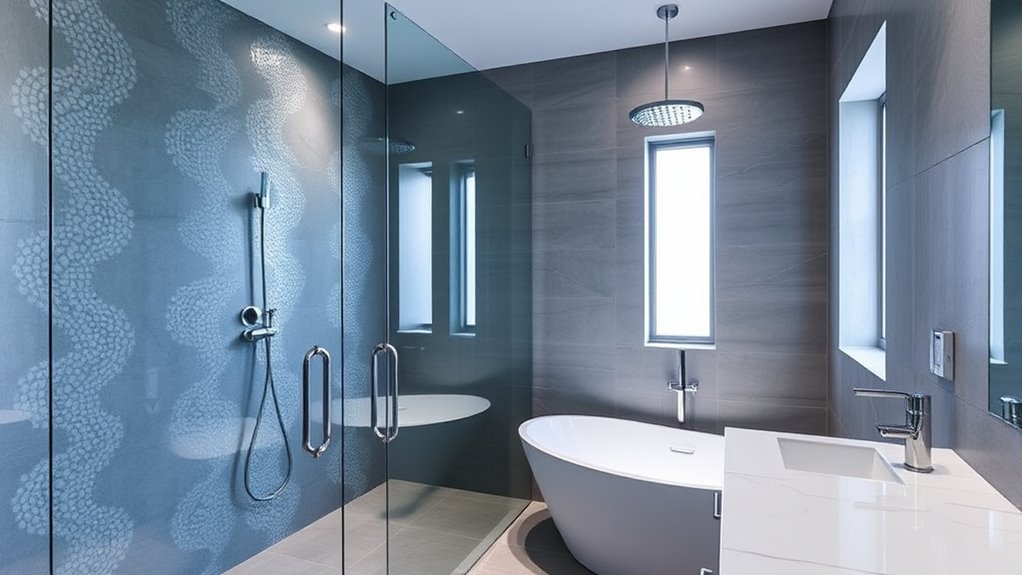

Shower rooms and wet rooms both offer flexible ways to combine tubs and showers, but they differ in design. Shower rooms usually feature enclosed spaces with shower enclosures or doors, while wet rooms are open-plan with waterproof flooring that seamlessly integrates a shower and sometimes a tub. Wet rooms create a modern, minimalist look, whereas shower rooms provide privacy and enclosure. Understanding these options helps you choose the best setup for your space—if you’re curious about how these designs can match your lifestyle, keep exploring.
Key Takeaways
- Combining tubs with shower rooms or wet rooms requires careful planning for waterproofing and drainage to prevent water damage.
- Wet rooms can seamlessly integrate a bathtub, creating a spacious, open-concept bathing area.
- Shower rooms typically enclose the shower area, but can be designed to include a bathtub for versatility.
- Proper waterproof flooring and accessories ensure safety and functionality when combining tubs and showers.
- The choice depends on space, style preferences, and lifestyle needs for a balanced, functional bathroom design.
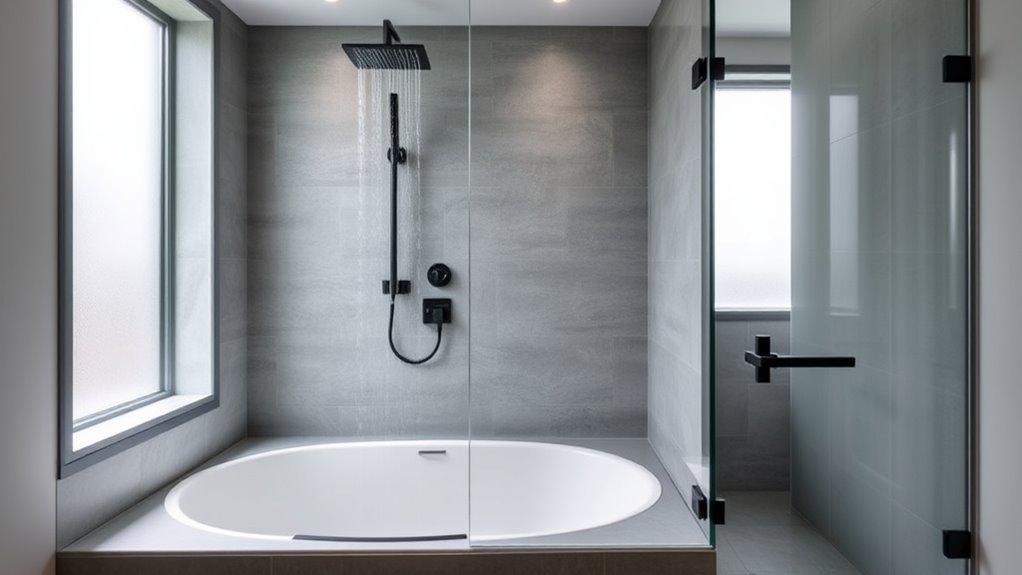
Ever wondered what sets shower rooms apart from wet rooms? The key difference lies in their design and functionality. Shower rooms are usually enclosed spaces dedicated solely to showering, often featuring walls, a door, and specific bathroom accessories like soap dishes, towel bars, and glass enclosures. Wet rooms, on the other hand, are more open, integrating the shower area into the bathroom itself, with waterproof flooring that extends seamlessly across the entire space. This design creates a sleek, minimalist look, but it also requires careful planning to prevent water from escaping into other parts of the bathroom.
Shower rooms are enclosed spaces, while wet rooms feature open, seamless waterproof flooring across the bathroom.
When considering a wet room, the significance of waterproof flooring becomes clear. Unlike traditional bathrooms where water is contained within a shower tray or tub, wet rooms depend on a waterproof membrane beneath the floor to prevent water from seeping into the structure. This flooring must be durable, slip-resistant, and properly sealed at all joints to prevent leaks. Because of this, choosing the right waterproof flooring is vital. Options like textured tiles, vinyl, or specially treated concrete are popular because they combine safety with aesthetic appeal. The floor’s slight slope directs water toward a drain, keeping the rest of the bathroom dry and preventing slips or water damage.
A major advantage of wet rooms is their flexibility and modern aesthetic. Without the need for bulky shower trays or curtains, you can create a spacious, open feel. You can also incorporate a variety of bathroom accessories—like built-in shelves, rain showerheads, and glass screens—to customize the space to your style and needs. These accessories not only enhance functionality but also complement the minimalist design, making your bathroom look sleek and uncluttered.
Transitioning from a shower room to a wet room involves some planning. You’ll need to make certain the waterproof flooring is properly installed and that the drainage system can handle water flow efficiently. Additionally, the open design of a wet room demands careful consideration of bathroom accessories, to keep everything organized and water-resistant. For example, installing wall-mounted soap dispensers, towel hooks, and waterproof storage ensures that your accessories stay dry and accessible. Understanding the importance of projector technology can also help you optimize other aspects of your home design to enhance your lifestyle.
In essence, deciding between a shower room and a wet room depends on your preferences, space, and lifestyle. Both can incorporate essential bathroom accessories, but wet rooms offer a seamless, modern look that hinges on waterproof flooring to keep water where it belongs. Whether you prefer the enclosed privacy of a shower room or the open elegance of a wet room, understanding these core differences helps you make an informed choice for your ideal bathroom space.
Frequently Asked Questions
What Are the Maintenance Requirements for Combined Tub and Shower Units?
You should clean your combined tub and shower unit regularly, ideally weekly, using non-abrasive cleaners to prevent soap scum and mold buildup. Keep a consistent cleaning schedule and inspect the sealant at least twice a year for cracks or deterioration. Promptly reseal any damaged areas to prevent water leaks and damage. Proper maintenance guarantees your unit stays in good condition, looks fresh, and prevents costly repairs later on.
How Do I Prevent Water From Leaking Between the Tub and Shower Areas?
To prevent water from leaking between the tub and shower areas, you should focus on proper waterproof sealing around the edges and joints. Regularly inspect and reseal any cracks or gaps using high-quality waterproof sealant. Additionally, ensure your drainage solutions are efficient by checking that the floor slopes correctly and drains are unobstructed. These steps help keep water contained, reducing leaks and potential water damage.
Are There Specific Safety Features Recommended for Wet Room Installations?
For wet room safety, you should install slip-resistant flooring to prevent falls and add grab bars near the shower and toilet for support. Make certain the grab bars are securely anchored into the wall to withstand weight. These features greatly enhance safety, especially for elderly or disabled users. Regularly check that the slip-resistant surface remains effective and that grab bars stay firmly in place for continued protection.
Can I Customize the Layout of a Combined Tub and Shower Space?
Yes, you can customize the layout of a combined tub and shower space. This allows for greater design flexibility, so you can tailor the setup to your needs and style preferences. You might choose different placements for the tub and shower, add seating, or incorporate storage solutions. By customizing the layout, you create a functional and personalized space that maximizes your bathroom’s potential and suits your lifestyle.
What Are the Best Materials for Durability in Wet and Shower Rooms?
You should choose durable materials like waterproof coatings and non-slip flooring for wet and shower rooms. Waterproof coatings protect surfaces from water damage and mold, ensuring longevity. Non-slip flooring enhances safety, preventing slips and falls in wet environments. Opt for ceramic or porcelain tiles, which are water-resistant and easy to clean, and consider sealed stone or vinyl flooring with textured surfaces for added grip. These choices keep your space safe and durable.
Conclusion
Choosing between shower rooms and wet rooms depends on your lifestyle and space. Both options offer convenience and modern appeal, allowing you to enjoy a revitalizing start or unwind effortlessly. Remember, Rome wasn’t built in a day—taking the time to select the right setup ensures a bathroom that suits your needs perfectly. Whichever you choose, embrace the comfort and functionality that come with a well-designed bathing space, making every shower a moment of luxury.