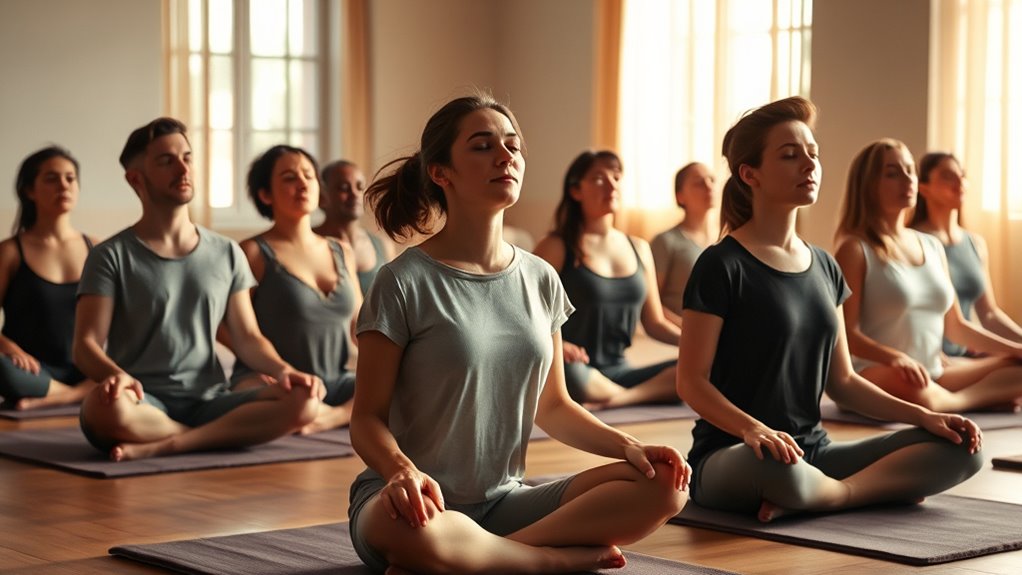

Integrating breathwork with movement helps you build a stronger mind-body connection and boosts mental wellness by calming the nervous system and releasing tension. Conscious breathing guides your movements, making them more precise and grounded. As you become more aware of bodily sensations, you’ll find it easier to manage emotions and reduce stress. Continuously exploring this synergy deepens resilience and emotional stability—so keep going to discover even more ways to enhance your well-being through mindful movement.
Key Takeaways
- Integrating breathwork with movement enhances somatic awareness, fostering better mind-body connection and emotional regulation.
- Synchronizing breath with physical actions improves stability, balance, and precision during movement practices.
- Conscious breathing during movement reduces tension, promotes relaxation, and supports overall mental wellness.
- Regular practice rewires the nervous system, improving resilience to stress and anxiety over time.
- Holistic body practices that combine breath and movement nurture mental clarity, emotional stability, and physical vitality.

Have you ever wondered how conscious breathing can enhance your movement and overall well-being? When you focus on your breath, you tap into the powerful mind-body connection that links your mental state with physical sensations. This connection isn’t just abstract; it’s a tangible pathway that influences your posture, fluidity, and resilience. By practicing intentional breathwork, you develop somatic awareness—the ability to notice and interpret bodily sensations—which deepens your understanding of how your mind and body work together. This heightened awareness allows you to move more consciously, reducing tension and improving coordination.
As you begin to pay attention to your breath, you start to notice subtle shifts in your body’s responses. For instance, slow, deep inhalations can relax tight muscles and calm a racing mind. Conversely, quicker breaths can signal stress, prompting you to consciously slow down. This interplay between breath and bodily sensation helps you stay present in your movements, making each action more intentional. When you’re attuned to your somatic experiences, you notice where you hold tension, where your energy is concentrated, and how different postures affect your emotional state. This awareness is *essential* for cultivating a harmonious mind-body relationship, which directly impacts your overall mental wellness.
Incorporating breathwork into movement practices enriches this connection further. Whether you’re engaging in yoga, tai chi, or simple stretching, synchronizing your breath with your movements enhances stability and precision. It’s like an internal rhythm that guides your physical actions, promoting balance and reducing the risk of injury. *Moreover*, conscious breathing encourages you to stay grounded and centered, even during challenging or strenuous movements. Regular practice of yoga poses and techniques can develop your breath control and increase your capacity for mindful breathing, which supports long-term mental and physical health. Over time, this process rewires your nervous system to respond more adaptively to stress, fostering resilience and emotional regulation.
You’ll find that as your somatic awareness deepens, your ability to manage anxiety, improve focus, and boost mood also improves. Breathwork becomes a tool for self-regulation, helping you navigate daily stresses with more ease. It creates a feedback loop: breath influences bodily sensations, which influence your thoughts and emotions, and vice versa. This integrated approach enhances your overall well-being, making movement not just a physical activity but a holistic practice that nurtures your mental health. By consciously engaging with your breath and bodily sensations, you craft a mindful movement practice that supports a healthier, more balanced mind and body connection.
yoga breathwork meditation cushion
As an affiliate, we earn on qualifying purchases.
As an affiliate, we earn on qualifying purchases.
Frequently Asked Questions
How Quickly Can I Expect Mental Health Improvements From These Practices?
You might notice mental health improvements within a few weeks if you practice mindfulness consistently. Regular breathwork and movement strengthen emotional resilience, helping you better manage stress and anxiety. While some people see quick results, others may need more time; patience is key. Keep a steady routine, and over time, you’ll likely experience increased calmness, clarity, and overall emotional stability. Consistency truly makes a difference in your mental wellness journey.
Can Breathwork and Movement Replace Traditional Therapy Methods?
Coincidences often lead you to explore holistic healing, but breathwork and movement can’t fully replace traditional therapy methods. While they serve as powerful alternative therapies that boost mental wellness, they work best when combined with professional mental health support. Relying solely on these practices might overlook underlying issues. Think of them as complementary tools, enhancing your overall mental health journey rather than substituting the expert guidance of a licensed therapist.
Are There Contraindications or Health Conditions That Prevent Participation?
You should verify with your healthcare provider if you have medical contraindications or physical limitations before starting breathwork or movement practices. Certain health conditions like cardiovascular issues, respiratory problems, or joint limitations might make some exercises unsafe. Always listen to your body, modify movements as needed, and seek professional guidance to ensure these practices support your mental wellness safely and effectively.
How Do I Choose the Right Type of Breathwork or Movement Practice?
Choosing the right practice is like finding the perfect dance partner. Start by exploring different breathwork techniques and movement styles that resonate with you—some may energize, others calm. Consider your goals and any health concerns, then try samples or classes. Trust your body’s signals, and don’t hesitate to consult a professional for personalized guidance. The best fit is the one that makes you feel balanced and alive.
What Safety Precautions Should I Take During Intense Breathwork Sessions?
During intense breathwork sessions, prioritize breath safety by listening to your body and stopping if you feel dizzy, chest pain, or discomfort. Follow movement precautions like avoiding rapid or jerky motions that could cause injury. Stay hydrated, practice in a safe environment, and consider consulting a professional if you’re new or have health concerns. Always respect your limits to guarantee a safe and beneficial experience.
tai chi starter kit with instructional DVD
As an affiliate, we earn on qualifying purchases.
As an affiliate, we earn on qualifying purchases.
Conclusion
As you embrace breathwork and movement, you realize they’re more than just practices—they’re your anchor during life’s unexpected twists. Sometimes, a deep breath or a simple stretch unexpectedly brings clarity or comfort, like a gentle reminder that you’re capable of finding calm amidst chaos. When you combine these mindful habits, you might just discover that your most profound moments of peace come when you least expect them, guiding you toward balance you never knew you needed.
mindfulness stretching yoga mat
As an affiliate, we earn on qualifying purchases.
As an affiliate, we earn on qualifying purchases.
guided breathwork for stress relief
As an affiliate, we earn on qualifying purchases.
As an affiliate, we earn on qualifying purchases.