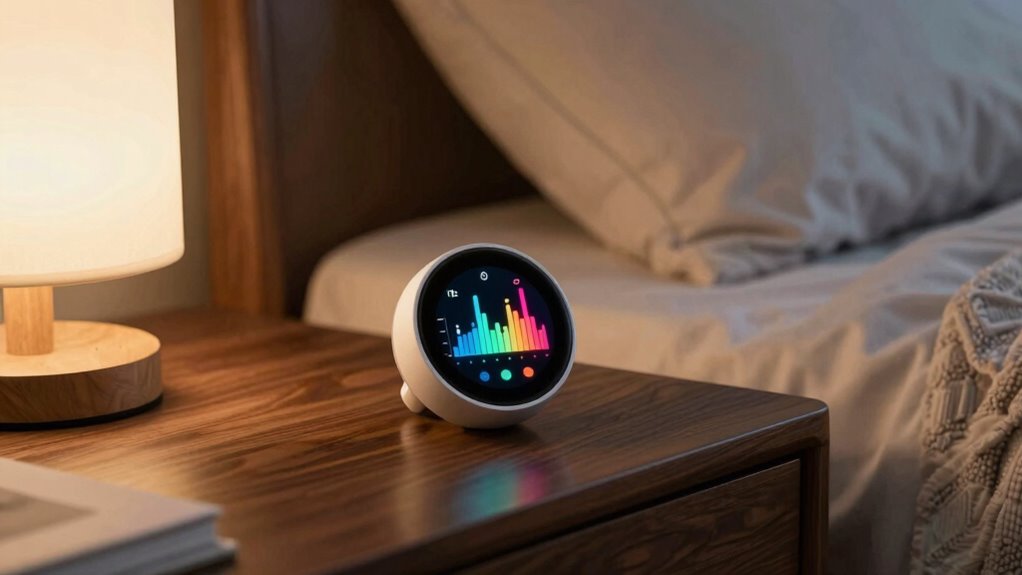
A sleep score from trackers measures your overall sleep quality by analyzing factors like sleep duration, sleep stages, heart rate variability, and movement. It uses physiological data—such as heart rate and breathing patterns—to assess how restful your sleep was, along with restlessness and wake times. External influences like environment or device placement can affect accuracy. By understanding these aspects, you’ll gain better insights into your sleep health and how to improve it over time.
Key Takeaways
- The sleep score reflects overall sleep quality based on duration, continuity, and sleep stage distribution.
- It incorporates data on sleep stages such as light, deep, and REM sleep, often derived from heart rate and movement.
- External factors like environment, restlessness, and device placement can influence the accuracy of the sleep score.
- Variations in heart rate variability and movement patterns are analyzed to determine sleep depth and restfulness.
- The score serves as a feedback tool to improve sleep habits and identify disruptions impacting sleep quality.

Smart Watch Fitness Tracker with 24/7 Heart Rate, Blood Oxygen Blood Pressure Monitor Sleep Tracker 120 Sports Modes Activity Trackers Step Calorie Counter IP68 Waterproof for Andriod iPhone Women Men
【Superb Visual Experience & Effortless Operation】Diving into the latest 1.58'' ultra high resolution display technology, every interaction on…
As an affiliate, we earn on qualifying purchases.
As an affiliate, we earn on qualifying purchases.
What Data Do Sleep Devices Collect to Calculate Your Sleep Score?
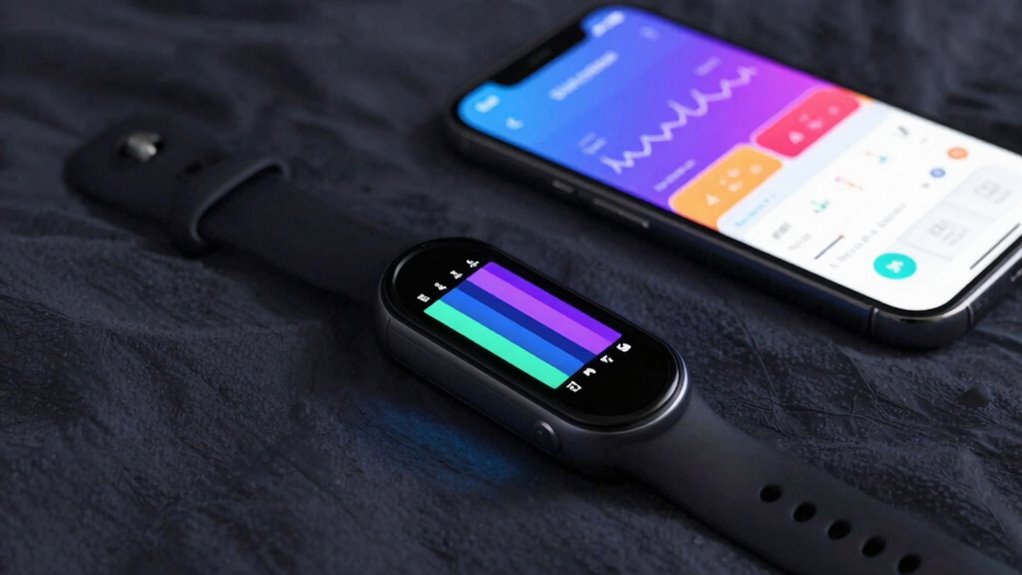
Sleep devices gather a variety of data points to determine your sleep score, primarily by monitoring your movements and physiological signals throughout the night. They track metrics such as heart rate, breathing patterns, and body movements to assess your sleep quality. Some devices even analyze your dream patterns through subtle cues, offering insights into your mental state during sleep. Your sleep environment also plays a role; sensors detect room temperature, light, and noise levels, which can influence your rest. This all-encompassing data helps create a detailed picture of your sleep health. Additionally, understanding how sleep scoring algorithms interpret these signals can help users better understand their results. The accuracy of these scores can also depend on the technology used in the device, which varies across different models. Moreover, data synchronization ensures that your sleep metrics are accurately recorded and analyzed across platforms, improving overall reliability. By understanding these factors, sleep trackers aim to provide accurate feedback to help you improve your sleep habits and overall well-being.

EMAY Sleep Oxygen Monitor with Built-in Recording Capability | Track Continuous Blood Oxygen Levels & Pulse Rate Overnight | Provides Sleep Report & Raw Data
With a 40 hours' built-in data memory, the EMAY Oxygen Monitor allows you to record O2 & heart…
As an affiliate, we earn on qualifying purchases.
As an affiliate, we earn on qualifying purchases.
How Do Sleep Trackers Measure Your Sleep Stages?

Sleep trackers assess your sleep stages by monitoring your heart rate and movements during the night. They use sensors and detection methods to identify when you’re in light, deep, or REM sleep. These devices then apply algorithms to analyze the data and determine your sleep stages accurately. Additionally, some trackers incorporate regional flavor insights to enhance the understanding of individual sleep patterns based on environmental or lifestyle factors. Incorporating biosensor data can further improve the accuracy and personalization of sleep stage detection. Understanding how sleep architecture varies from person to person can help users interpret their sleep scores more effectively, especially as emerging technologies integrate personalized health metrics to tailor insights to individual needs.
Heart Rate Monitoring
Heart rate monitoring is a key method sleep trackers use to determine your sleep stages, as your heart rate varies naturally throughout the night. During different sleep phases, your heart rate fluctuates, reflecting changes in brain activity and autonomic nervous system activity. Sleep trackers analyze these patterns to distinguish between light, deep, and REM sleep. Environmental factors, like noise or temperature, can influence your heart rate and consequently affect the accuracy of readings. By continuously monitoring your heart rate, the device can detect subtle shifts that correspond to changes between sleep stages. This method provides a non-invasive way to gain insights into your sleep quality, helping you understand how your body responds to internal and external influences during the night. Additionally, research indicates that hydrating ingredients in some devices may help improve the reliability of heart rate measurements during sleep. Advances in technology continue to enhance the precision of heart rate data, making sleep tracking more informative and personalized. For example, wearable sensors have become more sensitive, allowing for more detailed data collection and better differentiation of sleep stages. Moreover, ongoing developments in biometric monitoring aim to further refine the accuracy of sleep stage detection based on heart rate variability.
Movement Detection Methods
Movement detection methods play a crucial role in how sleep trackers estimate your sleep stages by monitoring your body’s motion throughout the night. When you stay still, it often indicates you’re in deep sleep, which can improve your sleep quality. Conversely, frequent movements suggest lighter sleep or wakefulness, affecting the accuracy of your sleep duration measurement. Many devices use accelerometers to detect even small shifts in position, helping you understand how restful your sleep is. These sensors can be enhanced with advanced hardware similar to automotive sensors to improve detection accuracy and reliability. Incorporating biometric data such as heart rate and breathing patterns can further refine sleep stage estimations. These methods provide valuable insights into your overall sleep patterns, but they don’t directly measure sleep stages. Instead, they serve as a foundation for estimating how well you sleep each night. Additionally, integrating machine learning algorithms can help interpret complex movement and biometric data more effectively, leading to more accurate sleep insights.
Algorithmic Sleep Stages
While movement detection provides valuable clues about your sleep, many advanced trackers go a step further by analyzing multiple data streams to estimate sleep stages. They use machine learning algorithms to interpret signals like heart rate, breathing patterns, and variations in body temperature, which are essential for understanding sleep architecture. These algorithms compare your data against large datasets of typical sleep patterns, enabling the device to classify different sleep stages such as REM, light, and deep sleep. By integrating various physiological signals, the tracker constructs a more accurate picture of your sleep cycle than movement alone. Understanding sleep architecture is crucial for interpreting your sleep quality accurately. This comprehensive analysis often incorporates sleep cycle patterns to provide a detailed view of your sleep stages. Additionally, advancements in sleep data analysis continue to improve the precision of these classifications, making it easier to identify sleep issues and optimize your rest. Moreover, ongoing research into technological innovations in sleep tracking is paving the way for even more personalized and insightful sleep assessments.
EMAY Sleep Oxygen Monitor with Built-in Recording Capability | Track Continuous Blood Oxygen Levels & Pulse Rate Overnight | Provides Sleep Report & Raw Data
With a 40 hours' built-in data memory, the EMAY Oxygen Monitor allows you to record O2 & heart…
As an affiliate, we earn on qualifying purchases.
As an affiliate, we earn on qualifying purchases.
Using Heart Rate to Understand Your Sleep Quality

Tracking your heart rate during sleep provides valuable insights into your sleep quality. Variations in heart rate variability can indicate how well your body is resting and recovering. A lower resting heart rate generally suggests deeper sleep, while irregularities may signal stress or disruptions. Your sleep environment plays a role too; a quiet, cool, and dark setting helps stabilize your heart rate, promoting better sleep quality. Monitoring these patterns over time allows you to identify trends and potential issues, such as increased heart rate due to anxiety or discomfort. Additionally, indoor air quality can impact your sleep, as pollutants and allergens may cause respiratory discomfort that disrupts your rest. Good sleep environment supports the body’s recovery processes, further enhancing sleep quality. When your surroundings are optimized, your heart rate tends to remain more stable, reflecting improved rest. Paying attention to factors like air quality can help you better understand how external conditions influence your sleep. By paying attention to your heart rate, you gain a clearer picture of your sleep health beyond just duration, helping you make informed adjustments to improve your overall rest and well-being. Incorporating digital health data from sleep trackers can provide a comprehensive view of your sleep patterns over time.
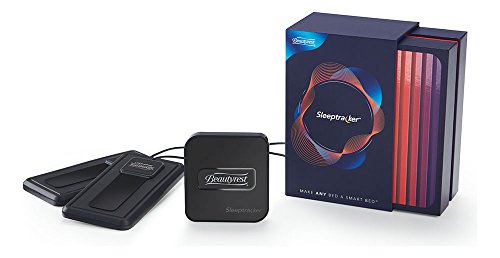
Beautyrest Sleeptracker Monitor – Wearable-Free Sleep Tracker – Intuitive App and Alexa Enabled
Powered by AI, the Beautyrest Sleeptracker is the premier and only sleep monitoring device that is Alexa enabled…
As an affiliate, we earn on qualifying purchases.
As an affiliate, we earn on qualifying purchases.
How Do Movement and Restlessness Affect Sleep Tracking?
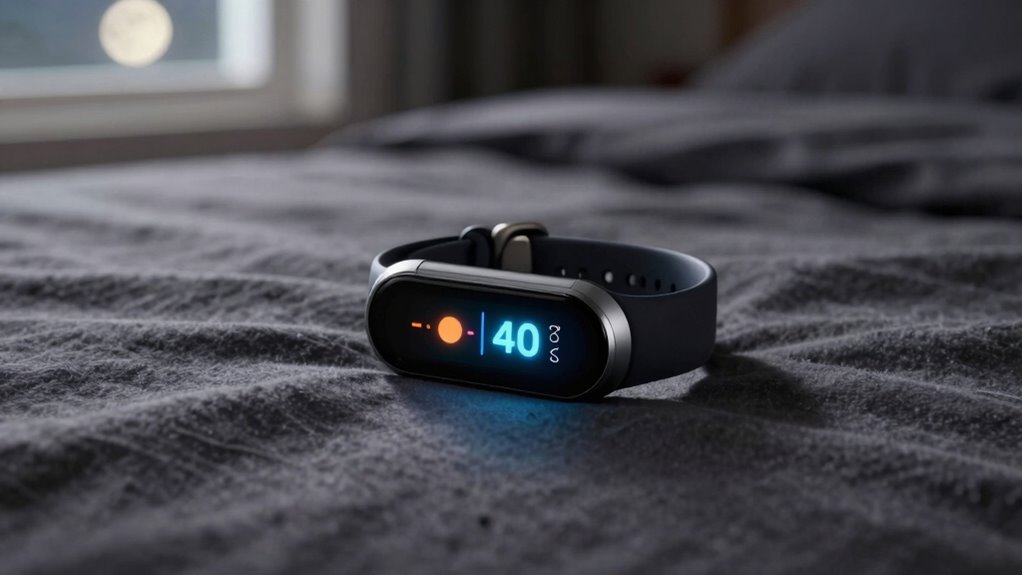
Your sleep tracker relies on movement detection to assess your sleep stages, but frequent tossing or restless movements can throw off its accuracy. When you’re restless, the device might overestimate wakefulness or light sleep, skewing your scores. Understanding how movement affects your results helps you interpret your data more accurately.
Movement Detection Accuracy
Movement and restlessness can considerably impact the accuracy of sleep trackers, as these devices rely heavily on detecting physical activity to determine sleep stages. Your sleep environment plays a significant role because factors like mattress comfort, noise, and light levels influence how much you move during sleep. Environmental factors, such as temperature and external disturbances, can cause unnecessary movements or restlessness, leading the tracker to misclassify sleep or wake states. If you’re frequently shifting or tossing, the device might record fragmented sleep even if your rest quality is good. Conversely, minimal movement doesn’t always guarantee deep sleep. To improve detection accuracy, verify your sleep environment is comfortable and free of disturbances, reducing unnecessary movements that can throw off your sleep tracking data.
Restlessness Impact on Scores
Have you ever noticed how restlessness can skew your sleep scores? When you toss, turn, or shift frequently, your tracker interprets these movements as disruptions, lowering your sleep quality. A restless night might be caused by factors like a bed partner moving or ambient noise, both of which can make you appear more restless on the device. These subtle movements may not truly reflect poor sleep but are recorded as restlessness, impacting your overall score. If your tracker relies heavily on movement detection, it can overstate wakefulness or light sleep, especially if external factors disturb your rest. Recognizing how external influences affect your readings helps you interpret your sleep data more accurately, without unfairly penalizing yourself for unavoidable disturbances.
How Do Sleep Trackers Detect Your Sleep Duration and Wake Times?
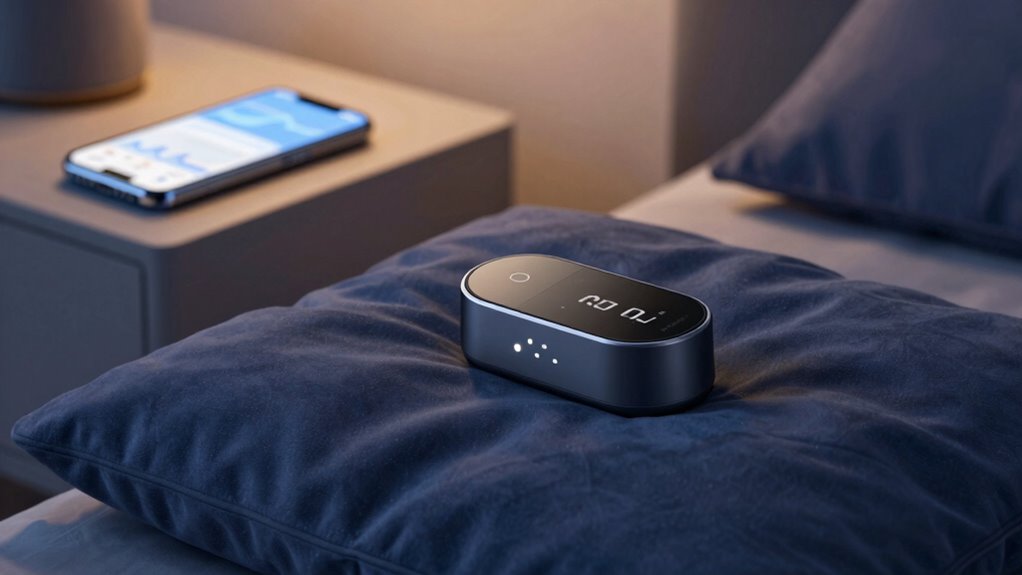
Sleep trackers use a combination of sensors and algorithms to determine when you fall asleep and wake up. They monitor movement, heart rate, and sometimes breathing patterns to identify sleep and wake periods. While they don’t perform dream analysis, they analyze data patterns to estimate sleep duration. Factors like your sleep environment—such as room temperature, light, and noise—can influence signals and accuracy. As you settle down, the device detects decreased movement and physiological changes indicating sleep onset. When you wake, increased activity signals your shift to wakefulness. These trackers often log your sleep and wake times automatically, providing a clear picture of your sleep duration without needing manual input. This technology helps you understand your sleep schedule more precisely, even if it doesn’t capture the full complexity of sleep stages.
Can Sleep Trackers Measure Sleep Depth and Restorative Quality?

You might wonder if sleep trackers can accurately gauge how deep your sleep is and how restorative it truly feels. While they can provide some insights, measuring sleep depth precisely remains challenging. Understanding their limitations helps you interpret the data and assess your sleep quality more effectively.
Measuring Sleep Depth Precisely
While many sleep trackers claim to measure sleep depth and restorative quality, their accuracy varies markedly. These devices often rely on movement, heart rate, and sometimes EEG-like signals, but they can’t directly assess sleep stages or dream analysis. External influences, like environmental factors—noise, light, temperature—impact sleep depth and can skew data. To improve precision, some trackers attempt to interpret subtle physiological signals, but they still lack the nuance of clinical tools. You should view sleep depth measurements as rough estimates rather than precise indicators. Keep in mind, true restorative sleep involves complex brain activity that these devices can’t fully capture. Understanding these limitations helps you better interpret your sleep data and avoid overestimating its accuracy.
Assessing Restorative Sleep
Many users turn to sleep trackers hoping to gauge how well they recover overnight, but these devices often fall short in accurately measuring restorative sleep. While they can track sleep stages, they don’t provide detailed insights into sleep depth or restorative quality. Dream analysis plays a role in understanding sleep’s restorative aspects, but sleep trackers lack the capability to interpret dreams or assess emotional recovery. Your sleep environment, including factors like noise, light, and temperature, profoundly influences restorative sleep, yet trackers rarely account for these elements. To truly assess how well you’re recovering, focus on how refreshed you feel in the morning and consider environmental improvements. Sleep trackers offer a partial view, but they can’t fully measure the complex process of restorative sleep.
What Are the Limitations of Sleep Score Accuracy?

Despite their advanced technology, sleep trackers often struggle to provide perfectly accurate sleep scores. They can misinterpret your sleep stages due to limitations in sensors and algorithms. Subjective sleep perception also skews results, as your feeling of restfulness doesn’t always match the data. Environmental influences like noise, light, or temperature can interfere with sensor readings, reducing accuracy. Additionally, factors such as movement or skin contact can throw off measurements. Here are some key limitations:
- Inaccurate detection of sleep stages
- Overreliance on movement rather than brain activity
- Variability caused by subjective perceptions
- External environmental factors affecting sensors
- Differences in individual physiology impacting data
These issues highlight that sleep scores are useful guides but shouldn’t replace extensive sleep assessments.
How Do Different Sleep Metrics Influence Your Sleep Score?
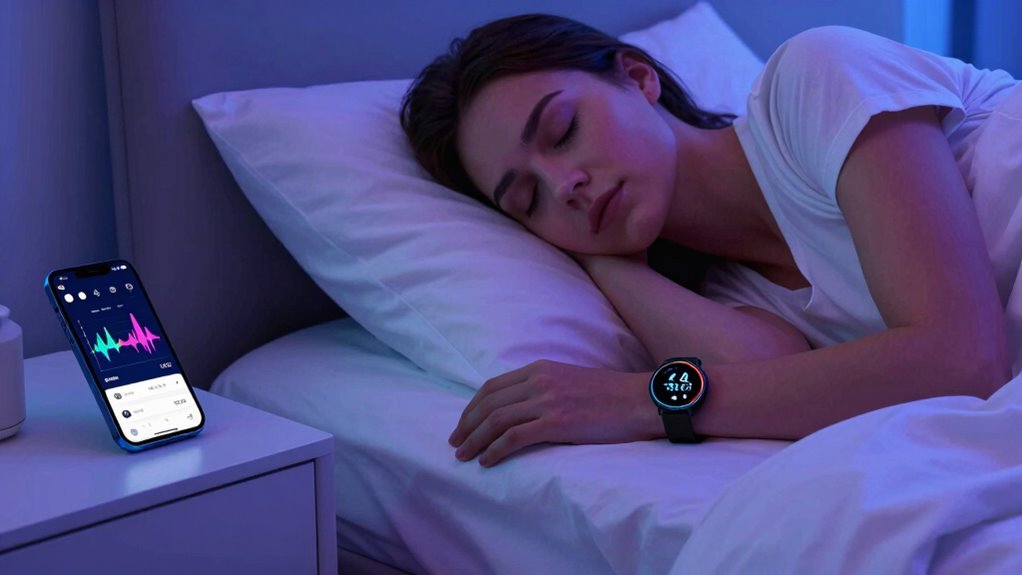
Sleep trackers rely on various metrics to generate your sleep score, and each one influences the overall assessment differently. Your sleep environment, like room temperature, light, and noise levels, affects how well you sleep, impacting metrics such as sleep duration and restlessness. Good sleep hygiene—consistent bedtimes, avoiding screens before sleep, and relaxing routines—also plays a role in improving these metrics. When your environment is ideal and your sleep habits are healthy, trackers often record longer, more restful sleep, boosting your score. Conversely, disruptions like noise or poor habits can lower your score by increasing wake times or reducing deep sleep. Understanding how these factors influence your metrics helps you interpret your sleep data more accurately and make better lifestyle choices.
Factors That Can Skew Your Sleep Data and How to Avoid Them
Various external factors can distort your sleep data, leading to inaccurate readings and misleading insights. Your sleep stage detection can be thrown off by movement or light, affecting how the tracker interprets your rest. Your sleep environment plays a vital role—noise, temperature, and bedding quality can all impact data accuracy. Additionally, factors like wearing the device incorrectly or inconsistent use can skew results.
To avoid these issues:
- Confirm your device fits snugly, especially around your wrist
- Minimize light and noise in your sleep environment
- Maintain consistent sleep and wake times
- Avoid caffeine or heavy meals before bed
- Keep the device charged and update its firmware regularly
Using Your Sleep Score to Improve Your Rest Effectively
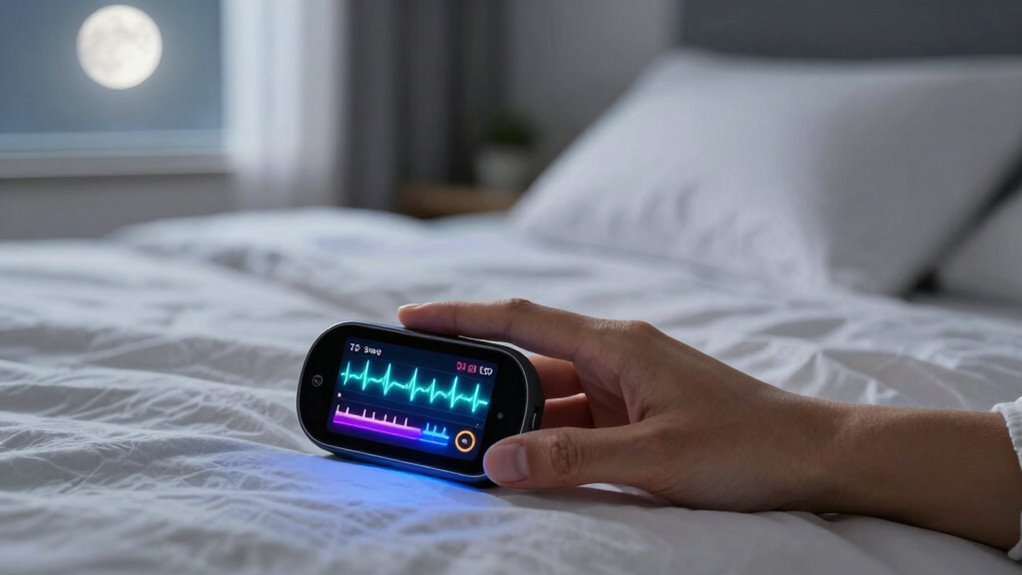
Your sleep score offers valuable insights into your overall rest quality, but only if you use it effectively. To do so, focus on improving your sleep hygiene by maintaining consistent sleep and wake times. Establish calming bedtime routines, like reading or gentle stretching, to signal to your body that it’s time to wind down. Use your sleep score as feedback to identify patterns or disruptions, such as late-night screen time or caffeine intake, that may affect your rest. Making small adjustments based on your score can lead to better sleep quality over time. Remember, a higher sleep score reflects healthier habits, so prioritize consistency and relaxation techniques to optimize your sleep and wake up feeling refreshed.
Frequently Asked Questions
Can Sleep Trackers Accurately Detect Naps During the Day?
Yes, sleep trackers can often accurately detect naps during the day by monitoring your movement and heart rate for signs of daytime sleep. Napping detection varies by device, but most modern trackers use sensors to identify periods of reduced activity and sleep patterns, helping you track your daytime sleep. Keep in mind, however, that accuracy might differ depending on the device’s technology and how well it’s calibrated for your sleep habits.
How Do Environmental Factors Affect Sleep Tracker Readings?
Your sleep environment is like a delicate dance, where ambient variables sway your sleep quality. Environmental factors such as noise, light, temperature, and humidity directly influence your sleep tracker readings. If the room’s too bright or noisy, it might register fragmented sleep or lighter stages. To get accurate data, optimize your sleep environment by controlling these ambient variables, ensuring your tracker captures a true picture of your restful nights.
Do Sleep Scores Predict Long-Term Health Outcomes?
Sleep scores can give you insight into your sleep quality, but they don’t directly predict long-term health outcomes. While consistently poor sleep may increase risks for issues like heart disease or diabetes, a good sleep score alone isn’t a crystal ball. Instead, focus on improving your sleep habits for better long-term health. Use your sleep tracker as a tool to identify patterns and make positive changes.
Are Sleep Tracker Results Consistent Across Different Brands?
You’ll find that sleep tracker results can vary across different brands due to device calibration differences and user compliance. Some devices may be more accurate if properly calibrated and used consistently, while others might not account for individual sleep patterns. To get reliable data, follow manufacturer instructions carefully, wear the device correctly, and stay consistent in your usage. This helps guarantee your sleep scores are as accurate and comparable as possible.
How Does Alcohol or Medication Impact Sleep Tracking Accuracy?
Alcohol interference and medication effects can distort your sleep tracker results. Alcohol may initially make you feel sleepy but disrupts your sleep cycle, leading to inaccurate readings of deep or REM sleep. Medications, especially sedatives or stimulants, can alter your sleep patterns and cause your device to misinterpret wakefulness or sleep stages. Always note these factors, as they can compromise the accuracy of your sleep score and overall sleep analysis.
Conclusion
Your sleep score offers a glimpse into your rest, but it’s not the full story. While it can motivate you to improve, don’t let it define your worth or cause anxiety. Remember, perfect sleep isn’t always achievable, and sometimes, rest comes in unexpected forms. Embrace the journey to better sleep with patience and awareness, knowing that even imperfect nights can still nourish your body and mind. Sleep well, and trust in your progress.