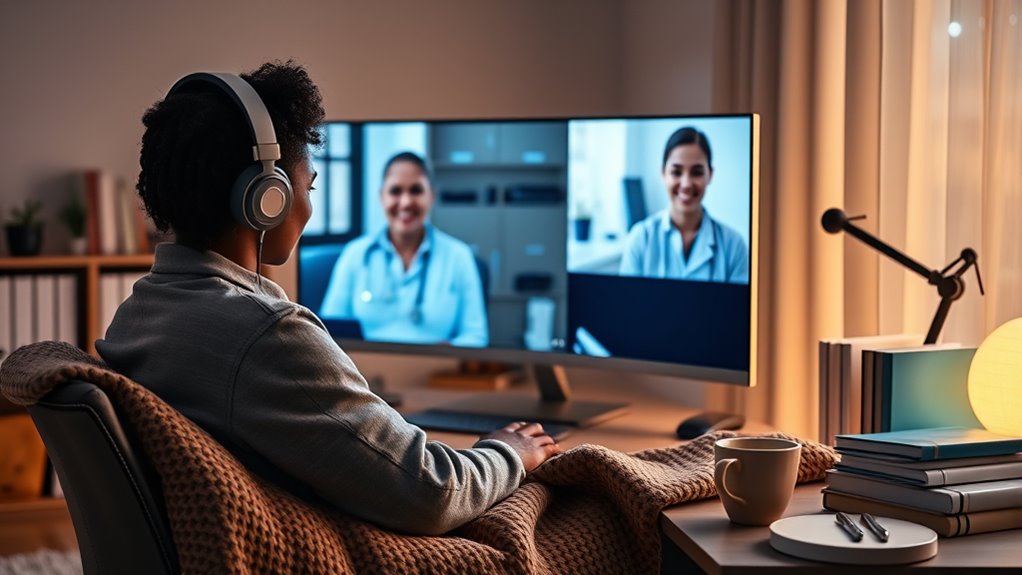

The rise of “Zoom psychiatry” makes mental health care more accessible and convenient by allowing you to attend therapy sessions from home. It helps overcome barriers like geographic location and mobility issues. However, you need to be mindful of privacy, digital literacy, and establishing trust in this virtual environment. If you want to understand how to navigate these benefits and challenges effectively, there’s more to explore.
Key Takeaways
- Zoom psychiatry increases access and convenience, allowing therapy from home and reaching underserved populations.
- It enhances flexibility but raises ethical concerns about privacy, data security, and confidentiality.
- Digital literacy affects user engagement and the effectiveness of virtual mental health services.
- Technical issues and emergencies pose challenges that require proper protocols to ensure patient safety.
- Maintaining trust depends on platform security, provider adherence to privacy standards, and clear boundaries in virtual care.

Zoom psychiatry has quickly become a popular way to access mental health care, especially as remote services become more essential. With the shift toward virtual platforms, you’re likely to find yourself engaging in therapy sessions from the comfort of your home, making care more accessible and convenient. But as you steer through this new landscape, it’s important to consider the ethical and practical aspects that come with virtual mental health services, particularly telehealth ethics and digital literacy.
Telehealth ethics play a crucial role in ensuring your privacy, confidentiality, and safety during online sessions. When using Zoom for psychiatry, you need to be aware of how your data is protected and whether your provider follows strict privacy protocols. It’s essential to confirm that your platform uses end-to-end encryption and that your provider is committed to maintaining confidentiality. Additionally, understanding the boundaries of virtual care helps prevent misunderstandings or breaches of trust. For instance, knowing what to do if a technical issue occurs or if you experience a crisis during a session is vital for your safety.
Ensuring privacy and confidentiality in Zoom psychiatry requires understanding data protection and privacy protocols.
Digital literacy is another key factor in your successful engagement with Zoom psychiatry. If you’re comfortable maneuvering digital tools, you can maximize the benefits of virtual care without frustration. This includes understanding how to access your sessions, troubleshoot common technical issues, and use features like chat or screen sharing if needed. If your digital skills are limited, you might feel overwhelmed or miss out on crucial parts of your therapy. Improving your digital literacy involves familiarizing yourself with the platform beforehand, ensuring your device and internet connection are reliable, and knowing how to reach out for technical support when necessary. Moreover, enhancing your digital literacy can also help you better understand telehealth platforms and the security measures in place, fostering greater trust in virtual care.
The intersection of telehealth ethics and digital literacy also influences your overall experience and trust in virtual psychiatric services. When providers prioritize ethical standards and you’re equipped with the necessary digital skills, you’re more likely to feel secure and engaged during your sessions. This creates a more effective therapeutic environment, even from a distance.
Frequently Asked Questions
How Secure Is Patient Confidentiality in Zoom Psychiatry Sessions?
Your patient confidentiality on Zoom psychiatry sessions depends on the platform’s data privacy measures and technological safeguards. Zoom uses encryption and security protocols to protect your information, but you should also make certain you’re using secure internet connections and updated software. Being aware of potential vulnerabilities helps you maintain confidentiality. Overall, while Zoom offers reasonable security, staying vigilant and following best practices is essential for safeguarding your sensitive data.
Can Zoom Psychiatry Replace In-Person Mental Health Care Entirely?
You might believe Zoom psychiatry can fully replace in-person interaction, but it often falls short on hands-on assessment and personal connection. While convenient and consistent, virtual visits lack the tactile touch and nuanced non-verbal cues of face-to-face care. In-person interaction offers a more thorough, tailored treatment, especially for complex conditions. So, while Zoom psychiatry is a valuable tool, it can’t entirely substitute the depth and detail of in-person mental health care.
What Are the Technical Requirements for Effective Zoom Psychiatry Sessions?
To guarantee effective Zoom psychiatry sessions, you need a device with a good camera and microphone, stable internet, and high-quality video. Make sure your internet connection is reliable to avoid interruptions, and check your camera and audio settings beforehand. Use a quiet, well-lit space to foster a comfortable environment. These technical requirements help create a seamless experience, enabling better communication and understanding during your sessions.
How Do Clinicians Handle Emergencies During Remote Psychiatric Consultations?
Handling emergencies during remote psychiatry is like steering a storm—you need clear plans. You should have crisis intervention strategies and emergency protocols in place, including immediate contact info for local emergency services. If a patient is in crisis, stay calm, assess their safety, and involve emergency responders if needed. Always document the situation thoroughly, and ensure your patient knows how to reach help outside the session.
Are There Demographic Groups Less Likely to Benefit From Zoom Psychiatry?
You might find that certain demographic groups benefit less from Zoom psychiatry due to digital literacy and access disparities. Older adults, low-income populations, and those in rural areas often struggle with reliable internet or familiarity with technology. These barriers can limit their ability to fully engage in remote sessions, making it essential for clinicians to contemplate alternative approaches or provide additional support to bridge these gaps effectively.
Conclusion
As you navigate the world of “Zoom Psychiatry,” remember it’s like a bridge connecting you to mental health care, no matter where you are. While it offers convenience and accessibility, be mindful of its cracks—technical issues and privacy concerns—that can weaken this connection. Embrace the benefits, but stay aware of the challenges. With careful use, you can walk this digital bridge confidently, ensuring your mental health remains supported across the miles.