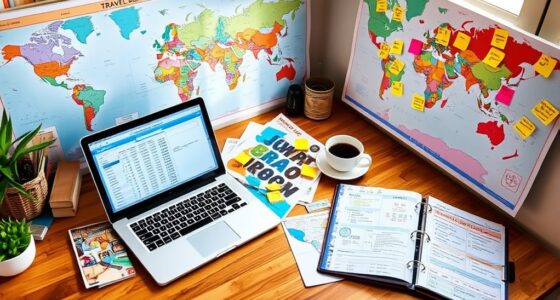
To track your expenses effectively, consider using digital apps like Mint, YNAB, or PocketGuard that connect to your bank accounts and automatically import transactions, making the process easier. You can also keep things traditional with spreadsheets or a manual journal, which require consistent recording but work well without digital tools. Whichever method you choose, maintaining regular tracking helps you understand your spending habits and stay on top of your financial goals. Keep exploring to discover more tips and tools.
Key Takeaways
- Digital apps simplify expense logging by automatically importing transactions and providing real-time spending updates.
- Automated tracking reduces forgotten expenses and reveals spending patterns for better financial decisions.
- Traditional methods like spreadsheets or manual journals help develop consistent recording habits without digital tools.
- Effective expense tracking requires consistency to identify cash flow leaks and optimize budget management.
- Combining apps and traditional methods offers flexibility and enhances overall financial monitoring and control.
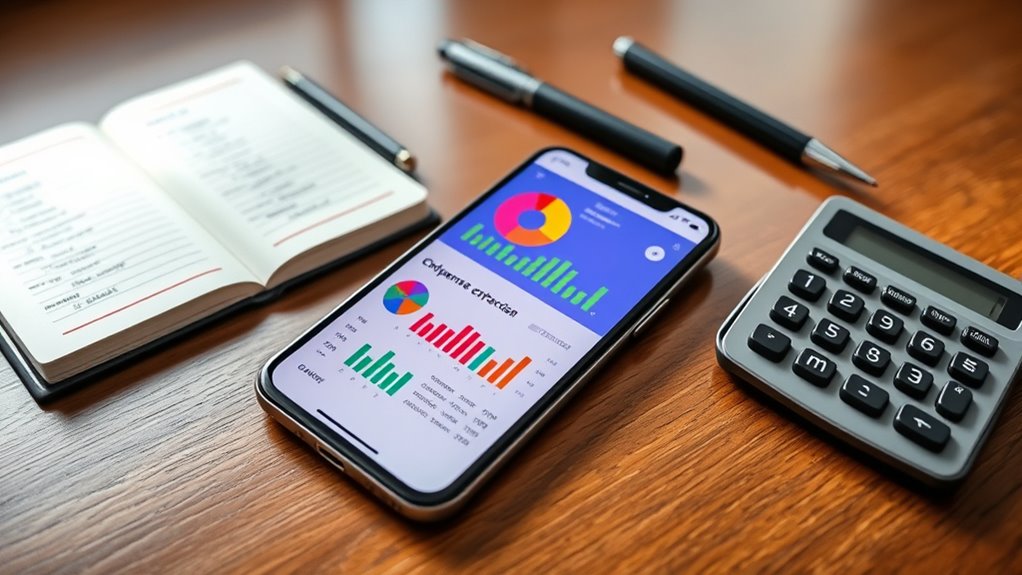
Keeping track of your expenses is essential for managing your finances effectively. When you stay on top of where your money goes, you gain a clearer picture of your cash flow, which helps you make smarter financial decisions. One of the most effective ways to do this is by using apps and methods designed for expense tracking. These tools not only simplify the process but also provide valuable insights that can improve your budgeting tips and strategies.
Using a dedicated expense tracking app allows you to log your spending quickly and accurately. Many apps connect directly to your bank accounts and credit cards, automatically importing transactions. This automation saves you time and reduces the chances of forgetting small expenses that add up over time. As you review your expenses regularly, you’ll notice patterns emerging—perhaps too many dining out trips or unnecessary subscriptions. Recognizing these habits enables you to adjust your spending and optimize your cash flow, ensuring more money stays available for savings or debt repayment.
Furthermore, tracking expenses with apps helps you set and stick to a realistic budget. Budgeting tips often emphasize the importance of knowing your income and fixed expenses, but the key to success is ongoing monitoring. With digital tools, you can create categories—like groceries, transportation, entertainment—and assign spending limits to each. As you record your expenses, the app provides real-time updates, showing you whether you’re staying within your budget or overspending. This immediate feedback keeps you accountable and motivated to make better choices.
In addition to apps, traditional methods like spreadsheets or manual journals can also be effective if used consistently. You might prefer writing down every expense or using a simple spreadsheet to track your daily spending. Whichever method you choose, the goal is to develop a habit of recording expenses as they occur. Consistency is vital because it gives you an ongoing snapshot of your cash flow, allowing you to identify leaks and areas where you can cut back. Establishing a routine for expense tracking ensures you stay informed and in control of your financial health.
Whether you rely on digital apps or pen-and-paper methods, the core principle remains the same: tracking your expenses helps you understand your cash flow and refine your budgeting tips. The more aware you are of your spending habits, the better equipped you’ll be to control your finances, avoid debt, and work toward your financial goals. Remember, effective expense tracking isn’t about restriction but about gaining clarity and making informed decisions that lead to financial stability.

2026 Wallet Tracker Card (iOS and Android) Slim Tracking Card, 6-12 Years Battery Bluetooth Smart Card, Work with Apple Find My & Google Find Hub, GPS Locator for Luggage, Passports, Keys, Backpack
Dual System Compatibility & Easy Steps: Wallet tracker natively works with both Google "Find Hub" and Apple"Find My"…
As an affiliate, we earn on qualifying purchases.
As an affiliate, we earn on qualifying purchases.
Frequently Asked Questions
How Do I Choose the Best Expense Tracking App for My Needs?
When choosing the best expense tracking app, you should consider your budgeting strategies and how the app supports them. Look for features like customizable expense report templates that match your needs. Think about ease of use, integrations, and cost. You want an app that simplifies tracking, helps you stick to your budget, and offers flexibility for your financial goals. Test a few options to find the one that fits your style best.
Can Expense Tracking Apps Automatically Categorize My Expenses?
You’re asking if expense tracking apps can automatically categorize your expenses. The answer is yes—many apps use receipt scanning and smart algorithms to do the heavy lifting, saving you time. They can also send budget alerts to keep you on track. While no app is perfect, choosing one with these features helps you keep your finger on the pulse without getting overwhelmed. It’s a win-win situation.
What Security Measures Do Expense Apps Use to Protect My Financial Data?
When you ask about security measures, expense apps use encryption protocols to safeguard your financial data, ensuring it’s unreadable during transmission and storage. They also prioritize data privacy by implementing strict access controls and regular security audits. This means your sensitive information stays protected from unauthorized access, giving you peace of mind. Rest assured, these apps take thorough steps to keep your financial details secure and private.
How Do I Sync Expenses Across Multiple Devices?
Imagine your expenses are like a playlist that you want to enjoy anywhere. To sync expenses across multiple devices, use apps with cloud synchronization features. These automatically update your data in real-time, ensuring consistency. Also, enable data backup options to safeguard against loss. This way, you can manage your expenses seamlessly, whether on your phone or tablet, knowing your financial data stays current and protected across all your devices.
Are There Free Expense Tracking Options With Premium Features?
You’re looking for free expense tracking options that offer premium features like budget planning and receipt scanning. Many apps provide free versions with basic tools, and some include optional upgrades for advanced features. Check out apps like Mint or Wave, which offer free expense tracking and budgeting, with premium add-ons for receipt scanning or detailed reports. These options help you stay organized without immediate costs, giving you flexibility as your needs grow.

Relax I Have Spreadsheet For That Accountant Spreadsheet Notebook: Blank Lined Journal For Accountants CPA Accountancy Notebook Accounting Coworker Gag Gift
As an affiliate, we earn on qualifying purchases.
As an affiliate, we earn on qualifying purchases.
Conclusion
By now, you’ve equipped yourself with tools and methods to tame your spending like a skilled captain steering through financial storms. Whether you choose apps or old-school methods, you’re turning your expenses into a well-orchestrated symphony rather than chaos. Keep tracking diligently, and watch your financial ship sail smoothly toward brighter horizons. Remember, every expense is a drop in your ocean of savings—manage them wisely, and you’ll navigate toward financial peace with confidence.
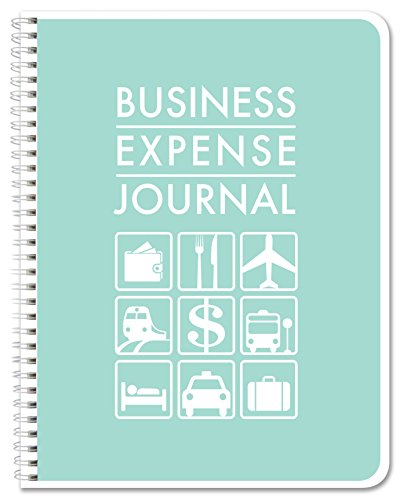
BookFactory Business Expense Log Book Expense Tracking Ledger Logbook Journal Receipt Organizer 100 Pages 8.5''x11'' Wire-O (Made in USA)
Made in USA – Proudly produced in Ohio by a Veteran-owned business
As an affiliate, we earn on qualifying purchases.
As an affiliate, we earn on qualifying purchases.

Discovey Digital Coin Counter Money Jar, LCD Screen, Automatic Piggy Bank Savings for US Coins, Keeps Track of Deposits, Battery Operated, Kids Gift (Pack of 2)
The information below is per-pack only
As an affiliate, we earn on qualifying purchases.
As an affiliate, we earn on qualifying purchases.