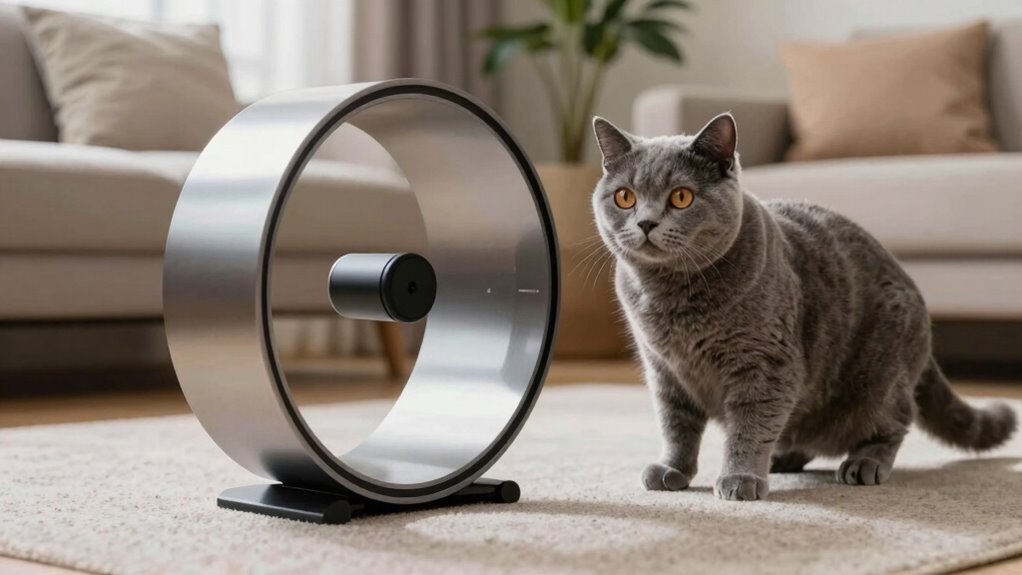

The main setup mistake stopping your cat from using the wheel is improper placement or choosing the wrong size and noise level. Place the wheel in a quiet, familiar spot away from drafts or heat, and make certain it’s stable and suitable for your cat’s size—at least 36 inches in diameter for adults. If you keep the environment calm and encourage positive associations, your cat is more likely to give it a try. Keep going to discover more tips!
Key Takeaways
- Placing the wheel in a noisy or high-traffic area can scare your cat away from using it.
- Using a wheel that is too small or unstable discourages your cat from engaging.
- Positioning the wheel in direct sunlight or hot spots can cause discomfort and reduce interest.
- Not creating positive associations with treats or toys near the wheel may fail to motivate your cat.
- Installing the wheel in a cluttered or inaccessible spot can hinder your cat’s ability and willingness to use it.

GTRACING Cat Wheels, 40" Diameter, Large Cat Exercise Wheel for Indoor Cats cat Treadmill Metal with Detachable Carpet & Teaser/Stickers, Ultra-Quiet Scroll Wheel with Latch, Black Ears-1 Style
🐱Heavy-Duty Metal Frame – Secure, Durable & Scratch-Resistant Designed for a cat's natural running needs, the cat wheel…
As an affiliate, we earn on qualifying purchases.
As an affiliate, we earn on qualifying purchases.
Common Mistakes That Discourage Your Cat From Using the Wheel
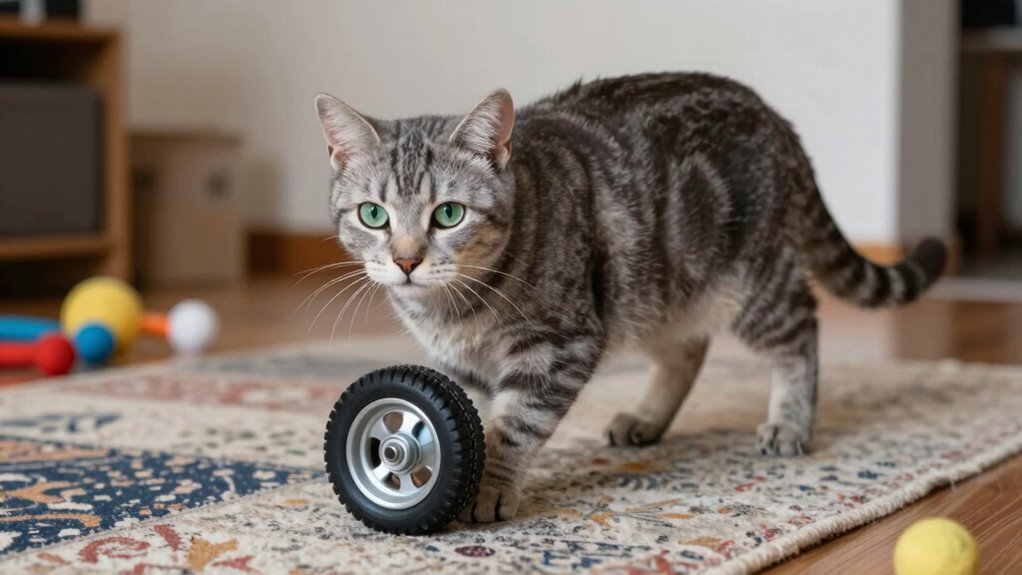
One of the most common reasons cats avoid using a wheel is that owners don’t properly introduce it or make it appealing. If you don’t understand your cat’s behavior, they might see the wheel as unfamiliar or intimidating. Rushing the introduction can cause frustration, leading to avoidance. Make sure to place the wheel in a quiet, familiar area and encourage positive associations by adding treats or toys nearby. Neglecting wheel maintenance can also discourage your cat; a squeaky or unstable wheel can seem unsafe or uninviting. Regularly check and clean the wheel to ensure smooth operation and safety. When you respect your cat’s comfort and keep the wheel in good condition, you’ll help foster curiosity and motivate your feline to try it out willingly. Additionally, understanding cat behavior patterns can help you tailor your approach for better results, especially since cat curiosity varies among individuals. Recognizing individual preferences allows you to adapt your training methods to each cat’s unique personality, increasing the likelihood of success. Recognizing and accommodating behavioral differences can also significantly improve your cat’s willingness to engage with a wheel.

Nordic Beast 48'' XL Cat Wheel – Safe, Quiet & Stable Exercise Wheel for Large Indoor Cats up to 45 lbs – 15.7'' Extra-Wide Surface Fits 2 Cats Side by Side & Prevents Wobbling, 1-Year Warranty
📏 XL Cat Wheel for Large Breeds up to 45 lbs – Engineered for big cats, the 48''…
As an affiliate, we earn on qualifying purchases.
As an affiliate, we earn on qualifying purchases.
How to Choose the Right Size and Design for Your Cat Wheel
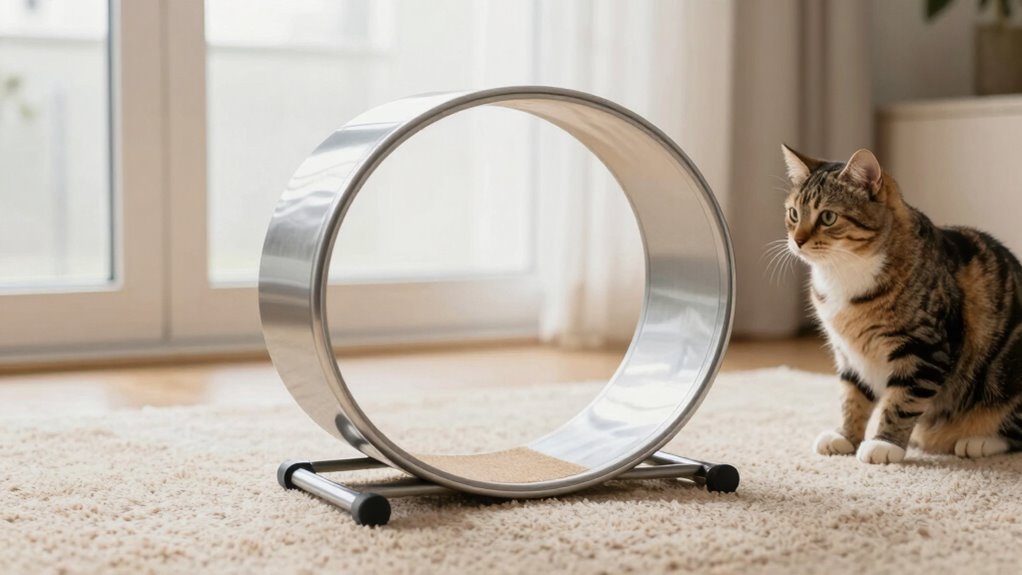
Choosing the right size and design for your cat wheel starts with understanding your cat’s specific needs and preferences. For size selection, confirm the wheel is wide enough for your cat to walk comfortably without feeling cramped. A wheel with a diameter of at least 36 inches is ideal for most adult cats, but larger cats may need even more space. When considering design considerations, look for a stable, sturdy frame that minimizes wobbling. The surface should provide good traction to prevent slipping. Also, consider the wheel’s noise level and ease of cleaning. Select a design that appeals to your cat’s behavior—some prefer open, airy structures, while others need enclosed options for security. Ensuring the wheel’s stability is crucial to prevent tipping or wobbling, which can discourage use. Proper size and design can also help prevent common setup mistakes that deter cats from using their wheel. Additionally, understanding piercing care and hygiene can be useful if you decide to incorporate safety measures or accessories around the wheel area to maintain cleanliness and prevent injury. Considering the best materials for durability can further enhance the longevity and safety of the wheel, encouraging consistent use and enjoyment by your cat. Being aware of ergonomic features can help in selecting a wheel that is comfortable and reduces strain for your feline friend. Picking the right size and design ensures your cat remains engaged and comfortable while using the wheel.

One Fast Cat – Cat Exercise Wheel – Gen. 7 – Safe 48" Diameter – Made in The USA – Black Wheel with Black Felt Traction Pads and Solid Inline Wheels
SAFE INDOOR EXERCISE – Helps prevent boredom and destructive anxiety behaviors by giving indoor cats an outlet to…
As an affiliate, we earn on qualifying purchases.
As an affiliate, we earn on qualifying purchases.
Where’s the Best Spot to Place Your Cat Wheel for Engagement?
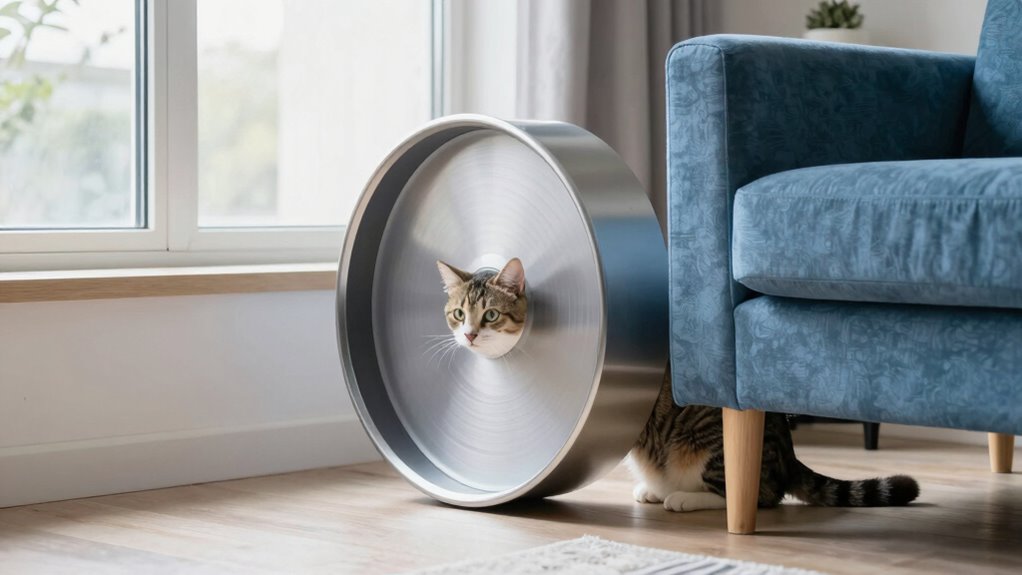
To get your cat excited about the wheel, pick a spot away from direct sunlight that might cause discomfort. Place it near your cat’s favorite area so they feel more inclined to use it. Make sure the location is quiet and free from loud noises to keep your cat focused and engaged. Additionally, choosing a well-ventilated area can help prevent overheating and encourage longer play sessions workspace organization. Ensuring proper home safety can also make your pet’s environment more comfortable and secure. Considering cat behavior when selecting the spot can further boost their interest and comfort with the wheel. An optimal location should also consider outdoor vs. indoor placement to maximize your cat’s enjoyment and safety, helping to increase usage and overall satisfaction. Selecting an optimal location can also enhance vacuum efficiency, helping to keep your home clean and your pet happy.
Avoid Direct Sunlight
Placing your cat wheel in a spot free from direct sunlight helps prevent overheating and keeps your feline friend comfortable during exercise. Excess heat can cause stress, reducing their motivation to use the wheel. Choose a shaded area that’s cool and well-ventilated to support overall cat health, including good cat nutrition and proper feline grooming. To help you decide, consider this table:
| Ideal Spot Characteristics | Benefits |
|---|---|
| Shade from direct sunlight | Prevents overheating, keeps cat comfortable |
| Calm, low-traffic area | Reduces stress, encourages use |
| Near a window but not in direct sun | Provides visual stimulation without heat |
| Away from drafts or heaters | Maintains a stable, cozy environment |
Ensuring your cat’s environment aligns with shipwreck preservation principles can help maintain their health and happiness. Selecting the right spot guarantees your cat stays engaged and healthy during exercise, especially when considering environmental comfort factors that influence feline activity levels. Additionally, providing a safe and quiet space promotes consistent use of the wheel and reduces stress. Proper placement also helps manage ambient indoor air quality, contributing to overall feline well-being.
Place Near Favorite Spot
Positioning your cat wheel near your cat’s favorite spot can considerably boost their enthusiasm for exercise. When the wheel is close to where your cat naturally spends time, it taps into their existing cat behavior, making them more likely to use it. Keep in mind that consistent wheel maintenance is essential to guarantee smooth operation and safety, encouraging regular use. To optimize placement, consider these points:
- Place it in a familiar area where your cat feels comfortable
- Avoid clutter or obstacles that could hinder wheel movement
- Position it where your cat’s scent is strong to boost curiosity
- Ensure the surface is stable and non-slip for safe wheel operation
- Incorporating environmental enrichment techniques can further motivate your cat to engage with their wheel. Additionally, placing the wheel in a low-traffic area helps your cat feel secure while exploring it. Creating a predictable routine around wheel use can also foster regular engagement and comfort. Introducing positive reinforcement can also enhance their willingness to use the wheel regularly. Recognizing behavioral cues can help you better understand your cat’s preferences and improve their overall exercise habits.
This strategic placement makes your cat more inclined to engage, turning exercise into a positive part of their routine.
Ensure Quiet Environment
Ensuring pet safety is also vital; select a stable, clutter-free location where your cat won’t trip or fall. Hive stability is crucial for a secure environment, preventing accidents and encouraging your cat to use the wheel confidently. A quiet corner with minimal foot traffic allows your cat to feel secure and encourages consistent use. When your cat perceives the space as safe and peaceful, it’s more likely to develop good habits, making the exercise both enjoyable and beneficial for their health.

Homegroove Cat Exercise Wheel for Indoor Cats, 46" Large XL Cat Running Treadmill Wheel with Carpeted Runway for Kitty’s Longer Life, Natural Wood Color(XL)
Latest Cat Running Wheel: Most pet cats are overweight because they spend long hours indoors and lack exercise….
As an affiliate, we earn on qualifying purchases.
As an affiliate, we earn on qualifying purchases.
Does Noise Bother Your Cat? Tips to Keep It Quiet and Smooth
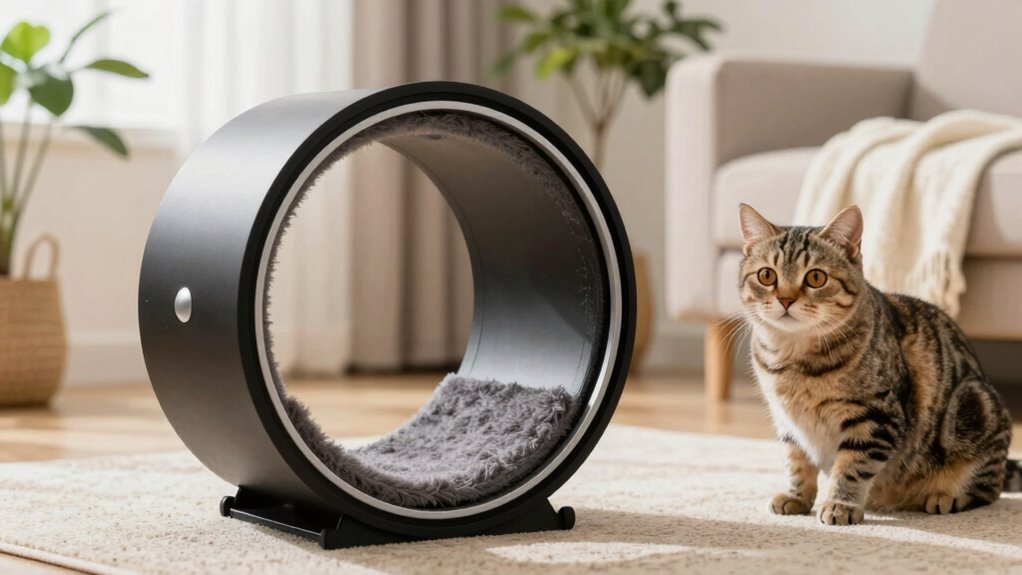
If noise from the wheel bothers your cat, there are simple ways to keep things peaceful. Choosing a quiet motor, placing the wheel in a low-traffic area, and using soundproof barriers can make a big difference. These tips help guarantee your cat stays comfortable and stress-free during exercise.
Choose Quiet Motor Options
Since loud motors can startle or stress your cat, selecting a quiet motor option is essential for a peaceful experience. Noisy environments and loud motors often deter cats from using their wheels. To guarantee smooth operation, look for models with noise-reducing features.
- Opt for motors with sound-dampening technology
- Choose wheels with variable speed controls
- Check reviews for noise levels from other pet owners
- Consider brands known for quiet operation
Place Away From Noise
Placing your cat’s wheel in a quiet area helps guarantee it stays calm and engaged. Noise can profoundly influence your cat’s behavior, making it hesitant to use the wheel. Loud sounds or sudden disturbances may trigger stress or anxiety, hindering training techniques that encourage regular use. To promote positive cat behavior, choose a spot away from noisy appliances, busy walkways, or loud TVs. This helps your cat feel secure and less distracted, increasing the likelihood of consistent activity. Remember, patience is key; a peaceful environment fosters natural curiosity and comfort. By creating a calm setting, you support your cat’s willingness to explore and use the wheel without stress, making training easier and more effective.
Use Soundproof Barriers
Soundproof barriers can make a significant difference in creating a peaceful environment for your cat. By reducing external noise, these barriers help your cat feel more comfortable and willing to use the wheel. To maximize noise reduction, consider installing soundproof barriers around the area. These can include heavy curtains, foam panels, or specialized soundproofing mats. Additionally, placing the wheel in a corner or enclosed space further cuts down on noise disturbance. Remember, the goal is to minimize loud sounds that might scare or deter your feline friend. Proper use of soundproof barriers creates a quieter environment and encourages consistent use of the wheel, making the setup more effective and enjoyable for your cat.
Personalize Your Wheel: Making It Appealing to Your Cat
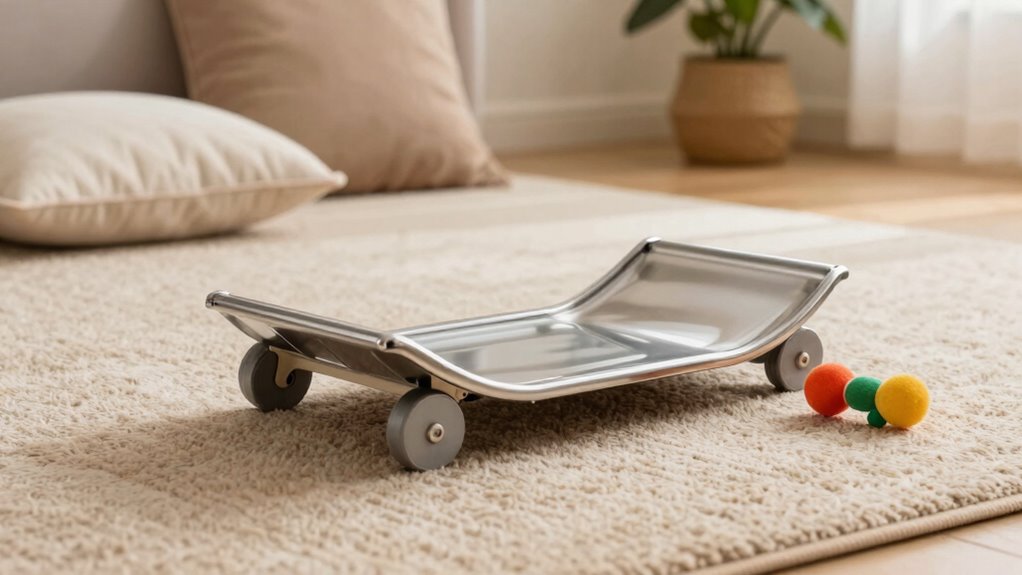
To encourage your cat to use the wheel regularly, making it visually appealing and engaging is essential. You can do this through interactive customization—adding elements that invite exploration and play. Consider decorating the wheel with bright colors or attaching toys that catch your cat’s eye. Incorporate textures like sisal or soft fabrics to stimulate their senses. Here’s a quick guide:
| Feature | Benefit |
|---|---|
| Bright Colors | Grabs attention and encourages use |
| Attached Toys | Promotes interaction and activity |
| Textured Surfaces | Enhances visual appeal and grip |
Troubleshooting Tips to Get Your Cat Playing and Using the Wheel
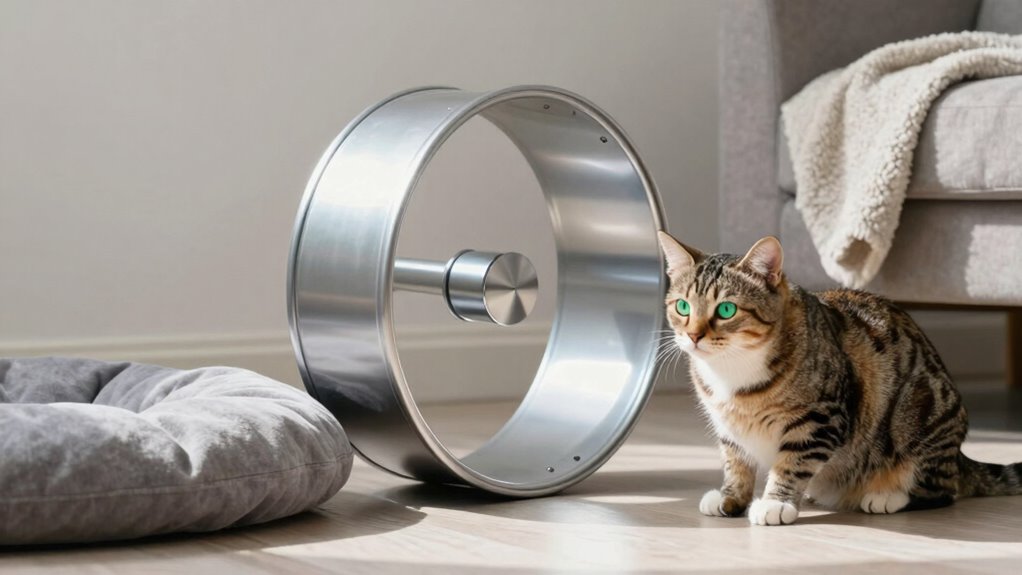
If your cat is hesitant to use the wheel, identifying and addressing common issues can make a big difference. Start by checking the cat wheel maintenance—make certain it’s stable, smooth, and free of squeaks or wobbling. Sometimes, cats need time to get comfortable, so introduce the wheel gradually with treats or toys nearby. Make sure the wheel isn’t too loud or intimidating, as noise can deter your feline from using it. Also, observe if your cat prefers certain positions or angles; adjusting the setup can encourage use. Remember, consistent use of the wheel promotes feline exercise benefits, so patience is key.
- Make certain the wheel spins smoothly without resistance
- Place the wheel in a quiet, accessible spot
- Use enticing toys or treats to encourage initial movement
- Regularly inspect and clean the wheel for optimal performance
Frequently Asked Questions
How Long Should My Cat Initially Spend on the Wheel Each Day?
Start with an initial duration of just a few minutes each day, gradually increasing as your cat becomes comfortable. Watch for signs of fatigue or disinterest, and don’t push too hard. The key is a gradual introduction, allowing your cat to build confidence and stamina. Over time, you can extend the sessions, but always prioritize your cat’s comfort and enjoyment to encourage consistent use of the wheel.
Can Using Treats or Toys Increase My Cat’s Interest in the Wheel?
Treat motivation and toy engagement can definitely boost your cat’s interest in the wheel. While treats reward your cat and encourage participation, engaging toys stimulate curiosity and play. Combining both creates a compelling environment that makes the wheel more enticing. Use treats to reinforce positive behavior and add toys that pique your cat’s curiosity. This dual approach keeps your feline active and enthusiastic to explore the wheel regularly.
What Signs Indicate My Cat Is Uncomfortable With the Wheel?
If your cat shows behavior cues like avoiding the wheel, hissing, or grooming excessively, they might be uncomfortable. Watch for signs like tail flicking, ears back, or reluctant approach, which indicate safety concerns. These cues mean your cat isn’t at ease, and you should stop using the wheel immediately. Ensuring your cat feels safe and relaxed is key to encouraging positive interaction and preventing stress or injury.
Are There Specific Cat Breeds More Inclined to Use a Wheel?
You might notice that active breeds like Bengals or Abyssinians are more inclined to use a wheel, likely due to their natural breed preferences and high activity levels. Coincidentally, these cats thrive on stimulation and exercise, making the wheel an appealing outlet. Conversely, less active or more sedentary breeds may show less interest. Tailoring the wheel to your cat’s breed preferences and activity levels encourages engagement and makes it more appealing.
How Often Should I Clean and Maintain the Wheel for Optimal Use?
You should clean your cat wheel at least once a week to guarantee peak performance. Regular maintenance tips include wiping down the surface, checking for loose parts, and removing fur or debris that can hinder movement. Keep the wheel dry and lubricate moving parts if needed. Consistent cleaning and maintenance prevent wear and tear, making the wheel safer and more appealing for your cat to use regularly.
Conclusion
Think of your cat wheel as a bridge to their happiness—each thoughtful step you take is like planting a seed of trust and curiosity. Avoiding common mistakes and creating a cozy, quiet space helps your feline friend embrace this new adventure. With patience and care, you’re opening a door to endless play and wellness, turning the wheel into a symbol of your bond—spinning together toward a healthier, happier life.