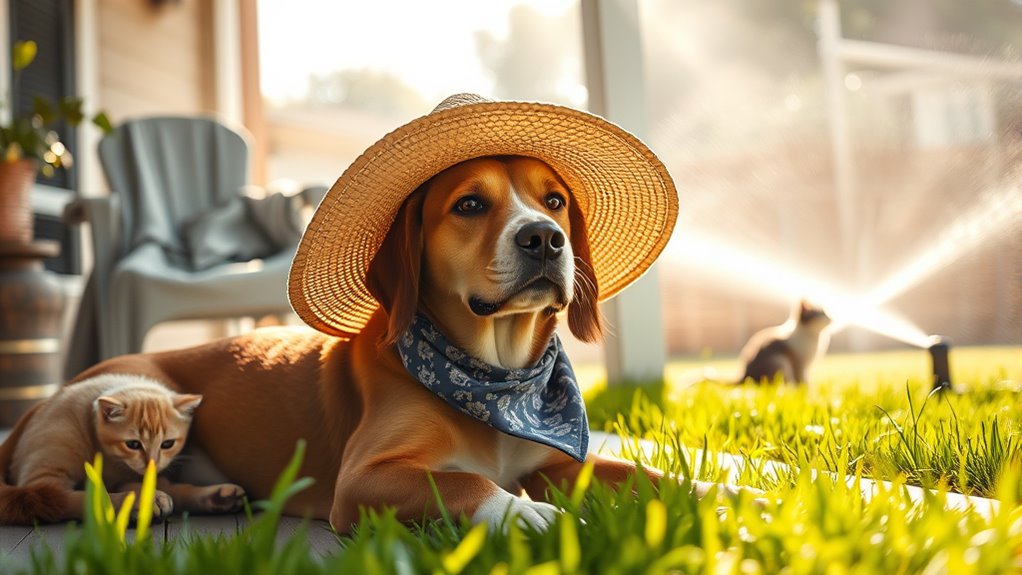

To prepare your pets for climate change, assemble an emergency kit with essentials like water, food, medications, and photos for ID. Keep them indoors during heatwaves, offer shade and hydration, and avoid leaving them in parked cars. Stay alert during wildfires by having a carrier, microchip info, and evacuation plans ready. During storms, secure loose items and create a safe space. Staying organized and informed helps reduce risks—continue exploring how to protect your pets from these threats effectively.
Key Takeaways
- Assemble a comprehensive, portable emergency kit with essentials, pet records, and recent photos for quick evacuation during climate-related disasters.
- Provide ample shade, fresh water, and cool environments; avoid leaving pets in parked cars or exposed to extreme heat.
- Keep pet records, microchip info, and photos accessible for identification during wildfires and evacuations.
- Secure loose items and create safe, quiet spaces indoors to reduce stress and injury during storms and extreme weather events.
- Stay informed about local alerts, plan evacuation routes, and monitor pets closely to respond swiftly to heatwaves, wildfires, and storms.

As climate change brings more frequent and intense weather events, it is vital to prepare your pets for these challenges. Extreme heatwaves, wildfires, and powerful storms can suddenly threaten your pet’s safety, making proactive planning essential. The first step is assembling an all-encompassing emergency kit tailored for your pets, which should include essential supplies like water, food, medications, and comfort items. Having these ready guarantees that if you need to evacuate quickly, your pets won’t be left behind or without necessities. Remember, during a pet rescue, delays can be dangerous, so packing a portable pet emergency supplies kit in advance can save valuable time and reduce stress during crises.
Prepare an emergency kit for pets to ensure safety during climate-related weather events.
When preparing for heatwaves, guarantee your pets have access to plenty of fresh water and shaded areas. Never leave them in parked cars, even for a short time, as temperatures can soar rapidly and cause heatstroke or death. Keep your pets indoors during the hottest parts of the day, and if you have a backyard, provide a shaded, ventilated space for them to retreat to. Small animals and those with thick coats are especially vulnerable, so take extra precautions like using cooling mats or fans. Regularly check on your pets’ condition during extreme heat, and be alert for signs of heat exhaustion, such as excessive panting, drooling, or lethargy. Monitoring projector technology can also be helpful when creating a comfortable indoor environment for your pets.
Wildfires pose a different threat, often forcing rapid evacuations. Make sure your pet rescue plan includes a safe, easily accessible carrier or leash. Keep your pets’ records, microchip information, and a recent photo handy to help identify them if they become lost. During fire season, stay informed about local alerts and evacuation routes. When evacuation is necessary, act swiftly—don’t wait until the last minute. Have your emergency supplies ready to load into your vehicle quickly, and keep a calm, reassuring demeanor to prevent your pets from panicking. Remember, the chaos of a wildfire can be overwhelming, so maintaining a clear plan and assembling your pet rescue supplies beforehand minimizes panic and ensures safety.
Storms, especially hurricanes and heavy thunderstorms, can lead to power outages and flooding, which disrupt your usual routines and shelter options. Secure loose items around your home to prevent injuries, and create a safe, quiet space where your pets can stay comfortably. Keep their supplies close at hand, and ensure they have familiar items like bedding or toys to reduce anxiety. During storms, stay indoors and monitor weather updates closely. If flooding is imminent, plan a quick exit route and keep your emergency supplies ready. Being prepared with a well-stocked kit and an evacuation plan makes all the difference in keeping your pets safe amid climate-induced storms. Staying proactive and organized ensures you’re ready to handle any weather event that comes your way, safeguarding your beloved pets from the increasing threats posed by climate change.

ARCA PET Cat & Dog First Aid Kit for Car – Pet Emergency Kit for Home Office Travel – Dog Camping Essentials with Digital Thermometer, Muzzle & Mini First Aid Pouch
ENSURE PET SAFETY ON THE GO with our dog travel accessories, dog must haves in pet travel. Our…
As an affiliate, we earn on qualifying purchases.
As an affiliate, we earn on qualifying purchases.
Frequently Asked Questions
How Can I Identify Early Signs of Heatstroke in My Pet?
To identify early signs of heatstroke in your pet, recognize symptoms like excessive panting, drooling, weakness, and rapid heartbeat. Prevention strategies include providing plenty of shade, fresh water, and avoiding intense activity during hot weather. Keep a close eye on your pet’s behavior, and if they seem disoriented or collapse, seek veterinary help immediately. Recognizing these signs early can prevent serious health issues and make sure your pet stays safe.
What Are the Best Emergency Supplies for Pets During Wildfires?
Imagine grabbing your pet’s emergency kit, ready for the chaos of a wildfire evacuation. Pack essentials like water, food, medications, and a collar with ID tags. Include a leash, a blanket, and copies of your pet’s medical records. These emergency supplies guarantee your pet stays safe and calm during a crisis. Always keep your pet’s evacuation plan and supplies ready, so you’re prepared when wildfires threaten your home.
How Do I Protect Outdoor Pets From Extreme Weather Conditions?
You should provide outdoor pets with ample shade protection to keep them cool and prevent heatstroke. Make certain they have constant access to fresh, clean water to stay hydrated during extreme weather. Create shaded areas using tarps or natural foliage, and bring pets indoors during the hottest parts of the day. Regularly check on them, and never leave outdoor pets unattended in severe weather conditions.
Are There Specific Breeds More Vulnerable to Climate Change Impacts?
Certain breeds are more vulnerable to climate change impacts due to breed susceptibility and genetic vulnerability. Small, flat-faced breeds like Bulldogs and Pugs struggle with heat regulation, making them prone to overheating. Elderly or overweight pets also face higher risks. You should consider these factors when choosing a breed or caring for your pet, ensuring you provide climate-appropriate shelter, hydration, and shade to mitigate their heightened vulnerability.
How Can I Help My Pet Recover After a Climate-Related Disaster?
You can help your pet recover from a climate-related disaster by providing a calm, secure environment to support their mental health. Offer gentle reassurance and maintain a routine to reduce stress. Schedule a visit for post-disaster veterinary care to address any injuries or health concerns. Keep a close eye on their behavior, and be patient as they adjust, ensuring they feel safe and loved throughout their recovery process.

Rywell Dog Cooling Mat 2.0, Ocean Blue,44" x 32" Thick & Durable Cooling Mat for Extra Large Dogs, Long-Lasting Cool with Waterproof & Color-Changing Arc-Chill Tech (Q-Max>0.5) Washable& Non-Toxic
🐶 【Deep Blue Cooling That Lasts】 The rich blue Rywell Cooling Mat isn’t just stylish—it’s engineered for lasting…
As an affiliate, we earn on qualifying purchases.
As an affiliate, we earn on qualifying purchases.
Conclusion
So, as you stock up on extra water and consider building that luxurious, climate-proof doghouse, remember—your pets are counting on your brilliance. After all, who better to navigate this flaming, storm-tossed world than the one who’s already mastered the art of scrolling through endless climate news? Stay prepared, stay clever, and perhaps, just perhaps, your furry friend will forgive you for that indoor sprinkler system you’re secretly planning. Cheers to survival—pet style.

VOISTINO 2-in-1 Double Pet Carrier Backpack for Small Cats and Dogs, Portable Pet Travel Carrier, Super Ventilated Design, Ideal for Traveling/Hiking/Camping, Large Size
2-In-1 DESIGN: The double pet backpack features two separate compartments to hold 2 small pets(especially suitable for cats),…
As an affiliate, we earn on qualifying purchases.
As an affiliate, we earn on qualifying purchases.

Manruta 20 Pack ISO Pet ID Microchip Tags Universal Standard 134.2Khz FDX-B Smaller Size 8 MM Length for Dogs and Cats Small Animals (1.4X8mm Microchip)
{Microchip Quality is Very Important }:Manruta Pet ID Microchip, from Germany ,well made with high quality bioglass ,last…
As an affiliate, we earn on qualifying purchases.
As an affiliate, we earn on qualifying purchases.