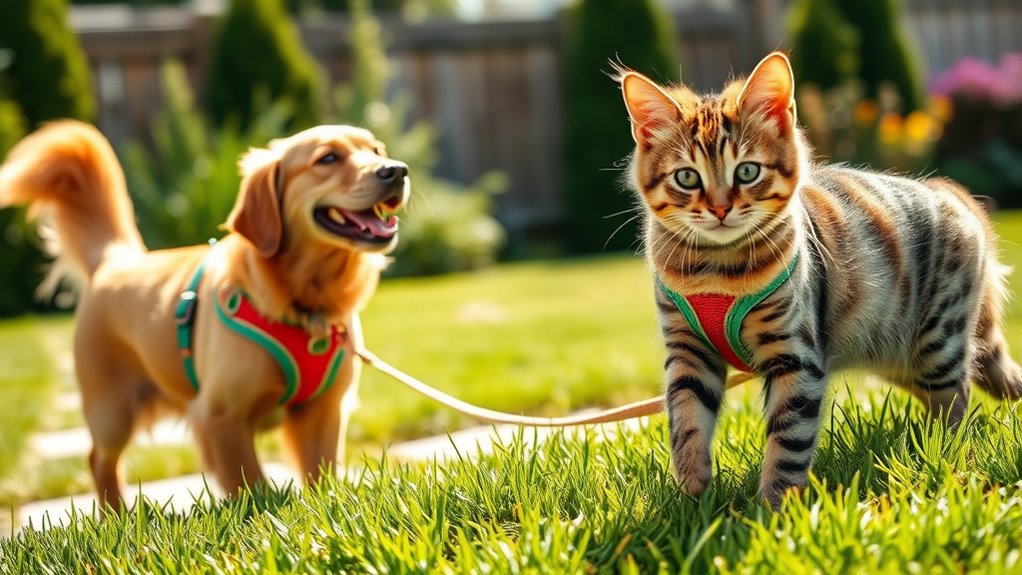

Harness training for cats and dogs ensures they stay safe and comfortable during outdoor activities. Choose a harness that fits snugly without causing discomfort, with adjustable straps for a secure feel. Proper attachment and leash control help prevent escapes and encourage good walking habits. With the right harness and technique, you can enjoy outdoor adventures safely and happily. Keep going to discover key tips that will make your pet’s harness experience even better.
Key Takeaways
- Proper harness fitting ensures pets are comfortable and secure, reducing stress during outdoor activities.
- Choose harnesses with adjustable straps and measure your pet’s chest and neck for a perfect fit.
- Attach the leash securely to prevent escapes, using back or chest attachment points based on your pet’s needs.
- Practice gradual training to help pets associate harnesses with positive experiences and fun outdoor walks.
- Use steady, gentle leash tension to guide pets safely, making outdoor adventures safe and enjoyable.

Harness training for cats and dogs can be a highly effective way to keep your pets safe and comfortable during outdoor adventures. When you’re ready to take your furry friend outside, the right harness combined with a secure leash attachment makes all the difference. It provides you with better control and guarantees your pet stays close, preventing unexpected escapes or dangerous situations. Selecting a harness that fits well and attaching the leash properly gives you peace of mind, knowing your pet is secure while exploring new environments.
A good harness should fit snugly without causing discomfort or restricting movement. Before heading out, take the time to measure your pet’s chest and neck, then choose a harness with adjustable straps. Once on, check that it’s snug but not tight—two fingers should slip comfortably between the harness and your pet’s body. With a well-fitting harness, the leash attachment point is essential. Most harnesses have a sturdy metal ring on the back or chest, where you’ll clip your leash. The back attachment is ideal for casual walks, giving your pet more freedom to explore, while the chest attachment offers better control if your pet tends to pull.
When you head outdoors, keep the leash attached securely at all times. This simple step guarantees your pet stays close and under control, especially in unfamiliar or busy environments. A secure leash attachment also prevents accidental detachment, which can happen if the clip isn’t snapped properly. As you walk, maintain a steady, gentle tension on the leash to guide your pet without causing discomfort. This encourages good walking habits and prevents pulling, making outdoor adventures more enjoyable for both of you. Additionally, understanding the types of harnesses and their features can help you select the best fit for your pet’s specific needs.

Voyager Step-in Pet Harness – All Weather Mesh, Adjustable Step in Harness for Cats and Dogs by Best Pet Supplies – Pink, S
Fits Small to Medium Pets: Whether your pet is a small or medium breed, we have the right…
As an affiliate, we earn on qualifying purchases.
As an affiliate, we earn on qualifying purchases.
Frequently Asked Questions
How Long Should Each Harness Training Session Last?
You should keep each harness training session around 5 to 10 minutes, following duration guidelines to guarantee your pet from becoming overwhelmed. Aim for daily sessions or at least several times a week, maintaining consistent session frequency to build confidence and familiarity. Watch for signs of stress or fatigue, and gradually increase session length as your pet becomes more comfortable. Short, positive sessions help assure safe and enjoyable harness training.
Can Harness Training Help Prevent Leash Pulling?
Yes, harness training can help prevent leash pulling by guiding your pet towards better leash manners. Think of it as teaching them a dance—step by step, they learn to move smoothly without tugging. As you reinforce behavioral improvements, your pet becomes more comfortable and relaxed on walks, reducing pulling. Consistent training and patience turn chaotic walks into enjoyable adventures, making both of you happier and more confident outside.
What Are Signs of Discomfort During Harness Training?
You might notice signs of discomfort during harness training through your pet’s body language and vocal cues. They may try to back away, stiffen, or scratch at the harness. Whining, growling, or yowling can also indicate distress. If your pet shows these signs, stop and give them time to adjust. Gradually reintroduce the harness, ensuring it fits comfortably, and always watch for cues that they’re uneasy.
How Do I Choose the Right Harness Size for My Pet?
To choose the right harness size, you should measure your pet’s chest and neck using a soft measuring tape. Use these measurements to compare with the sizing chart provided by the harness manufacturer. When fitting, make sure it’s snug but not too tight—use fitting techniques like checking for two-finger space between the harness and your pet’s body. This ensures comfort and safety during walks.
Is Harness Training Suitable for All Ages of Cats and Dogs?
Absolutely, harness training suits almost all ages of cats and dogs, like a universal key fitting every lock. You should consider age considerations and breed suitability, as puppies and kittens adapt quickly, while older pets might need extra patience. For large or active breeds, a sturdy harness guarantees safety, making training both fun and effective. With gentle guidance, your pet can enjoy the benefits of harness training at any stage of life.
](https://m.media-amazon.com/images/I/419XHWE0h0L._SL500_.jpg)
PHOEPET No Pull Dog Harness Medium Reflective Front Clip Vest with Handle,Adjustable 2 Metal Rings 3 Buckles,[Easy to Put on & Take Off](M, Black)
[UPDATED VESION, EASY TO PUT ON & TAKE OFF] This dog harness has 3 buckles( One is on…
As an affiliate, we earn on qualifying purchases.
As an affiliate, we earn on qualifying purchases.
Conclusion
Now that you’ve mastered harness training, your pets are unstoppable adventurers! Imagine them strutting confidently through parks, conquering the great outdoors like tiny explorers with superhero capes. With patience and consistency, you’ll turn everyday walks into epic journeys filled with joy, curiosity, and safe fun. Get ready to watch your furry friends become the most fearless, well-behaved explorers on the planet—nothing can stop their newfound sense of adventure!

Best Pet Supplies Voyager Step-in Air Harness – All Weather Mesh, Reflective, No Pull Harness for Dogs, Cats – Secure with Hook & Loop Fastener, Buckle, Double D-Rings – Moss Green, M
Perfect Fit: Sizing does NOT directly correspond to your pet's breed or weight; Ensure the ideal fit by…
As an affiliate, we earn on qualifying purchases.
As an affiliate, we earn on qualifying purchases.

Waterproof Long Leash Durable Dog Recall Training Lead Great for Outdoor Hiking, Training, Yard, Beach and Swimming (Purple, 15ft)
WATERPROOF DOG LEASH : Easy to Clean. It is made of rubber material, flexible and comfortable. It's super…
As an affiliate, we earn on qualifying purchases.
As an affiliate, we earn on qualifying purchases.