
To keep your pet safe with a heated bed, choose one with proper temperature controls, ensuring it stays between 100°F and 102°F. Place the bed in a draft-free, quiet spot away from direct sunlight, cords, or unstable surfaces. Regularly check the temperature with your hand and watch for signs of overheating like redness or panting. For tips on selecting, placing, and maintaining a safe, comfy heated bed, continue exploring helpful advice.
Key Takeaways
- Maintain the heated bed temperature between 100°F and 102°F for safety and comfort.
- Place the bed in quiet, draft-free areas away from direct sunlight and high-traffic zones.
- Ensure the bed is on a stable, non-slip surface and away from cords or hazards.
- Regularly check the temperature with your hand and use beds with automatic shut-off features.
- Monitor your pet’s behavior for signs of overheating or discomfort, adjusting settings accordingly.

INVENHO Heated Cat Bed, Waterproof Adjustable Temperature Dog Cat Heating Pad with Timer, Indoor Pet Heating Pad for Cats Dogs Electric Pads for Dogs Cats, Pet Heated Pad (S: 18" x 16")
🐶Upgraded Temperature Adjustable Function: Our pet heating pad has 11 levels of adjustable temperature setting, and 5℉/2.8℃ higher…
As an affiliate, we earn on qualifying purchases.
As an affiliate, we earn on qualifying purchases.
How Do I Choose the Best Heated Pet Bed for My Pet?

Choosing the right heated pet bed starts with understanding your pet’s specific needs. Material safety is vital; select a bed made from non-toxic, durable materials that won’t harm your pet if chewed or scratched. Look for beds with certified safety features and quality construction. Energy efficiency is also significant—opt for models with adjustable thermostats or automatic shut-off to prevent overheating and reduce energy consumption. Consider your pet’s size and preferred sleeping habits to choose a bed that offers adequate warmth and support. Reading reviews and product descriptions helps identify safe, eco-friendly options that won’t spike your energy bills. Additionally, inspecting the Material safety and construction quality ensures long-lasting durability and safety for your pet. Selecting a bed with proper temperature controls can help maintain a consistent, safe warmth for your pet. To further ensure safety standards, always follow the manufacturer’s instructions during setup and maintenance. A well-chosen heated pet bed ensures your furry friend stays warm, safe, and comfortable without unnecessary power use. Regularly checking the performance and maintenance of the heating elements can prolong the lifespan of the bed and ensure consistent safety. Essential DIY tools and safety tips can help you maintain and set up your pet’s heated bed properly.

K&H Pet Products Pet Bed Warmer, Turn Any Pet Bed Into a Heated Cat or Dog Bed, Waterproof Indoor Heated Warming Pad Insert, Automatic Temperature, Safety Listed – Small 10.25 X 9.25in Gray
DESIGNED FOR PETS: When placed inside your pet's bed, this low-wattage pet bed warmer automatically adjusts to the…
As an affiliate, we earn on qualifying purchases.
As an affiliate, we earn on qualifying purchases.
Where Should I Place a Heated Pet Bed for Safety and Comfort?
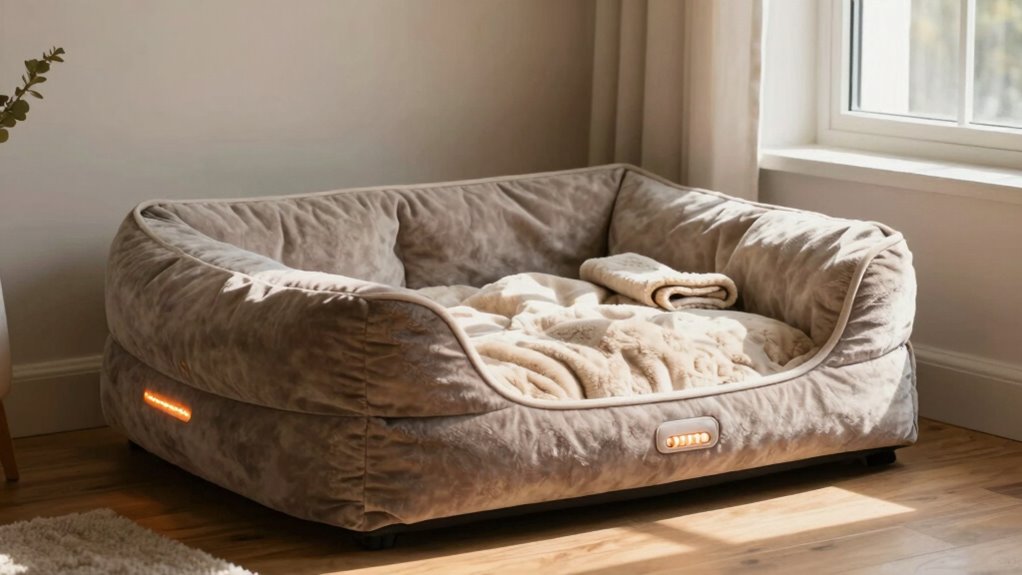
Placing your heated pet bed correctly can make a big difference in your pet’s safety and comfort. Choose a spot away from drafts, direct sunlight, and high-traffic areas to guarantee ideal placement safety. Avoid placing the bed on slippery or unstable surfaces to prevent accidents. Instead, select a quiet, cozy corner where your pet can relax undisturbed. Make sure the area isn’t too close to furniture or cords that could pose a chewing hazard. The goal is to create a warm, secure space that promotes pet comfort without risks. Keep the bed accessible yet protected from potential hazards, and always monitor your pet’s use to ensure safety and comfort go hand in hand. Understanding pet safety can help you make better placement decisions for your heated pet bed. Additionally, proper placement techniques can enhance your pet’s overall well-being and prevent injuries. Ensuring the right environment for your pet is essential for their safety and happiness. Proper placement also involves considering the safe temperature range, which is crucial for your pet’s health and comfort. Being aware of local climate conditions can help you choose the best spot and temperature setting for your pet’s needs.
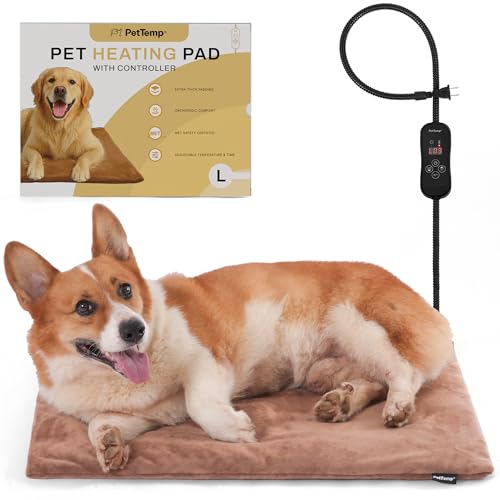
PetTemp Large Dog Heating Pad & Heated Pet Bed for Big Dogs and Multiple Pets, Waterproof Pet Heating Pad with 5 Adjustable Heat Settings, Timer, Auto Shut-Off and Chew Resistant Cord, 26'' x 20''
【Gentle Warmth for Every Pet】 The PetTemp Heating Pad provides steady, soothing warmth for cats, dogs, rabbits, and…
As an affiliate, we earn on qualifying purchases.
As an affiliate, we earn on qualifying purchases.
What Temperature Is Safe for Heated Pet Beds?
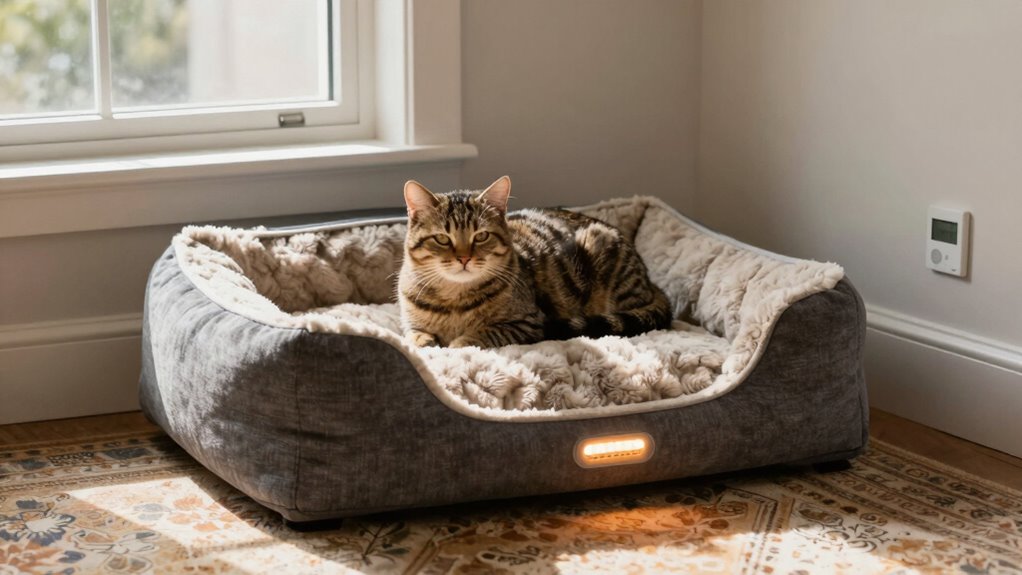
To keep your pet safe and comfortable, it’s important to set the heated bed within the ideal temperature range. Watch for signs of overheating, like excessive panting or restlessness, and adjust the settings accordingly. Finding the right balance ensures your pet stays warm without risking burns or discomfort.
Optimal Temperature Range
Ensuring your pet’s heated bed stays within a safe temperature range is crucial for their comfort and safety. The ideal temperature for heated pet beds is typically between 100°F and 102°F, mimicking a cozy, natural body heat. Using quality insulation materials can help maintain consistent warmth, especially in larger beds where heat distribution can vary. Proper air circulation can help prevent overheating and maintain a safe environment. The bed size also influences the optimal temperature; larger beds may require slightly higher settings to ensure even warmth. Additionally, selecting the right filter size and flow rate can improve the bed’s heating efficiency and safety. To prevent accidental overheating, some heated beds feature automatic shut-off systems that activate if temperatures exceed safe limits. It’s important to regularly monitor temperature with a reliable thermometer to ensure safety. For enhanced safety, some models incorporate temperature sensors that continuously track and adjust heat levels. Here’s a quick guide:
| Bed Size | Recommended Temperature | Insulation Materials |
|---|---|---|
| Small | 100°F – 102°F | Fleece, foam insulation |
| Medium | 100°F – 102°F | Memory foam, thermal layers |
| Large | 100°F – 102°F | Thick padding, insulated covers |
Stick to these ranges for safe, cozy comfort.
Signs of Overheating
Even when your heated pet bed stays within the recommended temperature range, it’s important to watch for signs indicating your pet might be overheating. Look for pet skin reactions like redness, irritation, or excessive dryness, which can signal discomfort from heat. Overheating symptoms also include panting, restlessness, or seeking to escape the bed. If your pet appears unusually sleepy or shows signs of distress, these could be warning signs of overheating. Keep a close eye on their behavior and skin condition, especially during warmer months or if your pet has a thick coat. Understanding safe temperature ranges can help prevent heat-related health issues. Maintaining appropriate ventilation in the area can also aid in regulating your pet’s comfort. Additionally, being aware of shipwreck preservation methods and proper care techniques can inform how you manage your pet’s comfort in various environments. Ensuring proper temperature regulation within the pet’s environment is essential for their safety and well-being. Maintaining optimal temperature in the bed is crucial for your pet’s safety and comfort. Promptly adjusting the bed or removing the heat source can prevent heat-related health issues. Monitoring these signs helps guarantee your pet stays safe and comfortable.
Adjusting Bed Settings
Maintaining the right temperature on your pet’s heated bed helps prevent overheating and keeps your furry friend comfortable. To achieve proper temperature regulation, start by setting the power levels according to your pet’s size and coat type. Many heated beds feature adjustable power settings that allow you to find a safe, cozy temperature. Begin with the lowest setting and monitor your pet’s response, ensuring they aren’t too hot or cold. Use a thermometer to verify the bed’s surface temperature, aiming for around 102°F (39°C). Regularly check the bed and your pet to adjust the power settings as needed. Remember, every pet is unique, so tailoring the heat ensures safety and comfort during colder months. Additionally, proper placement of the heated pet bed is essential to prevent hazards and optimize warmth. Proper temperature regulation is also key to preventing potential overheating, especially for pets with sensitive skin or health conditions. Ensuring your pet’s safety precautions are followed can help avoid accidents and promote a comfortable environment. To further enhance safety, consider using automatic shut-off features that some heated beds offer.

Self Warming Cat Bed Self Heating Cat Dog Mat 24 x 18 inch Extra Warm Thermal Pet Pad for Indoor Outdoor Pets with Removable Cover Non-Slip Bottom Washable Non Electric
2x Warmer Self Heating Tech: No plugs or cords needed! Upgraded with carbon-infused cover, this self heating cat…
As an affiliate, we earn on qualifying purchases.
As an affiliate, we earn on qualifying purchases.
How Can I Make Sure My Pet Is Not Overheating?
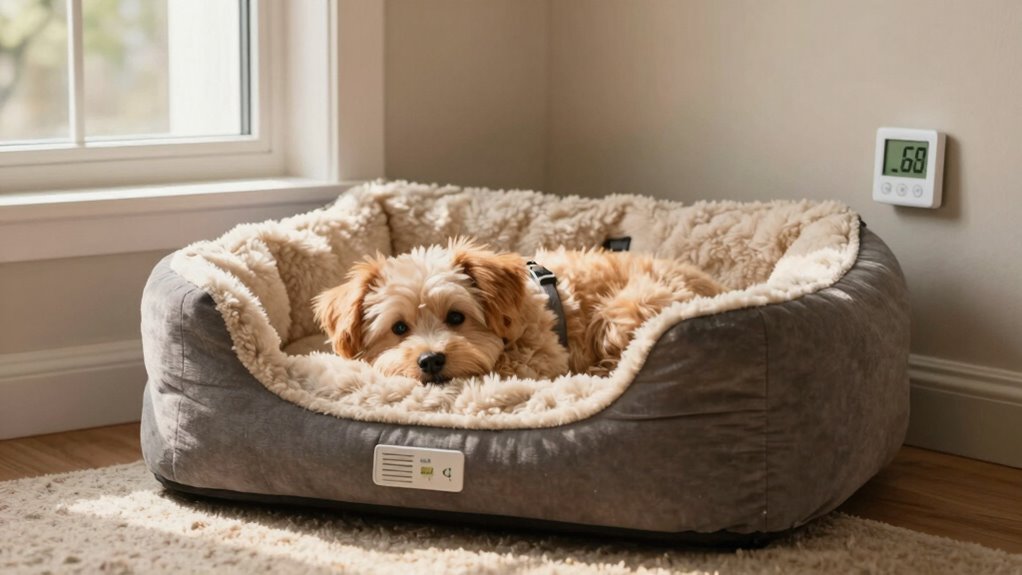
To prevent your pet from overheating in a heated bed, it’s important to watch for signs of discomfort or distress. Look for heavy panting, restlessness, or attempts to move away from the bed—that’s your cue to check the temperature. Incorporate pet cooling techniques, like adjusting the bed’s heat settings or providing a cooler area nearby, to help with temperature regulation. Ascertain the bed isn’t too hot by testing it with your hand first. Regularly monitor your pet’s behavior and physical cues, especially during the warmer months or if your pet has a thick coat. By staying attentive and making adjustments as needed, you keep your pet comfortable and safe without risking overheating.
What Are Common Mistakes to Avoid With Heated Pet Beds?
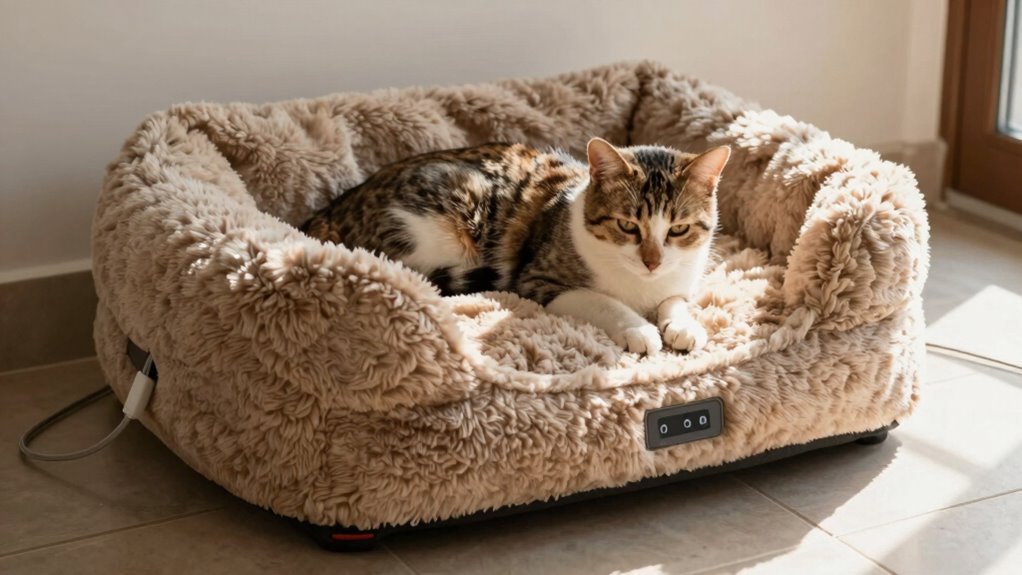
One common mistake pet owners make is neglecting to choose the right size and type of heated bed for their pet. Using a bed that’s too small or too large can cause discomfort or safety issues. Additionally, beware of incorrect wiring, which can lead to electrical hazards or fires. Always verify the wiring is properly installed and compatible with the bed’s specifications. Another mistake is selecting beds made from unsuitable materials, like cheap fabrics that can overheat or degrade quickly. These materials may also trap heat unevenly, risking burns or discomfort. To avoid these pitfalls, always opt for beds with certified wiring and high-quality, pet-safe materials. Proper research and adherence to manufacturer guidelines are key to keeping your pet safe and comfortable.
How Do I Know If My Pet Is Comfortable and Safe?
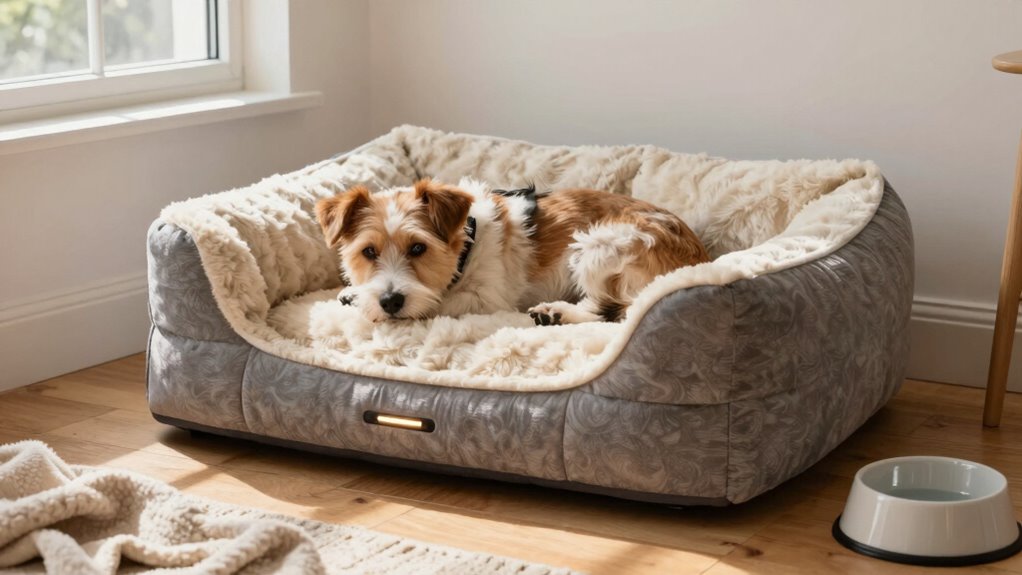
You can tell your pet is comfortable and safe in their heated bed by observing their behavior and physical cues. If they’re relaxed, often curled up or resting peacefully, it indicates they feel secure. Watch for signs of pet anxiety, such as restlessness or excessive licking, which suggest discomfort. Proper temperature regulation is key; your pet shouldn’t be panting or trying to escape the bed, as that shows it’s too hot. Conversely, if they’re shivering or seeking additional warmth elsewhere, the bed may be too cold or poorly heated. Keep an eye on their overall demeanor—calm and content pets are usually comfortable and safe. Adjust the temperature if needed, and ensure the bed’s placement minimizes stress and promotes relaxation.
Frequently Asked Questions
How Long Should My Pet Stay on a Heated Bed Daily?
You should limit your pet’s time on a heated bed to a few hours daily to guarantee proper temperature regulation. Keep an eye on their comfort and behavior, and avoid leaving them on the bed continuously. The ideal daily duration depends on your pet’s age, health, and the bed’s temperature. Regularly check for signs of overheating or discomfort, and always follow manufacturer guidelines for safe use.
Can Heated Pet Beds Be Used Outdoors Safely?
Imagine your pet nestled in a cozy heated bed under a clear sky—outdoor use depends on weather considerations and safety. You can use heated pet beds outside if you verify they’re weatherproof and placed in a sheltered spot, away from rain, snow, or direct sunlight. Always monitor temperature settings and avoid exposing the bed to extreme conditions, so your furry friend stays warm and safe in every season.
What Signs Indicate My Pet Is Overheating?
You’ll notice signs of overheating if your pet panting excessively, drooling more than usual, or acting restless and anxious. They might also have red or glazed eyes, a rapid heartbeat, or seem weak and unsteady. If your pet shows these discomfort signs, move them to a cooler area, offer water, and monitor closely. Recognizing these signs helps prevent heatstroke and keeps your furry friend safe and comfortable.
Are Heated Pet Beds Suitable for All Ages and Health Conditions?
Heated pet beds aren’t suitable for all ages and health conditions. If your pet is very young, old, or has health restrictions like skin issues or heart problems, consult your vet first. Younger or healthier pets might enjoy the warmth, but others could overheat or become anxious. Always monitor your pet closely, and guarantee the bed’s temperature is safe and appropriate for their specific age and health needs.
How Often Should I Replace or Inspect Heated Pet Beds?
You should inspect your heated pet bed weekly for any signs of damage or wear, especially the bed material. Replace it if you notice fraying, exposed wiring, or malfunctioning controls. Regularly check its energy efficiency to make sure it’s not consuming excessive power, which can be a safety concern. If the bed becomes old or damaged, replacing it promptly helps keep your pet safe and comfortable, maintaining ideal warmth and safety.
Conclusion
Choosing the right heated pet bed ensures your furry friend stays cozy and safe—think of it as giving them a warm hug every day. By placing it correctly, monitoring the temperature, and avoiding common mistakes, you create a haven where comfort and safety reign supreme. Remember, a well-chosen bed isn’t just a place to rest; it’s a symbol of your love—turning your pet’s comfort into a warm, everlasting embrace.