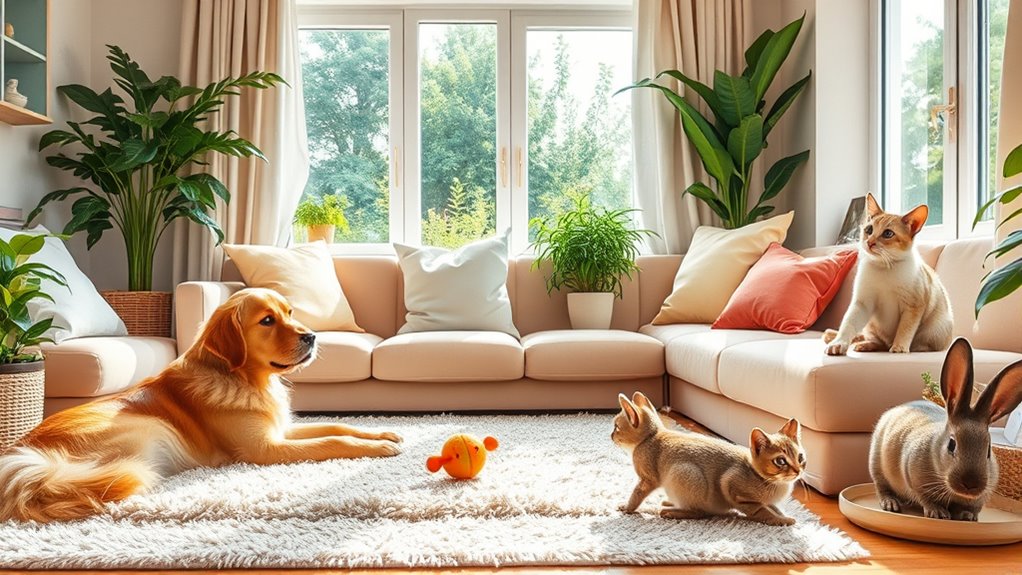

To foster harmony and happiness in a multi-pet household, observe your animals closely to understand their personalities and triggers. Set clear boundaries and designated spaces for each pet, and use positive reinforcement to encourage good behavior. Be consistent with routines, patient as they adapt, and address conflicts privately. With thoughtful management and loving guidance, you can create a peaceful environment—there’s plenty more to explore on how to make this balance work best for your pets.
Key Takeaways
- Establish clear boundaries and designated spaces for each pet to reduce territorial disputes.
- Use consistent routines and positive reinforcement to encourage good behavior and trust.
- Observe and understand individual pet cues to prevent conflicts and address stress early.
- Introduce new pets gradually with calm, controlled interactions to ease transitions.
- Maintain patience and adaptability, adjusting training methods to foster harmony and long-term cooperation.
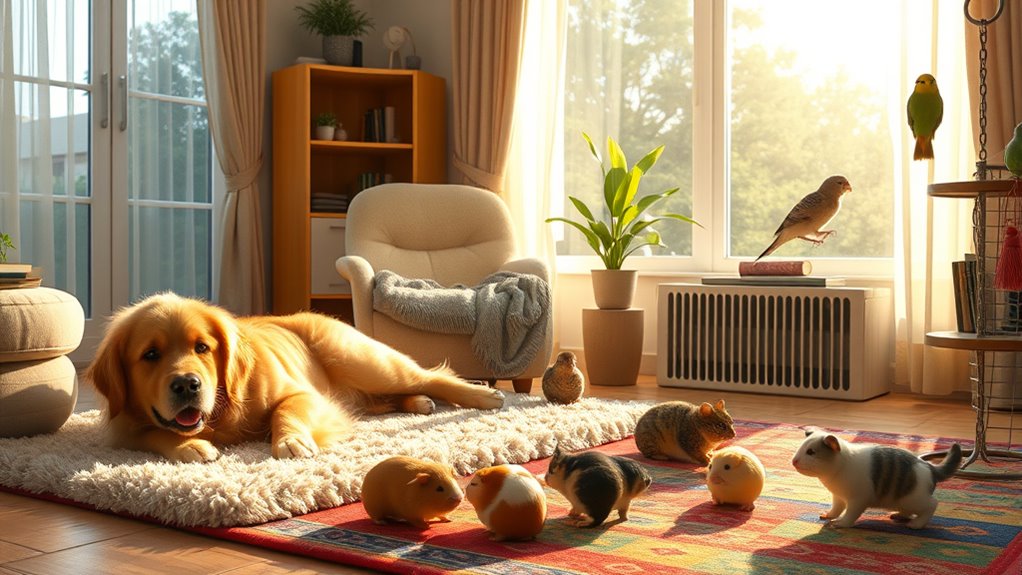
Managing a household with multiple pets can be challenging, but with the right approach, it becomes a rewarding experience. One of the most important aspects is understanding pet behavior. Every animal is unique, with distinct personalities, triggers, and reactions. Observing how your pets interact, what causes conflicts, and what makes them happy helps you create a harmonious environment. Recognizing signs of stress or discomfort early can prevent larger issues down the road. For example, if your dog growls when another pet approaches its food, you know to manage mealtime better. By paying attention to these cues, you can tailor your training strategies to address specific behaviors and needs. Additionally, understanding pet behavior patterns can help you predict and prevent potential conflicts before they escalate.
Effective training strategies are essential for managing multiple pets. Consistency is key, so establish clear rules and routines that all pets understand. Use positive reinforcement to encourage good behavior—praise, treats, or playtime work well. When introducing new pets, take it slow. Allow them to get used to each other’s scent and presence gradually, avoiding sudden confrontations. This helps prevent territorial disputes and builds a foundation of trust. When conflicts do arise, intervene calmly and redirect attention to positive activities. Never punish pets out of frustration; instead, focus on reinforcing desirable behaviors.
Consistency, patience, and positive reinforcement foster harmony among multiple pets.
Another useful training strategy involves setting boundaries. Designate specific areas for each pet, such as separate beds or feeding zones, to minimize competition and territorial issues. This not only helps with pet behavior but also gives each animal a sense of security. Training sessions should be short, engaging, and consistent. Regularly reinforce commands and behaviors you want to see repeated. If one pet exhibits unwanted behavior, address it immediately and privately, avoiding punishing others for reactions they can’t control.
In multi-pet households, patience and persistence are crucial. Training takes time, especially when managing different personalities and behaviors. Keep your approach positive and avoid harsh corrections, which can undermine trust and sometimes escalate conflicts. Remember, every pet responds differently, so adapt your strategies accordingly. Over time, your pets will learn to coexist, communicate better, and respect each other’s space. With thoughtful observation, consistent training, and patience, you’ll cultivate a peaceful, happy home where all your pets feel safe and loved. Managing pet behavior through effective training strategies isn’t just about discipline—it’s about building a trusting relationship that promotes harmony in your household.

OLANLY Dog Door Mat for Muddy Paws 30×20, Ultra Absorbent Chenille Mud Doormat, Non-Slip Washable and Dirt Trapping Doormat for Indoor Entryway, Quick-Dry Indoor Pet Bed Mats for Dogs, Grey
[SOFT AND COMFORTABLE] Treat yourself and your furry friends to the cloud-like softness of the OLANLY Chenille Dog…
As an affiliate, we earn on qualifying purchases.
As an affiliate, we earn on qualifying purchases.
Frequently Asked Questions
How Do I Introduce New Pets to My Existing Household?
When introducing pets, do so gradually to guarantee a smooth integration. Start by keeping them separate but allowing scent exchanges through bedding or toys. Gradually increase their supervised interactions, watching for signs of stress or aggression. Use positive reinforcement to reward calm behavior. This gradual integration helps build trust, minimizes conflict, and encourages your pets to accept each other, creating a harmonious multi-pet household.
What Are Signs of Pet Jealousy in a Multi-Pet Home?
You notice subtle signs of pet jealousy—are they guarding resources like food, toys, or attention? Watch for behaviors like sulking, growling, or aggressive posturing when another pet approaches. These jealousy behaviors often reveal a sense of insecurity or resource guarding. If left unchecked, they can escalate. Stay alert, observe their interactions closely, and make certain each pet feels secure and loved to maintain harmony in your multi-pet household.
How Can I Prevent Pets From Competing Over Resources?
To prevent pets from competing over resources, guarantee you establish clear territorial boundaries and promote resource sharing. Place food bowls, water, and toys in separate, easily accessible areas for each pet. Reinforce positive behavior when they share or respect boundaries, and avoid giving special privileges that might create jealousy. Consistent routines and fair distribution of resources help reduce competition and foster harmony in your multi-pet household.
What Are Effective Ways to Manage Different Pet Personalities?
You should focus on personality matching when introducing new pets to guarantee compatibility. Observe each pet’s unique traits and behaviors to tailor interactions accordingly. Provide individual attention to each pet, reinforcing their sense of security and importance. Consistently monitor their interactions, adjusting your approach as needed. By understanding and respecting their personalities, you foster a harmonious environment where all pets feel valued and comfortable.
How Do I Handle Conflicts Between Pets Calmly?
Imagine a tense standoff, like a storm brewing in your living room. Stay calm yourself, using calming techniques like deep breaths or gentle petting. Separate the pets if needed, then slowly reintroduce them with positive reinforcement. In pet conflict resolution, your calm demeanor sets the tone, helping your pets feel secure. Your patience and steady presence can turn stormy moments into peaceful, harmonious interactions.

Cupount Dog Screen Mesh Gate for Stairs Pet Gates for The House: for Doorways Stairways Indoor 29 inches Tall, 38 inch Wide, Fits 32-35 inch Openings
Easy to Install: This dog gate measures 29 x 38 inches and fits gate widths from 32 to…
As an affiliate, we earn on qualifying purchases.
As an affiliate, we earn on qualifying purchases.
Conclusion
By embracing patience and organization, you turn chaos into harmony, transforming your home into a sanctuary where every pet feels loved. Remember, managing a multi-pet household isn’t just about rules—it’s about nurturing bonds and understanding their unique personalities. Like a symphony, your home thrives when each pet’s needs are met in harmony. With a little effort and a lot of love, you’ll create a joyful, peaceful haven where all your pets can flourish together.

Pet Botanics 20 oz. Pouch Training Rewards Soft & Chewy, Bacon Flavor, with 500 Treats Per Bag, The Choice of Top Trainers
BIG MOTIVATION IN EACH MINI BITE. Each of these 3 calorie treats are packed with flavor from pork…
As an affiliate, we earn on qualifying purchases.
As an affiliate, we earn on qualifying purchases.

Hooded Dog Bed for Small Dogs, Nest Dog Beds, Washable Cute Cat Cave Bed, Cozy Nook Pet Bed for Dogs or Cats, Anti-Slip Puppy Bed Fits up to 22 lbs Pets(Grey, 20" x 20")
【2 Ways to Switch Freely】This uniquely designed small dog bed has two ways to use it, when the…
As an affiliate, we earn on qualifying purchases.
As an affiliate, we earn on qualifying purchases.