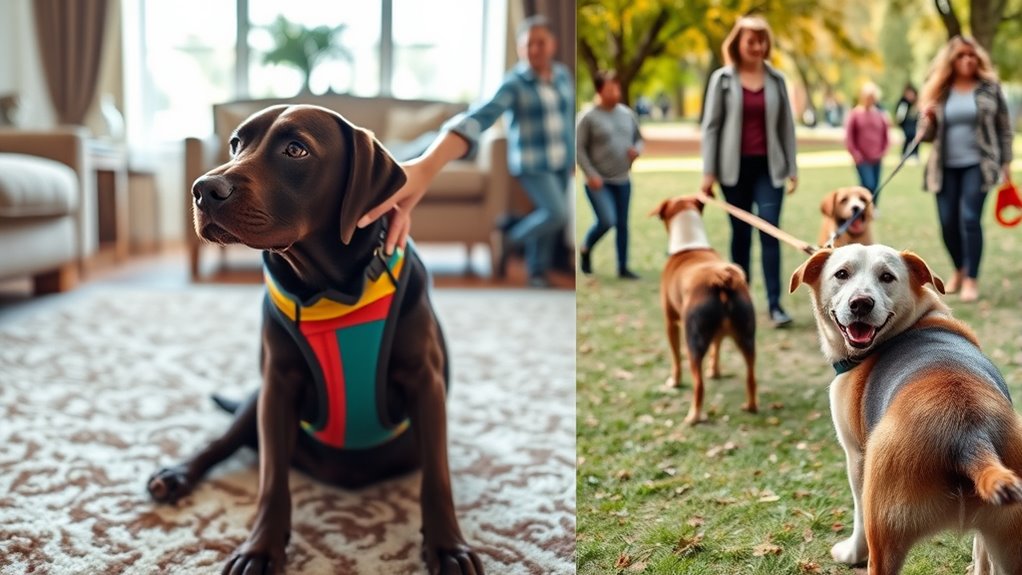

Practicing good pet etiquette means keeping your dog well-mannered both at home and in public. This involves consistent training, positive reinforcement, and regular grooming to guarantee your dog behaves appropriately and looks and feels good. It also means keeping your dog on a leash, respecting others’ space, and cleaning up after your pet. Making these habits part of your routine helps create a respectful environment for everyone. Keep exploring to learn more about fostering harmony with your furry friend.
Key Takeaways
- Consistently train your dog with positive reinforcement to promote good manners at home and in public.
- Keep dogs on a short leash and control their behavior in crowded or unfamiliar public spaces.
- Properly dispose of waste using waste bags to maintain cleanliness and respect shared environments.
- Regularly groom your dog to ensure hygiene, reduce shedding, and prevent odors.
- Respect others’ space and comfort, avoiding disruptive behaviors like barking or jumping in public settings.
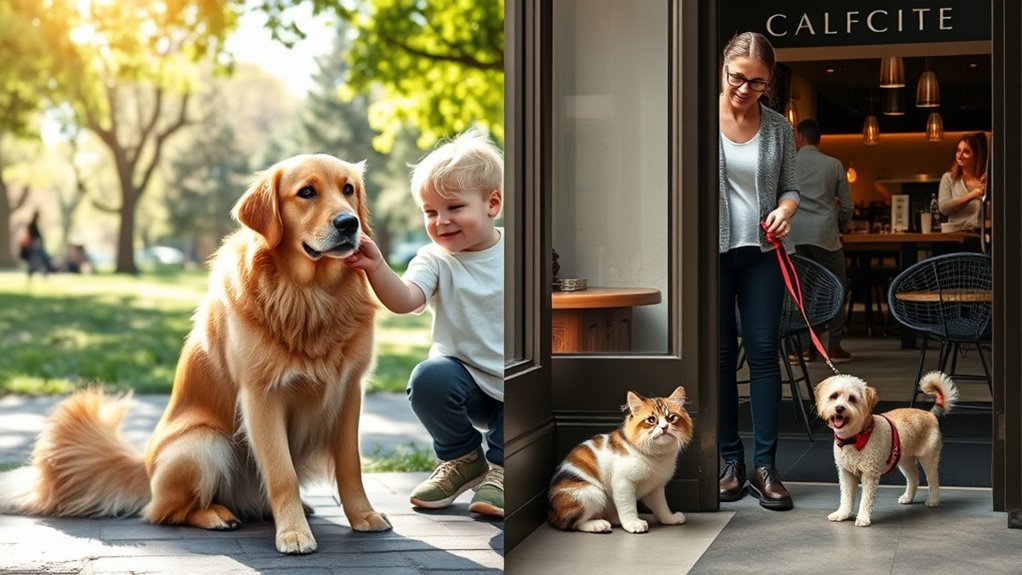
Pet etiquette is fundamental for ensuring that both your furry friends and others around them have positive experiences. When you understand and practice good manners, you create a harmonious environment where everyone feels comfortable. This includes knowing how to handle your dog, whether at home or in public spaces. Proper pet training is essential because it teaches your dog acceptable behaviors, making outings more enjoyable and less stressful. Regular dog grooming also plays a role in pet etiquette, as a clean and well-maintained dog shows respect for your pet and those around you. Grooming helps prevent unpleasant odors and reduces shedding, which keeps your home and public areas cleaner.
Pet etiquette ensures positive experiences for dogs and everyone around them through good manners and proper handling.
When it comes to pet training, consistency is key. Teach your dog basic commands like sit, stay, and come, so you can better control their actions in various situations. Well-trained dogs are less likely to jump on strangers, bark excessively, or pull on the leash. Reinforcing good manners through positive reinforcement encourages your dog to repeat desirable behaviors. Remember, patience is essential—training takes time, and every dog learns at its own pace. Keep training sessions short, fun, and frequent, and always reward progress. When your dog responds reliably, it’s easier to navigate social settings without worry.
Dog grooming is also a critical aspect of pet etiquette. Regular brushing not only keeps your dog looking neat but also provides an opportunity to check for skin issues or parasites. A clean dog is less likely to carry dirt or smell unpleasant, which helps maintain good hygiene in shared spaces. Bathing your dog as needed, based on their breed and activity level, is another important step. Trim their nails to prevent discomfort or accidental scratches, especially if they tend to be active or playful. Proper grooming demonstrates respect for your pet’s well-being and makes interactions with others more pleasant.
In public, leash manners are essential. Always keep your dog on a short leash and ensure they are under control, especially in crowded or unfamiliar places. Respect other people’s personal space, and avoid letting your dog approach strangers without permission. Clean up after your pet diligently—carrying waste bags and disposing of them properly shows consideration for everyone. If your dog gets overly excited or anxious around new people or animals, use training techniques to help them stay calm. Socialization, combined with good grooming, helps your dog behave appropriately and reduces the likelihood of conflicts.

BARKIE Dog Training Kit – Treat Pouch, Pet Training Fanny Pack, 2 Puppy Training Clickers, Ultrasonic Silent Whistle, 2-in-1 Whistle Clicker, Clicker Training Guide Booklet, Dog Poop Bag (Black)
【Rich Dog Training Kit】 Includes a training waist bag, a silicone dog treat bag, 2 dog training clickers…
As an affiliate, we earn on qualifying purchases.
As an affiliate, we earn on qualifying purchases.
Frequently Asked Questions
How Do I Introduce My Pet to New People Politely?
When introducing your pet to new people, start with a calm pet greeting to set a positive tone. Allow the guest to approach your pet at their pace, avoiding sudden movements. During the guest introduction, hold your pet gently and use a friendly tone. Observe your pet’s reactions, and if they seem comfortable, encourage gentle petting. This respectful approach helps everyone feel at ease and creates a pleasant experience.
What Should I Do if My Pet Is Aggressive in Public?
If your pet shows aggression in public, stay calm and keep control of their leash or area. Remove them from the situation immediately to guarantee pet safety and prevent escalation. Avoid punishing them, and consult a veterinarian or animal behaviorist if aggressive behavior persists. Being proactive helps you handle veterinary emergencies and ensures your pet feels secure, reducing future aggression and promoting positive interactions in public spaces.
Are There Specific Etiquette Rules for Pet-Friendly Restaurants?
Think of dog-friendly dining as a delicate dance where you set the rhythm. When at pet-friendly restaurants, follow pet menu etiquette by keeping your dog on a leash, ensuring they’re well-behaved, and not demanding food from others. Respect the space by cleaning up after your pet and never leaving them unattended. These simple steps help everyone enjoy the experience, turning a meal into a harmonious gathering for humans and pups alike.
How Can I Train My Pet to Avoid Disturbing Neighbors?
You can train your pet to avoid disturbing neighbors by setting clear pet boundaries and consistently reinforcing quiet behavior. Use positive reinforcement when your dog remains calm and quiet, especially during noisy times. Address dog noise early by redirecting your pet’s attention and providing plenty of exercise to reduce excess energy. Establish a designated quiet space, and communicate with neighbors about your efforts. Your consistency will help your pet learn respectful boundaries.
What Are Proper Leash Manners in Crowded Areas?
When walking your pet in crowded areas, practice proper leash manners by keeping a firm but gentle grip on the leash. Stay alert, avoid pulling, and maintain control to prevent your pet from startling others. Use short, consistent leash holding to guide your pet smoothly through crowded walking situations. This helps keep everyone safe and comfortable, making your outings more enjoyable for both you and your furry friend.

No Pull Dog Harness Adjustable Reflective Oxford Easy Control Medium Large Dog Harness with A Free Heavy Duty 5ft Dog Leash
【 NO PULL & NO CHOKE 】tobeDRI dog harness featured with 2 strong metal delta shape-rings on front…
As an affiliate, we earn on qualifying purchases.
As an affiliate, we earn on qualifying purchases.
Conclusion
Mastering pet etiquette is like tending a delicate garden; with patience and care, your harmony with your furry friend and others blossoms. Remember, respectful manners at home and in public create a symphony of understanding that everyone can enjoy. By being considerate and attentive, you nurture a bond rooted in trust and kindness. Keep these principles close—your pet’s well-being and your community’s peace will flourish, turning everyday moments into treasured memories.

Lanswood Dog Brush Dog Grooming Kit 6PCS Dog Brush for Shedding-Dog Brushes for Grooming, Dematting Comb for Dogs, Cat Nail Clipper with Nail File, Flea Comb, Bath Brush(Blue)
Professional Pet Grooming Kit: 6-Piece dog brush kits can meet your pet's daily grooming needs – Includes slicker…
As an affiliate, we earn on qualifying purchases.
As an affiliate, we earn on qualifying purchases.

VEVOR Pet Waste Bin, 11.5 Gallon Dog Poop Station with 50 Liners & 600 Bags, Outdoor Dog Waste Disposal System
Great User Experience: This dog waste station includes a trash can, a lockable dog poop bag dispenser, and…
As an affiliate, we earn on qualifying purchases.
As an affiliate, we earn on qualifying purchases.