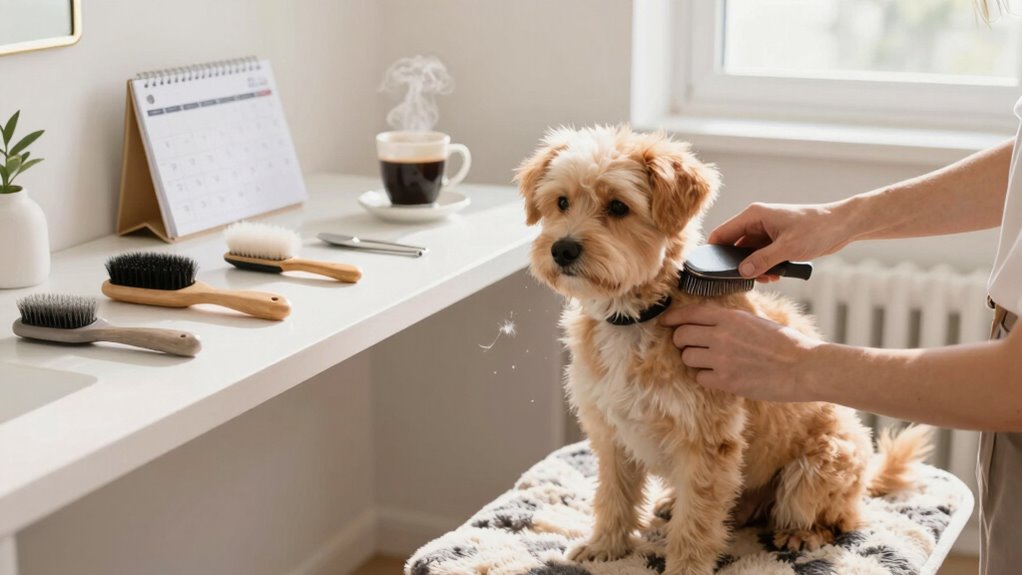

Creating a stress-free deshedding schedule involves consistent grooming tailored to your pet’s coat and shedding patterns. Use gentle tools like undercoat rakes or slicker brushes regularly, especially during peak shedding seasons. Incorporate daily habits such as feeding a healthy diet, keeping the environment clean, and staying calm during grooming sessions. If you stick to a routine and pay attention to your pet’s comfort, managing shedding becomes easier. Keep going, and you’ll discover tips to keep fur under control without the drama.
Key Takeaways
- Establish a consistent grooming routine tailored to your pet’s coat type and shedding season.
- Increase grooming frequency during peak shedding periods to manage loose fur effectively.
- Use appropriate deshedding tools like undercoat rakes and slicker brushes for efficient fur removal.
- Incorporate daily habits such as regular brushing, a balanced diet, and proper hydration to reduce shedding.
- Monitor for any signs of skin issues or excessive shedding, and consult a vet if problems persist.

Maxpower Planet Original Pet Grooming Rake – Double-Sided Deshedding Dematting Tool, Undercoat Rake for Dogs & Cats, Extra-Wide Dog Grooming Brush & Deshedder Comb for Long Hair, Reduces Shedding 95%
DUAL-SIDED DESIGN: Our Undercoat Rake Dog brush is perfect for deshedding your pet's coat. Designed with a dual-sided…
As an affiliate, we earn on qualifying purchases.
As an affiliate, we earn on qualifying purchases.
Why Pets Shed and What’s Normal
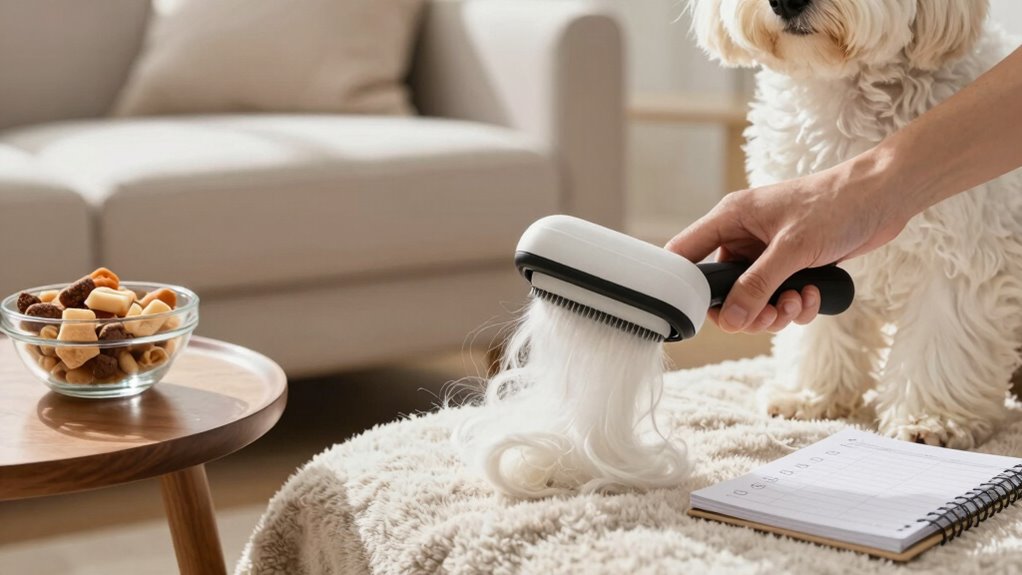
Pets shed to get rid of old, damaged, or excess hair, which helps maintain healthy and clean coats. Shedding is a natural process, often influenced by your pet’s coat color and type. For example, some breeds with darker or lighter coat colors may shed more visibly, but all pets shed to some extent. Shedding seasons, typically in spring and fall, trigger your pet’s body to prepare for temperature changes, leading to increased hair loss. This is normal and varies among breeds and individual pets. Understanding what’s typical helps you distinguish between normal shedding and excessive hair loss. Regular grooming during shedding seasons can make the process easier and keep your home cleaner, ensuring your pet’s coat stays healthy. Understanding shed patterns can help you manage hair loss more effectively. Additionally, knowing about breed-specific traits can inform your grooming routine and shed management strategies, especially since coat types and shedding behaviors vary widely among breeds. Recognizing seasonal shedding cycles can also help you anticipate periods of increased shedding and plan your grooming accordingly. Being aware of environmental influences can further aid in managing your pet’s shedding habits.
Maxpower Planet Original Pet Grooming Rake – Double-Sided Deshedding Dematting Tool, Undercoat Rake for Dogs & Cats, Extra-Wide Dog Grooming Brush & Deshedder Comb for Long Hair, Reduces Shedding 95%
DUAL-SIDED DESIGN: Our Undercoat Rake Dog brush is perfect for deshedding your pet's coat. Designed with a dual-sided…
As an affiliate, we earn on qualifying purchases.
As an affiliate, we earn on qualifying purchases.
The Best Deshedding Tools for Your Pet
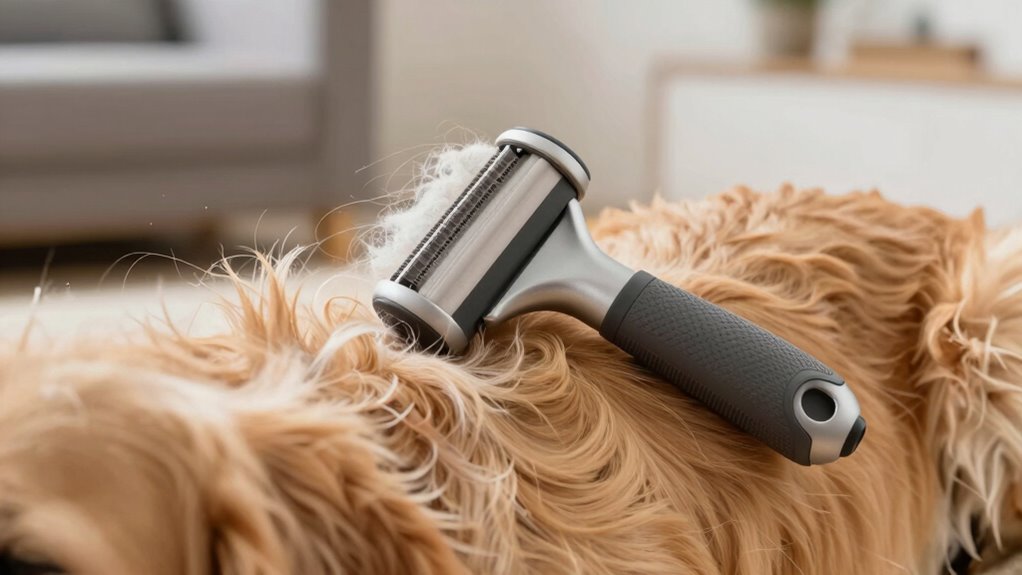
Choosing the right deshedding tools can make a significant difference in managing your pet’s shedding. The best tools support fur maintenance and promote coat health, making grooming easier and more effective. Undercoat rakes are excellent for removing loose fur deep within the coat, reducing shedding around your home. Slicker brushes help detangle hair and stimulate skin health, preventing mats and promoting a shiny coat. Rubber grooming gloves are gentle but effective for cats and dogs, helping lift loose fur without causing discomfort. Deshedding tools with stainless steel blades or teeth are durable and easy to clean, ensuring consistent results. Selecting the right tool depends on your pet’s breed, coat type, and sensitivity. Proper use of these tools improves fur maintenance and keeps your pet comfortable and healthy. Regular grooming not only reduces shedding but also supports coat health and skin by distributing natural oils for a healthier coat. Additionally, using high-quality grooming tools can make the process more efficient and comfortable for both you and your pet. Incorporating appropriate grooming techniques can further enhance your pet’s comfort and the effectiveness of shedding management.

3PCS Self Cleaning Slicker Brush & Pet Grooming Rake & Flea Comb for Dogs, Cats and Horses | Double-Sided Dematting Comb & Skin Friendly Deshedding Grooming Tool | Premium Pet Supplies (Blue)
【Professional Pet Grooming Kit 】3 Pet grooming tools selected by pet lovers, which can meet daily all the…
As an affiliate, we earn on qualifying purchases.
As an affiliate, we earn on qualifying purchases.
How to Build a Grooming Routine That Reduces Shedding
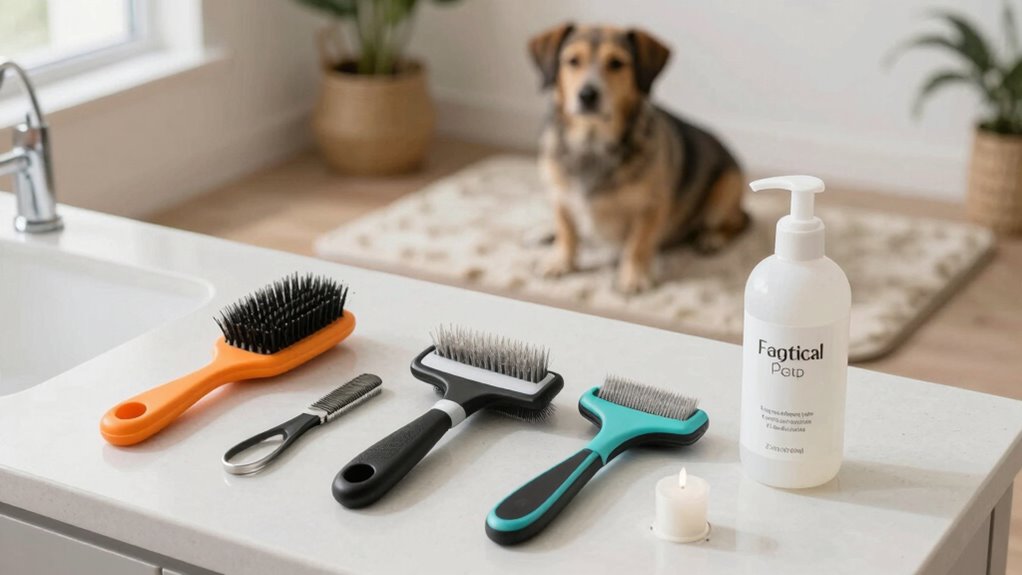
Establishing a consistent grooming routine is essential for minimizing shedding and maintaining your pet’s coat health. Many grooming myths suggest that daily brushing is always necessary, but understanding your pet’s specific needs helps create an effective schedule. During shedding seasons, more frequent grooming can considerably reduce loose fur around your home. Use quality tools designed for your pet’s coat type, and stick to a regular routine to prevent matting and excess shedding. Avoid thinking that grooming is only needed during heavy shedding; regular maintenance keeps fur healthier year-round. By establishing a schedule tailored to your pet’s coat and shedding patterns, you’ll reduce fur around the house and promote a happier, healthier coat. Consistent grooming is key to managing shedding effectively. Additionally, understanding animal traits influenced by astrology can sometimes provide insights into your pet’s specific grooming needs and shedding tendencies. Incorporating proper grooming tools into your routine can further enhance the effectiveness of shedding control. Remember that pet health also plays a vital role in shedding, so regular veterinary checkups can help identify underlying issues. Moreover, Lifevest Advisors recommends researching and consulting professionals to ensure your grooming practices align with your pet’s well-being.

NVNAN Pet Hair Removal Glove for Dogs & Cats, 2-in-1 Deshedding Brush & Massage Mitt – Grooming Gloves for Shedding Control, Bathing and Washing, Safe for Short/Long Hair Pets 2-Pack (Blue)
All – in – One Grooming Solution: These dog grooming gloves and cat grooming gloves are a must…
As an affiliate, we earn on qualifying purchases.
As an affiliate, we earn on qualifying purchases.
Daily Habits to Keep Fur Under Control at Home
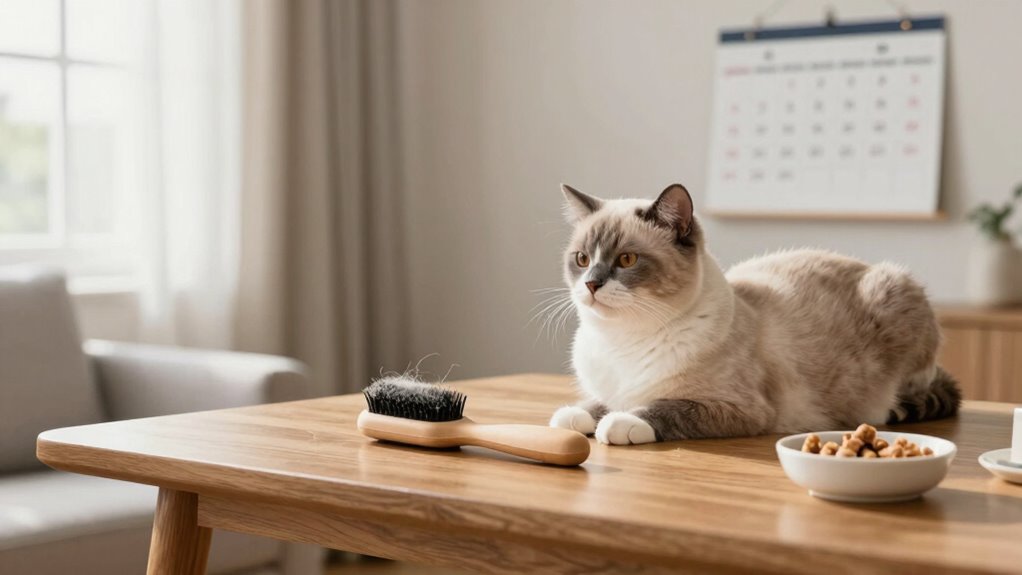
To keep fur under control at home, incorporating simple daily habits can make a significant difference. First, pay attention to your pet’s diet; high-quality food with essential nutrients can promote healthy skin and reduce excess shedding. Regularly brushing your pet not only removes loose fur but also stimulates skin health. Be mindful of environmental factors—keep your home clean by vacuuming frequently and using washable bedding to minimize fur buildup. Additionally, maintaining proper hydration is crucial, as it supports skin and coat health. Guarantee proper hydration and avoid sudden temperature changes, which can stress your pet and increase shedding. Establishing a consistent routine can help shed management practices and maintain a healthy coat. Incorporating effective grooming tools can also enhance fur removal and improve coat condition. Small daily actions, like monitoring your pet’s diet and managing environmental conditions, can greatly improve shedding control and keep your living space cleaner. Regular coating inspections can help catch skin issues early and promote overall coat health.
Troubleshooting Shedding Problems and When to See a Vet
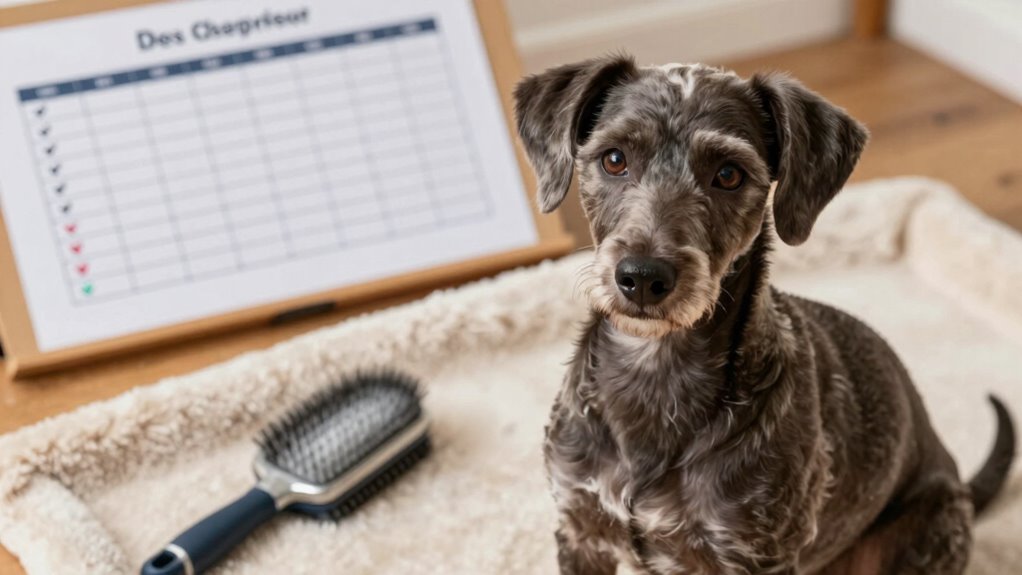
If your pet’s shedding suddenly increases or seems abnormal, it’s important to pay attention to potential underlying issues. Seasonal changes often trigger extra shedding, but allergy symptoms can also cause excessive hair loss and skin irritation. Here are signs you should see a vet:
Sudden or abnormal shedding may indicate allergies or health issues requiring veterinary attention.
- Shedding persists beyond seasonal changes or irregularly spikes
- Skin shows redness, inflammation, or sores
- Your pet scratches, bites, or licks excessively
- Hair loss accompanied by other symptoms like lethargy or changes in appetite
These signs may indicate allergies, hormonal imbalances, or other health problems. If you notice any of these, consulting a veterinarian helps identify the cause and get appropriate treatment. Addressing issues early prevents further discomfort and hair loss. Additionally, understanding the shedding process of your pet can help manage expectations and grooming routines more effectively. Recognizing symptoms of skin irritation linked to shedding can also guide timely intervention. Being aware of related health conditions can further aid in comprehensive care and prevention, especially when abnormal shedding patterns are observed. Paying attention to environmental factors can also reduce shedding-related stress for your pet.
Frequently Asked Questions
How Does Diet Influence My Pet’s Shedding?
Your pet’s diet directly influences shedding by impacting hair follicle health. High-quality food rich in essential fatty acids, vitamins, and minerals nourishes their skin and promotes strong, healthy hair. When you feed your pet a balanced diet, you support ideal hair follicle function, reducing excessive shedding. Avoid low-quality fillers and focus on nutrient-dense options to keep your pet’s coat shiny and minimize the drama of shedding.
Can Environmental Factors Increase Shedding?
Think of your pet’s coat as a garden that responds to the weather. Seasonal changes can trigger extra shedding, like leaves falling in autumn. Indoor humidity also plays a role, with dry air making fur brittle and prone to shedding. You can help by maintaining consistent humidity levels and providing a cozy environment. This way, you keep shedding in check and your pet’s coat healthy, no drama needed.
Are There Natural Remedies to Reduce Shedding?
Yes, there are natural remedies you can try for shedding reduction. Regularly brushing your pet helps remove loose hair and stimulates healthy skin. You can also incorporate omega-3 fatty acids into their diet, which promotes a shiny coat and reduces excess shedding. Additionally, using coconut oil or aloe vera topically can soothe irritated skin, supporting overall coat health. Consistency with these remedies can make a noticeable difference in shedding.
How Often Should I Replace Deshedding Tools?
You should replace your deshedding tools every 6 to 12 months, depending on their durability and how often you use them. Regularly check for signs of wear, such as bent or dull blades, which reduce effectiveness. Proper replacement frequency guarantees your tool stays effective, preventing unnecessary tugging or discomfort for your pet. Investing in quality tools and replacing them when needed helps maintain a smooth shedding process without drama.
Does Age Affect My Pet’s Shedding Patterns?
Yes, your pet’s shedding patterns change with age. Younger animals often shed more during growth spurts, while older pets might shed less or more unpredictably due to age-related changes. Breed-specific shedding also influences this, as some breeds naturally shed more or less. You’ll notice the difference as your pet matures, requiring you to adjust your grooming routine accordingly, balancing regular deshedding with patience and care.
Conclusion
With a steady routine, shedding becomes a manageable tide rather than a relentless storm. By choosing the right tools and habits, you’re steering your pet’s coat toward calmer waters, letting love and care be your lighthouse. Remember, a little patience goes a long way—soon, your home will be a cozy haven where fur’s gentle drifts are just part of the journey. Keep sailing smoothly, and enjoy the companionship that makes every fur-laden moment worth it.