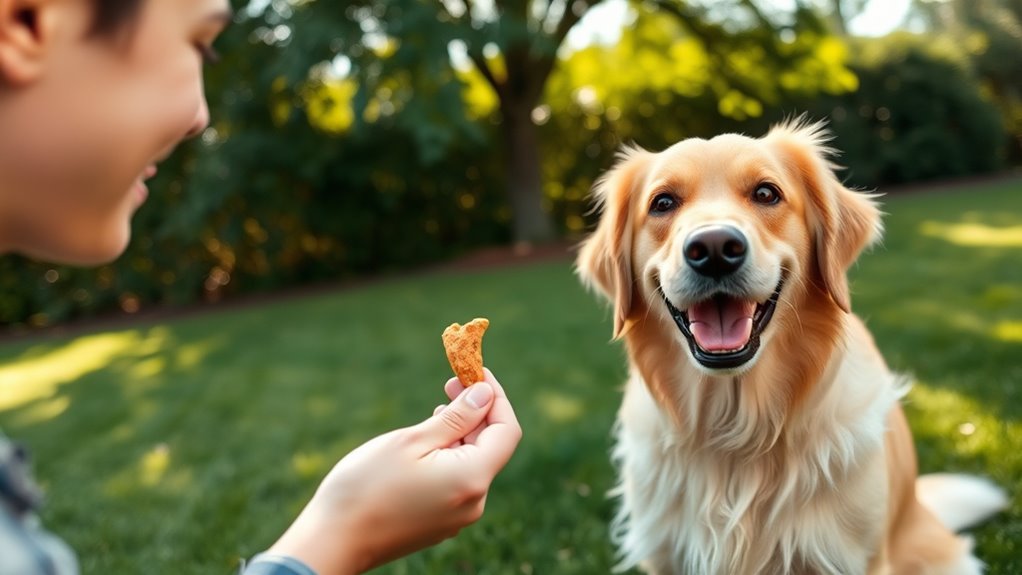

Using positive reinforcement is the best way to train your pet kindly and effectively. Focus on rewarding good behaviors with treats, praise, or play to encourage them to repeat those actions. Be patient and consistent, rewarding calm or desired behaviors while avoiding punishment. Recognizing calming signals helps prevent stress and builds trust. If you keep practicing these gentle techniques, you’ll see better behavior and a happier, more confident pet. Continue to learn more for lasting success.
Key Takeaways
- Use treats, praise, or play as rewards to reinforce desired behaviors consistently.
- Recognize and respond to calming signals to prevent stress and promote trust during training.
- Pair positive reinforcement with crate training by rewarding calm entry and inside behavior.
- Maintain patience and consistency to gradually shape and strengthen good behaviors.
- Avoid punishment; focus on humane methods that foster confidence and a positive training environment.
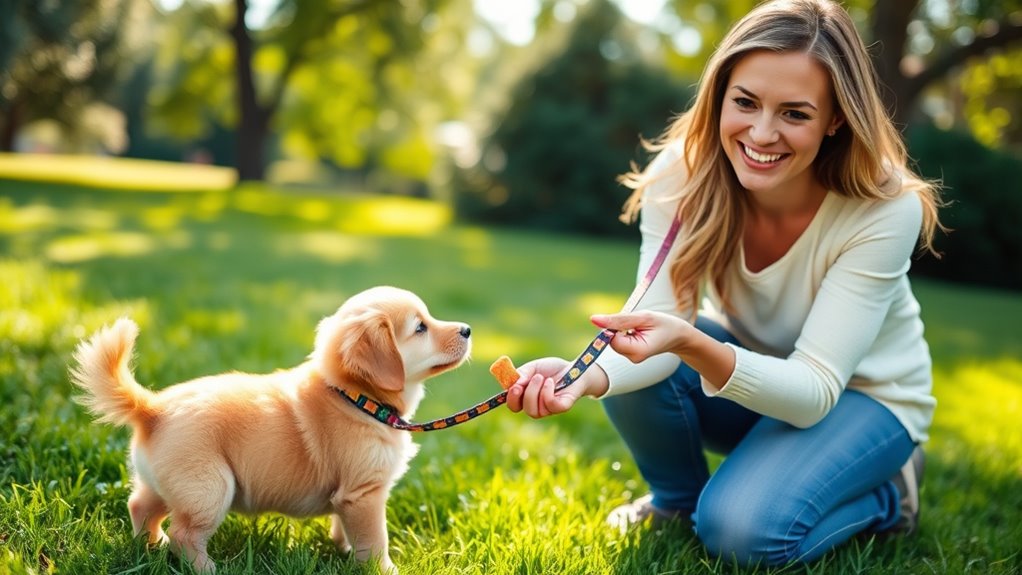
Have you ever wondered what it really takes to get started with effective training? It all begins with understanding your pet’s signals and responses. One of the first steps is recognizing calming signals—subtle behaviors your pet uses to communicate stress or discomfort. These signals, like yawning, lip licking, or turning their head away, serve as early warnings that your pet might be overwhelmed or anxious. By noticing these signs, you can adjust your approach to keep training sessions positive and stress-free. This awareness helps build trust and prevents your pet from becoming fearful or resistant. Recognizing these signals also ties into the importance of vetted training methods that are proven to be effective and humane.
Crate training is another fundamental aspect of training that can set the tone for your pet’s behavior and safety. Many pets initially see crates as confinement, which can cause anxiety or resistance. However, with positive reinforcement techniques, you can turn crate training into a rewarding experience. Start by making the crate inviting—place treats, toys, and comfortable bedding inside. Encourage your pet to explore it at their own pace, never forcing them in. When they enter voluntarily, praise them and offer treats, reinforcing that the crate is a safe, happy place. Over time, gradually increase the duration they spend inside, always pairing the experience with calm praise and rewards. This process uses positive reinforcement to reshape your pet’s perception of the crate, making it a secure spot rather than a punishment.
Throughout this process, patience and consistency are key. Using positive reinforcement techniques, like treats, praise, or play, encourages your pet to repeat desired behaviors. For example, when your dog exhibits calming signals during training, acknowledge this calmly and reward them. This reinforces that staying calm and relaxed is beneficial, helping to reduce stress and improve focus. When it comes to crate training, reward your pet for entering and staying in the crate calmly, gradually building their comfort level. Avoid punishment or harsh corrections, as these can undermine your efforts and cause setbacks.

Lil' Bitz Soft & Chewy Training Treats for Dogs, Bite Size Reward Treats for Training & Positive Reinforcement, Grain Free Treats Made with Real Chicken, Flame Roasted Chicken Flavor, 4 oz Bag
PERFECT TRAINING TREATS (BITE SIZE REWARDS) – Small bite-sized treats are ideal for frequent rewarding during obedience training,…
As an affiliate, we earn on qualifying purchases.
As an affiliate, we earn on qualifying purchases.
Frequently Asked Questions
How Long Does It Typically Take to See Results With Positive Reinforcement?
You can usually see results within a few days to a couple of weeks with positive reinforcement, but it depends on your training consistency, patience, and persistence. If you stay consistent and provide immediate rewards, your pet will learn faster. Keep in mind that every animal is different, so remain patient and persistent, and celebrate small successes along the way. With steady effort, your pet will improve over time.
Can Positive Reinforcement Work for Aggressive or Fearful Pets?
Did you know that around 70% of aggressive or fearful pets respond well to positive reinforcement? Yes, it can be effective for aggression management and fear reduction techniques. You just need patience and consistency. Focus on rewarding calm behavior, avoid punishment, and gradually expose your pet to triggers. Over time, you’ll build trust and help your pet feel safer, making positive reinforcement a powerful tool for difficult behaviors.
What Are the Best Treats to Use for Training?
You should choose treats based on treat selection and reward quality. Opt for small, soft, and highly appealing treats that your pet finds irresistible. Use a variety of treats to keep their interest high, especially during challenging training sessions. Avoid treats that are too large or crumbly, as they can distract or slow down training. The best treats motivate your pet and reinforce good behavior effectively.
How Do I Handle Setbacks or Regressions in Training?
Did you know 70% of pet owners face setbacks in training? When setbacks happen, stay calm and focus on progress management. Use patience strategies like short, consistent sessions and positive reinforcement to rebuild confidence. Remember, regressions are normal; they signal your pet needs a little extra support. Keep a positive attitude, celebrate small wins, and stay consistent—your pet will get back on track with time and patience.
Is Positive Reinforcement Effective for All Types of Pets?
Positive reinforcement is effective across many species due to its versatility, but it does have training limitations. You’ll find it works well for dogs, cats, and small animals, encouraging good behavior through rewards. However, some species or individual pets might respond less to this approach, requiring tailored techniques. You should observe your pet’s reactions and be flexible, combining methods if needed, to make certain of successful training outcomes for different species.

On Talking Terms with Dogs: Calming Signals
training field calm aggressive behavior
As an affiliate, we earn on qualifying purchases.
As an affiliate, we earn on qualifying purchases.
Conclusion
Remember, positive reinforcement is your best tool for successful pet training. Like planting seeds in rich soil, your patience and kindness help your pet grow into well-behaved and happy. Consistency and praise turn learning into a positive experience, strengthening your bond. Keep practicing these techniques, and you’ll see progress just as a sunrise brightens the day. With time and love, you’ll both enjoy a harmonious relationship built on trust and understanding.

Puppy Crate Training Tools: Complete Guide on How to Raise a Puppy Safely Using Successful Crate Training Tools—Teach Your New Puppy to Love Its Crate (The First Puppy Guide Series)
As an affiliate, we earn on qualifying purchases.
As an affiliate, we earn on qualifying purchases.

URSKYTOUS 60Pcs Animal Erasers Desk Pets for Kids Animal Pencil Erasers Bulk Puzzle Eraser Toys Gifts for Classroom Prizes,Game Reward,Treasure Box,Easter Egg Fillers,Goodie Bag Stuffers,Party Favors
PUZZLE PENCIL ANIMAL ERASERS: Pack of 60 animal erasers desk pets simple puzzle erasers toys in realistic and…
As an affiliate, we earn on qualifying purchases.
As an affiliate, we earn on qualifying purchases.