
To reduce your pet’s anxiety during stressful situations, try using gentle massage and calming music to relax them. Offer slow, soothing strokes along their neck and back while speaking softly. Play pet-specific calming tunes to drown out loud noises like thunderstorms or fireworks. Combining these techniques creates a comforting environment that can help your pet feel secure. Keep exploring different methods to find what works best for your furry friend’s emotional well-being.
Key Takeaways
- Use gentle massage along the neck, shoulders, and back to promote relaxation and release tension.
- Play soft, calming music specifically designed for pets to create a peaceful environment.
- Combine massage and music for a multisensory approach that enhances calming effects.
- Maintain a consistent routine with these techniques to build your pet’s resilience to stressors.
- Support emotional well-being by providing gentle care, attention, and additional behavior-based calming resources.
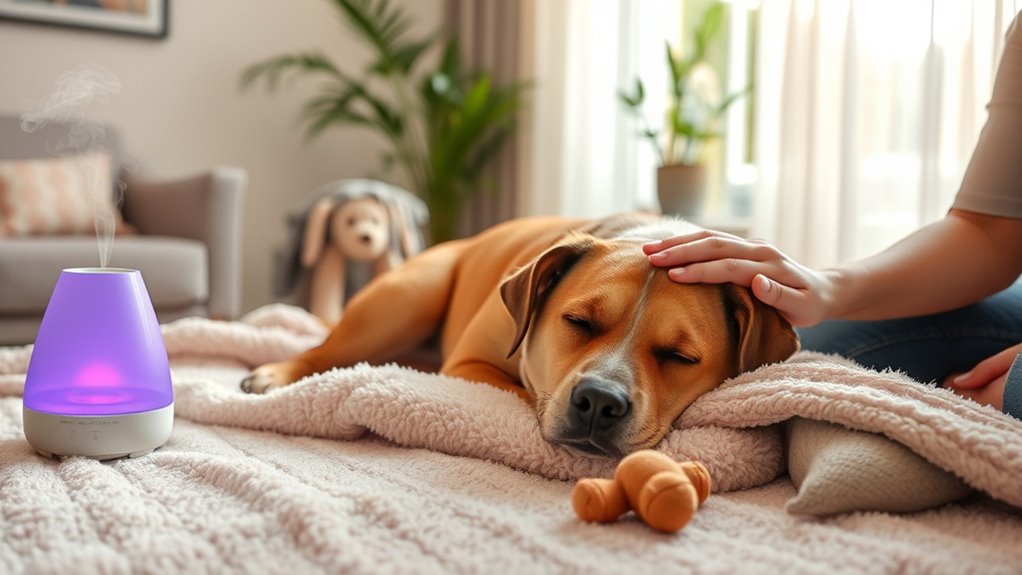
Pet anxiety can markedly affect your furry friend’s well-being, but there are effective ways to help them feel calmer. When your pet is overwhelmed, simple techniques like dog massage and calming music can make a notable difference. These methods create a soothing environment, helping your pet relax and feel safe during stressful situations.
Dog massage is an excellent way to ease anxiety because it promotes relaxation and releases tension. You don’t need to be a professional; gentle strokes along your dog’s neck, shoulders, and back can help reduce stress levels. Use slow, firm movements to stimulate circulation and release endorphins that naturally elevate your pet’s mood. Incorporate long, calming strokes while speaking softly to your dog, reinforcing a sense of security. Consistent massage sessions, especially before or during stressful events like thunderstorms or fireworks, can condition your pet to associate touch with comfort, gradually decreasing their anxiety response.
Gentle, consistent dog massages help reduce stress and promote relaxation during anxious moments.
Calming music is another powerful tool you can use to create a peaceful environment. Soft, slow melodies or specially designed pet relaxation tracks can drown out frightening noises and reduce your dog’s anxiety. Play the music at a low volume in the background, ensuring it’s not overwhelming or startling. The consistent, gentle sounds help regulate your dog’s heartbeat and breathing, fostering a sense of calm. Many pet owners find that incorporating calming music during travel, grooming, or alone time greatly alleviates their pet’s stress. The key is to choose music that’s specifically composed for pets, as it’s designed to be soothing and free from abrupt changes or loud sounds that could trigger anxiety.
Blending these techniques with a routine can amplify their effectiveness. Before stressful events, spend a few minutes giving your dog a gentle massage while playing calming music. This combination creates a multisensory experience that signals to your pet that they’re in a safe space. Over time, your dog will learn to associate these calming cues with relaxation, making stressful situations more manageable. Remember, consistency is essential. Practicing calming techniques regularly helps your pet develop resilience against anxiety triggers and builds trust in your comforting presence.
Supporting your pet through stressful moments with dog massage and calming music isn’t just about immediate relief; it’s about fostering a sense of security and emotional well-being. Your attentive care and gentle approach can transform stressful experiences into opportunities for bonding and reassurance. To further enhance their comfort, consider integrating evidence-based anxiety reduction techniques that are supported by animal behavior research. By incorporating these simple but effective techniques into your routine, you help your furry friend navigate anxiety more confidently, ultimately improving their quality of life.

Pet Tunes Bluetooth Speaker for Canines with Preloaded Calming Music for Dogs – Dog Anxiety Relief for Separation, Fireworks, and Thunderstorms – Relaxing Pet Music Device for Puppy and Adult Dogs
Clinically Proven Calming Music for Dogs: Preloaded with hours of calming canine music developed by an expert sound…
As an affiliate, we earn on qualifying purchases.
As an affiliate, we earn on qualifying purchases.
Frequently Asked Questions
How Can I Tell if My Pet Is Experiencing Anxiety?
You can tell if your pet is experiencing anxiety by observing their body language and behavioral signs. Look for pacing, trembling, or lip licking, which indicate stress. Watch for ears pinned back, tail tucked, or avoiding eye contact, as these are common signs of discomfort. If your pet hides or becomes overly clingy, they’re likely anxious. Recognizing these signs helps you respond quickly and calmly to ease their stress.
Are There Specific Breeds More Prone to Anxiety?
Some breeds are more prone to anxiety due to breed predispositions and genetic factors. For example, terriers, German Shepherds, and Border Collies often exhibit higher anxiety levels, especially in stressful situations. These tendencies are linked to their breed characteristics and inherited traits. As a pet owner, understanding your breed’s predispositions helps you anticipate stress and implement calming techniques to support your pet’s emotional well-being effectively.
What Natural Remedies Can Calm My Anxious Pet?
You can try natural remedies like herbal supplements such as chamomile or valerian to help calm your anxious pet. Aromatherapy diffusers with calming scents like lavender also work well to create a soothing environment. Always consult your veterinarian before starting any new remedies, and combine these with gentle reassurance and a consistent routine to effectively reduce your pet’s anxiety naturally.
How Long Does It Take to See Results From Calming Techniques?
You’ll usually see progress from calming techniques within a few days to a couple of weeks, but it varies. Remarkably, studies show 60% of pets respond positively within the first week. Timing expectations depend on your pet’s temperament and consistency in using the techniques. Watch for progress indicators like reduced pacing or calmer behavior, which signal your efforts are working. Patience and regular practice are key to success.
Can Diet Changes Help Reduce My Pet’s Stress Levels?
Yes, diet changes can help reduce your pet’s stress levels. Focus on diet optimization by providing balanced, nutrient-rich foods, and consider adding nutritional supplements like omega-3 fatty acids or calming herbs. These additions support brain health and reduce anxiety. Consistent dietary adjustments can make a noticeable difference over time, but always consult your veterinarian to safeguard the best approach for your pet’s specific needs and to avoid any adverse reactions.
dog massage tools
As an affiliate, we earn on qualifying purchases.
As an affiliate, we earn on qualifying purchases.
Conclusion
By implementing these calming techniques, you can transform your pet’s stress-filled days into moments of peace and trust. Remember, your calm demeanor and consistent routines hold the power to soothe even the most anxious soul—your pet’s happiness depends on it. With patience and love, you’ll witness anxiety melt away faster than you ever thought possible, creating a bond so strong it could move mountains. Your efforts make all the difference in turning chaos into calm.
pet anxiety relief products
As an affiliate, we earn on qualifying purchases.
As an affiliate, we earn on qualifying purchases.
calming music for pets
As an affiliate, we earn on qualifying purchases.
As an affiliate, we earn on qualifying purchases.