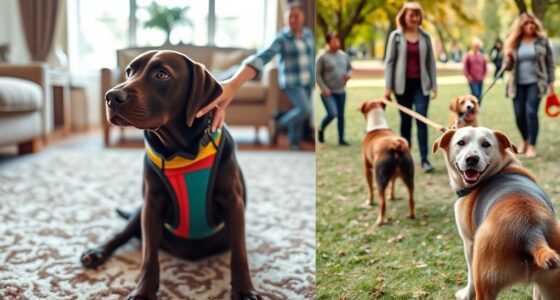

To keep your senior pet comfortable and happy, focus on tailored nutrition with high-quality proteins and joint support, and make certain their environment is calm and hazard-free. Use ramps, orthopedic beds, and mobility aids to support their movement. Regular vet checkups help spot issues early, and gentle exercise maintains muscle and joint health. Monitoring their behavior and adapting care as needed ensures they thrive. Keep exploring to discover even more ways to enhance your older pet’s well-being.
Key Takeaways
- Provide a tailored diet rich in high-quality proteins and joint-supporting nutrients, and monitor for weight or dental issues.
- Create a calm, accessible environment with soft bedding and hazard-free spaces to reduce stress and support mobility.
- Use mobility aids like ramps, stairs, and orthopedic beds to assist movement and alleviate joint discomfort.
- Encourage gentle, regular exercise to maintain muscle tone, flexibility, and joint health.
- Schedule regular veterinary checkups and monitor signs of pain or discomfort for timely care adjustments.

Caring for a senior pet requires extra attention and adjustments to keep them comfortable and happy. As your pet ages, their needs change, and providing the right support becomes essential. One of the most important aspects is ensuring they receive proper veterinary nutrition. Older pets often have specific dietary needs that differ from their younger days. You might notice weight gain, joint issues, or dental problems, which all require tailored nutrition. Consult your veterinarian to develop a diet plan that supports their aging body, focusing on high-quality proteins, joint-supporting nutrients like glucosamine and chondroitin, and easily digestible ingredients. Proper veterinary nutrition can help manage weight, boost their immune system, and improve overall vibrancy, making your pet’s golden years more comfortable. Additionally, ensuring a consistent and calm environment can help reduce stress and promote their well-being.
Mobility can become a challenge as pets age, which is why incorporating mobility aids can considerably enhance their quality of life. You may notice your senior pet struggling to climb stairs, jump onto furniture, or walk long distances. Providing supportive devices such as ramps, stairs, or specially designed harnesses can make a big difference. Ramps let your pet access favorite spots without putting stress on their joints, while orthopedic beds offer cushioning and support for aching bones. Using mobility aids not only helps prevent further injury but also encourages your pet to stay active and engaged. Regular gentle exercise, combined with these aids, helps maintain their muscle tone and joint flexibility, reducing stiffness and discomfort. Proper joint health support, such as using the right fuel source, can also contribute to better mobility and well-being.
Monitoring your senior pet closely allows you to catch health issues early and adapt their care routine accordingly. Keep an eye on their eating habits, activity levels, and any signs of pain or discomfort. Regular veterinary checkups are crucial, especially to assess their joint health and nutritional needs. Adjustments to their diet and environment should be ongoing, as their condition evolves. Providing a calm, comfortable space where they can rest undisturbed is equally important. Soft bedding, easy access to water and food, and minimizing hazards like slippery floors help prevent accidents and make daily routines safer.

EHEYCIGA Orthopedic Dog Beds for Extra Large Dogs 44x32Inch, Waterproof Memory Foam XL Pet Bed with Sides, Non-Slip and Egg-Crate Foam Big Dog Couch Bed with Washable Removable Cover, Grey
MEMORY FOAM: The EHEYCIGA orthopedic dog bed features memory foam and egg crate foam to provide even support…
As an affiliate, we earn on qualifying purchases.
As an affiliate, we earn on qualifying purchases.
Frequently Asked Questions
How Do I Recognize Pain in My Senior Pet?
You can recognize pain in your senior pet by observing pain indicators like decreased activity, reluctance to move, or changes in appetite. Behavioral changes such as irritability, hiding, or vocalizing more than usual also signal discomfort. Pay attention to their body language, like limping or difficulty getting up. If you notice these signs, consult your vet promptly to guarantee your pet gets the care they need and stays comfortable.
What Are Common Signs of Cognitive Decline?
Think of your senior pet as a fading star, with signs of cognitive decline like behavioral changes and sensory decline. You might notice confusion, disorientation, or missed cues like barking or responding slowly. They may forget familiar routines or seem less interested in play. These subtle shifts signal your pet’s mind is aging. Staying attentive helps you spot these signs early, so you can provide comfort and support during their twilight years.
How Often Should Senior Pets Visit the Vet?
You should take your senior pet to the vet at least twice a year for thorough check-ups. Regular visits help monitor pet dental care and detect issues early. During these appointments, make certain they get advice on senior pet exercise, which keeps them active and healthy. Consistent veterinary visits help maintain your pet’s quality of life, manage age-related health concerns, and keep them comfortable and happy as they age.
Are Special Diets Necessary for Aging Pets?
Yes, special diets are often necessary for aging pets. You should focus on tailored nutritional supplements that support joint health, heart function, and digestion. These diets also help manage dietary restrictions, ensuring your senior pet gets the right balance of nutrients. Think of it as a customized recipe, blending essential ingredients to keep your pet vibrant and comfortable, much like a well-crafted symphony of nutrition that adapts to their changing needs.
How Can I Keep My Senior Pet Mentally Stimulated?
To keep your senior pet mentally stimulated, you should regularly introduce interactive toys and puzzle feeders into their routine. These activities challenge their minds and help prevent boredom, which can lead to anxiety or destructive behavior. Spend time engaging with them during play, and vary the toys to keep things interesting. Consistent mental activity not only keeps your pet sharp but also strengthens your bond, ensuring they stay happy and engaged.

HOMBYS Cat Ramp for Bed, Gentle Slope Bed Access Ramp with Fun Spring Ball Toy & Sisal Scratching Posts, Soft Pet Ramp for Elderly Cats, Joint-Friendly Alternative to Cat Stairs
【Gentle Slope Design, Safer Than Steps】 Unlike traditional pet stairs with steep steps, our cat ramp features a…
As an affiliate, we earn on qualifying purchases.
As an affiliate, we earn on qualifying purchases.
Conclusion
As you care for your senior pet, remember that “A happy dog is a happy home.” Your patience, regular vet visits, and cozy comforts can make their golden years truly special. Cherish every moment, and your pet will continue to bring joy and love into your life. Aging is a natural part of life, but with your gentle care, you can guarantee they feel safe, loved, and comfortable every step of the way.

Nutramax Cosequin for Dogs Joint Health Supplement, Contains Glucosamine for Dogs, Plus Chondroitin and MSM, Supports Healthy Joints, For All Breeds and Sizes, Chewable Tablets, 132 Count
Joint Health Supplement for Dogs – Cosequin is the #1 vet recommended retail joint health supplement brand▼, supporting…
As an affiliate, we earn on qualifying purchases.
As an affiliate, we earn on qualifying purchases.

Adjustable Dog Lift Harness Dog Sling for Large Dogs Hind Leg Support Soft Lift Support and Rehab Harness for Weak Rear Legs, Helps Senior, Injured, Disabled and After ACL Surgery Dogs Large
Harness Object: The Rear Legs support Harness is designed to help your elderly, disabled, or injured dog, who…
As an affiliate, we earn on qualifying purchases.
As an affiliate, we earn on qualifying purchases.