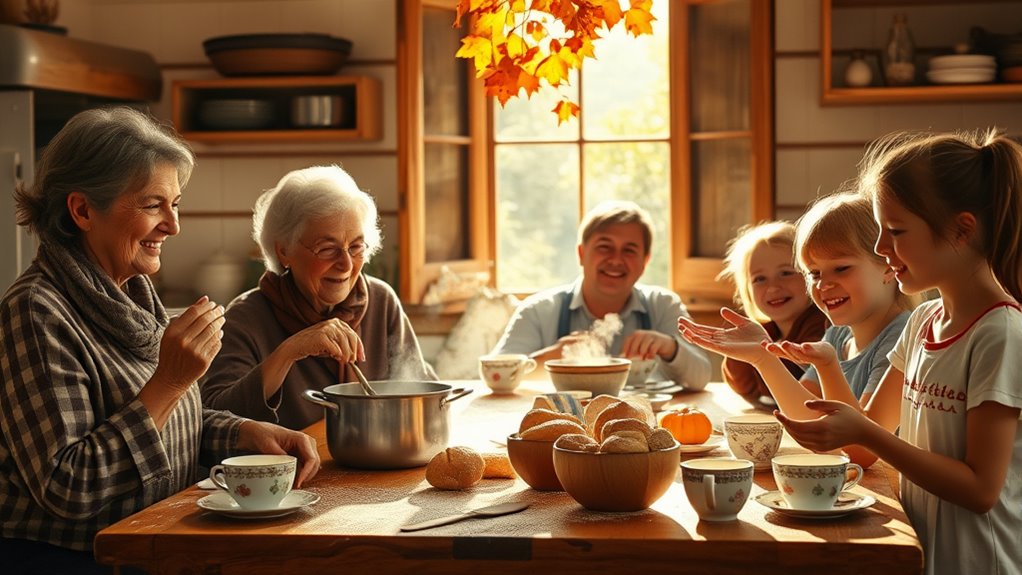

Creating meaningful family rituals and traditions builds strong bonds and a sense of belonging. These activities, like weekly dinners or annual celebrations, offer comfort, joy, and a shared identity that lasts through life’s changes. They serve as anchors during tough times and moments of celebration, fostering connection and passing down values. Keep exploring how to create and maintain traditions that nurture your family’s strength and legacy for generations to come.
Key Takeaways
- Establish consistent routines and celebrations that create a sense of stability and belonging for family members.
- Involve everyone in planning and participating to foster ownership and strengthen emotional connections.
- Incorporate meaningful symbols, songs, or foods that reinforce family identity and shared values.
- Use rituals as anchors during challenging times to provide comfort and resilience.
- Nurture traditions over time to build a lasting legacy that bonds generations and preserves family history.
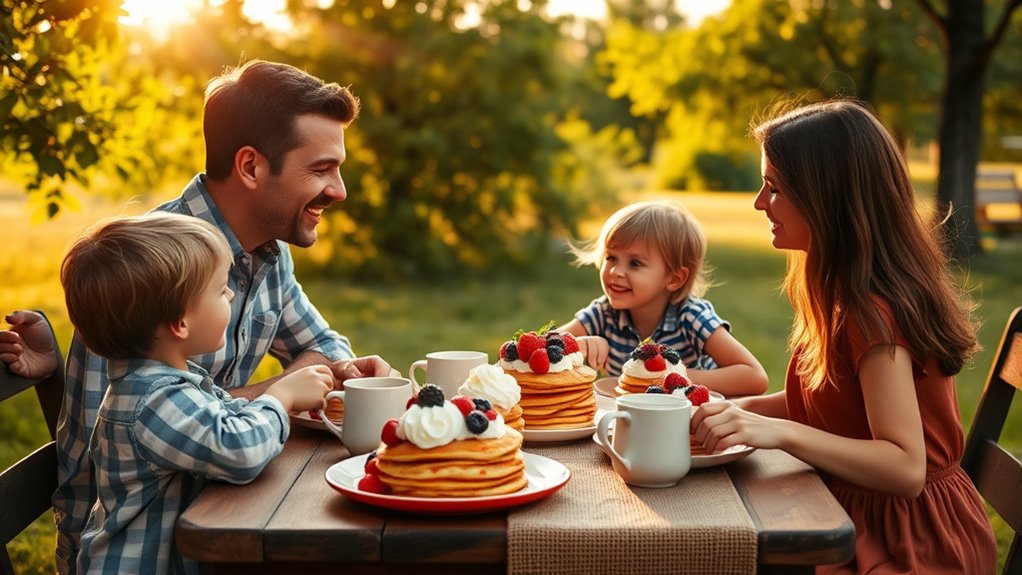
Have you ever wondered why certain traditions stick with you long after they happen? It’s because these rituals, whether big or small, create a sense of continuity and belonging that resonates deeply. Family rituals, in particular, serve as the glue that holds your family’s identity together. They provide comfort during tough times and joy during celebrations, shaping the way you connect with one another. When you participate in meal planning for family dinners or holiday celebrations, you’re not just deciding what to eat or how to decorate; you’re fostering a sense of teamwork and shared purpose. These moments become more than just routines—they turn into opportunities for bonding, storytelling, and passing down values. Over time, the repeated acts of preparing meals together or gathering around the table for holiday feasts become cherished traditions, anchoring your family’s story across generations.
Holiday celebrations are especially powerful in creating lasting memories. Think about the excitement of decorating the house for Christmas or setting up a special table for Thanksgiving. These traditions often involve specific rituals, like singing certain songs or sharing particular foods, that become ingrained in your family’s history. When you participate in these celebrations year after year, they transform from simple events into meaningful markers of time. You begin to associate certain smells, sights, and sounds with feelings of warmth and togetherness. These rituals aren’t just about observing customs but about reinforcing your family’s values and identity. They remind everyone that, despite life’s changes, some traditions remain steady, providing comfort and continuity. Additionally, maintaining proper soil conditions for plant-related family activities can serve as a metaphor for nurturing family traditions, emphasizing the importance of a healthy foundation.
Building new rituals is equally important. You might start a tradition of family game nights or annual trips that become anticipated highlights. These new customs, like carefully planning holiday celebrations or establishing a special Sunday breakfast, create a sense of stability and anticipation. They give your family something to look forward to, strengthening bonds through shared experiences. When you involve everyone in planning and executing these rituals, you foster a sense of ownership and connection. Over time, these traditions become a part of your family’s fabric, shaping how each member views themselves within the larger story.
In essence, family rituals—whether centered around meal planning, holiday celebrations, or simple weekly routines—are essential in building a resilient, loving family. They serve as anchors amid life’s chaos, reminding everyone of their roots and each other’s importance. By intentionally creating and nurturing these traditions, you lay the foundation for a legacy of connection that endures through generations.

Homienly 40-Piece Premium Wheat Straw Dinnerware Sets, Service for 8, Unbreakable Plates and Bowls Set – Cups Sets, Dinner Plates, Bowls for Kitchen,Dishwasher and Microwave Safe Dishes Set – Multi
PERFECT COMBINATION: In the busy daily life, looking for tranquility and nature, we bring you a set of…
As an affiliate, we earn on qualifying purchases.
As an affiliate, we earn on qualifying purchases.
Frequently Asked Questions
How Do I Start New Family Traditions With Teenagers?
You can start new family traditions with teenagers by involving them in tradition brainstorming sessions, where everyone suggests ideas. Focus on activities that promote teen bonding, like movie nights, cooking together, or outdoor adventures. Show genuine interest in their preferences, and be flexible to adapt traditions as they grow. This approach makes teens feel valued and encourages their active participation, strengthening your family bond through shared experiences.
Can Family Rituals Help Improve Communication?
Ever wonder how shared routines can transform your family life? Family rituals definitely enhance communication by creating a safe space for open dialogue, which boosts emotional bonding. When you prioritize regular activities like family dinners or game nights, you foster understanding and trust. These traditions give everyone a chance to express themselves, making communication more natural and heartfelt. Isn’t it amazing how simple routines can strengthen your family’s connection?
How Often Should Family Rituals Be Practiced?
You should practice family rituals regularly, ideally weekly or biweekly, to build consistency and strengthen bonds. Incorporate ritual variety by planning different activities to keep everyone engaged and excited. Consistent frequency helps create dependable routines, while mixing things up prevents boredom. By balancing this frequency with thoughtful planning, you foster meaningful connections and make family rituals a cherished part of your life.
Are There Cultural Considerations in Creating Family Traditions?
Yes, cultural differences and generational gaps influence how you create family traditions. Respect and incorporate diverse customs to honor your heritage, making traditions meaningful for everyone. Be mindful of differing perspectives to bridge generational gaps, ensuring traditions remain inclusive. This approach helps you strengthen bonds by celebrating shared values while respecting individual backgrounds, fostering a sense of belonging and understanding across all family members.
What if Family Members Have Conflicting Schedules?
If family members have conflicting schedules, you can overcome scheduling conflicts by establishing flexible routines. Prioritize key moments and set aside specific times for family traditions, even if they’re brief. Communicate openly to find common availability, and consider rotating activities to accommodate everyone. Flexibility helps maintain meaningful connections despite busy lives, ensuring your family traditions continue to strengthen bonds without adding stress.
Vintage Letter Envelope Hanging Garlands 8pcs Red Wax Seal Design Garlands for Magic Theme Birthday Party Christmas Holiday Celebration Decorations
COMPLETE SET: Package includes 8 pieces of vintage letter envelope hanging garlands featuring charming red wax seal designs…
As an affiliate, we earn on qualifying purchases.
As an affiliate, we earn on qualifying purchases.
Conclusion
By creating family rituals, you strengthen bonds and build lasting memories. These traditions foster a sense of belonging and stability, making your family more resilient. Did you know that families who engage in regular rituals report 25% higher levels of happiness and connection? So, start small—whether it’s Sunday dinners or bedtime stories—and watch your family grow closer with each shared moment. These simple acts can truly transform your family’s dynamic for the better.
Do You Really Know Your Family? A Fun Family Game Filled with Conversation Starters and Challenges – Great for Kids, Teens and Adults
Get ready for the best family game night as you laugh and learn new things about each other…
As an affiliate, we earn on qualifying purchases.
As an affiliate, we earn on qualifying purchases.

iDIY Personalized Family Christmas Ornaments – Custom Engraved Names & Year – Handcrafted Family Keepsake – Premium Resin Personalized Ornaments – Family of 4 Christmas Ornament 2025
Create Lasting Memories: Picture the joy on your loved ones' faces when they see their names beautifully engraved…
As an affiliate, we earn on qualifying purchases.
As an affiliate, we earn on qualifying purchases.