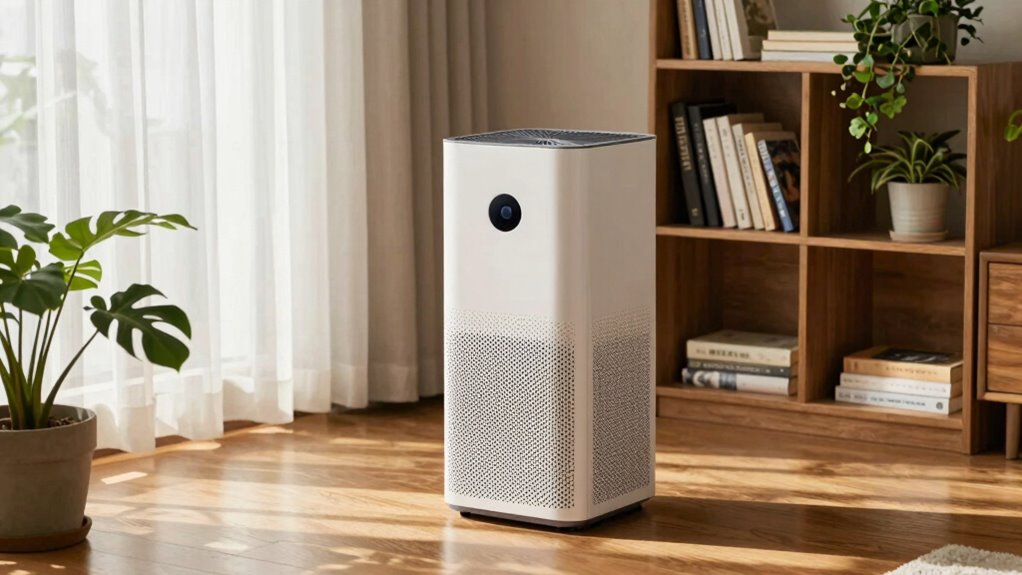
Placing your air purifier too close to walls, furniture, or in corners can block airflow and reduce its cleaning ability. Positioning near pollution sources or in cramped spaces causes pollutants to bypass the filter, making it less effective. Avoid obstructed or uneven placement, and keep the device elevated off the ground for better circulation. Want to maximize your purifier’s performance? Keep upcoming tips in mind to find the perfect spot for clean, healthy air.
Key Takeaways
- Placing the purifier near open windows or vents causes re-entry of unfiltered air, reducing effectiveness.
- Blocking vents or intake/outlet areas with furniture or objects restricts airflow and diminishes performance.
- Positioning the device in cramped corners or against walls impedes circulation and filters’ lifespan.
- Placing the purifier directly next to pollution sources like fans or cooking areas overloads the filter.
- Elevating the unit on unstable or obstructed surfaces can block vents and decrease airflow efficiency.

Air Purifier Stand Compatible with Levoit Core 200S-P, Elevated Air Purifier Base Riser, Stable Floor Stand for Improved Airflow, Space-Saving Holder (Black)
Elevated Airflow Design: Raises your air purifier stand to improve air circulation and placement efficiency.
As an affiliate, we earn on qualifying purchases.
As an affiliate, we earn on qualifying purchases.
Why Your Air Purifier Might Not Be Working Well (And How Placement Is the Key)
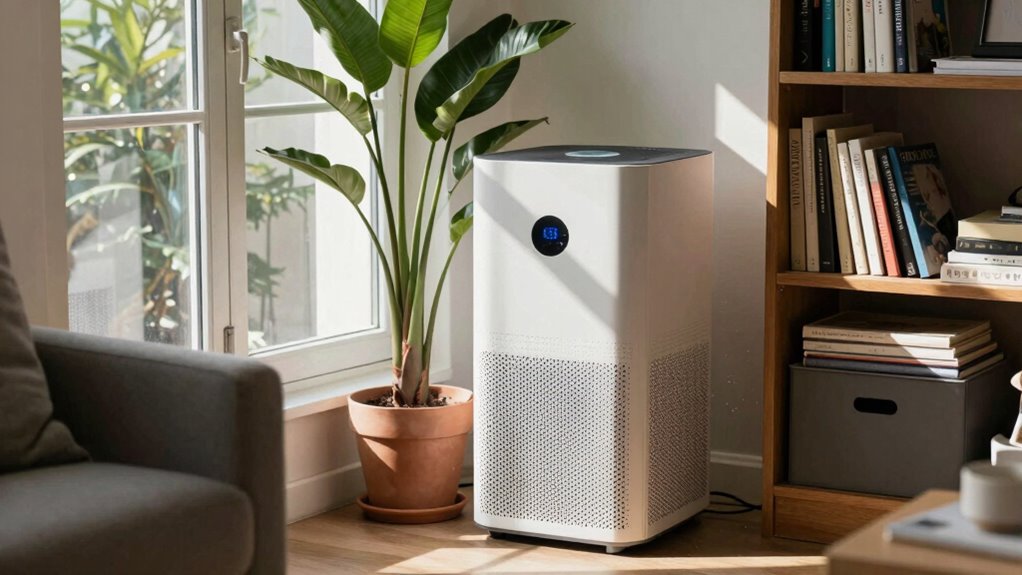
If your air purifier isn’t performing as well as expected, the problem might be with its placement. Poor placement can profoundly impact air quality because the device may not circulate air effectively. When positioned incorrectly, your purifier struggles to pull in contaminated air and distribute clean air evenly. Additionally, improper placement can lead to faster filter maintenance, as the unit works harder to compensate for poor airflow. Keep the purifier away from obstructions like furniture or walls, which block airflow. Instead, place it in open, central locations to maximize efficiency. Proper placement can also help prevent performance issues caused by stagnant air or localized contaminants. Regularly replacing or cleaning filters ensures peak performance, but even the best filter can’t do its job if airflow is restricted. Proper airflow directly influences both air quality and filter longevity. Moreover, understanding air circulation principles can help you choose the best spot for your device, preventing potential performance issues caused by poor placement. Ensuring proper airflow paths can significantly improve the purifier’s overall efficiency and lifespan.
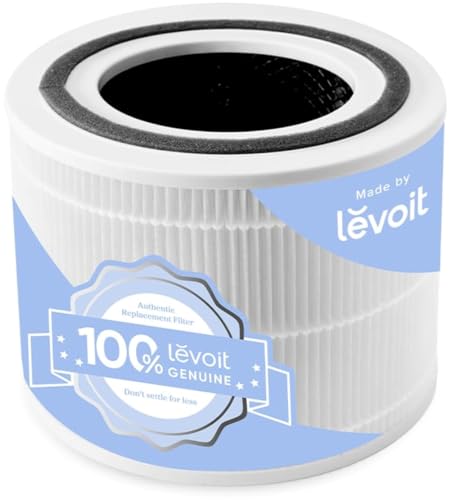
LEVOIT Genuine Core 300-P Replacement Filter, Core 300-RF Air Purifier Core300S Filters, Supports HEPA Sleep Mode, High-Efficiency Activated Carbon for Removal of Smoke, Odor, Allergens, Pollen,1 Pack
𝐆𝐄𝐍𝐔𝐈𝐍𝐄 𝐑𝐄𝐏𝐋𝐀𝐂𝐄𝐌𝐄𝐍𝐓 𝐅𝐈𝐋𝐓𝐄𝐑: Designed specifically for the Core 300-P / Core 300S-P air purifiers to maintain its peak…
As an affiliate, we earn on qualifying purchases.
As an affiliate, we earn on qualifying purchases.
How to Find the Best Spot for Your Air Purifier in Any Room
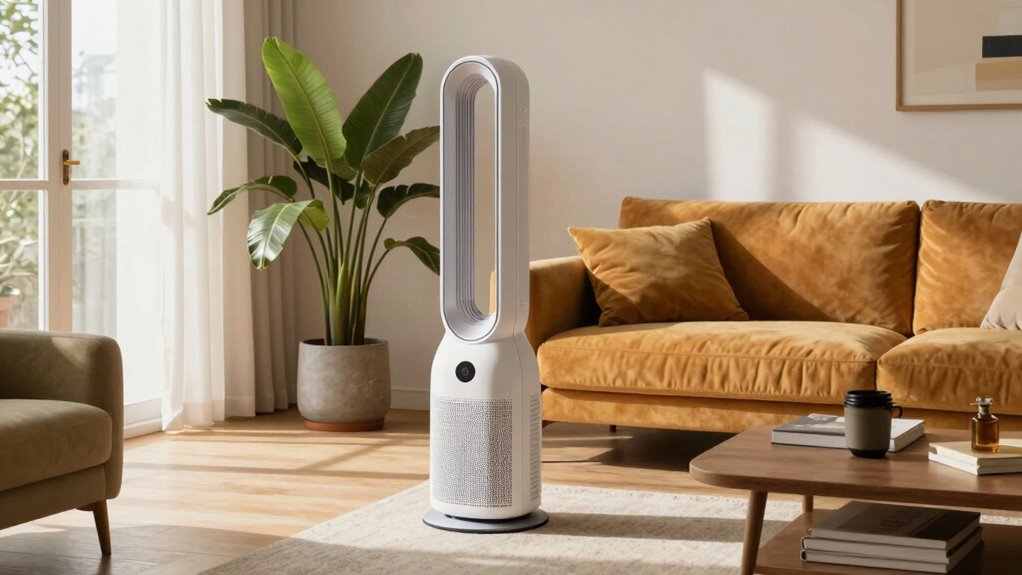
Choosing the right spot for your air purifier is essential for ideal performance. Start by placing it in a central location where airflow isn’t obstructed, such as away from walls and furniture. Keep it at least a few feet off the ground to optimize circulation. Pay attention to air quality indicators; if your device has a sensor, position it where it can accurately detect pollutants, often in the main living area. Regular air purifier maintenance, like cleaning filters and checking for dust buildup, guarantees consistent operation. Avoid corners or cramped spaces, as these can trap pollutants and reduce efficiency. Additionally, be mindful of microplastics in dust, which can accumulate and affect indoor air quality, making proper placement even more important. Proper airflow patterns are crucial to ensure pollutants are effectively captured and circulated. Ensuring your air purifier is placed in an area with good air circulation helps prevent stagnant zones that can diminish its effectiveness. Considering the distribution of pollutants within a room can aid in selecting the optimal placement to maximize purification. Proper placement also involves understanding how ventilation systems influence airflow, which can further enhance air cleaning efficiency. By selecting a spot with good airflow and monitoring air quality indicators, you maximize your air purifier’s effectiveness and maintain healthier indoor air.

Air Purifiers for Home Large Room up to 2200sq.ft, MOOKA Air purifier for Home Pets with Washable Filter, PM 2.5 Display Air Quality Sensor Air Cleaner for Bedroom, Dorm room, Pets, Office PR1 (White)
MORE AIR INTAKE & HIGH-EFFICIENCY: This is the 2024 latest MOOKA PR1 HEPA air purifiers for home. To…
As an affiliate, we earn on qualifying purchases.
As an affiliate, we earn on qualifying purchases.
The Critical Placement Spot That Can Undermine Your Air Purifier’s Effectiveness
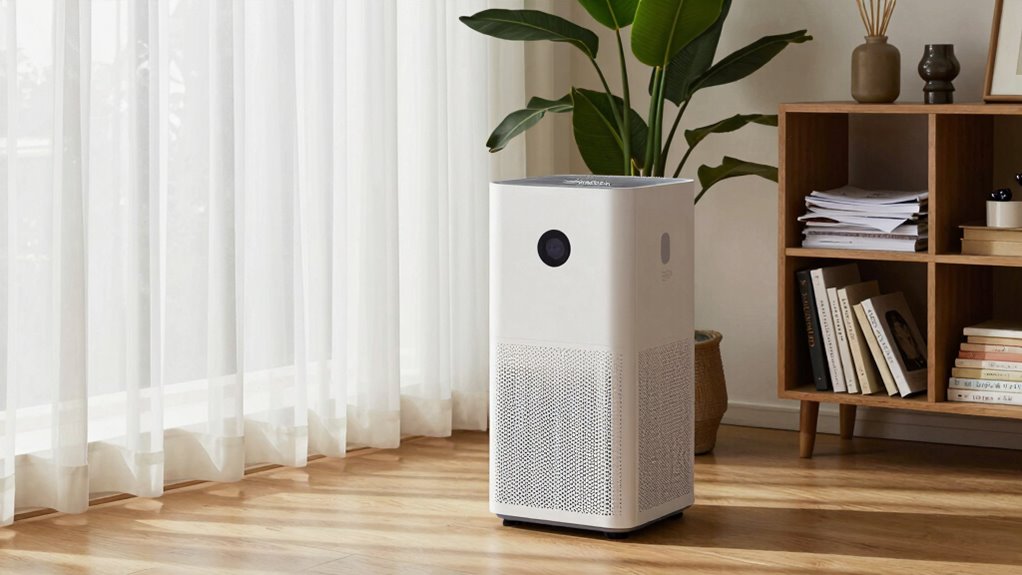
One of the most critical spots that can undermine your air purifier’s effectiveness is placing it near sources of pollution or strong airflow, such as open windows, vents, or fans. These areas can cause dust, pollen, and other pollutants to bypass the filter or re-enter the room quickly, reducing overall air quality. Additionally, constant airflow from vents or fans can force unfiltered air directly into the purifier, forcing it to work harder. This not only diminishes the purifier’s ability to clean the air efficiently but also shortens its filter lifespan, leading to more frequent replacements and higher costs. To maintain ideal air quality and prolong your filter’s life, keep the air purifier away from such disruptive spots.

Air Purifiers for Home with H13 Quiet HEPA Filter Up to 1076 Ft² for Pet Hair, Odors, Pollen, Smoke, Compact Air Cleaner with 3 Speeds, Timer, Aroma Quiet 360°Intake Filter, White
Effortless Operation: Simplified control panel with intuitive design makes it easy to operate. No complicated setup—just one tap,…
As an affiliate, we earn on qualifying purchases.
As an affiliate, we earn on qualifying purchases.
Tips for Placing Your Air Purifier for Maximum Clean Air
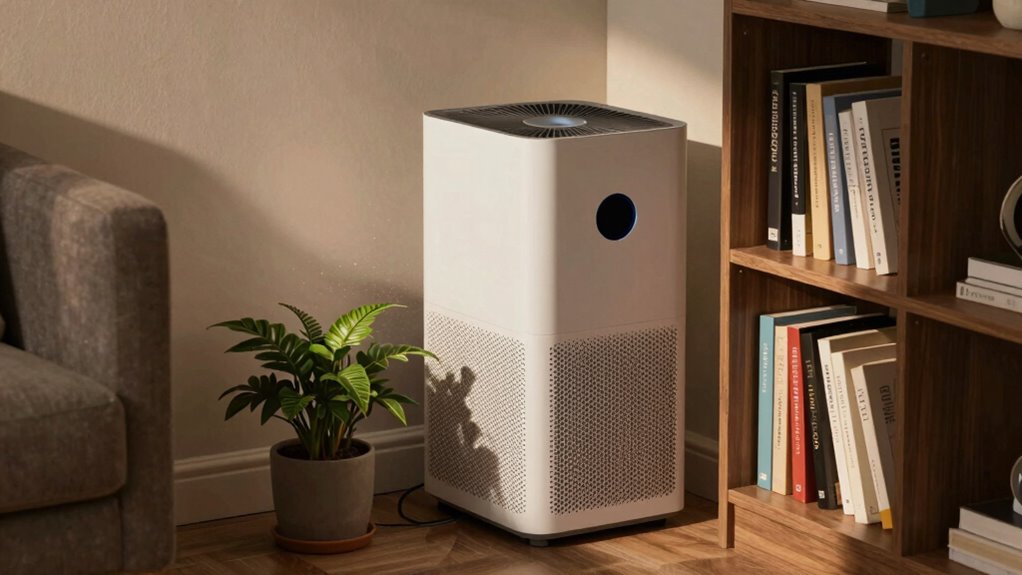
To get the most out of your air purifier, make certain it’s not blocking vents or airflow paths. Keep it elevated off the floor, ideally on a table or shelf, to improve circulation. Proper placement ensures cleaner air without unnecessary obstructions. Additionally, positioning your air purifier near ventilation sources can enhance its effectiveness in circulating fresh air throughout the space. Ensuring that the air purifier is placed in a well-ventilated area can also help prevent the buildup of pollutants around the device. Recognizing airflow patterns within the room can further optimize its performance by directing clean air where it’s needed most. Being mindful of caregiver emotional health by maintaining a healthy environment can also support your overall well-being. Moreover, understanding air quality dynamics can help you fine-tune the placement for optimal results.
Avoid Obstructing Vents
Even if your air purifier is powerful, blocking vents can substantially reduce its effectiveness. Vent obstruction causes airflow restriction, limiting the purifier’s ability to circulate and clean the air efficiently. To avoid this, keep vents clear and unobstructed. Proper air circulation is essential for maintaining good indoor air quality. Keep furniture and objects away from vents and airflow paths. Ensure no curtains or drapes block air intake or outlet points. Regularly check for dust buildup that can cause vent obstruction. Position the purifier where air can flow freely without being blocked, and be mindful of airflow dynamics to optimize performance. Additionally, understanding vent placement can help improve overall air purifying efficiency in your space. Being aware of airflow patterns can further enhance how effectively your purifier cleans the air. Proper ventilation strategies can also contribute significantly to maintaining a healthy indoor environment.
Maintain Proper Elevation
Proper elevation of your air purifier guarantees it functions at its best. Position it on a sturdy surface at waist level or slightly higher to optimize airflow and purification. This placement helps the unit draw in air efficiently, improving overall performance. Regular maintenance tips, like cleaning the exterior and checking for dust buildup, ensure it runs smoothly. Don’t forget filter replacement—changing filters as recommended maintains air quality and prevents strain on the motor. Elevating your purifier also keeps it away from obstructions and moisture, which can hinder operation. Additionally, considering the placement of components within your environment can influence the efficiency of nanotech filters and other advanced purification technologies. Proper placement can also help prevent the device from being affected by environmental factors that reduce its effectiveness. Being mindful of airflow patterns in your space ensures the purifier operates optimally. Understanding how air circulation affects purifier performance can guide you in choosing the best spot. By following these simple steps, you maximize clean air delivery and extend your device’s lifespan. Proper placement combined with consistent maintenance ensures your air purifier works effectively, providing healthier indoor air for you and your family.
Common Mistakes That Ruin Your Air Purifier’s Performance
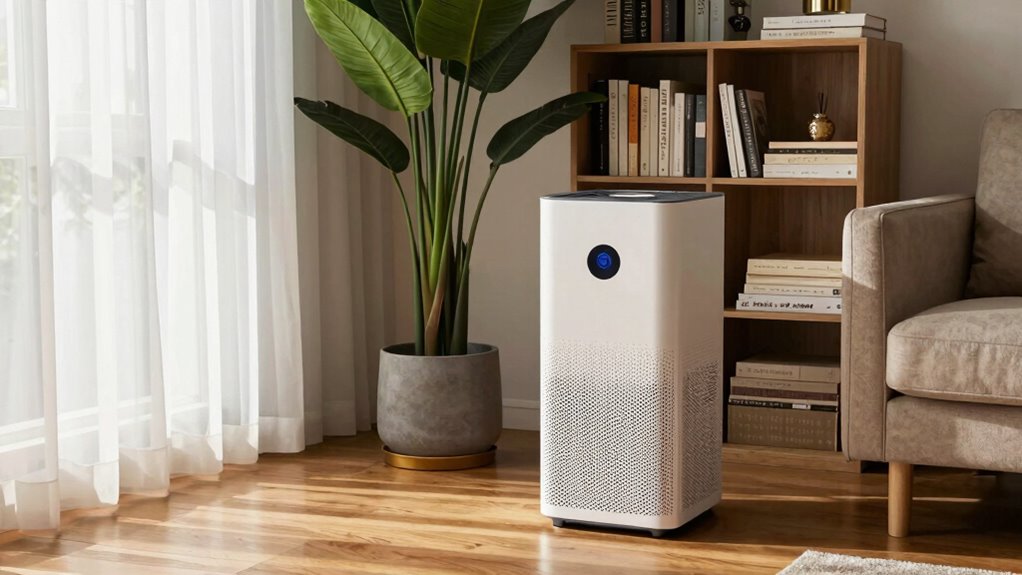
Avoid blocking your air purifier’s intake, or it won’t work efficiently. Poor airflow circulation can also reduce its ability to clean the air properly. Plus, placing it too close to walls limits its effectiveness and can cause it to underperform.
Blocking Air Intake
Blocking the air intake is a common mistake that considerably hampers your air purifier’s effectiveness. When airflow is restricted, the device struggles to pull in contaminated air, reducing its cleaning power. To keep your purifier working ideally, avoid placing objects or furniture directly in front of the intake. Poor placement can also hinder air purifier maintenance and timely filter replacement, leading to decreased performance. Here are some key points to remember:
- Keep at least 3 feet of clearance around the intake
- Never block vents with curtains or furniture
- Avoid placing the purifier near walls or closed cabinets
- Regularly check for dust buildup that can obstruct airflow
Poor Airflow Circulation
Poor airflow circulation is a common mistake that can substantially reduce your air purifier’s effectiveness. When airflow pathways are blocked or restricted, the purifier struggles to draw in polluted air and circulate clean air efficiently. Poor filter placement can also hinder airflow, causing air to bypass the filter or create dead zones where air isn’t refreshed. If your purifier is placed in a corner or behind furniture, it can disrupt proper airflow pathways, limiting its ability to clean the entire room. To avoid this, position your air purifier in a central location with unobstructed airflow routes. Ensuring ideal airflow pathways and correct filter placement helps maximize performance, allowing your purifier to effectively reduce airborne contaminants and improve indoor air quality.
Placing Near Walls
Placing your air purifier too close to walls can substantially diminish its performance. Wall placement blocks airflow, reducing the purifier’s ability to filter air effectively. Avoid corner positioning, as it limits circulation and creates dead spots. When positioning your purifier, maintain enough space around it for proper airflow.
- Keep it at least a few feet away from walls for ideal circulation
- Avoid placing it in corners where airflow is restricted
- Don’t block vents or intake areas with nearby furniture
- Position it in open spaces for maximum efficiency
Proper placement ensures your air purifier works as intended. Remember, proximity to walls and corner positioning can dramatically decrease its ability to clean the air. Keep it in the right spot, and your air quality will thank you.
How Room Size and Layout Impact Your Placement Choices
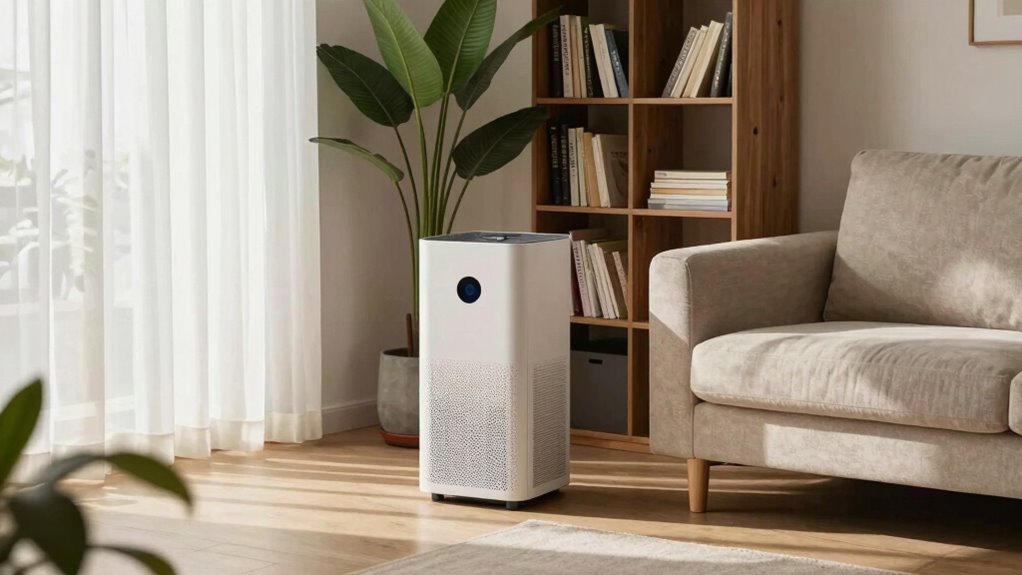
The size and layout of your room play a crucial role in determining the best placement for your air purifier. In larger rooms, you might need to position the purifier closer to the center to ensure even air circulation. Smaller spaces require strategic placement near sources of pollutants, like vents or furniture that traps dust. Your interior design influences where you can place the unit without disrupting aesthetic harmony. Considering Feng Shui principles, avoid blocking pathways or placing the purifier in direct line with your bed or main seating area. Proper placement enhances efficiency and maintains flow within the room. Knowing how your room’s dimensions and layout interact helps you choose a spot that maximizes air purification without compromising your room’s function or style.
Signs Your Air Purifier Isn’t Working Effectively (And How to Fix It)
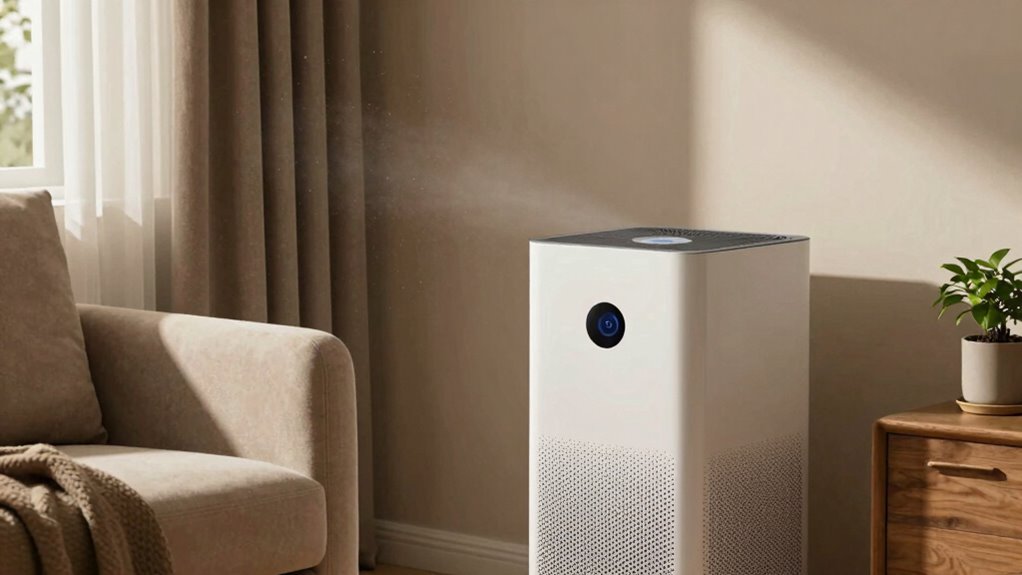
Even if you’ve carefully chosen the right spot for your air purifier, it may not work as effectively as it should. Signs your device isn’t performing well include poor air quality, persistent odors, or increased noise levels. If your purifier’s filter hasn’t been replaced recently, it can reduce filtration efficiency. Additionally, higher noise levels might indicate the filter is clogged or the unit is overworking. You might also notice the air feels stuffy or you’re still sneezing despite running the purifier. Regularly check for filter replacement to maintain performance. If noise levels seem abnormal, clean or replace filters and ensure the unit isn’t blocked or placed too close to walls. These simple steps can restore your air purifier’s effectiveness and improve indoor air quality.
Frequently Asked Questions
Can Placing an Air Purifier Near Windows Reduce Its Effectiveness?
Placing an air purifier near windows can reduce its effectiveness because window placement often causes airflow disruption. When you position it there, outside air may enter or interfere with the purifier’s airflow, making it harder for the device to clean the air efficiently. To maximize performance, keep your air purifier away from windows, ensuring unobstructed airflow and better filtration. This way, your purifier works ideally and improves your indoor air quality.
Does the Height at Which I Place My Air Purifier Matter?
Yes, the height of your air purifier matters because it impacts air circulation and airflow patterns. Placing it too low or too high can limit its ability to draw in and circulate air effectively. To optimize performance, position your purifier at a height where it can easily access the room’s air, typically around eye level or slightly above, ensuring it captures airborne particles efficiently and maintains good air flow throughout the space.
Should I Avoid Placing the Purifier Near Electronic Devices?
Don’t put your air purifier near electronic devices, or you’ll invite trouble. Electronic interference can disrupt its airflow, and device overheating could occur, hampering performance. Keep the purifier at a safe distance from computers, TVs, and chargers to guarantee it works effectively. Think of it as not throwing all your eggs in one basket—spread out your devices and purifier for the best air quality and device longevity.
How Does Furniture Placement Affect Air Purifier Performance?
Furniture placement can considerably impact your air purifier’s performance. If you block the unit with furniture or place it too close to large pieces, it causes airflow restriction and furniture obstruction. This prevents the purifier from circulating air effectively, reducing its ability to clean your space. To maximize efficiency, keep the purifier in an open area, away from obstructions, ensuring unobstructed airflow for the best air quality.
Is It Better to Keep the Air Purifier on or off When Not in Use?
You should turn off your air purifier when not in use to save energy and reduce unnecessary wear. While it might seem better to leave it on, doing so increases energy consumption without substantially improving air quality when the space is empty. Turning it off minimizes energy use and still maintains good air quality, especially if you’re away or asleep. Regularly using it when needed offers the best balance of efficiency and air quality impact.
Conclusion
Remember, your air purifier is like a silent guardian, fighting off invisible enemies. But even the bravest warrior can falter if placed in the wrong corner of the battleground. Find that one spot where it can exhale freely and patrol your space without obstruction. When you position it wisely, it becomes a mighty shield, transforming stale air into a rejuvenating, crisp breeze. Your room’s true gust of fresh air depends on your placement prowess.