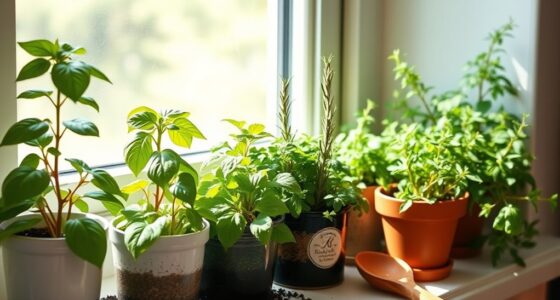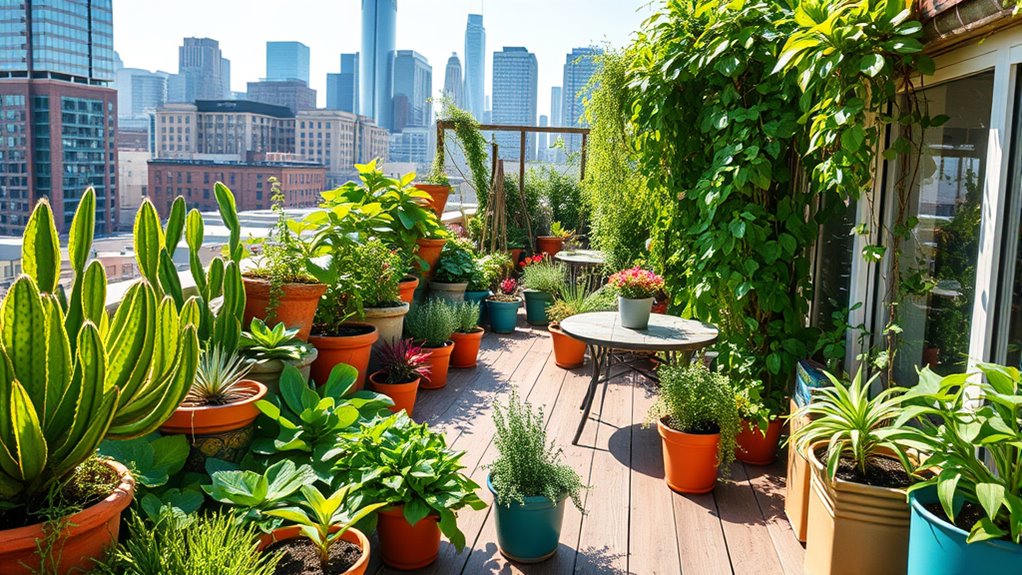

To create thriving rooftop and balcony gardens, focus on vertical farming techniques like wall-mounted planters and vertical containers to maximize your limited space. Use community composting to naturally nourish your plants and promote sustainability. Choose compact plants such as herbs, leafy greens, and strawberries that grow well in small footprints. Elevate your gardening game by combining these methods and exploring innovative ideas—more tips await to help you turn your small space into a lush oasis.
Key Takeaways
- Use vertical planters and wall-mounted containers to maximize limited space on rooftops and balconies.
- Incorporate community composting to enrich soil naturally and reduce waste.
- Choose easy-to-maintain, space-efficient crops like herbs, leafy greens, and strawberries.
- Ensure proper sunlight, water management, and wind protection for healthy plant growth.
- Engage neighbors in gardening efforts to foster community and share resources effectively.
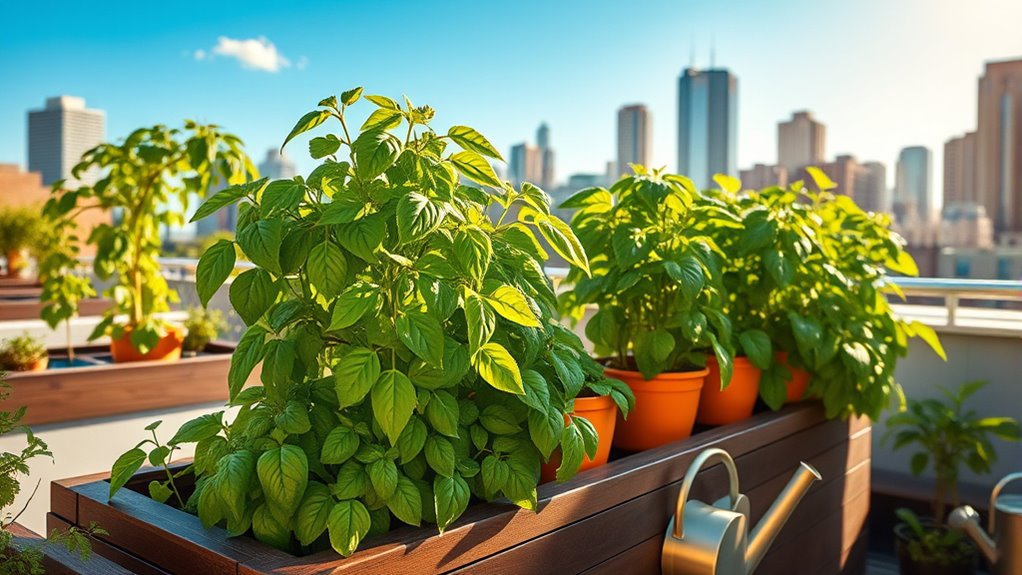
Have you ever wondered how to turn a small city balcony or empty lot into a thriving green space? The key lies in smart, space-efficient practices like community composting and vertical farming. These methods maximize limited areas, allowing you to grow fresh produce and create a sustainable environment right in the heart of the city.
Community composting is one of the simplest ways to start transforming your urban space into a greener haven. Instead of sending kitchen scraps and yard waste to landfills, you can set up a compost bin nearby. Not only does this reduce waste, but it also produces nutrient-rich soil perfect for your plants. When your neighbors participate in composting, it fosters a sense of community and shared responsibility for keeping your neighborhood clean and green. Plus, composted soil improves plant health, leading to better yields in limited spaces. Whether you’re working on a balcony garden or an empty lot, composting provides the organic matter your plants need without buying expensive fertilizers. Engaging in composting also helps you understand the importance of soil health in supporting thriving gardens.
Community composting transforms waste into nutrient-rich soil, fostering green spaces and stronger neighborhood bonds.
Vertical farming is another game-changer for urban gardening. Instead of spreading out horizontally, you grow upward, making the most of every inch of available space. You can install vertical planters, wall-mounted containers, or even repurpose pallets and shoe organizers for plant beds. This approach makes it possible to grow herbs, leafy greens, and strawberries in a small footprint. Vertical farming not only saves space but also makes tending to your plants easier, as you can access all levels without bending or kneeling excessively. It’s especially effective on balconies where sunlight might be limited or on rooftops where traditional gardening isn’t feasible.
Combining community composting with vertical farming creates a closed-loop system that enhances your urban gardening efforts. Use compost from your local community or neighbors to nourish your vertical garden, ensuring your plants get the best possible nutrition. This synergy reduces your reliance on store-bought soil and fertilizers, lowering your environmental impact. Plus, it encourages neighbors to participate, strengthening community bonds and shared sustainability goals.
Starting with these techniques, you’ll quickly see how small, confined spaces can become lush, productive gardens. With a little planning, you’ll be harvesting herbs, vegetables, and even flowers, all while contributing to a greener, more sustainable city. Urban gardening isn’t just about growing food; it’s about creating a vibrant community hub and transforming overlooked spaces into thriving ecosystems. So, gather your materials, involve your neighbors, and get ready to turn your balcony or lot into a lush, productive oasis.

Fogein 5 Tier Vertical Raised Garden Bed Planter Box, Vertical Raised Bed with Drainage Holes for Indoor Outdoor Herbs Flowers Vegetables Plants, Black
Sturdy and Durable-The vertical garden planter is made with a sturdy all-metal frame to ensure durability and longevity….
As an affiliate, we earn on qualifying purchases.
As an affiliate, we earn on qualifying purchases.
Frequently Asked Questions
How Do I Prevent Pests on Rooftop and Balcony Plants?
To prevent pests on your rooftop and balcony plants, start with companion planting; mix herbs like basil and marigolds with your vegetables to naturally repel pests. Use organic pest control methods, such as neem oil or insecticidal soap, to keep bugs at bay without chemicals. Regularly inspect your plants for early signs of pests and remove any affected foliage promptly. These strategies create a healthy, pest-resistant environment for your garden.
What Are the Best Plants for Shaded Urban Spaces?
For shaded urban spaces, you should choose shade tolerant plants and low light greenery that thrive with minimal sunlight. Consider ferns, hostas, and impatiens, which flourish in low-light conditions. Opt for plants like begonias and caladiums that add vibrant color without direct sun. These plants will thrive in your balcony or rooftop garden’s shaded corners, creating a lush, inviting space while requiring less maintenance and sunlight.
How Can I Improve Soil Drainage in Small Containers?
Your tiny containers are drowning your plants in water, but don’t worry! To fix this, you need to supercharge your soil with amendments like perlite or coarse sand that dramatically improve drainage. Also, choose containers with ample drainage holes or consider elevating your pots on small feet. These simple steps will transform your container garden into a thriving oasis, preventing waterlogging and keeping roots happy.
What Is the Optimal Watering Schedule for Rooftop Gardens?
You should water your rooftop garden consistently, using a drip irrigation system to maintain steady moisture. Aim for watering every 2-3 days, adjusting based on weather conditions and plant needs. Check soil moisture regularly—if it feels dry a few inches down, it’s time to water. This schedule helps prevent overwatering and makes certain your plants get the right amount of water for healthy growth.
How Do I Protect Plants From Strong Wind Damage?
Did you know strong winds can reduce plant growth by up to 50%? To protect your plants, use windbreak barriers like lattice panels or shrub screens to block gusts. Additionally, stake taller plants securely with plant staking to prevent breakage. Regularly check and adjust these supports to keep your rooftop garden resilient, ensuring your plants thrive despite the wind’s challenges.

URUQ Hydroponics Growing System Garden: 8 Pods Indoor Herb Garden with Grow Light Plants Germination Kit Quiet Automatic Hydroponic Height Adjustable – Gardening Gifts for Women Kitchen
5 TIMES FASTER GROW: Hydroponics growing system with a 24-watt LED light that simulates the effects of sunlight…
As an affiliate, we earn on qualifying purchases.
As an affiliate, we earn on qualifying purchases.
Conclusion
Think of your rooftop or balcony garden as a tiny universe, full of potential waiting to bloom. With patience, care, and a bit of creativity, you’re the gardener of this miniature cosmos. Each plant is like a star, shining brighter with your nurturing. As your garden grows, so does your confidence—transforming your small space into a lush, thriving oasis. Keep tending, and watch your urban universe flourish beyond your wildest dreams.

VIVOSUN Outdoor Tumbling Composter Dual Rotating Batch Compost Bin, 43 Gallon Black Door
Twin chambers: Two separate chambers allow one side to finish composting while leaving the other side available to…
As an affiliate, we earn on qualifying purchases.
As an affiliate, we earn on qualifying purchases.

XNGZY Wall Planters for Indoor Plants, 3 Pack Wall Mounted Plant Holder, Metal Plant Floating Decor Shelves, Space Saving, for Bedroom, Living Room, Kitchen, Office, Bathroom Decor
【Multi Functional Plant Display Solution】This metal plant wall hanger can be used for a variety of green plants,…
As an affiliate, we earn on qualifying purchases.
As an affiliate, we earn on qualifying purchases.