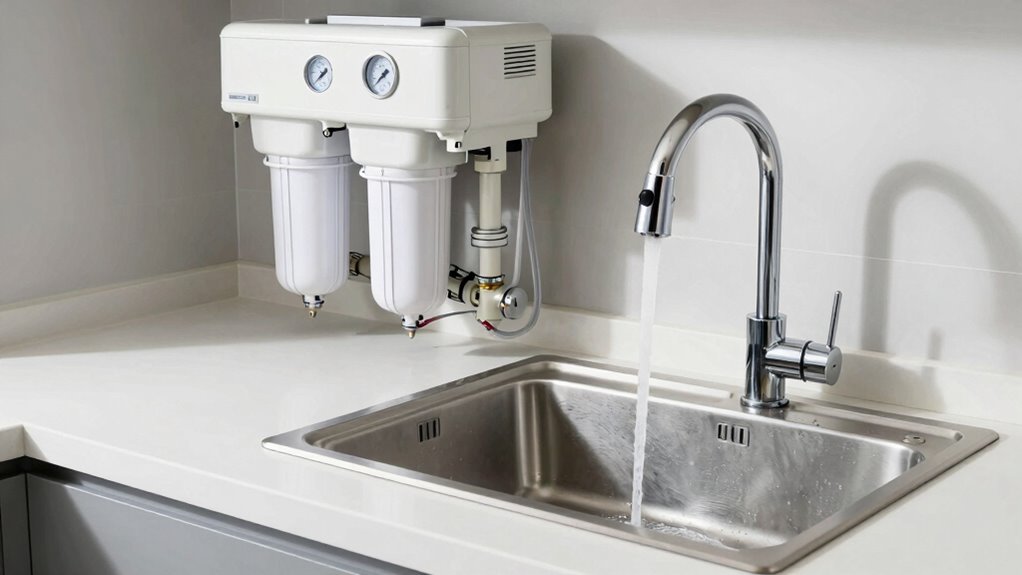

Choosing between whole-house and under-sink filters depends on what water problems you’re trying to fix. If you want clean water throughout your home, improve taste, and remove sediments or chemicals, a whole-house system is best. For targeted purification at a specific tap or for removing particular contaminants like lead or microbes, an under-sink filter works well. To find the ideal solution for your needs, consider your household’s water quality and usage—more tips await.
Key Takeaways
- Whole-house filters address comprehensive water quality issues for the entire home, including sediments, chemicals, and microbes.
- Under-sink filters target specific contaminants at a single point, such as improving taste or removing heavy metals from drinking water.
- Use whole-house systems for large households with high water usage and broad contamination concerns; under-sink filters suit localized needs.
- Whole-house filters require higher upfront costs and maintenance but provide continuous protection; under-sink units are more affordable and easier to install.
- Combining both systems offers tailored solutions for diverse household water problems, ensuring comprehensive and point-specific purification.

Express Water Whole House Water Filter System | ULTIMATE PROTECTION | 3 Stage Home Filtration, Top Tier Heavy Metal + Anti-Scale Filter, Highly Reduces Scale, Chloramine, Chlorine, PFAs, Lead, Arsenic
WHOLE HOUSE WATER FILTRATION: Notice the difference immediately with 3-stage water filtration process throughout your home. From every…
As an affiliate, we earn on qualifying purchases.
As an affiliate, we earn on qualifying purchases.
Deciding Between Whole-House and Under-Sink Water Filters
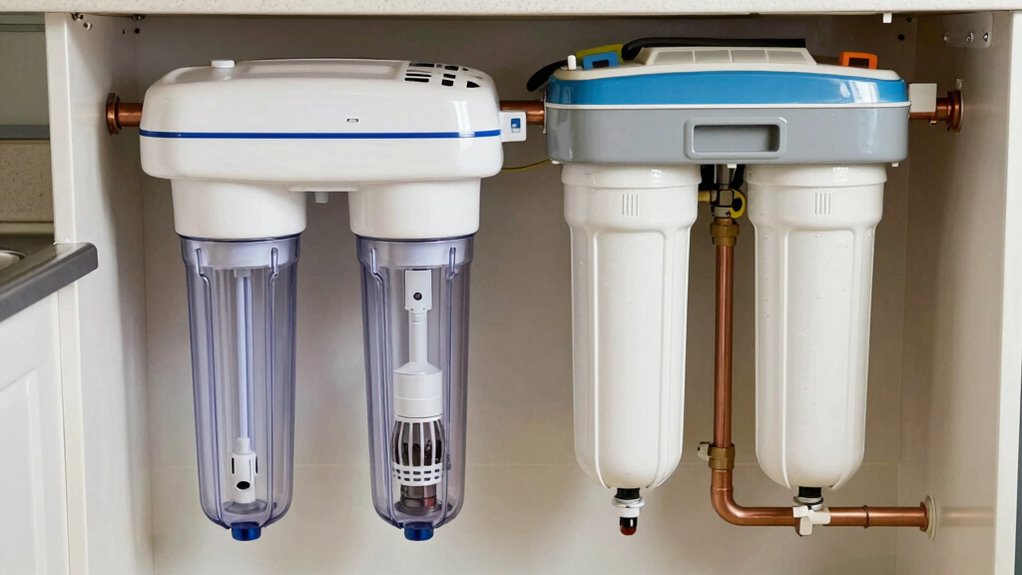
Choosing between whole-house and under-sink water filters depends on your specific water quality concerns and household needs. Start by conducting water testing to identify contaminants and understand your water’s composition. This step helps determine which filtration technology will be most effective. Whole-house filters are ideal if you want to remove sediments, chemicals, or chlorination from all the water entering your home, providing extensive protection. Under-sink filters are better suited for targeted filtration, especially if your primary concern is improving water quality at a specific tap, like the kitchen sink. By evaluating your water test results, you’ll be able to choose a filtration system that best addresses your household’s needs efficiently and effectively. Additionally, understanding the contrast ratio of your filtration system can help you gauge its ability to produce clear, sharp water quality. Considering filtration technology options can further optimize your water treatment solution to meet your unique household requirements. Incorporating water quality tests into your decision-making process can provide valuable insights that refine your choice, ensuring you select the most suitable filtration method.

Waterdrop 10UA Under Sink Water Filter System, Reduces PFAS, PFOA/PFOS, Lead, Chlorine, Bad Taste & Odor, Under Counter Water Filter Direct Connect to Kitchen Faucet, NSF/ANSI 42 Certified, 1 Year
Less than $25.99 per replacement filter WD-RF10(Search " B085G66JTZ "on Amazon), save over 50% of cost on subsequent…
As an affiliate, we earn on qualifying purchases.
As an affiliate, we earn on qualifying purchases.
How Do I Assess My Household’s Water Quality Needs?
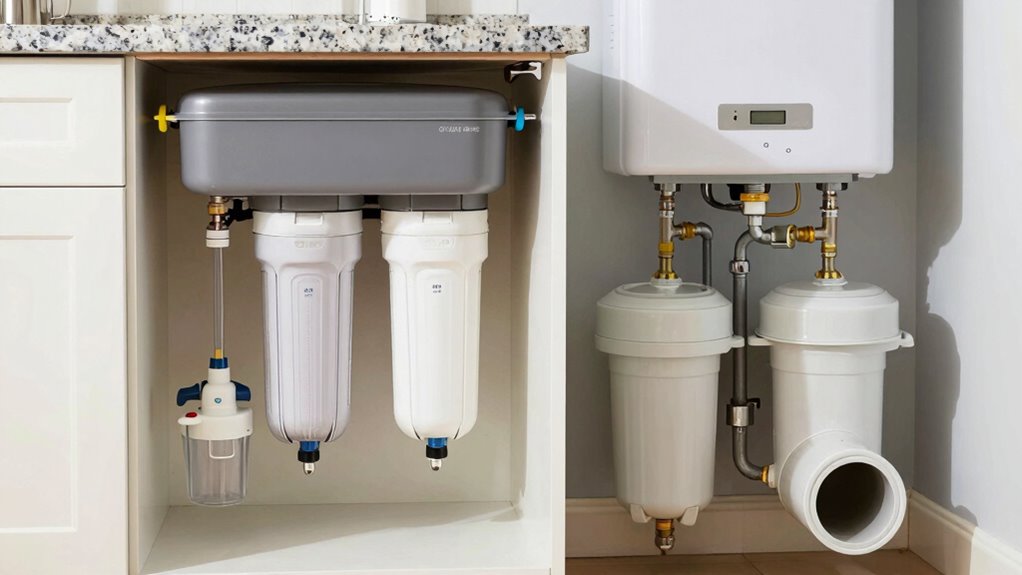
To accurately assess your household’s water quality needs, start by testing your water. This will reveal issues like pH balance and mineral content. A pH imbalance can cause corrosion or scale buildup, so knowing whether your water is too acidic or alkaline helps determine the right filter. High mineral content, such as calcium or magnesium, can lead to hard water problems, affecting appliances and plumbing. Testing kits are available online or through local labs, providing detailed results. Once you understand your water’s pH and mineral levels, you can identify which contaminants or deficiencies you need to address. This step guarantees you choose a filtration system tailored to your specific needs, avoiding unnecessary features and focusing on the issues that matter most in your home.
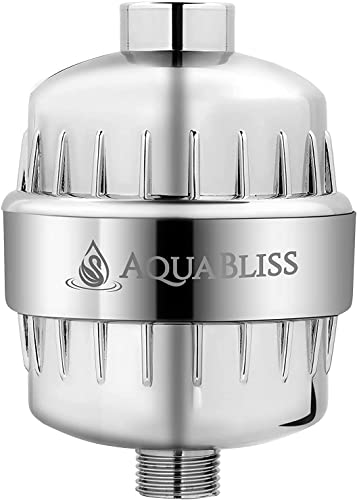
AquaBliss High Output Revitalizing Shower Filter – Reduces Dry Itchy Skin, Dandruff, Eczema, and Dramatically Improves The Condition of Your Skin, Hair and Nails – Chrome (SF100)
DAY 1 – IMMEDIATELY BEGINS REJUVENATING SKIN, HAIR & NAILS: HARD, chlorinated, chemical ridden water causing itchy skin,…
As an affiliate, we earn on qualifying purchases.
As an affiliate, we earn on qualifying purchases.
Coverage and Capacity: Comparing Whole-House and Under-Sink Water Filters
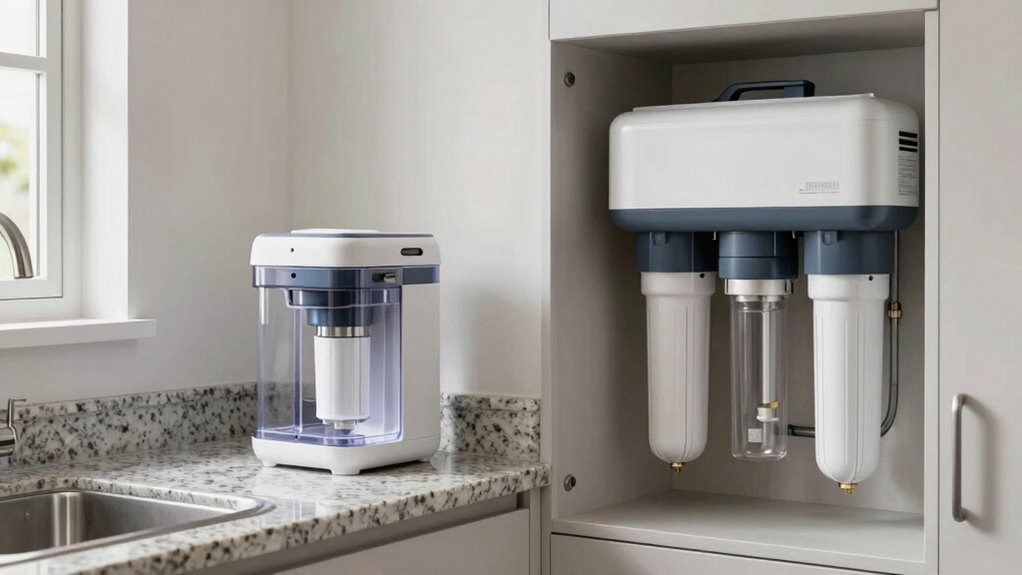
When comparing whole-house and under-sink water filters, understanding their coverage and capacity is essential to meeting your household’s needs. Whole-house filters typically handle larger volumes of water, providing filtered water throughout your home, which benefits families with high water usage. They also help maintain pH balance and mineral content, ensuring your water stays naturally balanced and healthy. Additionally, whole-house systems often incorporate multi-stage filtration to address various contaminants more effectively. Under-sink filters, on the other hand, focus on a single faucet, offering targeted filtration with a smaller capacity. This makes them ideal for removing specific contaminants or improving taste without affecting entire household water supply. Consider your household size and water consumption when choosing a system. Both types impact your water’s mineral content and pH, so select one that aligns with your water quality goals. Additionally, best water filter options are available to ensure you choose a system that provides reliable performance and meets your specific needs. For example, understanding filtration capacity can help you select a system that effectively meets your daily water consumption requirements.

Varify 17in1 Complete Drinking Water Test Kit – 100 Strips + 2 Bacteria Tester Kits – Well, Tap, Home, City Water Testing Strip for Lead, Alkaline, Chlorine, Hardness, Iron, Fluoride, Copper & More
17 IMPORTANT PARAMETERS: The Varify Premium Drinking Water Test Kit offers an unrivaled, complete analysis of your drinking…
As an affiliate, we earn on qualifying purchases.
As an affiliate, we earn on qualifying purchases.
Which Water Filter System Is Best for Removing Chlorine and Chemicals?

If you’re looking to effectively remove chlorine and chemicals from your water, selecting the right filter system is essential. Under-sink filters are excellent for improving water taste by targeting chemicals directly at the point of use, providing clean, great-tasting water for drinking and cooking. They typically have a straightforward installation process, often requiring just a few connections to your existing tap or plumbing. Whole-house filters also remove chlorine and chemicals but do so across your entire home’s water supply, ensuring better water taste in every faucet. However, they usually involve a more complex installation and higher upfront costs. Consider your needs: for targeted, high-quality drinking water, an under-sink filter is ideal; for whole-home cleanliness, a whole-house system works best. Additionally, understanding water chemistry is crucial for selecting the most effective filtration system.
What Contaminants Can Water Filters Remove? Bacteria, Lead, and Heavy Metals
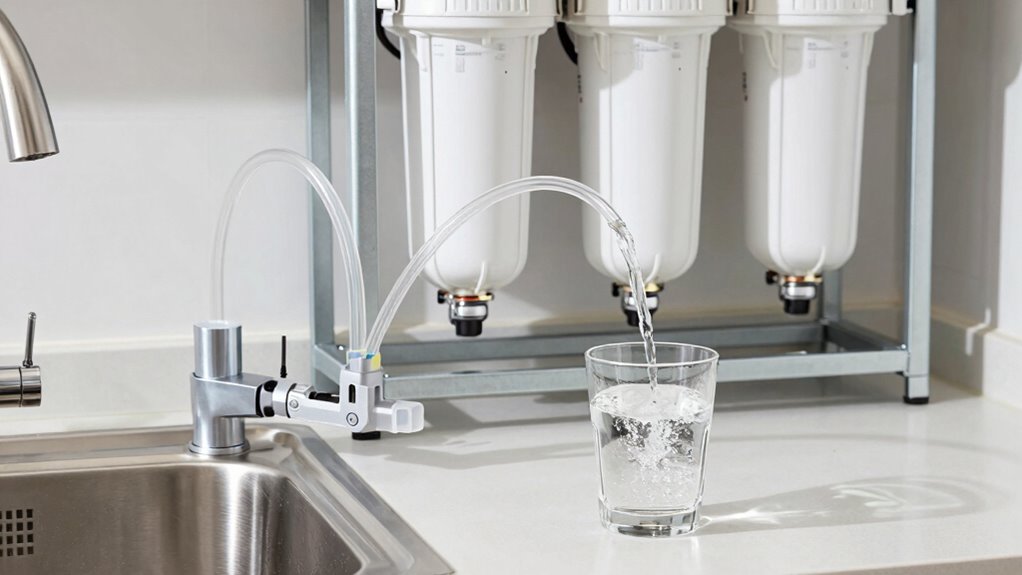
Choosing the right water filter isn’t just about improving taste; it’s also about protecting your health from harmful contaminants. Many filters effectively target waterborne pathogens, bacteria, and viruses, reducing the risk of illness. They also excel at contaminant removal, especially lead and heavy metals like mercury and arsenic, which can accumulate in your body over time. Under-sink filters often use activated carbon or reverse osmosis to filter out these toxins, providing cleaner, safer water directly from your tap. Whole-house systems can also remove heavy metals and bacteria, offering holistic protection for your entire home. Knowing which contaminants you need to address helps you select the most effective system, ensuring your water is safe to drink and use daily.
What Are the Costs and Maintenance Requirements? Longevity and Upkeep
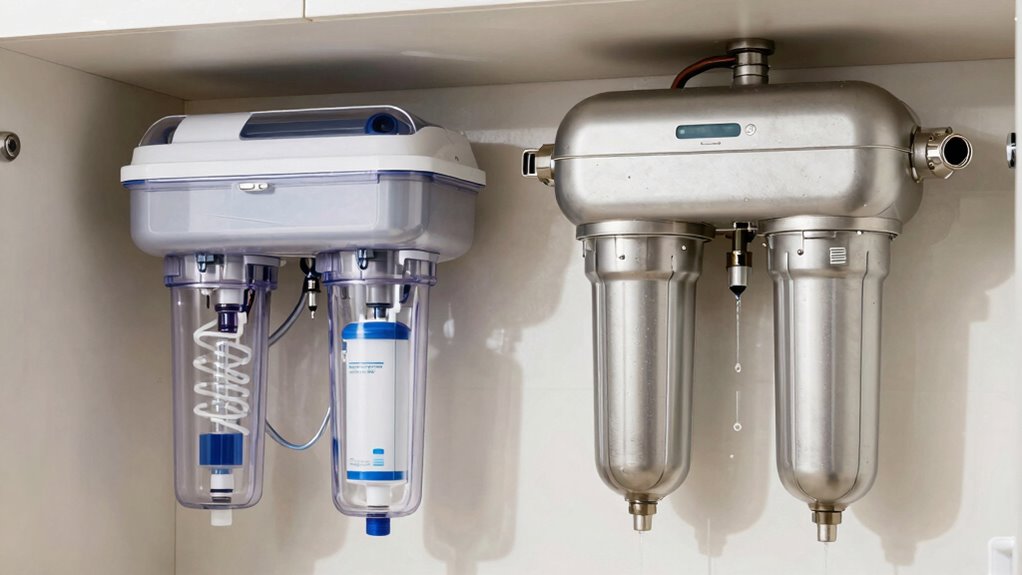
Understanding the costs and maintenance involved in water filters is essential to making a smart investment. A clear cost comparison helps you decide whether a whole-house or under-sink filter fits your budget. Whole-house systems typically have higher upfront costs but require less frequent maintenance, with filter changes every 6 to 12 months. Under-sink filters usually cost less initially but may need more regular upkeep, often every 3 to 6 months. Consider the longevity of each system—whole-house filters tend to last longer due to larger capacities. Maintenance frequency impacts ongoing expenses and convenience. Regular upkeep ensures your water stays clean and prevents costly repairs. Additionally, storage and backup solutions such as optical drives and enterprise USB backups can help safeguard your data, reflecting the importance of reliable maintenance routines. Weigh these factors carefully to choose a system that balances your budget, maintenance commitment, and water quality needs.
How Do I Know Which System Fits My Household Size and Lifestyle?
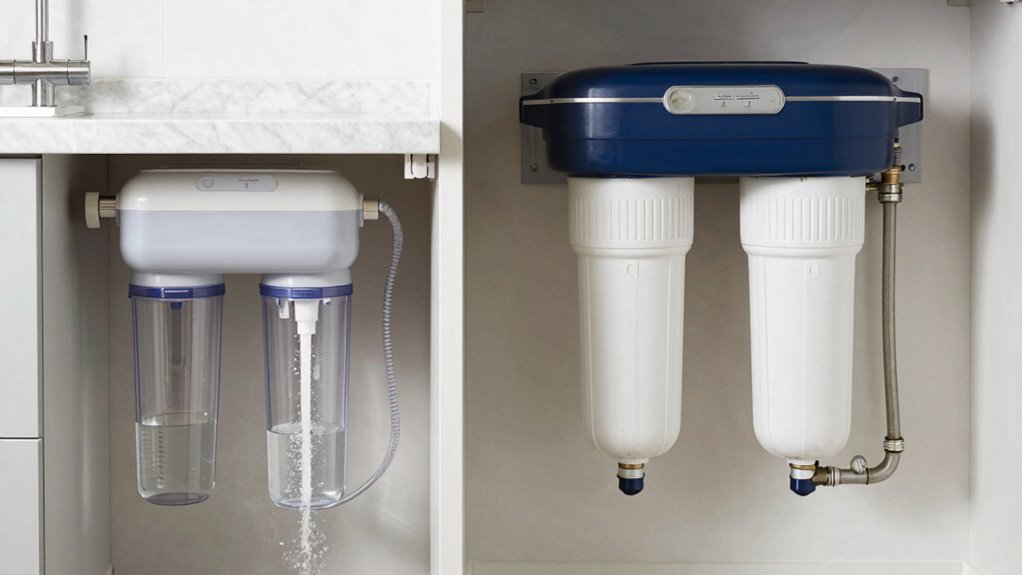
Selecting the right water filtration system depends on your household size and daily water usage. If you have a large family or high water consumption, a whole-house system might be more efficient, providing filtered water for all fixtures and supporting water conservation efforts. Smaller households may find under-sink filters sufficient, focusing on specific needs like drinking and cooking. Consider aesthetic considerations too; under-sink units are discreet and don’t impact your home’s look, while whole-house systems are more visible but offer convenience. Think about your daily routines—if you value convenience and minimal maintenance, a whole-house filter may suit you better. Additionally, understanding your household’s water quality can help determine the most appropriate filtration solution, ensuring you address specific contaminants effectively. Matching your household’s size and lifestyle guarantees you get effective filtration without unnecessary expense or complexity.
Should I Use Both Whole-House and Under-Sink Filters?

Using both whole-house and under-sink filters can be a smart way to guarantee thorough water quality, especially if your household has diverse needs. Many water filtration myths suggest that one system alone can address all concerns, but combining both offers extensive protection. However, consider potential installation challenges—adding multiple systems can be complex and may require professional help. This setup ensures your entire home benefits from filtered water, while specific sinks can have additional purification for sensitive tasks like drinking or cooking. Before investing, evaluate your water issues and whether the added cost and effort align with your health priorities. Using both filters can be effective, but it’s essential to plan carefully to avoid unnecessary complications. Proper installation is crucial to maximize performance and prevent issues. Additionally, understanding water filtration safety tips can help you maintain your systems effectively and ensure ongoing safety.
Questions to Consider Before Installing a Water Filter System

Before installing a water filter system, you need to consider your water quality concerns and whether your system will effectively address them. Think about how often you’ll need to perform maintenance to keep your filters working properly. Being clear on these points helps ensure you choose the right solution for your home’s needs. Additionally, understanding household water quality can help you select the most suitable filtration system. Recognizing the importance of microplastics in dust and other indoor pollutants can also inform your choices for improving overall air and water quality in your home. Proper system installation techniques are essential to ensure your filter functions correctly and lasts longer, preventing potential issues caused by improper setup. Knowing about cabling failures and proper installation techniques can also be crucial when setting up or upgrading your water filtration system to prevent issues down the line. Recognizing the importance of credit card security can also aid in managing online payments related to home improvements.
Water Quality Concerns
Understanding your water quality is essential before installing a water filter system, as different contaminants require different filtration methods. You should test your water for issues like pH balance, mineral content, heavy metals, and microbial presence. If your water has low pH, it may be acidic, causing corrosion and affecting taste. High mineral content, such as calcium or magnesium, can lead to scale buildup. Knowing the specific contaminants helps you choose the right filter—whether you need a system that adjusts pH, removes minerals, or filters out chemicals. For example, under-sink filters excel at targeting localized issues, while whole-house systems provide broader protection. Evaluating your water quality ensures you install a system tailored to your needs, providing safe, clean, and balanced water.
System Maintenance Needs
Ensuring your water filter system stays effective requires regular maintenance, so it’s important to contemplate the ongoing upkeep before installation. Consider how often you’ll need to replace filters to maintain good water taste and ideal filtration technology performance. Whole-house filters often require more frequent changes due to larger volumes of water passing through, while under-sink units might need less frequent attention. Think about your ability to perform maintenance tasks and whether you prefer a system that’s low-maintenance or one that demands regular upkeep. Some systems may have indicators to alert you when filters need replacing, saving you time. Understanding these system maintenance needs** can help you plan for long-term costs and operational efficiency. Additionally, being aware of Free Floating concepts can assist in making informed decisions about your water filtration options for a more sustainable home environment, especially when considering system longevity and eco-friendly practices. Regularly reviewing your system performance can also ensure that your filter remains effective and your water quality stays high over time. Considering filter replacement frequency** can further aid in maintaining optimal filtration and avoiding unexpected issues.
Next Steps: How to Choose the Right Water Filter for Your Home
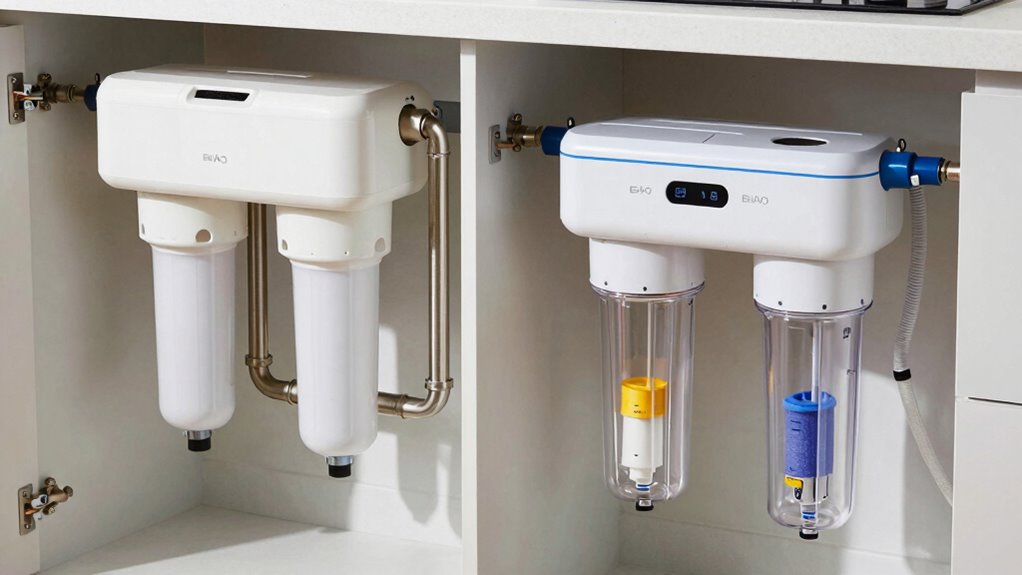
Are you unsure how to pick the best water filter for your home? Start by considering what issues you’re trying to solve. If water taste is your main concern, look for filters that target chlorine and other odors. For cleaner, better-tasting water, under-sink filters often excel. If you’re worried about overall water quality, a whole-house filter might be necessary. Next, evaluate installation procedures—some systems require professional setup, while others are DIY-friendly. Think about space, budget, and maintenance needs. Also, check what contaminants each filter removes to ensure it matches your water test results. Additionally, understanding filter flow rates and system efficiency can help you select a solution that meets your household’s demand without sacrificing performance. By clarifying your priorities and understanding installation requirements, you’ll be better equipped to choose the right water filter to improve your home’s water quality effectively. Remember to consider system maintenance and filter lifespan to ensure your investment remains effective over time.
Frequently Asked Questions
Can I Install Both Whole-House and Under-Sink Filters Simultaneously?
Yes, you can install both whole-house and under-sink filters simultaneously. Just guarantee their installation compatibility with your existing plumbing and consider water flow rates. Whole-house filters handle large volumes, so they won’t bottleneck your system, while under-sink filters target specific needs. However, you might need professional help to avoid pressure drops or installation issues. Monitoring flow rates ensures both filters work efficiently without compromising water pressure.
How Do I Determine the Appropriate Filter Size for My Household?
You determine the right filter size by evaluating your household needs first. Consider the number of people using the water, your daily water consumption, and the specific contaminants you’re targeting. Larger households typically require bigger filters or higher flow rate models to ensure adequate water supply. Measure your plumbing setup and consult manufacturer guidelines to match the filter size with your household’s demand, guaranteeing effective filtration without sacrificing flow.
Are There Specific Brands Recommended for Different Contaminants?
You should look for brand recommendations that specialize in contaminant-specific filters. For example, if you’re targeting lead, consider brands like Aquasana or Robert Shaw. For chlorine removal, PUR and APEC are reliable choices. Always check product labels to verify the filter addresses your specific contaminants. Reading reviews and consulting with water quality experts can help you find trusted brands that meet your needs effectively.
What Are Signs My Water Filter Needs Replacement or Maintenance?
Watch for water with a weird smell, strange taste, or cloudiness—that’s your filter signaling trouble. You’ll want to track your filter lifespan and stick to a maintenance schedule to prevent problems. Regularly check for reduced flow rate or leaks, and replace filters promptly to keep water pure. Staying proactive guarantees your filter functions effectively, protecting your health and household happiness.
How Do I Ensure My Water Filter System Complies With Local Regulations?
You guarantee your water filter system complies with local regulations by conducting regular water testing to check for contaminants. Verify that your filter meets certification standards set by relevant authorities, such as NSF or ANSI. Keep documentation of tests and certifications handy. Additionally, stay updated on local regulations, and consult your water supplier or a certified professional to confirm your system’s compliance, ensuring safe and clean water.
Conclusion
Choosing between whole-house and under-sink filters is like picking the right tool for a job—you want what fits your needs perfectly. Consider your water quality, household size, and specific concerns. Sometimes, using both systems is the best solution. By understanding what each offers, you’ll make a confident decision that keeps your water clean and safe—like a well-tuned engine running smoothly behind the scenes.