To set your basement dehumidifier effectively, you need accurate humidity measurements, not guesswork. Use a reliable hygrometer to monitor moisture levels regularly, aiming for 50-60% RH to prevent mold and keep the area comfortable. Proper placement and calibration of your device are key. Continuously checking your humidity data ensures ideal settings and energy efficiency. Keep in mind, mastering these steps will help you maintain a healthy basement environment with confidence.

Get gifts for the two of you delivered free with Prime
- Fast, free delivery on millions of items
- Prime Video, Amazon Music and more included
- Member-only deals all year
Key Takeaways
- Use a reliable hygrometer to accurately measure basement humidity before adjusting dehumidifier settings.
- Set your dehumidifier to maintain humidity levels between 50-60% for optimal moisture control.
- Regularly check and calibrate your hygrometer to ensure precise readings for informed adjustments.
- Monitor real-time humidity data and adjust the dehumidifier output accordingly, avoiding guesswork.
- Incorporate climate considerations and seasonal changes into your settings for consistent basement dryness.
As an affiliate, we earn on qualifying purchases.
Why Proper Humidity Measurement Is Essential for a Dry Basement
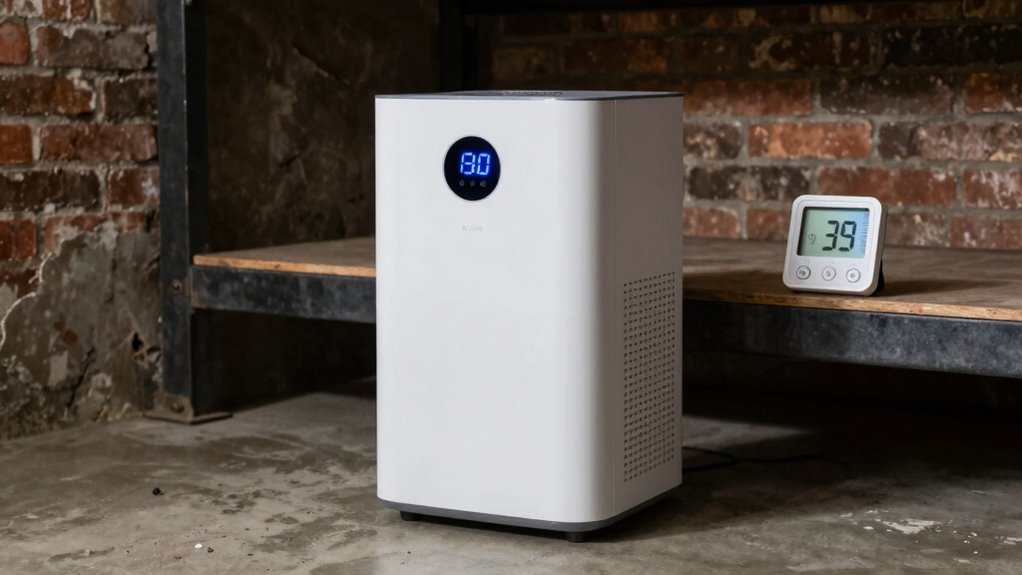
Accurately measuring humidity levels is essential because it helps you maintain a dry and healthy basement. When you know the exact humidity, you can adjust your basement insulation and ventilation techniques effectively. Proper insulation prevents moisture from seeping through walls and floors, reducing humidity buildup. Ventilation techniques, like exhaust fans or air exchange systems, help remove excess moisture and improve air circulation. Without precise humidity measurements, you risk under- or over-using your dehumidifier, leading to mold growth or dry air that can damage your home. Regularly monitoring humidity levels ensures your efforts are targeted and efficient, keeping your basement dry, comfortable, and free from moisture-related problems. Using a vetted hygrometer ensures reliable readings and better control over indoor humidity. Understanding indoor humidity levels can also help you identify hidden sources of moisture and prevent long-term issues. Accurate measurement is the foundation for setting your dehumidifier correctly and maintaining an ideal environment. Additionally, being aware of moisture patterns can help you anticipate and address potential issues before they escalate. Incorporating humidity sensors into your monitoring routine can further enhance your ability to maintain optimal conditions. Recognizing regional climate influences can also help you tailor your humidity control strategies more effectively.
automatic dehumidifier with humidity control
As an affiliate, we earn on qualifying purchases.
As an affiliate, we earn on qualifying purchases.
What Is Relative Humidity and How Does It Affect Your Basement?
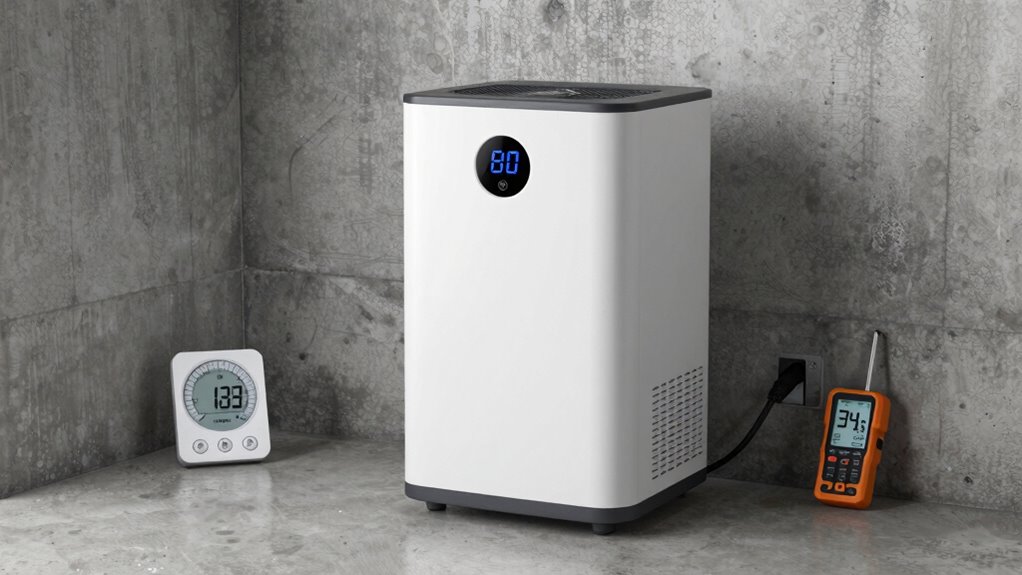
Understanding relative humidity is key to managing your basement’s moisture levels effectively. Relative humidity measures how much moisture air holds compared to its maximum capacity at a given temperature. When humidity control isn’t maintained, high relative humidity can lead to excess moisture, fostering mold, musty odors, and structural damage. Conversely, too low humidity can cause dryness and discomfort. Maintaining ideal relative humidity—generally between 50% and 60%—helps prevent these issues. It’s essential to know that temperature affects relative humidity; warmer air holds more moisture, so managing both temperature and humidity is crucial for a healthy basement environment. Proper humidity control can also improve indoor air quality and extend the lifespan of your basement’s structure. Additionally, understanding how solar/power safety impacts energy efficiency can support better climate control strategies indoors. Being aware of air circulation and ventilation practices can further enhance moisture management and prevent stagnant, damp conditions. By understanding how relative humidity influences moisture levels, you can make better decisions about dehumidifier settings and keep your basement dry and safe. Regularly monitoring humidity levels with a hygrometer provides real-time data to fine-tune your settings and maintain optimal conditions.
As an affiliate, we earn on qualifying purchases.
How to Choose and Use a Hygrometer to Monitor Humidity
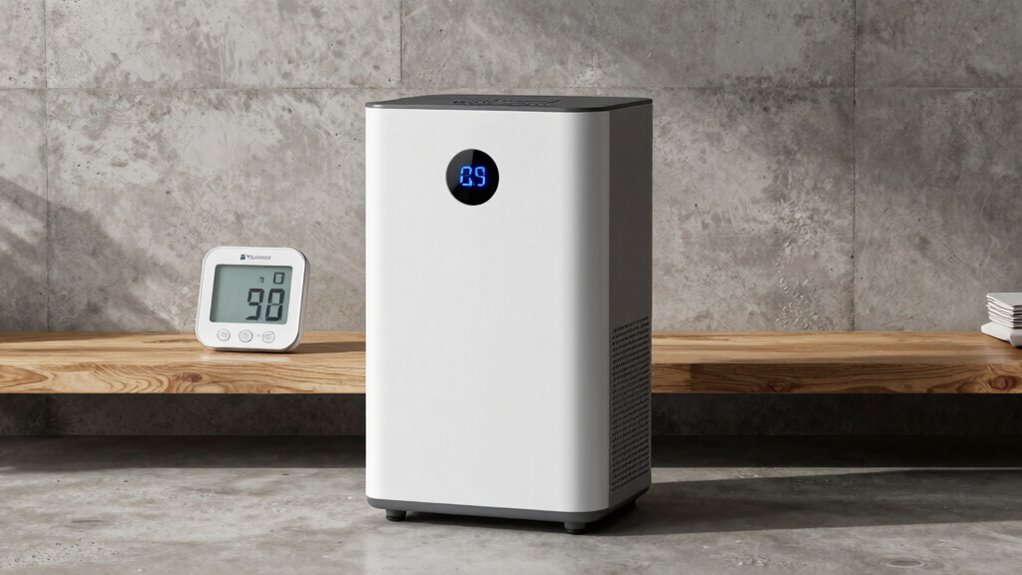
Choosing the right hygrometer is essential for effectively monitoring your basement’s humidity levels, especially since proper readings help you set your dehumidifier correctly. Look for models with accurate humidity sensors and easy calibration options. To guarantee reliable data, regularly use calibration techniques like salt solution tests or compare with a trusted device. Here’s a quick guide:
| Hygrometer Type | Calibration Technique | Ideal Humidity Range | |
|---|---|---|---|
| Digital | Salt test | 30-50% | |
| Analog | Bubble level calibration | 30-50% | |
| Thermo-hygrometer | Factory calibration check | 30-50% | Additionally, understanding humidity measurement is vital for maintaining a healthy basement environment. |
energy-efficient basement dehumidifier
As an affiliate, we earn on qualifying purchases.
As an affiliate, we earn on qualifying purchases.
Setting Your Dehumidifier for the Best Basement Comfort
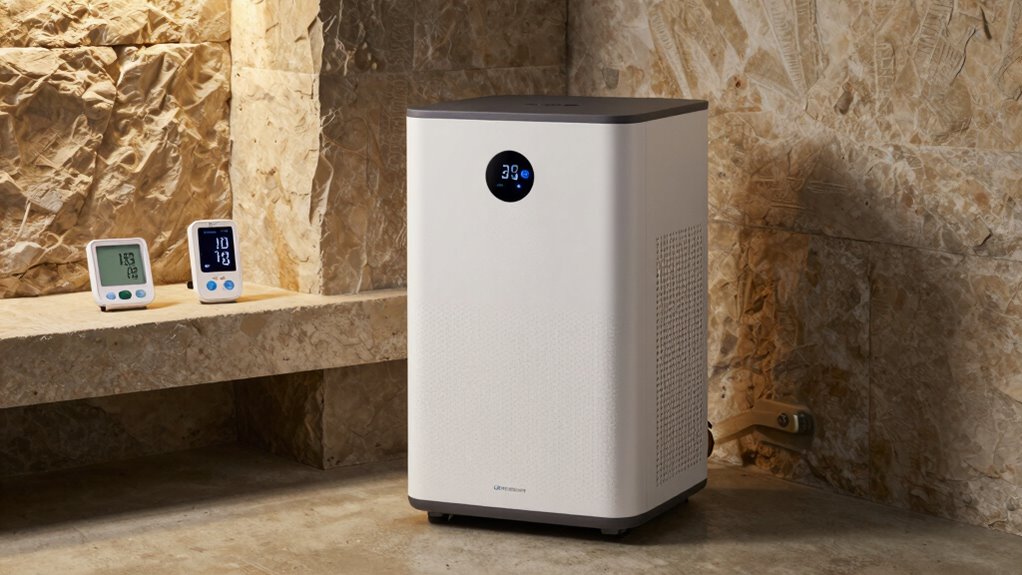
To get the most comfort from your basement, you need to set your dehumidifier correctly. Keep the humidity between 50-60% for a dry, comfortable space, and make sure it’s placed where it can work efficiently. Regularly check and adjust the settings to maintain the ideal environment. Monitoring dehumidifier performance ensures your system operates effectively and maintains consistent comfort.
Ideal Humidity Levels
Have you ever wondered what the ideal humidity level is for a comfortable and healthy basement? Maintaining the right humidity helps prevent mold, reduces musty odors, and improves air quality. Aim for a range between 50-60%, which is suitable for comfort and mold prevention. To support this, consider:
- Using air purifiers to filter airborne spores and allergens
- Keeping humidity consistent with your dehumidifier settings
- Monitoring humidity levels regularly with a hygrometer
- Proper dehumidifier maintenance ensures consistent performance and prevents excess moisture buildup. Regularly checking and adjusting your dehumidifier settings based on indoor air quality readings can help maintain optimal humidity levels. Understanding humidity control methods can further enhance your basement environment. Implementing sensor-based controls can automate the process and maintain more precise humidity levels. Additionally, understanding the impact of relative humidity on indoor air quality can help you make better adjustments.
Lowering humidity below 50% can cause dry air and discomfort, while going above 60% increases mold risks. Finding this balance ensures your basement stays comfortable, safe, and free from excess moisture. Proper humidity control also enhances the effectiveness of air purifiers, creating a healthier environment overall.
Proper Dehumidifier Placement
Proper placement of your dehumidifier is essential to guarantee it operates efficiently and maintains a comfortable basement environment. Position it away from basement insulation that could block airflow and ensure unobstructed air circulation. Place the unit in a central location or near areas prone to excess moisture, such as near damp walls or leaks. Good ventilation techniques, like opening vents or windows periodically, help improve airflow and prevent humidity buildup. Proper dehumidifier placement is key to maximizing performance and energy efficiency. Avoid placing the dehumidifier in corners or tight spaces where air circulation is limited. Keep it elevated on a sturdy surface if possible, to enhance air intake and exhaust. Optimal placement maximizes dehumidifier performance, reduces energy use, and helps sustain a dry, comfortable basement. Understanding best practices for dehumidifier placement can further optimize its efficiency. Additionally, being aware of indoor air quality factors can help you better assess the ideal spot for your unit.
Monitoring and Adjustments
Monitoring your dehumidifier and making adjustments as needed guarantees your basement stays comfortable and dry. Use smart sensors and digital displays to track humidity levels accurately. Regularly check these readings to identify trends and ensure the most suitable settings. When humidity creeps above your target, increase the dehumidifier’s output; if it’s too low, dial it back. Adjustments should be based on real-time data rather than guesswork. Keep an eye on:
- Humidity readings from digital displays
- Sensor alerts for abnormal moisture levels
- Filter and vent conditions affecting performance
Being aware of regional climate influences can help you anticipate seasonal humidity changes and adjust your dehumidifier accordingly. Incorporating smart home automation features can further optimize performance by automating these adjustments. Regularly reviewing dehumidifier settings ensures your system remains efficient and effective. Consistently monitoring and tweaking settings helps maintain the ideal environment, prevents mold growth, and extends your dehumidifier’s lifespan. Stay proactive to achieve the best basement comfort.
Common Problems With Dehumidifiers and How to Fix Them
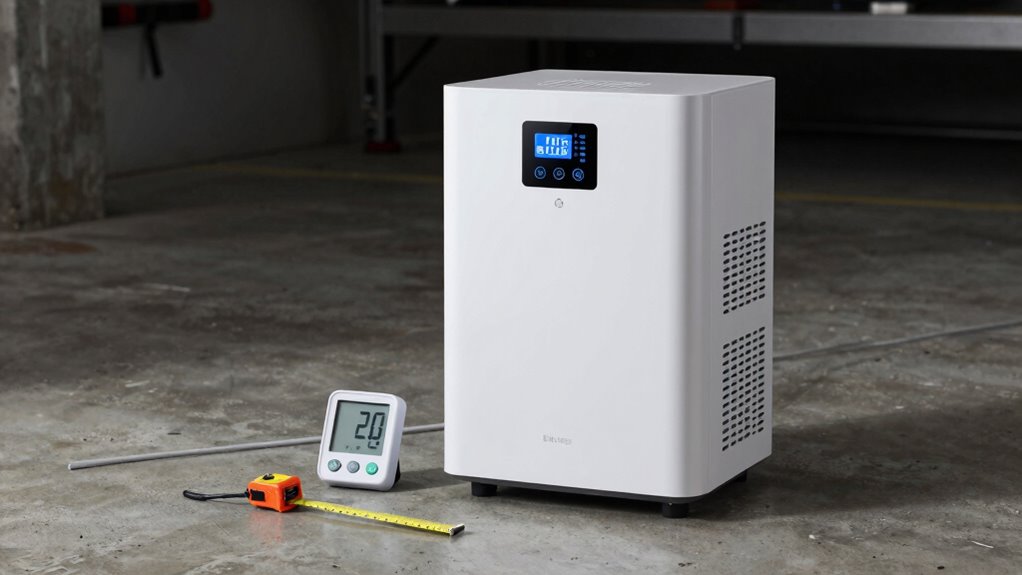
If your basement still feels damp or mold starts to grow, excess humidity could be the cause. Lingering odors might also point to issues with your dehumidifier’s performance. Unusual noises are often signs of malfunctions that need quick attention to keep your system running smoothly.
Excess Humidity Triggers Mold
When a basement dehumidifier isn’t set correctly, excess humidity can quickly lead to mold growth. Mold thrives in damp environments, compromising air quality and risking health. To prevent this, focus on effective ventilation strategies and monitor humidity levels closely. Be aware of common signs like musty odors or visible mold spots. Here are key ways excess humidity triggers mold:
- Stagnant air traps moisture, creating ideal conditions.
- Poor ventilation allows humidity to build up over time.
- High humidity levels promote mold spores to settle and grow.
Adjusting your dehumidifier settings helps keep humidity in check. Regularly measuring humidity ensures ideal air quality and prevents mold development, saving you from costly repairs and health issues.
Persistent Odors Persistently Linger
Have you noticed a persistent musty smell even after running your dehumidifier? This lingering odor often indicates incomplete mold prevention or odor control issues. To fix it, first verify your dehumidifier is properly sized and functioning correctly. Clean or replace filters regularly, as dirty filters can trap odors. Check for mold growth in hidden areas like vents or corners, and clean surfaces with mold-killing solutions. Improving ventilation helps release trapped odors and freshens the space. Consider using activated charcoal or odor absorbers to supplement your dehumidifier’s efforts. Proper maintenance and monitoring are key to eliminating persistent odors. By addressing these issues, you’ll enhance your basement’s environment, prevent mold, and keep the air smelling fresh.
Unusual Noises Indicate Malfunction
Unusual noises from your dehumidifier often signal that something’s amiss, and addressing these sounds promptly can prevent further damage. Noise issues could stem from loose parts, debris, or motor problems. Ignoring them may lead to decreased efficiency or system failure. To troubleshoot, inspect your unit regularly and follow maintenance tips such as cleaning filters and tightening screws. Watch out for:
- Rattling sounds from loose panels
- Whining or squealing from motor or fan issues
- Banging or knocking noises indicating debris in the fan
These signs point to specific problems requiring attention. Addressing noise issues early not only extends your dehumidifier’s lifespan but also ensures it operates quietly and efficiently. Regular maintenance tips help prevent these common problems altogether.
How Maintaining the Right Humidity Prevents Mold and Saves Energy

Maintaining the right humidity levels in your basement is essential for preventing mold growth and reducing energy costs. When humidity is controlled, mold spores can’t thrive, protecting your home’s air quality and your health. Proper humidity levels also improve energy efficiency by reducing the workload on your dehumidifier and HVAC system. When the air is too moist, your system works harder, increasing energy consumption and raising utility bills. Conversely, keeping humidity in check minimizes this strain, saving you money. Consistent humidity management not only prevents mold but also creates a healthier, more comfortable environment. By measuring and adjusting your dehumidifier settings correctly, you ensure ideal moisture levels, enhancing air quality and making your basement more energy-efficient year-round.
Tips for Keeping Your Basement Humidity Levels Balanced All Year
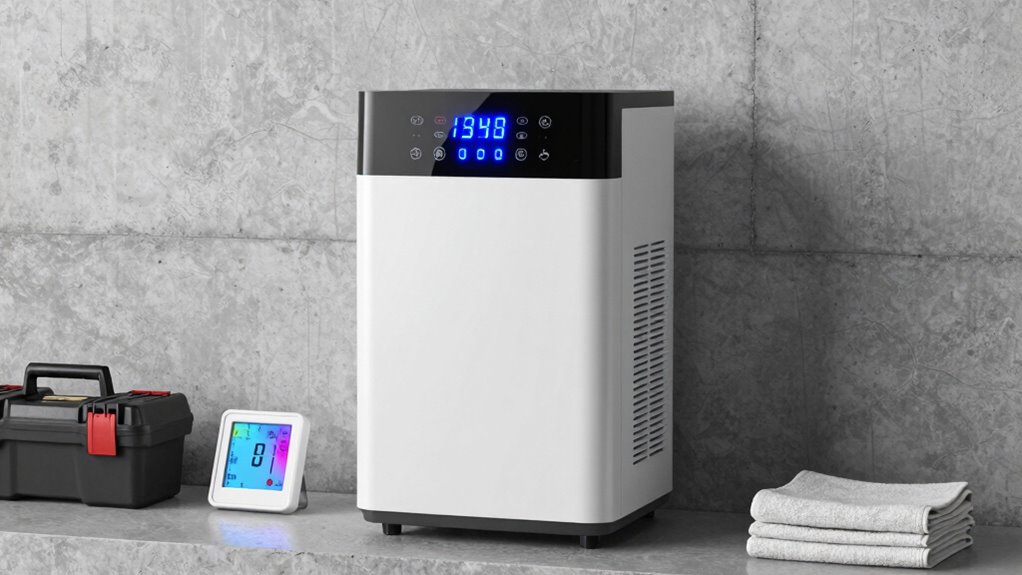
To keep your basement’s humidity levels balanced throughout the year, you need to stay proactive about monitoring and adjusting your dehumidifier settings. Regularly check your device to guarantee it’s working efficiently, which directly impacts air quality. Proper dehumidifier maintenance prevents mold growth and keeps moisture levels in check regardless of seasonal changes. Here are some tips:
Maintaining optimal basement humidity requires regular monitoring and dehumidifier upkeep for a healthier environment.
- Use a hygrometer to track humidity and make precise adjustments.
- Set your dehumidifier to maintain 50-60% humidity year-round.
- Clean filters and coils regularly for ideal air quality and efficiency.
Frequently Asked Questions
How Often Should I Recalibrate My Hygrometer for Accurate Readings?
You should recalibrate your hygrometer every six months to guarantee optimal accuracy. Regular calibration helps maintain hygrometer accuracy, especially if you notice inconsistent readings. Factors like temperature changes and humidity fluctuations can affect its precision over time. By staying on top of calibration frequency, you’ll get reliable measurements, allowing you to set your basement dehumidifier correctly and prevent mold or moisture issues.
What Is the Ideal Humidity Range for Different Basement Uses?
A stitch in time saves nine, so knowing the right humidity is key. For general storage, keep it between 50-60%. If you’re preventing mold or aiming for energy efficiency, aim for 45-50%. For a basement used as a living space, 45-55% strikes a good balance. Maintaining these ranges helps prevent mold growth and keeps your energy bills in check, making your basement healthier and more efficient.
How Do External Weather Conditions Influence Basement Humidity Levels?
External weather conditions, especially outdoor air and seasonal changes, directly affect your basement’s humidity. When outdoor air is humid or rainy, it increases moisture levels inside, making dehumidifier settings harder to manage. During dry seasons or cold weather, humidity drops naturally. You need to monitor outdoor conditions regularly and adjust your dehumidifier accordingly, ensuring your basement stays comfortable and protected regardless of seasonal fluctuations.
Can a Dehumidifier Operate Effectively in Extremely Humid Environments?
Yes, a dehumidifier can operate effectively in extremely humid environments, but you need the right equipment compatibility. Focus on humidity control, ensuring your dehumidifier is designed for high moisture levels, and verify its capacity matches your space. Keep the unit well-maintained, monitor its performance regularly, and consider additional ventilation or moisture barriers. With proper setup, your dehumidifier will manage even the most challenging humidity levels efficiently.
Are There Any Safety Considerations When Adjusting Dehumidifier Settings?
When adjusting your dehumidifier, prioritize electrical safety by unplugging it before making changes to prevent shocks. Make certain proper appliance placement, keeping it on a level surface away from water and obstructions to prevent accidents. Regularly inspect cords for damage and avoid overloading outlets. These safety measures help protect you and ensure your dehumidifier operates efficiently, reducing the risk of electrical hazards and maintaining a safe environment in your basement.
Conclusion
Remember, knowledge is power—especially when it comes to your basement’s humidity. By measuring carefully and setting your dehumidifier properly, you prevent mold, save energy, and enjoy a more comfortable space. Don’t guess; measure and adjust as needed. After all, an ounce of prevention is worth a pound of cure. Stay vigilant, keep an eye on your hygrometer, and your basement will stay dry and healthy all year round.
Halloween Picks
halloween
As an affiliate, we earn on qualifying purchases.