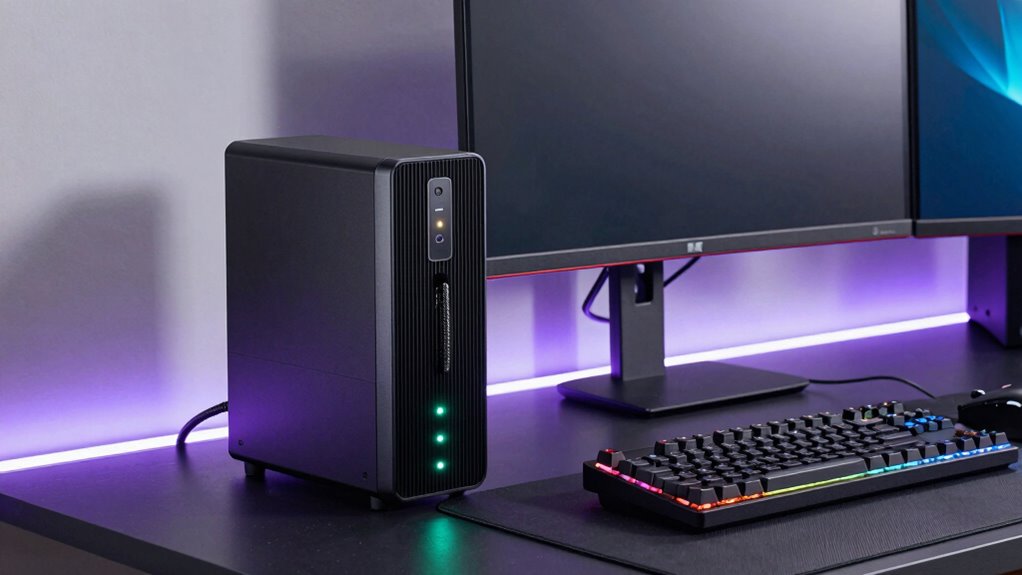

For a battery backup UPS for a gaming and work PC, my best overall pick is the CyberPower CP1500PFCLCD, which pairs a pure sine wave output with useful capacity for many desktop setups. The APC BR1500MS2 is another strong fit for PCs that need clean power, while the GOLDENMATE 1500VA/1000W lithium model stands out for buyers prioritizing battery longevity. The main tradeoffs are runtime versus load, pure sine wave compatibility versus lower-cost alternatives, and compact size versus expansion room. I compare all 14 models by the needs of gaming and work setups, not by headline capacity alone. Read on for the full breakdown and guidance on choosing a unit that matches your PC and peripherals.

Get gifts for the two of you delivered free with Prime
- Fast, free delivery on millions of items
- Prime Video, Amazon Music and more included
- Member-only deals all year
Key Takeaways
- The CyberPower CP1500PFCLCD leads for balanced PC use: its pure sine wave output and 1500VA class make it a versatile starting point for many gaming and work desktops, though actual runtime depends on the connected load.
- Pure sine wave separates several PC-focused contenders: the APC BR1500MS2, APC BR1350MS, and APC BGM1500B-US are worth comparing when a PC power supply may be sensitive to simulated waveforms.
- Lithium models trade upfront simplicity for battery-life potential: the GOLDENMATE 1500VA/1000W offers the highest listed watt capacity among the three GOLDENMATE options, while the 1000VA/800W and 1000VA/600W suit different load ceilings.
- Gaming labels do not replace load calculations: the CyberPower GX950UC, GX150C2-E, and APC BGM1500B-US should be compared by watt capacity, connected equipment, and desired shutdown time—not their gaming branding alone.
- Higher capacity is most useful when it matches the whole desk: a monitor, router, and storage devices add to the PC load, so the 1500VA models may suit fuller setups better than compact or lower-capacity picks such as the CyberPower EC850LCD.
| APC Back-UPS Pro BX1500M 1500VA/900W UPS Battery Backup & Surge Protector |  | Best Value for Standard Gaming and Work PCs | Capacity: 1500VA / 900W | Outlets: 10 total: 5 battery backup and 5 surge-only | Surge protection: 789 joules | VIEW ON AMAZON | See Our Full Breakdown |
| APC Back-UPS Pro BR1500MS2 Pure Sine Wave UPS Battery Backup & Surge Protector |  | Best Overall for Pure Sine Wave PC Backup | Capacity: 1500VA / 900W | Output waveform: Pure sine wave | Outlets: 10 total: 6 battery backup and 4 surge-only | VIEW ON AMAZON | See Our Full Breakdown |
| APC Back-UPS Pro 1350VA/810W Battery Backup and Surge Protector (BX1350M) |  | Best for Network-Rich Workstations | Capacity: 1350VA / 810W | Input voltage: 120V | Output voltage: 120V | VIEW ON AMAZON | See Our Full Breakdown |
| APC Back-UPS Pro BR1350MS 1350VA/810W Pure Sine Wave UPS |  | Best Mid-Capacity Pure Sine Wave Pick | Capacity: 1350VA / 810W | Output: Pure sine wave | Outlets: 10 total: 6 battery backup and 4 surge-only | VIEW ON AMAZON | See Our Full Breakdown |
| CyberPower CP1500PFCLCD PFC Sinewave UPS Battery Backup and Surge Protector |  | Best for Higher-Wattage PC Setups | Capacity: 1500VA / 1000W | Output: True sine wave | Outlets: 12 total: 6 battery backup and surge-protected, 6 surge-only | VIEW ON AMAZON | See Our Full Breakdown |
| GOLDENMATE 1500VA/1000W Lithium UPS Battery Backup & Surge Protector |  | Best for High-Wattage PCs and Long Battery Life | Capacity: 1500VA / 1000W | Battery type: LiFePO4 | Waveform: Pure sine wave | VIEW ON AMAZON | See Our Full Breakdown |
| GOLDENMATE 1000VA/600W Lithium UPS Battery Backup and Surge Protector |  | Best for Midrange PCs and Frequent Outages | Capacity: 1000VA / 600W | Battery type: LiFePO4 | Battery charge time: 10 hours | VIEW ON AMAZON | See Our Full Breakdown |
| CyberPower GX950UC Gaming UPS Battery Backup and Surge Protector |  | Best Compact Gaming UPS | Capacity: 950VA / 510W | Outlets: 7 total; 5 battery-backed | Output wattage: 510W | VIEW ON AMAZON | See Our Full Breakdown |
| CyberPower EC850LCD Ecologic UPS Battery Backup and Surge Protector |  | Best for Multi-Device Office Setups | Capacity: 850VA / 510W | Topology: Standby | Outlets: 12 total; 6 battery-backed | VIEW ON AMAZON | See Our Full Breakdown |
| APC Back-UPS Pro Gaming UPS 1500VA/900W Pure Sine Wave (Model BGM1500B-US) |  | Best Gaming-Focused Feature Set | Capacity: 1500VA / 900W | Waveform: Pure sine wave | Outlets: 10 total; 6 battery-backed and 4 surge-only | VIEW ON AMAZON | See Our Full Breakdown |
| CyberPower GX150C2-E Gaming UPS Battery Backup and Surge Protector |  | Best for Gaming Setups | Capacity: 1500VA/1000W | Outlets: 13 total: 7 battery backup and surge-protected; 6 surge-only | USB-C ports: 2 | VIEW ON AMAZON | See Our Full Breakdown |
| CyberPower CP1500AVRLCD3 Intelligent LCD UPS Battery Backup |  | Best for Beginners | Capacity: 1500VA/900W | Output waveform: Simulated sine wave | Outlets: 12 NEMA 5-15R: 6 battery backup and surge-protected; 6 surge-protected | VIEW ON AMAZON | See Our Full Breakdown |
| GOLDENMATE 1000VA/800W Lithium UPS Battery Backup and Surge Protector |  | Best Long-Life Battery Pick | Capacity: 1000VA/800W | Battery type: Lithium iron phosphate (LiFePO4) | Output waveform: Pure sine wave | VIEW ON AMAZON | See Our Full Breakdown |
| CyberPower PR1500LCD Smart App Sinewave UPS Battery Backup |  | Best for High-Power PCs | Capacity: 1500VA/1500W | Topology: Line interactive | Output waveform: Sine wave | VIEW ON AMAZON | See Our Full Breakdown |
| battery backup ups for gaming and work pc | Capacity | Outlets | Warranty |
|---|---|---|---|
| APC Back-UPS Pro BX1500M 1500V | 1500VA / 900W | 10 total: 5 battery backup and 5 surge-only | — |
| APC Back-UPS Pro BR1500MS2 Pur | 1500VA / 900W | 10 total: 6 battery backup and 4 surge-only | 3 years |
| APC Back-UPS Pro 1350VA/810W B | 1350VA / 810W | 10 total: 5 battery backup and 5 surge-only | — |
| APC Back-UPS Pro BR1350MS 1350 | 1350VA / 810W | 10 total: 6 battery backup and 4 surge-only | — |
| CyberPower CP1500PFCLCD PFC Si | 1500VA / 1000W | 12 total: 6 battery backup and surge-protected, 6 surge-only | 3 years, including battery |
| GOLDENMATE 1500VA/1000W Lithiu | 1500VA / 1000W | 8 NEMA 5-15P | — |
| GOLDENMATE 1000VA/600W Lithium | 1000VA / 600W | 8 NEMA 5-15P | — |
| CyberPower GX950UC Gaming UPS | 950VA / 510W | 7 total; 5 battery-backed | — |
| CyberPower EC850LCD Ecologic U | 850VA / 510W | 12 total; 6 battery-backed | 3 years, including battery |
| APC Back-UPS Pro Gaming UPS 15 | 1500VA / 900W | 10 total; 6 battery-backed and 4 surge-only | 3-year limited |
| CyberPower GX150C2-E Gaming UP | 1500VA/1000W | 13 total: 7 battery backup and surge-protected; 6 surge-only | 3 years, including the battery |
| CyberPower CP1500AVRLCD3 Intel | 1500VA/900W | 12 NEMA 5-15R: 6 battery backup and surge-protected; 6 surge-protected | 3 years, including battery coverage |
| GOLDENMATE 1000VA/800W Lithium | 1000VA/800W | 8 battery backup and surge-protected | — |
| CyberPower PR1500LCD Smart App | 1500VA/1500W | 8 NEMA 5-15R, battery backup and surge-protected | 3 years, including battery |
More Details on Our Top Picks
APC Back-UPS Pro BX1500M 1500VA/900W UPS Battery Backup & Surge Protector
The BX1500M makes the most sense for a gaming or work PC that needs substantial backup capacity without requiring pure sine wave output. Its 1500VA/900W rating, AVR, and five battery-backed outlets give a desktop, monitor, and network gear a useful window to save work or ride through a brief outage. The LCD also makes load and battery status easier to check than on a basic backup unit. Compared with the BR1500MS2, this model has stepped-approximation output rather than pure sine wave, so the BR1500MS2 is the safer fit for a PC with an Active PFC power supply or sensitive audio equipment. In return, the BX1500M still offers a user-replaceable battery and ten total outlets. Skip it for appliances or sensitive devices; the replacement battery is sold separately.
Pros:- 1500VA/900W capacity suits many single-PC gaming and work setups.
- AVR corrects voltage fluctuations without using battery power.
- LCD shows battery, runtime, and load information.
- User-replaceable battery supports maintenance without replacing the whole UPS.
Cons:- Stepped-approximation output may not suit sensitive audio equipment or some Active PFC power supplies.
- Only five of the ten outlets provide battery backup.
- Replacement battery is sold separately.
Best for: PC owners who want 1500VA-class backup, AVR, and clear status monitoring for a gaming desktop or home-office workstation.
Not ideal for: People with sensitive audio gear or a PC power supply that requires pure sine wave output; choose the BR1500MS2 or CP1500PFCLCD instead.
- Capacity:1500VA / 900W
- Outlets:10 total: 5 battery backup and 5 surge-only
- Surge protection:789 joules
- Voltage:120V
- Topology:Line-interactive
- Voltage regulation:Automatic Voltage Regulation (AVR)
- Display:LCD status panel
- Battery:User-replaceable APCRBC124
- Certification:ENERGY STAR
Our verdict“Choose the BX1500M for a capable, maintainable PC backup when stepped-approximation output is compatible with your equipment.”
APC Back-UPS Pro BR1500MS2 Pure Sine Wave UPS Battery Backup & Surge Protector
For a gaming PC with an Active PFC power supply, I would put the BR1500MS2 ahead of the BX1500M because its pure sine wave output is the more compatible match for sensitive computer hardware. The 1500VA/900W capacity and AVR also suit a demanding desktop-and-monitor setup, while six battery-backed outlets leave room for networking equipment alongside the PC. Its LCD gives useful operating information, and front-facing USB-A and USB-C charging add convenience during an outage. The tradeoff is that its wattage ceiling matches the BX1500M, not the higher 1000W CyberPower CP1500PFCLCD, and runtime falls sharply as load rises; the listed 73 minutes applies at just 100W. This is a strong all-around choice for PC protection, but buyers should plan for a separately purchased replacement battery.
Pros:- Pure sine wave output suits Active PFC power supplies and sensitive electronics.
- AVR manages voltage fluctuations without drawing on the battery.
- Six battery-backed outlets accommodate a PC setup and connected network gear.
- USB-A and USB-C ports provide device charging, with an LCD for status checks.
Cons:- Runtime drops substantially under heavy loads; the listed 73 minutes is at 100W.
- Replacement battery is sold separately.
- 900W output capacity is lower than the CP1500PFCLCD’s 1000W rating.
Best for: Gaming-PC owners with Active PFC power supplies who want 1500VA-class capacity, pure sine wave output, and multiple battery-backed outlets.
Not ideal for: Buyers running a high-load setup near the UPS limit or those seeking a higher wattage ceiling; the CyberPower CP1500PFCLCD is rated for 1000W.
- Capacity:1500VA / 900W
- Output waveform:Pure sine wave
- Outlets:10 total: 6 battery backup and 4 surge-only
- Surge protection:1080 joules
- Transfer time:8 ms
- Runtime:Up to 73 minutes at 100W
- Charging ports:USB-A and USB-C
- Battery:Replaceable lead-acid, model APCRBC163
- Warranty:3 years
Our verdict“Pick the BR1500MS2 for a pure sine wave UPS that balances PC compatibility, backup capacity, and useful connections.”
APC Back-UPS Pro 1350VA/810W Battery Backup and Surge Protector (BX1350M)
The BX1350M is a sensible match for a work PC or gaming desktop that shares a desk with networking equipment. Its coaxial and Ethernet surge protection distinguishes it from the BX1500M, while AVR, ten outlets, and a user-replaceable battery cover the core needs of a home-office setup. The stated runtime of over 54 minutes at 100W can help keep low-power gear online or give a lightly loaded system time to shut down, but it should not be read as expected runtime for a gaming PC under load. At 810W, it also has less output headroom than the 900W BX1500M and BR1500MS2. The outlet layout splits evenly between battery-backed and surge-only connections, so prioritize which devices must stay on during an outage. Its output waveform is not listed as pure sine wave.
Pros:- Coaxial and Ethernet surge protection can help safeguard connected network lines.
- AVR corrects low and high voltage without using battery power.
- Ten outlets include five battery-backed connections.
- User-replaceable battery allows battery service without replacing the UPS.
Cons:- 810W capacity provides less headroom than the 900W APC models and 1000W CyberPower CP1500PFCLCD.
- Runtime varies with load; the 100W figure does not represent a gaming-PC load.
- Replacement battery is sold separately.
Best for: Home-office users who want battery backup for a PC and modem/router setup, especially when coaxial or Ethernet surge protection is useful.
Not ideal for: Owners of high-draw gaming PCs who want more wattage headroom or confirmed pure sine wave output; the BR1500MS2 offers pure sine wave at 900W.
- Capacity:1350VA / 810W
- Input voltage:120V
- Output voltage:120V
- Outlets:10 total: 5 battery backup and 5 surge-only
- Runtime:Over 54 minutes at 100W
- Battery:User-replaceable APCRBC123, sold separately
- AVR:Automatic Voltage Regulation
- Additional protection:Coaxial and Ethernet surge protection
- Dimensions and weight:19.3 x 13.6 x 9 inches; 22.5 pounds
Our verdict“Choose the BX1350M for a network-connected workstation that benefits from line protection more than extra wattage or pure sine wave output.”
APC Back-UPS Pro BR1350MS 1350VA/810W Pure Sine Wave UPS
The BR1350MS offers a useful middle ground for buyers who want pure sine wave output but do not need the 1500VA rating of the BR1500MS2. That output can be a better match for Active PFC gaming-PC power supplies, while AVR handles routine voltage swings and the LCD reports system status and load. Six of its ten outlets have battery backup, and USB-A and USB-C ports offer a handy way to charge smaller devices. Compared with the BR1500MS2, the main compromise is capacity: this model is rated at 810W rather than 900W, so a powerful PC and several peripherals leave less headroom. The listed runtime reaches 54 minutes at 100W, not at a typical gaming load. A 16-hour battery charge time and separately sold replacement battery also make maintenance planning relevant.
Pros:- Pure sine wave output suits Active PFC power supplies and sensitive computer gear.
- Six battery-backed outlets support a PC, display, and selected peripherals.
- LCD shows system status and load.
- USB-A and USB-C ports add charging options.
Cons:- 810W capacity is lower than the BR1500MS2 and may constrain high-draw setups.
- Battery charge time is listed as 16 hours.
- Replacement battery is sold separately.
Best for: PC owners seeking pure sine wave output and USB charging for a moderate-load gaming or work setup without needing 1500VA capacity.
Not ideal for: Users with high-draw gaming rigs or multiple peripherals who need more output headroom; the BR1500MS2 provides 900W capacity.
- Capacity:1350VA / 810W
- Output:Pure sine wave
- Outlets:10 total: 6 battery backup and 4 surge-only
- Runtime:Up to 54 minutes at 100W
- Battery charge time:16 hours
- Display:LCD status display
- Charging ports:USB-A and USB-C, 5V/3A shared
- Battery:User-replaceable APCRBC161, sold separately
- Dimensions and weight:14.5 x 3.9 x 10.2 inches; 25.7 pounds
Our verdict“Choose the BR1350MS when pure sine wave compatibility matters more than the higher capacity of the BR1500MS2.”
CyberPower CP1500PFCLCD PFC Sinewave UPS Battery Backup and Surge Protector
The CP1500PFCLCD stands out for buyers whose gaming or work PC needs more wattage headroom: it is rated at 1000W, compared with 900W for the APC BR1500MS2 and BX1500M. Its true sine wave output is suited to Active PFC power supplies, and AVR can correct minor voltage changes without switching to battery. The six battery-backed outlets will cover a core PC setup, while six additional surge-only outlets bring the total to twelve. A color LCD that tilts for easier viewing and both USB-A and USB-C charging ports make it practical to monitor and use at a desk. The tradeoffs are physical: at 24.9 pounds and 14 inches long, it takes real placement space. Like the APC alternatives, it also splits outlets between backup and surge-only protection.
Pros:- 1000W capacity provides more output headroom than the APC 1500VA/900W models.
- True sine wave output supports Active PFC power supplies.
- Twelve total outlets give more connection options than the listed APC alternatives.
- Color LCD, AVR, and USB-A/USB-C charging support monitoring and daily desk use.
Cons:- Six of the twelve outlets are surge-only, leaving six for battery-backed equipment.
- At 24.9 pounds, it is heavy to move and position.
- Its 14 x 3.9 x 11-inch footprint can be awkward under a crowded desk.
Best for: Owners of higher-wattage gaming desktops or workstations who need pure sine wave output and up to 1000W of UPS capacity.
Not ideal for: People with limited desk or floor space, or those who need battery backup for more than six connected devices.
- Capacity:1500VA / 1000W
- Output:True sine wave
- Outlets:12 total: 6 battery backup and surge-protected, 6 surge-only
- USB ports:1 Type-A and 1 Type-C
- Voltage regulation:Automatic Voltage Regulation (AVR)
- Display:Color LCD, tilts up to 22 degrees
- Dimensions:14 x 3.9 x 11 inches
- Weight:24.9 pounds
- Warranty:3 years, including battery
Our verdict“Pick the CP1500PFCLCD if your PC needs the lineup’s higher 1000W rating and you have room for a substantial UPS.”
GOLDENMATE 1500VA/1000W Lithium UPS Battery Backup & Surge Protector
For a gaming or work PC that draws more power, this GOLDENMATE offers the largest capacity among these five: 1000W, paired with pure sine wave output for sensitive components. Its LiFePO4 battery is rated for 3,000+ charge cycles and a 10-year lifespan, which makes it a stronger fit for frequent power interruptions than the lead-acid CyberPower EC850LCD. Eight outlets and USB-C/USB-A charging also help keep a full desktop setup connected. The tradeoff is that greater capacity does not make it a quiet fit under every load: the fan may become loud during heavy battery use. Unlike the gaming-focused APC BGM1500B-US, it has no listed RGB lighting or AVR, but its battery is included and its wattage ceiling is higher. Check that your setup stays within its 1000W limit.
Pros:- 1000W capacity gives more headroom than the 600W GOLDENMATE 1000VA model.
- Pure sine wave output suits sensitive PC hardware.
- LiFePO4 battery is rated for 3,000+ charge cycles and a 10-year lifespan.
- Eight outlets plus USB-C and USB-A ports support a multi-device setup.
Cons:- Cooling fan may become loud during heavy battery use.
- Not compatible with generator-supplied power.
- 90–140V input range limits it to compatible standard household power.
Best for: PC owners with higher-draw gaming or work systems who want pure sine wave backup and a long-cycle lithium battery.
Not ideal for: Users who rely on generator-supplied power, need an especially quiet UPS under heavy battery load, or have a setup drawing over 1000W.
- Capacity:1500VA / 1000W
- Battery type:LiFePO4
- Waveform:Pure sine wave
- Outlets:8 NEMA 5-15P
- USB ports:1 USB-C and 1 USB-A; 10W total
- Input voltage:90–140V AC
- Output voltage:120V AC
- Form factor:Tower
Our verdict“Choose this GOLDENMATE for a higher-wattage PC and long-life lithium backup, provided its fan behavior and power-source limits suit your setup.”
GOLDENMATE 1000VA/600W Lithium UPS Battery Backup and Surge Protector
This model makes the most sense for a midrange gaming or work PC whose connected load stays comfortably below 600W. Its LiFePO4 battery is rated for more than 5,000 charge cycles, exceeding the cycle rating listed for the 1500VA GOLDENMATE, while the pure sine wave output is a useful match for sensitive electronics. The LCD and muteable alarm make it easier to monitor conditions without living with a constant buzzer. Compared with the CyberPower EC850LCD, it offers lithium chemistry and a higher stated capacity, though the CyberPower gives you 12 outlets and ECO Mode. The limits are real: 600W rules out higher-draw rigs, and the cooling fan can run during heavy battery use. Its listed 30-minute runtime should not be treated as a guarantee for every PC load.
Pros:- LiFePO4 battery rated for over 5,000 charge cycles.
- 600W pure sine wave output for compatible PC equipment.
- Eight surge-protected outlets and an LCD status display.
- Muteable buzzer and overload protections support quieter, more controlled operation.
Cons:- 600W capacity limits use with high-draw gaming systems.
- Cooling fan may activate during heavy battery use.
- Listed 10-hour battery charge time means recovery may take a while after a prolonged outage.
Best for: Owners of modest gaming PCs, office desktops, and networking gear who want lithium battery longevity without needing 1000W capacity.
Not ideal for: High-power gaming PC owners whose combined PC and monitor load approaches or exceeds 600W, or buyers who need a silent UPS under heavy backup use.
- Capacity:1000VA / 600W
- Battery type:LiFePO4
- Battery charge time:10 hours
- Outlets:8 NEMA 5-15P
- Input voltage:90–140V AC
- Output voltage:120V
- Listed runtime:30 minutes
- Form factor:Tower
- Cooling fan noise:Under 50 dB
Our verdict“Pick this GOLDENMATE for a moderate-load PC and long-cycle lithium battery, but choose its 1000W sibling if your rig needs more headroom.”
CyberPower GX950UC Gaming UPS Battery Backup and Surge Protector
The GX950UC is the compact, gaming-styled choice here: at 7.1 pounds and 2.76 inches deep, it takes less room than the tower-style GOLDENMATE units. Its 510W capacity is better suited to a modest PC, console, or streaming setup than a high-draw gaming tower, and only five of its seven outlets provide battery backup. The remaining two are surge-only, so plan outlet assignments around the devices you need to keep running. Compared with the APC BGM1500B-US, this CyberPower is smaller and lighter, but it offers less power and fewer total outlets. USB-C/A charging and customizable RGB add convenience and gaming flair; however, its simulated sine wave output is a less suitable match for buyers specifically seeking pure sine wave backup. Treat its warranty and equipment guarantee as supporting details, not substitutes for checking load capacity.
Pros:- Compact, lightweight design is easier to fit near a desk or console setup.
- Five battery-backed outlets support a focused gaming or streaming system.
- USB-C and USB-A ports charge accessories.
- Customizable RGB lighting and 890-joule surge protection suit a gaming setup.
Cons:- 510W maximum output may not support a high-draw PC and peripherals.
- Only five of seven outlets provide battery backup.
- Simulated sine wave output may not suit buyers seeking pure sine wave power.
Best for: Console players, compact-PC owners, and streamers who want a small UPS with gaming-oriented lighting and modest backup needs.
Not ideal for: Owners of high-wattage gaming towers, buyers who need more than five battery-backed outlets, or anyone requiring pure sine wave output.
- Capacity:950VA / 510W
- Outlets:7 total; 5 battery-backed
- Output wattage:510W
- Waveform:Simulated sine wave
- USB ports:USB-C and USB-A
- Surge protection:890 joules
- Dimensions:2.76 × 12.76 × 5.43 inches
- Weight:7.1 pounds
- Form factor:Compact
Our verdict“Choose the GX950UC for a compact, lower-power gaming setup where space and RGB matter more than high capacity or pure sine wave output.”
CyberPower EC850LCD Ecologic UPS Battery Backup and Surge Protector
The EC850LCD is less about powering a demanding gaming rig and more about keeping a work PC, router, and selected peripherals connected while organizing a crowded desk. Its 12 outlets are the most in this group, with six battery-backed sockets and ECO Mode outlets that can switch off peripherals when a computer is asleep or off. The LCD gives a quick view of power status. Compared with the 600W GOLDENMATE, this CyberPower has fewer watts and a lead-acid battery rather than long-cycle LiFePO4, but it offers four additional outlets and useful peripheral control. Its listed runtime is just two minutes, so think of it as a brief window to save work and shut down, not extended gaming time. Simulated sine wave output and standby topology also make it a less specialized pick than the pure sine wave GOLDENMATE models.
Pros:- Twelve outlets accommodate a crowded desk setup.
- Six outlets provide battery backup.
- ECO Mode can switch off connected peripherals when the computer is off or asleep.
- LCD panel displays battery and power conditions.
Cons:- Listed runtime is only two minutes.
- Lead-acid battery has a shorter average life than the LiFePO4 batteries in the GOLDENMATE models.
- Simulated sine wave output may not fit buyers seeking pure sine wave backup.
Best for: Home-office users with a lower-power desktop, router, and several peripherals who value outlet count and automatic peripheral shutoff.
Not ideal for: Gaming PC owners seeking extended outage runtime, pure sine wave output, or a lithium battery designed for many charge cycles.
- Capacity:850VA / 510W
- Topology:Standby
- Outlets:12 total; 6 battery-backed
- Battery type:Sealed lead acid
- Input voltage:120V
- Listed runtime:2 minutes
- Power cord:5 feet
- Warranty:3 years, including battery
Our verdict“Choose the EC850LCD for a lower-load work desk that needs many outlets and a short shutdown window, not extended gaming backup.”
APC Back-UPS Pro Gaming UPS 1500VA/900W Pure Sine Wave (Model BGM1500B-US)
The APC BGM1500B-US pairs 900W pure sine wave output with gaming-oriented touches: a tilted LCD Reactor Circle display, customizable RGB lighting, and USB-A/C charging. That gives a high-performance PC, monitor, and networking gear a more tailored home than the compact CyberPower GX950UC, which is lighter but limited to 510W. Ten outlets offer room for a fuller setup, though only six are battery-backed; reserve those for the PC and other devices that need to stay on. Automatic Voltage Regulation can address voltage fluctuations without using battery backup, while the tower body takes more room than the GX950UC. One major caveat separates it from both GOLDENMATE models: the battery is sold separately, so it cannot provide backup until you obtain one. This makes the feature-rich design a less straightforward ready-to-use choice.
Pros:- 900W pure sine wave output suits higher-performance gaming and work PCs.
- AVR helps manage voltage fluctuations without relying on battery backup.
- Ten outlets include six battery-backed sockets.
- Tilted LCD, customizable RGB, and USB charging are tailored to a gaming setup.
Cons:- Battery is sold separately, so backup functionality requires an additional component.
- Tower dimensions take more space than the compact CyberPower GX950UC.
- Four of the ten outlets are surge-only rather than battery-backed.
Best for: Gaming-PC owners who want a high-capacity pure sine wave UPS with AVR, a clear display, and configurable RGB, and are prepared to source the battery separately.
Not ideal for: Buyers who need a complete battery-backed UPS out of the box, have a compact desk area, or need more than six battery-backed outlets.
- Capacity:1500VA / 900W
- Waveform:Pure sine wave
- Outlets:10 total; 6 battery-backed and 4 surge-only
- Input voltage:120V AC
- Output voltage:120V AC
- USB ports:2 USB-A and 1 USB-C; 5V/3A shared
- Dimensions:16.06 × 4.13 × 11.45 inches
- Warranty:3-year limited
Our verdict“Choose the APC for a gaming-focused 900W pure sine wave setup with AVR, but only if you are comfortable buying the battery separately.”
CyberPower GX150C2-E Gaming UPS Battery Backup and Surge Protector
The GX150C2-E makes the most sense for a gaming desk that needs room for a PC, display, console, and accessories. Its 1500VA/1000W capacity exceeds the CP1500AVRLCD3’s 900W rating, giving it more rated output headroom for a demanding setup. Thirteen outlets and two USB-C ports also help keep chargers and peripherals close at hand, while customizable RGB lighting suits a gaming-focused space.
The outlet count needs a closer look: only seven outlets provide battery backup; the other six are surge-only. That makes outlet planning more important than the total suggests. At 24.3 pounds, it is also a substantial unit, and the product data does not specify a runtime figure. Compared with the work-focused CyberPower PR1500LCD, this model favors gaming-friendly extras and outlet quantity over pure sine wave output.
Pros:- 1000W capacity offers more rated output than the CP1500AVRLCD3’s 900W
- Thirteen total outlets, including seven with battery backup
- Two USB-C ports can charge accessories during an outage
- Customizable RGB lighting and a three-year warranty that includes the battery
Cons:- Six outlets are surge-only, so they will not keep equipment running during an outage
- At 24.3 pounds, it is heavy for a desk-side unit
- No runtime figure is provided in the supplied product data
Best for: PC gamers and streamers with several devices to connect who want USB-C charging and gaming-oriented lighting.
Not ideal for: Buyers whose gaming PC requires pure sine wave output, or anyone who needs battery backup at more than seven connected outlets.
- Capacity:1500VA/1000W
- Outlets:13 total: 7 battery backup and surge-protected; 6 surge-only
- USB-C ports:2
- Output voltage:120 volts
- Input connector:NEMA 5-15P right-angle plug
- Power cord:5 feet
- Dimensions:13.78 x 3.94 x 11.02 inches
- Weight:24.3 pounds
- Warranty:3 years, including the battery
Our verdict“Choose the GX150C2-E for a feature-rich gaming desk with several devices, but check that seven battery-backed outlets and its output type suit your PC.”
CyberPower CP1500AVRLCD3 Intelligent LCD UPS Battery Backup
The CP1500AVRLCD3 is a straightforward choice for a home-office PC or a gaming setup that mainly needs time to save work and shut down. Its color LCD makes battery and power conditions easier to check at a glance, while automatic voltage regulation handles minor fluctuations without drawing on the battery. That day-to-day protection is useful when the goal is not just riding out outages but avoiding needless battery use.
Its 900W rating is lower than the GX150C2-E’s 1000W, and its output is simulated sine wave rather than the pure sine wave offered by the CyberPower PR1500LCD. The supplied runtime is only three minutes, so this is better treated as a shutdown buffer than extended backup. Six of its 12 outlets are surge-only, too. For buyers who want an accessible status display and basic power management, those compromises may be easier to accept than a more specialized gaming or sine-wave model.
Pros:- Automatic voltage regulation corrects minor power fluctuations without using battery power
- Color LCD displays battery and power conditions
- Twelve outlets and both USB-A and USB-C charging ports
- Three-year warranty includes battery coverage
Cons:- Simulated sine wave output may not suit every PC power supply
- Listed runtime is only three minutes
- Only six of the 12 outlets provide battery backup
Best for: First-time UPS buyers with a home-office desktop, router, and monitor who want clear status information and automatic voltage regulation.
Not ideal for: Owners of PCs that require pure sine wave output, or users expecting several minutes of sustained gaming during an outage.
- Capacity:1500VA/900W
- Output waveform:Simulated sine wave
- Outlets:12 NEMA 5-15R: 6 battery backup and surge-protected; 6 surge-protected
- USB charging:1 Type-A and 1 Type-C
- Automatic voltage regulation:Yes
- Listed runtime:3 minutes
- Battery charge time:8 hours
- Dimensions:13.78 x 3.94 x 10.2 inches
- Warranty:3 years, including battery coverage
Our verdict“Pick this model for readable status information and everyday voltage regulation, not for long outage runtime or a pure sine wave requirement.”
GOLDENMATE 1000VA/800W Lithium UPS Battery Backup and Surge Protector
The GOLDENMATE 1000VA/800W stands apart from the 1500VA models here by pairing a lower capacity with a LiFePO4 battery rated for over 10 years and 5,000 charge cycles. That battery design may appeal to someone who prefers a longer-lived UPS for a modest desktop, workstation, or network stack rather than maximizing output for a high-draw gaming rig. Its pure sine wave output and eight battery-backed outlets give it a more focused, equipment-protection profile than the CyberPower GX150C2-E, which has more total outlets but only seven battery-backed ones.
The tradeoff is capacity: 800W is below the 1000W GX150C2-E and the 1500W PR1500LCD, so buyers should check their combined load carefully. The listed 46-minute runtime should not be read as a guarantee for a gaming PC; runtime depends on the connected load. A cooling fan can run during heavy battery use, and this unit is designed for standard 110V household power.
Pros:- LiFePO4 battery is rated for over 10 years and 5,000 charge cycles
- Pure sine wave output for compatible sensitive equipment
- All eight listed outlets provide battery backup and surge protection
- LCD shows power and battery conditions, with a buzzer mute function
Cons:- 800W capacity is below the 1000W GX150C2-E and 1500W PR1500LCD
- Cooling fan can activate during heavy battery use
- Designed for standard 110V household power
Best for: Workstation and network-device owners who prioritize a long-cycle LiFePO4 battery and pure sine wave output over maximum UPS capacity.
Not ideal for: High-power gaming PC owners who need more than 800W of capacity, or buyers who need a quiet unit during heavy battery operation.
- Capacity:1000VA/800W
- Battery type:Lithium iron phosphate (LiFePO4)
- Output waveform:Pure sine wave
- Outlets:8 battery backup and surge-protected
- Input voltage:90–140V AC
- Output voltage:120V
- Listed runtime:46 minutes
- Battery charge time:10 hours
Our verdict“Choose the GOLDENMATE for a moderate-load PC or workstation where long battery life matters more than the higher capacity of the 1500VA alternatives.”
CyberPower PR1500LCD Smart App Sinewave UPS Battery Backup
For a gaming or work PC with an Active PFC power supply, the PR1500LCD earns its place through a rare combination in this group: 1500VA/1500W capacity and pure sine wave output. That higher wattage rating gives it more stated output headroom than the GX150C2-E’s 1000W, while the sine wave design is aimed at compatibility with both Active PFC and conventional power supplies. Automatic voltage regulation also corrects minor fluctuations without spending battery charge.
It is less generous with connections than the CyberPower CP1500AVRLCD3: there are just eight battery-backed outlets, with no USB charging ports listed. Its stated runtime is about four minutes under load, so its strength is power quality and shutdown time, not long sessions without mains power. Remote management also needs an optional RMCARD205 card. The detachable LCD and included management software offer useful monitoring, but this is a more specialized pick than a general-purpose desk UPS.
Pros:- 1500W capacity is higher than the GX150C2-E’s 1000W rating
- Pure sine wave output supports Active PFC and conventional power supplies
- Automatic voltage regulation handles minor power fluctuations
- Detachable LCD, free management software, and a three-year battery warranty
Cons:- Eight outlets provide less connection capacity than the CP1500AVRLCD3’s 12
- Approximate runtime is four minutes under load
- Remote management requires a separately sold RMCARD205
Best for: Owners of high-draw gaming PCs or workstations with Active PFC power supplies who want pure sine wave output and higher rated wattage.
Not ideal for: Buyers who need many outlets, USB charging, long outage runtime, or remote management without purchasing an optional card.
- Capacity:1500VA/1500W
- Topology:Line interactive
- Output waveform:Sine wave
- Outlets:8 NEMA 5-15R, battery backup and surge-protected
- Surge protection:1030 joules
- Input/output voltage:120V / 120V
- Approximate runtime:4 minutes under load
- Dimensions:17 x 6.7 x 8.7 inches
- Warranty:3 years, including battery
Our verdict“Choose the PR1500LCD when a high-draw PC benefits from pure sine wave power and 1500W capacity, and accept fewer outlets and short runtime.”

How We Picked
I compared the 14 UPS units around the problems they need to solve for gaming and work PCs: keeping a desktop powered through brief outages, giving the user time to save work and shut down, and handling the combined load of a PC and selected peripherals. I weighed listed watt capacity alongside VA rating, output waveform, battery type, display and status information, and the intended setup. A high VA number alone did not earn a higher position; the watt limit and the likely connected load matter more when choosing equipment for a desktop.
The ranking favors balanced PC compatibility and practical capacity first, then separates models by battery technology, gaming-specific design, size, and likely buyer fit. Pure sine wave models get more attention for PC power-supply compatibility, while lower-capacity and value-oriented options remain useful for modest systems or targeted needs. The product list does not provide a shared runtime test or a controlled comparison, so I do not claim exact minutes of backup; buyers should use each model’s runtime chart and calculate their own load before choosing.
Factors to Consider When Choosing Battery Backup Ups For Gaming And Work Pc
Choosing a UPS is less about finding the biggest number and more about matching power, runtime, and connections to the way your desk is used. These broader checks can prevent overspending on unused capacity or buying a unit that cannot support the devices you expect.
1. Calculate the Real Load, Not Just the PC’s Rated Power
Add the actual watt draw of the desktop, monitor, router, and any other device you want to keep running during an outage. A PC power supply’s advertised wattage is its maximum output rating, not a promise that the computer always draws that much; actual demand changes with components and workload. At the same time, a UPS’s VA rating is not interchangeable with its watt limit, so check both figures. Leave headroom for brief power spikes and avoid planning to run continuously at the UPS’s ceiling. If you are uncertain, use a plug-in power meter or the equipment’s measured consumption rather than guessing from component labels.
2. Decide How Much Runtime You Actually Need
A UPS for a gaming PC usually serves as a bridge to a safe shutdown, not as a way to keep playing through a long blackout. Work users may value enough time to save files, close applications, and keep a modem or router active for a short period. Runtime drops as the connected load rises, so adding a large monitor or another computer can cut the available window. Compare runtime charts at a load close to your own, rather than relying on a maximum-runtime claim measured under light load. If you need longer operation, reducing the load may be more effective than attaching every desk device to battery-backed outlets.
3. Match the Output Waveform to the PC Power Supply
Pure sine wave output is a sensible preference for a gaming or work desktop, especially when its power supply uses active power factor correction. Some systems work with simulated sine wave output, but compatibility can vary; possible symptoms include unexpected shutdowns, buzzing, or the UPS switching to battery. Check the PC power supply documentation and the UPS specifications before buying, rather than assuming that every desktop reacts the same way. Paying more for pure sine wave can reduce uncertainty, but it does not raise the UPS’s watt capacity or guarantee longer runtime. Treat waveform and capacity as separate checks.
4. Choose Battery Chemistry With Ownership Time in Mind
Battery type affects more than the day an outage occurs: it can shape maintenance, replacement planning, and how long the UPS remains useful. Many conventional UPS units use replaceable lead-acid batteries, which may need replacement as they age; check whether the battery is user-replaceable and whether the maker lists compatible replacements. Lithium models may offer a longer service life, but buyers should confirm the warranty, replacement policy, charging behavior, and product support rather than assuming the chemistry alone settles the choice. A lithium unit can make more sense for a buyer keeping the UPS for years, while a conventional model may suit someone who prioritizes a familiar replacement path. Battery lifespan and warranty terms are not the same thing.
5. Separate Battery-Backed Outlets From Surge-Only Outlets
Many UPS units include a mix of outlets: some provide battery backup and surge protection, while others only protect against surges. Map the PC, monitor, and any network equipment you want powered during an outage to battery-backed sockets; reserve surge-only outlets for devices that can shut off immediately. Also check plug spacing, outlet orientation, and whether a bulky adapter could block a neighboring socket. Do not plug a laser printer, space heater, or other high-draw device into the battery side unless the manufacturer permits it and the load calculation supports it. Outlet layout can matter as much as the total outlet count on a crowded desk.
6. Check Shutdown Tools, Alerts, and Placement Before Buying
A UPS can protect data only if you notice an outage and have a plan to save or shut down. LCD status screens can show load and battery information at a glance, while USB or network monitoring can let compatible computers initiate an automatic shutdown. Confirm operating-system support, cable requirements, and software compatibility instead of assuming these features work with every PC. Measure the intended location as well: larger-capacity units can take up substantial floor or desk space, and they need ventilation and access for maintenance. A quiet office setup may favor a model with agreeable alarm controls, but do not silence alerts without another way to learn that the battery needs attention.
Frequently Asked Questions
Do I need a pure sine wave UPS for a gaming PC?
Not every gaming PC requires one, but pure sine wave is the safer choice when you are unsure how the power supply will behave on battery. Active power factor correction is common in desktop power supplies, and some such systems may react poorly to simulated sine wave output. Check the power supply and UPS documentation, and look for compatibility guidance from their manufacturers. If the PC has shut down or made unusual noise during a simulated-waveform transfer, that is a reason to favor pure sine wave. It is a compatibility choice, not a substitute for checking watt capacity and runtime.
How do I know whether a 1500VA UPS can run my PC and monitor?
Start with the UPS’s watt limit, since the VA figure alone cannot tell you how much equipment it can support. Measure or estimate the combined draw of the PC and monitor under the workloads you actually use, then leave headroom rather than aiming at the limit. Include a router or storage device if you want it to stay powered during an outage. Next, check the maker’s runtime chart at a load close to your estimate. A 1500VA label does not promise the same runtime for a low-power office PC and a demanding gaming system.
Should I connect my gaming monitor to battery backup too?
If you want to see the screen while saving work or shutting down, connect the monitor to a battery-backed outlet. That monitor adds to the UPS load and reduces available runtime, so include its draw when sizing the unit. If your priority is preserving the computer rather than keeping the display on, a surge-only outlet may be sufficient for the monitor, provided it is protected and you can shut down safely without it. Keep the PC itself on a battery-backed outlet. Check the outlet labels, since not every socket on a UPS supplies battery power.
Is a lithium UPS worth choosing over a conventional battery model?
It can make sense if you expect to keep the UPS for years and value the potential for a longer-lived battery. Compare warranty length, battery replacement options, service support, and the unit’s watt capacity before choosing based on chemistry. A lithium model with too little output for your desktop is still a poor fit, and a conventional model may be easier to maintain if replacement batteries are readily available. Also check whether the battery is replaceable and what the manufacturer says about end-of-life service. The better fit depends on ownership plans as much as battery type.
Can I plug a laser printer or speakers into my PC’s UPS?
Do not put a laser printer on battery backup unless the UPS maker explicitly permits it and the printer’s power draw fits the unit. Printers can have high short bursts of demand that overload a UPS, even if their average draw seems modest. Speakers and smaller accessories may be fine, but their combined load still counts against the watt limit and affects runtime. Put nonessential devices on surge-only outlets when available, and keep battery-backed outlets for the PC and the equipment needed to save work or shut down. Check the manual before connecting any device with a motor, heating element, or high startup demand.
Conclusion
For most readers building a single-PC setup, I would start with the CyberPower CP1500PFCLCD as the best overall because it combines pure sine wave output with a useful capacity class. The best value depends on your measured load: compare the APC BX1350M or CyberPower CP1500AVRLCD3 if their specifications fit your system and you do not need a lithium battery or a gaming-specific design. For a longer ownership horizon, the GOLDENMATE 1500VA/1000W is my best premium lithium pick among the listed GOLDENMATE models, while the APC BR1500MS2 is a strong premium alternative for buyers prioritizing pure sine wave. Beginners should shortlist a clearly specified 1350VA or 1500VA unit with status information, then verify watt capacity and battery-backed outlets before purchase. For gaming-focused styling, compare the APC BGM1500B-US and CyberPower GX models by output and load; for a lower-demand workstation, the CyberPower EC850LCD may be enough. The right choice is the model that can support your actual PC and peripherals with enough time to shut down safely.
Halloween Picks
halloween
As an affiliate, we earn on qualifying purchases.