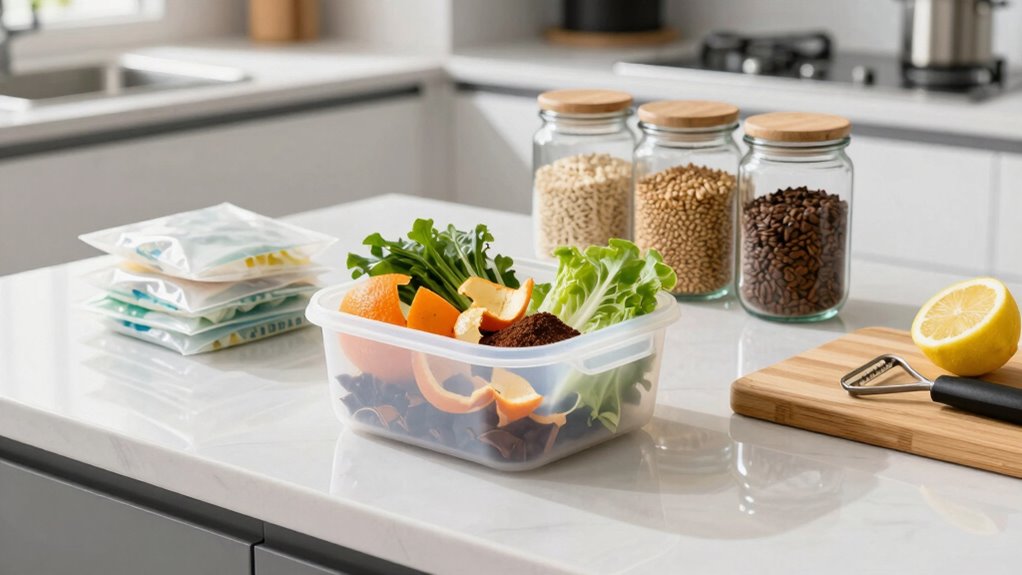

Small changes like properly organizing your fridge with airtight containers and using clear storage bins can prevent spoilage and extend food life. Practicing portion control and repurposing leftovers helps cut down waste. Composting kitchen scraps, especially fruit and veggie peels, transforms waste into nutrient-rich soil. These tiny habits add up quickly, reducing clutter and environmental impact. Keep going, and you’ll discover even more simple shifts that make a big difference in your kitchen’s sustainability.

Get gifts for the two of you delivered free — and shop member deals
- Fast, free delivery on millions of items
- Access to Prime Big Deal Days deals on October 6–7
- Prime Video, Amazon Music and more included
Key Takeaways
- Organize your fridge to ensure older items are used first, reducing food spoilage and waste.
- Use clear, airtight containers for storage, extending freshness and minimizing unnecessary discard.
- Incorporate small-scale composting for kitchen scraps to recycle organic waste into nutrient-rich soil.
- Practice portion control and mindful shopping to prevent overbuying and reduce leftovers.
- Implement preservation methods like freezing or drying to extend ingredient shelf life and cut waste.
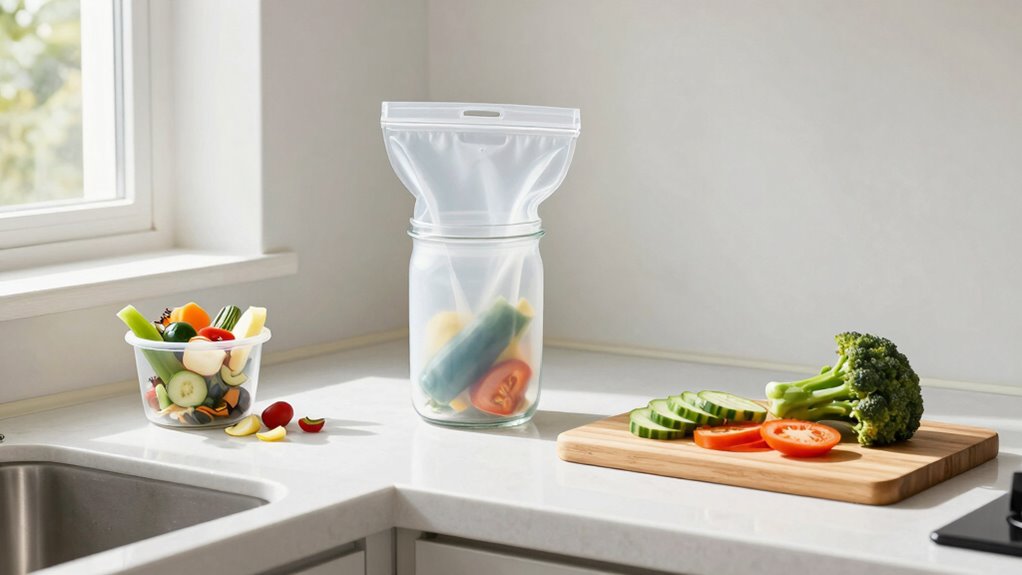
Even small adjustments in your kitchen habits can markedly reduce waste more than you might imagine. One of the simplest ways to do this is by improving your food storage. When you store food properly, you prevent spoilage and extend its shelf life, which means fewer leftovers end up in the trash. Use clear, airtight containers to keep produce fresh longer and organize your fridge so that older items are used first. Learning to recognize which foods stay good longer helps you plan meals better, reducing the chance of throwing away spoiled ingredients. Additionally, repurposing leftovers into new meals can cut down on waste and save you money. For example, day-old bread can become croutons or bread pudding, while vegetable scraps can be transformed into flavorful broths. Implementing proper food storage techniques can significantly extend the freshness of your ingredients and minimize waste. Proper food preservation methods can also help you reduce spoilage and extend the usability of your ingredients, saving you both time and money. Incorporating waste reduction strategies into your routine can further enhance your efforts and make a meaningful impact.
Beyond food storage, your approach to composting methods can significantly impact the amount of waste you send to landfills. Composting turns kitchen scraps into nutrient-rich soil, decreasing the volume of waste that’d otherwise sit in a bin. You don’t need a large yard to compost; many apartment-friendly compost bins are available, making it easy to start small. Focus on composting fruit and vegetable peels, coffee grounds, eggshells, and tea bags—these are all great for compost and won’t attract pests if managed correctly. Avoid composting meat, dairy, or oily foods, as they can cause odors and attract pests. Regularly turning your compost and maintaining the right moisture levels accelerate decomposition, so you see results faster. Over time, this process reduces your trash and provides you with compost that can nourish your garden or houseplants. Proper composting techniques ensure an efficient breakdown process and help prevent common issues like odors or pests.
Incorporating better food storage and composting methods into your routine doesn’t require drastic changes. It’s about small, consistent shifts—like buying only what you need, storing food effectively, and composting scraps instead of throwing them away. These habits not only cut down on waste but also foster a more sustainable relationship with your kitchen. As you become more mindful of what you toss out, you’ll notice less clutter in your trash bin and healthier, fresher ingredients in your fridge. Plus, composting turns what seems like waste into something useful, closing the loop in your kitchen’s cycle. Ultimately, these tiny tweaks can make a big difference in reducing your overall waste footprint without demanding a complete overhaul of your routine.
airtight food storage containers
As an affiliate, we earn on qualifying purchases.
As an affiliate, we earn on qualifying purchases.
Frequently Asked Questions
How Can I Organize My Pantry to Reduce Waste Effectively?
To organize your pantry and cut waste effectively, start by grouping similar items for easy access and visual inventory. Use clear containers with expiration labels to monitor freshness and prevent spoilage. Incorporate meal prep by planning meals around soon-to-expire items, reducing leftovers. Regularly check and rotate stock, discarding expired products. This organized approach minimizes waste, saves money, and makes your kitchen more efficient.
Are There Eco-Friendly Storage Options for Leftovers?
You can totally transform your leftover storage with eco-friendly options that make a massive impact. Reusable containers are your best bet—they’re sturdy, leak-proof, and cut down on waste like nothing else. Pair them with compostable wraps, and you’re saving the planet one meal at a time. These choices aren’t just good for your kitchen—they’re a giant leap toward a greener, cleaner world, and that’s worth celebrating!
What Are Simple Ways to Compost Kitchen Scraps at Home?
You can start composting kitchen scraps at home easily with worm composting or the bokashi method. For worm composting, set up a worm bin with moist bedding and add food scraps, avoiding meat and dairy. With the bokashi method, layer scraps with bokashi bran in a sealed container to ferment waste quickly. Both methods reduce waste and produce nutrient-rich compost, helping you cut kitchen waste effortlessly.
How Can I Track My Weekly Food Waste?
To track your weekly food waste, start by keeping a simple journal or digital log. Incorporate meal planning and portion control to reduce excess. Each day, note what you discard, paying attention to leftovers and spoiled items. Over time, you’ll identify patterns and adjust your shopping and cooking habits. This helps you minimize waste, save money, and become more mindful of your consumption, making a noticeable environmental difference.
Which Small Appliances Help Minimize Waste in the Kitchen?
You can minimize waste with small appliances like a compost bin or a food recycler, which turn scraps into compost and reduce landfill waste. A vacuum sealer helps extend food freshness, reducing spoilage and unnecessary disposal. Incorporate recycling tips by separating recyclables properly and choose sustainable shopping options, like reusable bags and eco-friendly containers. These appliances and habits work together to cut waste, save money, and support environmental conservation in your kitchen.
As an affiliate, we earn on qualifying purchases.
Conclusion
Think of your tiny kitchen as a garden: small tweaks can cultivate a bloom of sustainability. Each change, like composting or mindful shopping, tends to the soil of your habits, transforming waste into nourishment—both for your home and the planet. Just as a gardener’s patience yields vibrant life, your simple adjustments grow into a lush landscape of less waste and greater impact. Embrace these small acts; they’re the seeds of a greener tomorrow.
reusable silicone food storage bags
As an affiliate, we earn on qualifying purchases.
As an affiliate, we earn on qualifying purchases.
As an affiliate, we earn on qualifying purchases.
Fall Picks
fall essentials
As an affiliate, we earn on qualifying purchases.