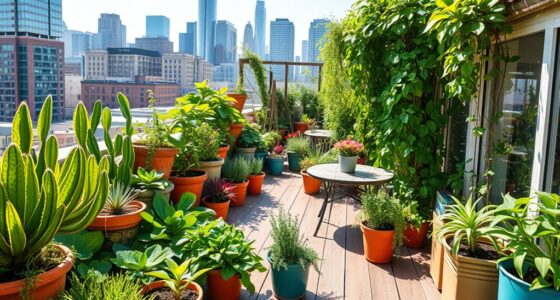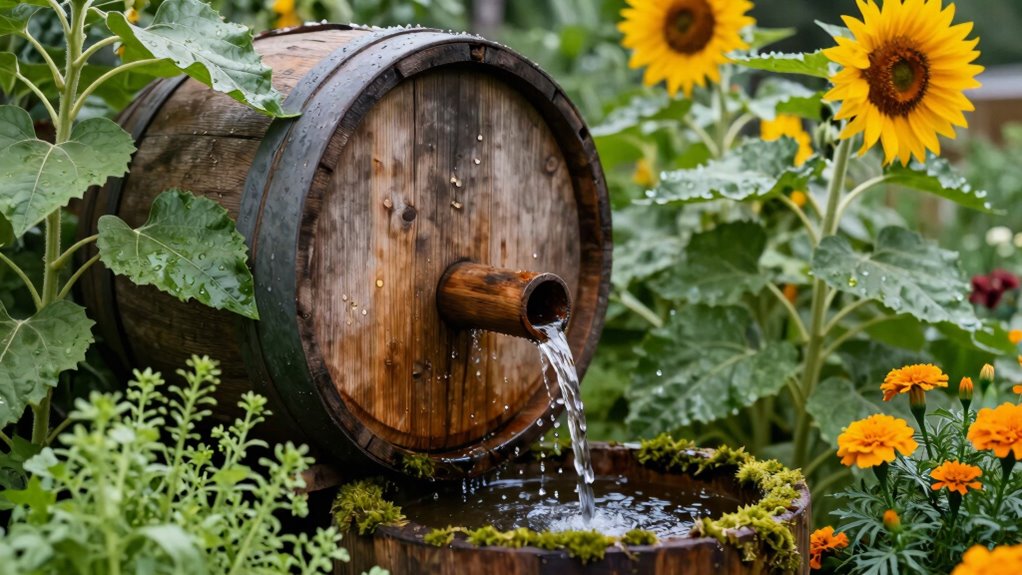

Setting up a rain barrel beneath a downspout helps you gather clean, debris-free water for your garden. Adding a filter and a secure lid keeps pests out and prevents clogging, while a spigot makes watering easy and targeted. Regular maintenance and proper placement optimize efficiency and water quality. Incorporating diverters and timing your watering with rainfall ensures you’re conserving water wisely. Keep going to discover more smart tips to make your garden watering even more effective.

Get gifts for the two of you delivered free — and shop member deals
- Fast, free delivery on millions of items
- Access to Prime Big Deal Days deals on October 6–7
- Prime Video, Amazon Music and more included
Key Takeaways
- Position barrels beneath downspouts with filters and secure lids to collect clean, pest-free rainwater efficiently.
- Use diverters and first flush systems to improve water quality by removing initial contaminants.
- Regularly maintain and inspect the system for leaks, blockages, and cracks to ensure optimal performance.
- Attach hoses or watering cans to the spigot for targeted, efficient watering and plant health.
- Incorporate rainwater harvesting into your gardening routine to conserve water, reduce costs, and support sustainable practices.
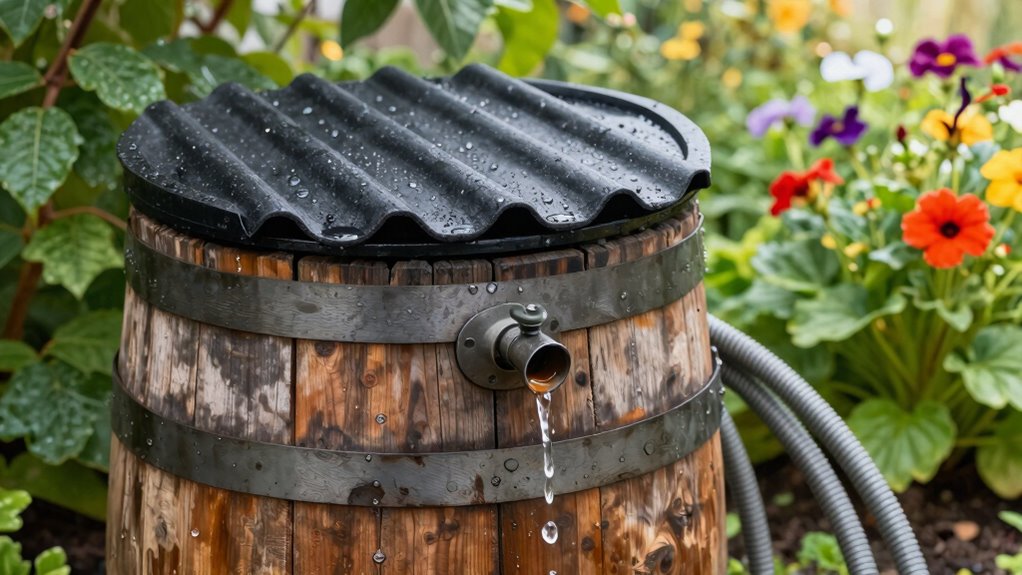
Have you ever wondered how to efficiently collect and use rainwater around your home? If so, understanding the basics of rain barrel setup can make a big difference in your gardening routine. Rain barrel installation is straightforward and offers a simple way to capture free, natural water from your roof. To start, you’ll need a sturdy barrel placed on a level, solid surface. Position it beneath a downspout, and consider adding a screen or filter at the opening to prevent debris and insects from getting inside. Securing the barrel with a secure lid not only keeps out pests but also reduces evaporation and keeps your water clean. Once your rain barrel is in place, connect the downspout to direct water efficiently into the barrel’s inlet. Many models include spigots near the bottom, making it easy to attach a hose for watering your garden. Proper rain barrel installation is essential for maximizing water flow and ensuring safety, especially if children or pets are around. Incorporating water harvesting techniques can further enhance your rainwater collection system for greater efficiency.
Using rainwater stored in your barrel is a prime example of water conservation techniques. By harvesting rain, you reduce your reliance on municipal water supplies, which saves money and helps preserve local resources. This approach is especially beneficial during dry seasons when water restrictions are common. When you water your plants with rainwater, you also avoid the chemicals often found in tap water, leading to healthier, more vigorous plants. To make the most of your rain barrel, consider installing a diverter or a first flush system. These devices divert or discard the initial runoff, which may contain dirt, leaves, and other pollutants, ensuring only clean water enters your storage. Additionally, you can implement watering schedules that align with rainfall patterns, further optimizing your water conservation efforts. Regular maintenance and proper barrel placement can significantly improve the efficiency and safety of your system. Furthermore, understanding local rainfall patterns can help you time your watering to maximize water savings and plant health.
Another smart tip is to use a watering can or hose attached to the rain barrel’s spigot for gentle, targeted watering, reducing waste and runoff. Regularly check your rain barrel for cracks, leaks, or blockages, so it functions efficiently throughout the season. Covering the top with mesh or a lid prevents mosquito breeding and keeps debris out, maintaining water quality. Keep in mind that rain barrel use is not only about saving water but also about making your garden more sustainable and eco-friendly. By integrating rain barrel installation into your gardening routine, you’re actively participating in water conservation techniques, helping to protect the environment while keeping your plants healthy and thriving.
As an affiliate, we earn on qualifying purchases.
Frequently Asked Questions
How Do I Prevent Mosquito Breeding in My Rain Barrel?
To prevent mosquito breeding in your rain barrel, focus on mosquito prevention by covering it tightly. Use rain barrel covers that fit securely to block access for mosquitoes. Regularly empty and clean the barrel to remove any standing water, and consider adding a mosquito dunk or larvicide if needed. These steps help eliminate breeding sites, keeping your water clean and your garden safe from mosquito-borne illnesses.
What Materials Are Best for Constructing a Durable Rain Barrel?
For a durable rain barrel, choose materials like high-density polyethylene (HDPE) or galvanized steel, which resist cracking and corrosion. Look for durability factors such as UV resistance, sturdy construction, and a tight-fitting lid to prevent debris and pests. Avoid flimsy plastics or thin metals. These materials guarantee your rain barrel withstands weather elements, lasts longer, and effectively supplies water for your garden.
How Often Should I Clean or Maintain My Rain Barrel?
You should check and clean your rain barrel at least once every few months, especially after heavy storms. Proper Rain barrel placement helps prevent debris buildup, but regular Water quality maintenance guarantees your water stays safe for plants. Keep an eye out for algae or sediment, and rinse out the barrel as needed. Staying vigilant keeps your water fresh and your garden thriving—don’t let neglect catch you off guard.
Can Rain Barrels Be Connected for Larger Watering Needs?
Yes, you can connect multiple rain barrels to meet larger watering needs. To do this effectively, you need to take into account each barrel’s capacity and set up a proper overflow system. Connecting multiple barrels increases your overall rain barrel capacity, allowing you to store more water. Just ensure you link them securely and use the right fittings so water flows smoothly from one barrel to the next, maximizing your watering efficiency.
Are There Any Legal Restrictions on Installing Rain Barrels?
You should check local regulations before installing a rain barrel, as some areas require rain barrel permits. Local regulations vary, so you might need to register your rain barrel or adhere to size restrictions. To stay compliant, contact your local government or water authority. Following these rules guarantees you enjoy eco-friendly watering without legal trouble. Always research specific requirements in your area to make your rain harvesting both legal and effective.
As an affiliate, we earn on qualifying purchases.
Conclusion
By embracing rain barrels, you’re opening a treasure chest of nature’s gift, turning your garden into a thriving oasis. Think of your barrel as a gentle river, patiently collecting life’s purest drops. When you harness this rainwater wisely, you’re not just watering plants—you’re dancing in harmony with the environment. So, keep the flow going, and watch your garden flourish like a vibrant painting, painted by Mother Nature’s own hand.
As an affiliate, we earn on qualifying purchases.
garden rainwater harvesting system
As an affiliate, we earn on qualifying purchases.
As an affiliate, we earn on qualifying purchases.
Halloween Picks
halloween
As an affiliate, we earn on qualifying purchases.