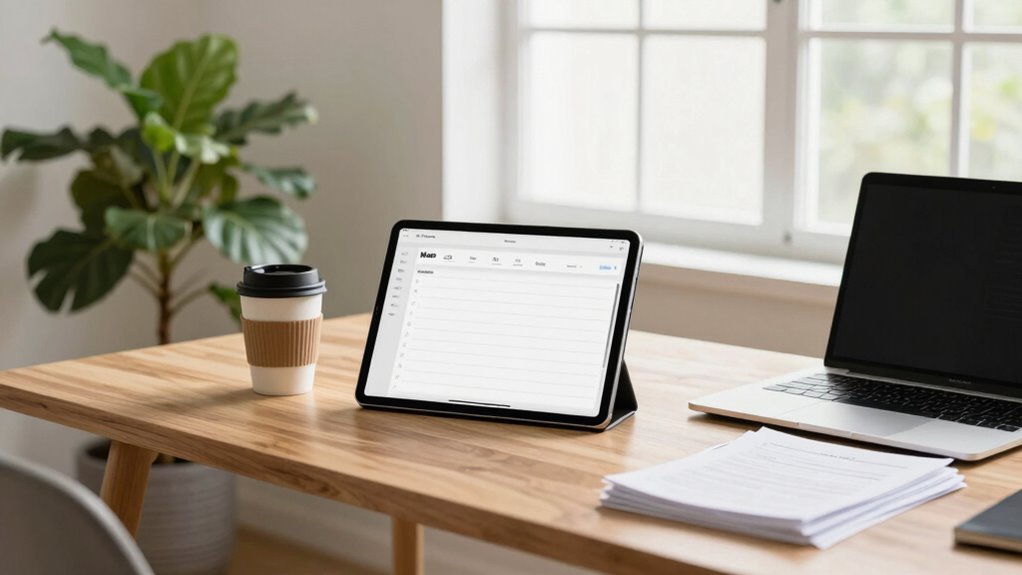

To reduce home paper waste without missing important things, switch to digital versions of documents, bills, and receipts, and store files securely online. Use digital calendars and reminders to stay organized, and opt for reusable notebooks or notepads. Regularly recycle paper in clearly labeled bins and follow local guidelines. By combining digital tools with responsible disposal, you can cut down on paper clutter while staying on top of everything—more tips await if you explore further.
Key Takeaways
- Transition to digital documents and use cloud storage to access important files anytime.
- Set up organized filing systems for essential papers, reviewing and recycling regularly.
- Use digital calendars and reminders to track deadlines and appointments, reducing paper notices.
- Choose recycled or sustainably sourced paper products when necessary, printing only essential documents.
- Establish routines for managing mail and paper, incorporating digital solutions to minimize clutter.
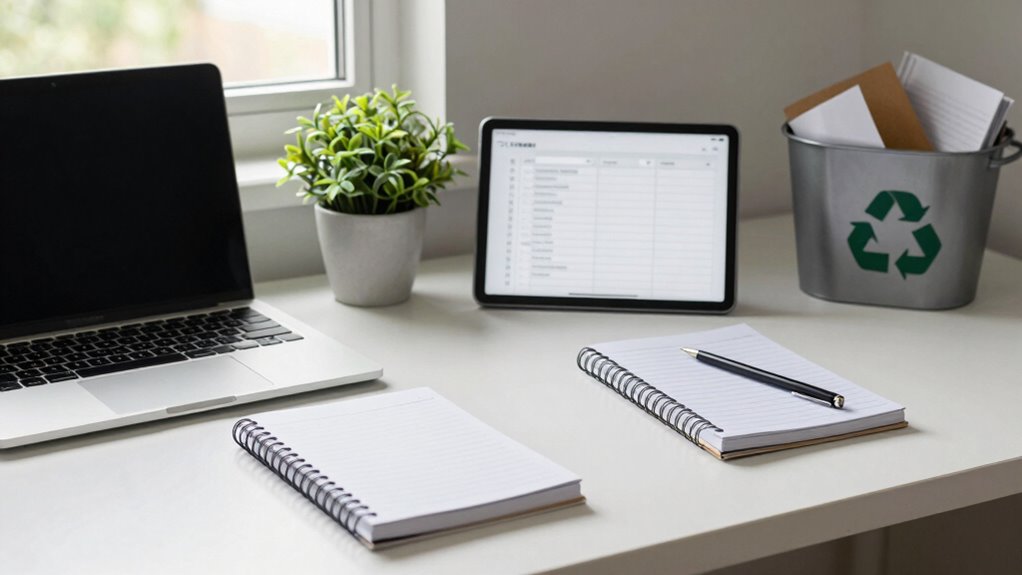
Reducing home paper waste is an effective way to minimize your environmental impact and save money. One of the best strategies involves shifting to digital alternatives whenever possible. Instead of printing documents, bills, or receipts, opt for electronic versions that you can store securely on your devices or in cloud services. Emailing instead of mailing, reading digital magazines, and using apps for note-taking can substantially cut down on paper use. Not only does this reduce clutter, but it also eliminates the need to dispose of paper waste regularly. Moving to digital solutions keeps you organized, ensures quick access to information, and is environmentally friendly. Additionally, being mindful of recycling guidelines helps ensure your paper waste is managed responsibly and reduces contamination in recycling streams.
In addition to adopting digital alternatives, developing effective recycling strategies can help you manage paper waste responsibly. Set up clearly labeled recycling bins in accessible locations around your home, making it easy to sort paper waste from other trash. Regularly empty these bins to prevent overflow and encourage consistent recycling habits. Familiarize yourself with local recycling guidelines to ensure you’re disposing of paper properly—contamination in recycling streams can be minimized by proper sorting. Some items like shredded paper or paper towels might need special handling. Incorporating education about recycling can further improve your waste management practices, as understanding proper sorting methods helps prevent mistakes that lead to contamination. Properly educating yourself about recycling practices can help prevent mistakes that lead to contamination. By recycling effectively, you prevent paper from ending up in landfills, where it can take years to decompose and contribute to pollution.
You don’t have to eliminate paper entirely to reduce waste. When you do need to print or use paper, choose recycled or sustainably sourced options. Be mindful of your printing habits—print only what’s necessary, double-sided when possible, and preview documents to avoid wasteful reprints. For notes or reminders, consider digital apps or voice recordings instead of sticky notes or handwritten lists, which often get discarded quickly. Additionally, keep a stash of reusable notebooks or notepads designed for multiple uses, which reduces the need for single-use paper products. Incorporating these sustainable choices helps reinforce your commitment to reducing paper waste, especially when considering sustainable sourcing for paper products.
To stay on top of important information without paper, leverage digital calendars and reminders. These tools ensure you won’t miss appointments or deadlines, even without physical notes cluttering your space. If you receive paper mail, set aside specific times to review and recycle or file documents, preventing unnecessary accumulation. Establishing these routines helps you maintain a balance—remaining organized and informed without generating excess waste. Overall, by integrating digital alternatives and recycling strategies into your daily habits, you can considerably cut down on home paper waste without missing out on anything important.

Rocketbook Core Reusable Smart Notebook, Letter Size 8.5×11, Gray
- Premium Reusable Paper: Enhanced writing feel and durability
- Smart Titles and Tags: Organize files efficiently with smart labels
- App-Enabled Cloud Uploads: Scan and upload notes to cloud platforms
As an affiliate, we earn on qualifying purchases.
As an affiliate, we earn on qualifying purchases.
Frequently Asked Questions
How Can I Organize Digital Documents Effectively?
To organize digital documents effectively, start with a clear digital filing system, creating folders for different categories like bills, receipts, or work files. Use consistent naming conventions for easy searching. Rely on cloud storage to back up your files securely and access them from anywhere. Regularly declutter by deleting outdated documents, and consider setting aside time each month to maintain organization. This keeps your digital space tidy and easily navigable.
What Are Eco-Friendly Alternatives to Paper?
Imagine a world where your everyday notes and letters don’t harm the environment. Switch to eco-friendly alternatives like reusable stationery, which reduces waste and saves money, and choose plant-based inks that are biodegradable and less toxic. These options help you stay connected while protecting nature. Embrace sustainable choices, and you’ll find that reducing paper waste becomes effortless, making a positive impact on both your home and the planet.
How to Recycle Paper Responsibly at Home?
To recycle paper responsibly at home, you should sort and remove contaminants like plastic or food residue, addressing common recycling challenges. Flatten and bundle paper neatly to prevent jams in your recycling bin. Consider paper reuse ideas such as repurposing scrap paper for notes or crafts before recycling. By staying aware of local recycling guidelines, you guarantee your paper waste is processed properly and reduces environmental impact effectively.
Are There Apps to Track Paper Waste Reduction?
Yes, there are apps for digital tracking and waste monitoring that can help you reduce paper waste. These apps let you log your paper usage, set waste reduction goals, and monitor your progress over time. By using them, you gain insight into your habits and make adjustments to cut down on unnecessary paper. This proactive approach helps you stay environmentally conscious while staying organized and on top of your waste reduction efforts.
How to Involve Family in Reducing Paper Usage?
You can involve your family in reducing paper usage by assigning family chores that focus on paper reduction, like organizing digital files or creating a shared digital calendar. Encourage everyone to participate in eco-friendly habits, such as printing less and using reusable notes. Make it fun by setting goals and celebrating achievements together. This teamwork not only cuts paper waste but also teaches kids the importance of sustainability.

Epson Workforce ES-50 Compact & Lightweight Mobile Document Scanner
- Portability: Lightweight, mobile document scanner
- Fast Scanning: Scans a page in 5.5 seconds
- Compatibility: Works with Windows and Mac
As an affiliate, we earn on qualifying purchases.
As an affiliate, we earn on qualifying purchases.
Conclusion
By reducing your paper waste, you’re planting seeds of change that grow into a healthier planet. Think of each paper you save as a leaf on a tree—stronger and more vibrant with every mindful choice. Your actions ripple outward, shaping a future where resources flourish and waste diminishes. Remember, even the smallest leaf contributes to the whole. Embrace this journey, and watch your efforts blossom into a greener, more sustainable home for generations to come.

RecycleBoxBin Triple Recycling Bin – Large Capacity (25 gal. per Bin), All Plastic, Light-Weight, with Changeable Label System
- Large Capacity Recycling Bins: 25 gallons per bin, triple set
- Lightweight Plastic Construction: Easy to handle and move
- Changeable Label System: Customizable labels for sorting
As an affiliate, we earn on qualifying purchases.
As an affiliate, we earn on qualifying purchases.

Adobe Creative Cloud Pro | 20+ creative apps plus 100GB Storage | 12-Month Subscription with Auto-Renewal|PC/Mac
- AI-powered creative apps: Photography, design, video, social media
- 20+ industry apps: Photoshop, Illustrator, Premiere Pro, Acrobat Pro
- Creative essentials included: Fonts, Adobe Stock
As an affiliate, we earn on qualifying purchases.
As an affiliate, we earn on qualifying purchases.