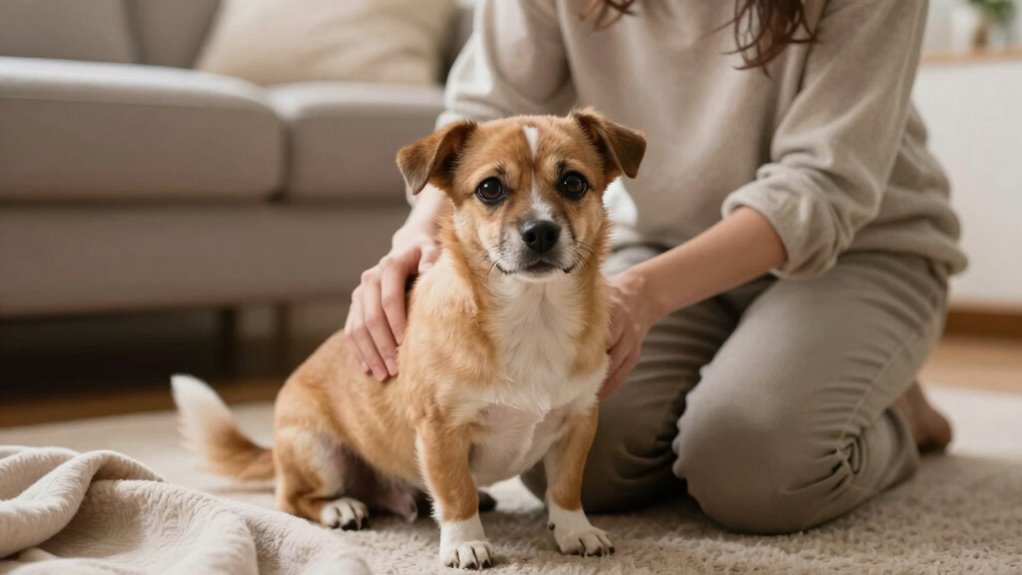

To support a nervous dog without reinforcing fear, stay calm and avoid overreacting to their reactions. Use gentle praise and treats when they handle stress well, creating positive associations. Keep interactions slow, predictable, and at your dog’s pace, rewarding confidence. Create a safe space and incorporate calming aids like soft speech or soothing touches. Consistency and patience are key—building trust over time will help them feel more secure. If you want to learn more, there’s helpful advice ahead.
Key Takeaways
- Stay calm and composed to convey safety and prevent increasing the dog’s anxiety.
- Reward calm behavior consistently, avoiding attention to nervous or fearful reactions.
- Use gentle, soothing speech and petting to promote relaxation without reinforcing fear.
- Maintain a stable environment with routine to provide predictability and security.
- Avoid scolding or punishing, focusing instead on positive reinforcement for confident behaviors.
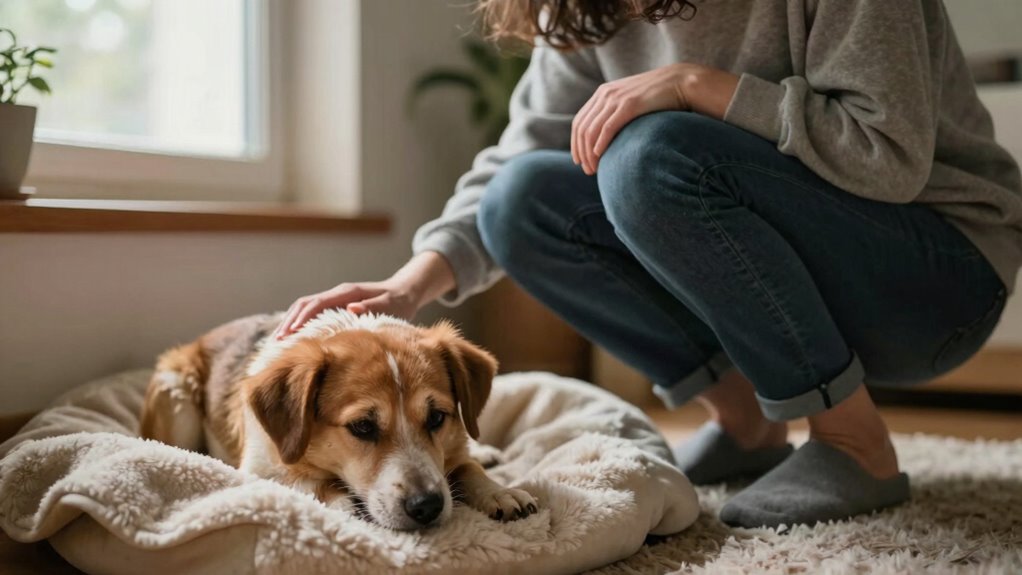
If your dog seems nervous or anxious, understanding how to support them can make a significant difference in their well-being. One of the most effective ways to help is through positive dog socialization. Carefully introducing your dog to new people, other dogs, and different environments can gradually build their confidence. Start with calm, controlled settings where your dog feels safe, and reward them for calm behavior. Over time, exposure to diverse situations helps reduce fear and teaches your dog that new experiences aren’t threats. It’s important to avoid overwhelming your dog during socialization; keep interactions gentle and at your dog’s pace. Consistency is key, so regularly practicing socialization in a supportive manner helps reinforce positive associations.
Supporting nervous dogs through gentle, consistent socialization helps build confidence and trust over time.
Alongside socialization, calming techniques play a key role in easing your dog’s anxiety. When your dog becomes nervous, use gentle, soothing methods to help them relax. Techniques such as softly speaking in a calm voice, petting with gentle strokes, or offering a favorite toy can be very calming. Creating a safe space, like a cozy corner or crate, gives your dog a retreat where they feel secure. Using calming aids, such as pheromone diffusers or calming collars, can also provide extra reassurance. Incorporating calming techniques into daily routines helps your dog learn that there’s nothing to fear and that they’re supported. Additionally, understanding the importance of biodiversity and conservation in the environment can help you foster a sense of safety and stability for your dog by creating a peaceful, natural setting. Recognizing the role of natural habitats in promoting overall well-being can further enhance your approach to creating a calming environment. Establishing a stable environment is crucial because it helps your dog feel more secure and reduces anxiety triggers.
It’s essential to avoid reinforcing fear through your responses. If your dog reacts anxiously, do your best to stay composed and avoid giving too much attention to fearful behaviors. For example, don’t scold or punish your dog for being nervous, as that can increase their anxiety. Instead, focus on rewarding calm, confident behaviors. When your dog handles a stressful situation well, praise them with a gentle voice or treats to reinforce their bravery. Maintaining a relaxed demeanor yourself helps communicate that there’s no danger, encouraging your dog to mirror your calmness.
Patience is fundamental when supporting a nervous dog. Progress may be slow, and setbacks can happen, but consistent, gentle efforts will gradually help your dog become more confident. Remember, your goal is to foster trust and security without reinforcing fear. By combining gradual dog socialization with effective calming techniques, you create an environment where your dog feels safe enough to explore and grow. Your support and understanding can transform their anxiety into resilience, making life happier and more comfortable for both of you.
As an affiliate, we earn on qualifying purchases.
Frequently Asked Questions
Can Certain Breeds Be More Prone to Nervousness?
Certain breeds can be more prone to nervousness due to breed tendencies and genetic predisposition. For example, small or highly energetic breeds often exhibit higher anxiety levels. You might notice that some breeds, like Chihuahuas or Jack Russell Terriers, tend to be more alert or skittish. Understanding these tendencies helps you provide better support, ensuring you avoid reinforcing their fears and help them feel more secure in their environment.
How Long Does It Take to See Improvement?
Improvements from behavior modification and gradual exposure can vary, often taking weeks to months depending on your dog’s personality and the issues involved. You’ll see progress as you consistently implement these strategies, helping your dog build confidence. Patience is key—stay calm and avoid rushing the process. Regular, positive reinforcement during exposure sessions encourages your pup to feel safe and gradually reduce fear, leading to noticeable improvements over time.
Is It Safe to Use Calming Products or Supplements?
Using calming products or supplements is generally safe when chosen carefully and used as directed, but always consult your vet first—these can be game-changers for anxious dogs. Consider alternative therapies and calming routines to support your dog naturally. These methods, combined with the right products, can create a peaceful environment, helping your pup feel safe and secure without risking adverse effects. Always prioritize professional guidance for the best results.
Should I Consult a Veterinarian or Trainer for My Dog’s Anxiety?
Yes, you should consult a veterinarian or trainer for your dog’s anxiety. They can recommend effective behavior modification and training techniques tailored to your dog’s needs. A professional assessment helps identify underlying issues and creates a customized plan to reduce fear without reinforcing it. With expert guidance, you’ll learn how to build your dog’s confidence and help them feel secure during stressful situations.
How Do I Handle a Nervous Dog During Vet Visits?
Like a true knight of yore, you’ll want to stay calm and confident during vet visits. Use calming techniques such as gentle petting or soothing voice tones, and make environmental adjustments like bringing familiar blankets or toys. Keep the experience positive by offering treats and praise, and avoid rushing. Your calm presence reassures your dog, helping them feel safer and more at ease, transforming a stressful visit into a manageable one.
As an affiliate, we earn on qualifying purchases.
Conclusion
Remember, patience and gentle support go a long way in helping your nervous dog feel safe. Avoid coddling or rewarding fearful behavior, as it can reinforce their anxiety. Instead, offer calm reassurance and gradual exposure to new experiences. Keep in mind the saying, “A soft answer turneth away wrath.” With consistent kindness and understanding, you’ll help your dog build confidence and trust, turning their fears into courage one step at a time.
As an affiliate, we earn on qualifying purchases.
As an affiliate, we earn on qualifying purchases.