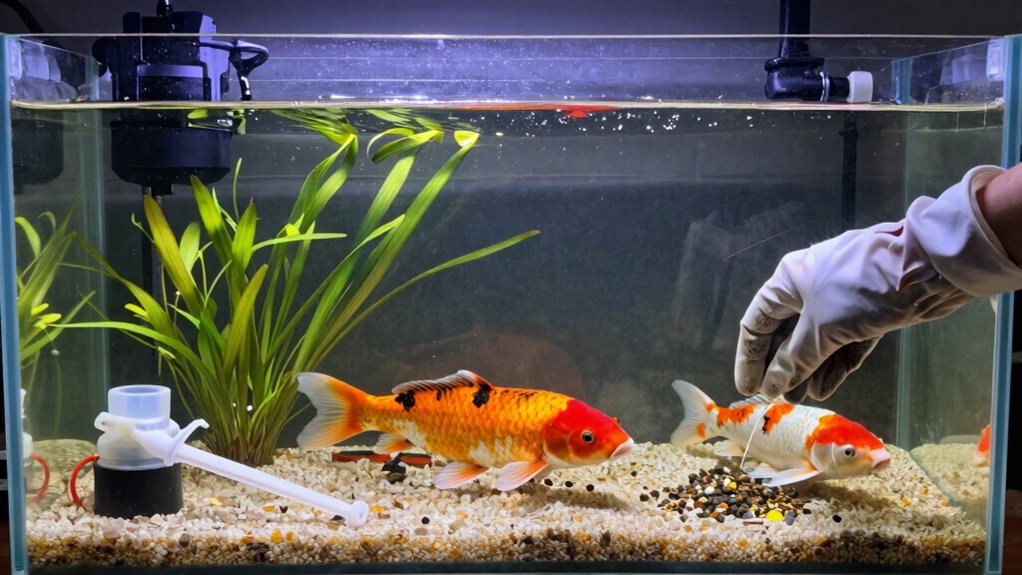

A large fish tank needs a real maintenance plan because it helps you keep the environment healthy and stable. Proper lighting, water quality checks, and equipment inspections prevent issues like algae overgrowth, fish stress, or disease. Regular water changes and debris removal are essential for your fish’s well-being. Staying organized and consistent with your routine allows you to catch problems early and avoid costly repairs. Keep exploring these strategies to guarantee your tank remains vibrant and balanced.

Get gifts for the two of you delivered free with Prime
- Fast, free delivery on millions of items
- Prime Video, Amazon Music and more included
- Member-only deals all year
Key Takeaways
- Large tanks require systematic maintenance to prevent algae overgrowth and ensure a balanced aquatic environment.
- Regular monitoring of water quality and equipment health avoids sudden system failures.
- Consistent cleaning and water changes maintain optimal conditions for fish health and reduce disease risks.
- A detailed plan helps detect early signs of stress, illness, or equipment malfunction.
- Organized routines improve efficiency, ensuring all components work harmoniously for long-term tank stability.
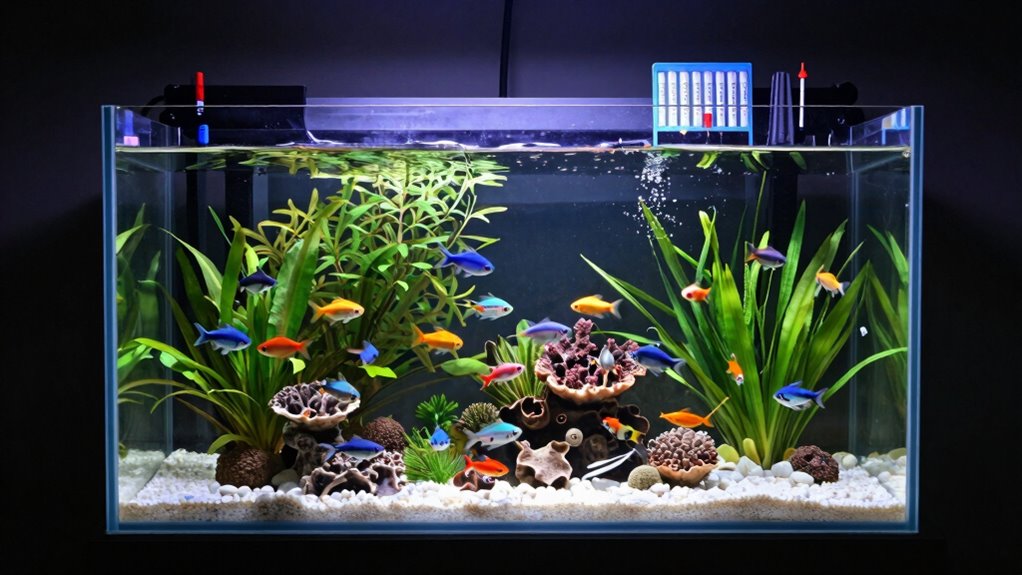
Maintaining a large fish tank requires consistent effort and attention to detail to keep your aquatic environment healthy and thriving. One of the most critical aspects of this is developing a solid maintenance plan that covers all essentials, including aquarium lighting and fish health monitoring. These elements are crucial because they directly affect the well-being of your fish and the overall stability of the tank.
Your aquarium lighting isn’t just about aesthetics; it’s a fundamental part of the ecosystem. Proper lighting schedules help mimic natural day-night cycles, which can reduce stress for your fish and promote healthy behaviors. If your lighting is too intense or inconsistent, it can lead to algae overgrowth and disrupt the biological balance. A maintenance plan should include regular checks on your lighting system, ensuring bulbs are functioning correctly and timers are set accurately. This not only keeps your tank looking vibrant but also prevents issues that could compromise fish health.
Equally important is fish health monitoring. When you’re managing a large tank, it’s easy for problems to go unnoticed until they become serious. Regular observation allows you to catch signs of stress, disease, or nutritional deficiencies early. Look for abnormal swimming patterns, discoloration, or signs of injury. Incorporating routine tests of water parameters—such as pH, ammonia, nitrite, and nitrate levels—helps ensure the environment remains within safe ranges for your specific fish species. Consistent monitoring helps you make timely adjustments, preventing health problems before they escalate. Additionally, understanding the biological balance of your tank is essential for maintaining a stable and healthy environment. Regularly researching the specific needs of your fish species can also improve your tank maintenance practices. Implementing a detailed maintenance schedule can further help you stay organized and systematic in your upkeep routines.
A thorough maintenance plan also involves scheduled water changes, cleaning, and equipment checks. Large tanks tend to accumulate waste faster and require more frequent water changes to maintain water quality. Cleaning filters and removing debris from the substrate keeps the environment clean and reduces the risk of disease. Regularly inspecting your equipment ensures everything functions properly, minimizing unexpected breakdowns that could threaten your fish. Incorporating proper sterilization methods and understanding how to effectively disinfect equipment can further reduce the risk of disease transmission. Additionally, staying informed about new aquarium technology developments can help optimize your maintenance efforts and improve overall tank stability.
As an affiliate, we earn on qualifying purchases.
Frequently Asked Questions
How Often Should I Replace the Tank Water Completely?
You should replace about 10-20% of your tank water weekly to maintain a healthy environment. Regular water testing helps you monitor parameters like pH and ammonia, guiding your maintenance schedule. Complete water changes aren’t necessary often—usually every few months—unless there’s a problem. During tank cleaning, make certain you remove debris and algae, but avoid over-cleaning, which can disrupt beneficial bacteria that keep your tank balanced.
What Are the Signs of a Failing Filtration System?
If your filtration system is failing, you’ll notice water clarity plummeting like a fog rolling in, and filtration efficiency dropping dramatically. Algae blooms will explode, and debris will float freely instead of being filtered out. Fish may become stressed or sick, and odors will become overwhelming. These signs mean your filter isn’t doing its job, and you need to act fast to restore water quality and protect your aquatic life.
How Do I Prevent Algae Overgrowth in Large Tanks?
To prevent algae overgrowth in large tanks, you need effective algae control and proper lighting management. Keep your tank’s lighting consistent, avoid excess light by using timers, and limit exposure to direct sunlight. Regularly clean the glass and remove excess nutrients that promote algae growth. Monitoring water quality and maintaining a balanced environment also helps, ensuring algae don’t thrive and your tank stays healthy and clear.
What Emergency Procedures Should I Have in Place?
Imagine a sudden power outage, and your large tank’s life hangs in the balance. You should have emergency drills to practice quick responses, like switching to backup power sources or manually aerating the water. Keep a kit with tools, batteries, and emergency contacts handy. Regularly review these procedures, so when a crisis hits, you’re prepared to protect your aquatic ecosystem swiftly and confidently.
How Can I Safely Introduce New Fish to the Tank?
To safely introduce new fish, start with an aquarium compatibility check to guarantee they get along. Quarantine the new fish in a separate tank for at least two weeks to observe for diseases and stress. Gradually acclimate them to your main tank’s water parameters by slowly mixing tank water with quarantine water. This process minimizes stress and prevents the spread of illness, keeping your entire aquatic community healthy.
As an affiliate, we earn on qualifying purchases.
Conclusion
A solid maintenance plan keeps your large fish tank thriving like a well-tuned orchestra. You’ll catch problems early, ensuring your fish stay healthy and your tank stays sparkling. Just like a garden needs regular tending to flourish, your tank needs consistent care to stay vibrant and balanced. Stick to your plan, and you’ll enjoy a beautiful, lively aquatic world that’s as mesmerizing as a clear, rippling pond on a sunny day.
As an affiliate, we earn on qualifying purchases.
As an affiliate, we earn on qualifying purchases.
Halloween Picks
halloween
As an affiliate, we earn on qualifying purchases.