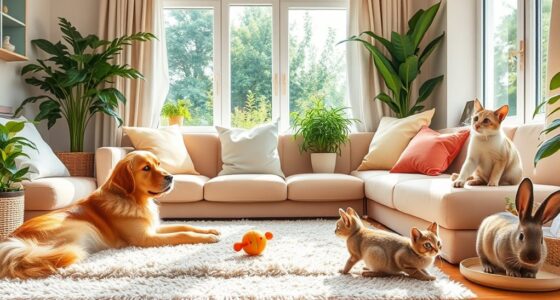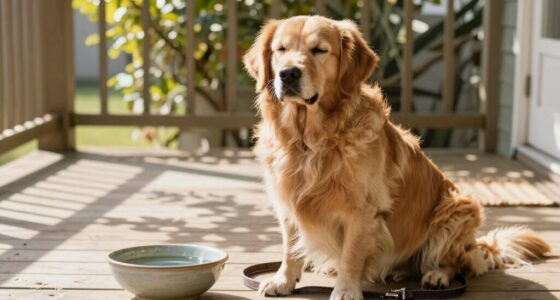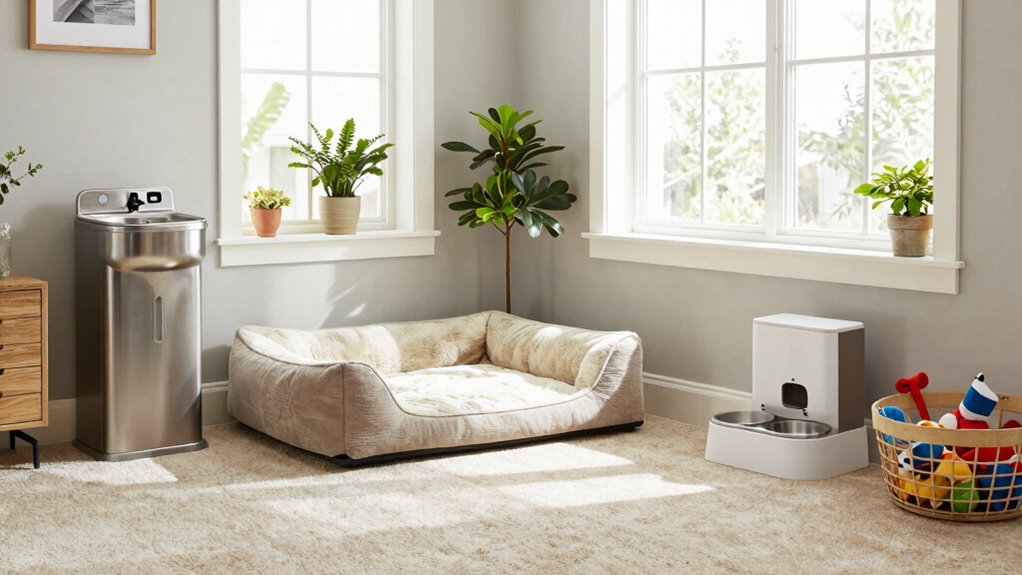
To build a home that supports your pet’s comfort and cleanliness, choose durable, easy-to-clean flooring like tile or sealed hardwood, and avoid carpets that trap fur and odors. Design designated areas for feeding, sleeping, and playing with water-resistant materials and good ventilation. Use air purifiers and odor absorbers to keep the air fresh. Incorporate easy-to-maintain surfaces and strategic storage to reduce clutter. For more tips on creating a pet-friendly space, keep exploring this helpful guide.

Get gifts for the two of you delivered free with Prime
- Fast, free delivery on millions of items
- Prime Video, Amazon Music and more included
- Member-only deals all year
Key Takeaways
- Choose durable, easy-to-clean flooring like tile, vinyl, or sealed hardwood to resist pet messes and simplify maintenance.
- Incorporate air purifiers and good ventilation to reduce pet odors and improve indoor air quality.
- Design designated pet areas with washable, water-resistant materials for feeding, sleeping, and play zones.
- Position pet spaces near cleaning stations and use stain-resistant wall finishes for effortless upkeep.
- Implement storage solutions for toys and grooming supplies to keep the home organized and reduce clutter.
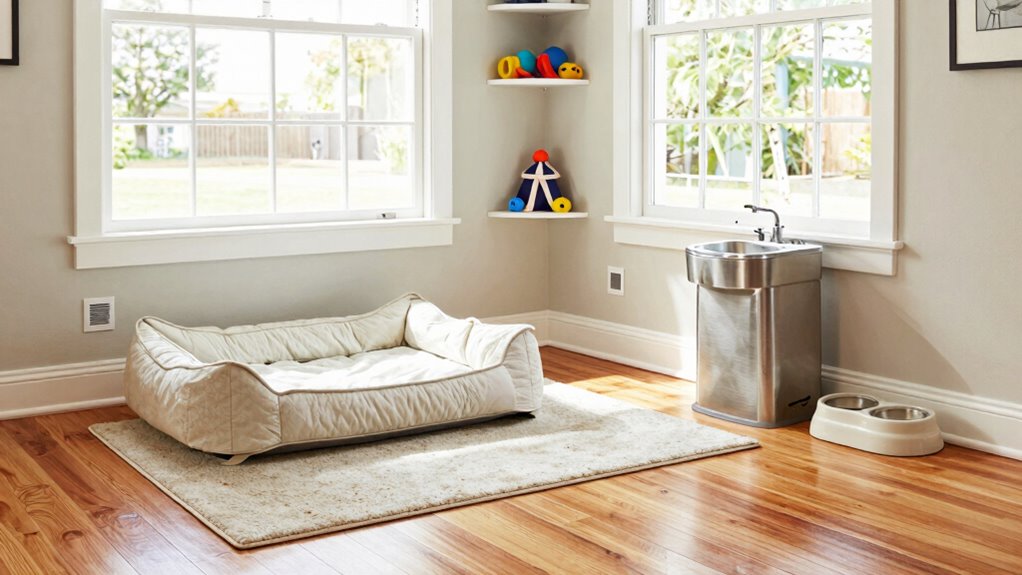
Creating a home that prioritizes your pet’s comfort and cleanliness starts with thoughtful design choices. When building or renovating, selecting pet-friendly materials is essential. Look for flooring options like tile, vinyl, or sealed hardwood that are durable and easy to clean. These materials resist scratches and moisture, making maintenance simpler while ensuring your pet’s space remains hygienic. Avoid carpets, which trap fur, dander, and odors, creating challenges for cleaning and air quality. Instead, choose smooth surfaces that can be quickly wiped or mopped, reducing messes and promoting a healthier environment.
Choose durable, easy-to-clean flooring like tile or sealed hardwood to keep your pet’s space hygienic and mess-free.
Incorporating odor control solutions is equally important. Invest in air purifiers equipped with HEPA filters to capture pet hair, dander, and airborne odors. Ventilation plays a key role, so consider installing exhaust fans or ensuring good cross-ventilation to keep stale smells at bay. Regularly cleaning and maintaining your pet’s designated areas also helps prevent odors from building up. Use enzymatic cleaners designed specifically for pet messes, which break down odor-causing molecules effectively without harsh chemicals. Placing odor-absorbing products like activated charcoal or baking soda in strategic spots can further neutralize smells and keep your home smelling fresh.
Design your pet’s living spaces with functionality in mind. Create designated areas for feeding, sleeping, and play that are easy to access and clean. Elevated beds or pads made from washable and water-resistant materials can provide comfort while simplifying cleanup. Incorporate storage solutions for pet toys, grooming supplies, and supplies, keeping clutter out of sight and reducing dust and hair accumulation. Make sure these spaces are well-ventilated and away from high-traffic areas to minimize disturbances and maintain cleanliness. Additionally, selecting pet-safe cleaning products can help ensure the safety of your furry friends while maintaining a tidy environment.
When planning your home layout, consider the flow of cleaning routines. Position pet-related areas near sinks or laundry zones for quick washing of bedding and toys. Use washable wall coverings or paint with pet-safe, stain-resistant paint to make cleaning walls easier if your furry friend gets a little too enthusiastic. Incorporating dust control measures such as regular vacuuming and air filtration can further reduce pet hair and dander, improving indoor air quality. Installing airless paint sprayers in renovation projects can also help achieve a seamless, durable finish that resists scratches and stains, making cleaning even easier. Properly designed pet entry points can help contain fur and dirt within specific zones, reducing the spread throughout your home. Incorporating ventilation systems can enhance airflow and decrease indoor allergens, creating a more comfortable environment for both pets and humans. Always keep your pet’s comfort in mind by ensuring their space is cozy, accessible, and safe, while also implementing practical solutions to maintain a clean, odor-free environment.
pet-friendly waterproof pet beds
As an affiliate, we earn on qualifying purchases.
As an affiliate, we earn on qualifying purchases.
Frequently Asked Questions
How Can I Improve Indoor Air Quality for Pets?
You can improve indoor air quality for pets by using air purification systems to remove pet dander and odors. Regularly ventilate your home with effective ventilation systems to guarantee fresh air circulation. Vacuum frequently with HEPA filters, and wash pet bedding often. Keep your home well-ventilated, and consider adding air purifiers to reduce allergens, creating a healthier environment where your pets can breathe easier and stay comfortable.
What Are the Best Storage Solutions for Pet Supplies?
Smart storage solutions keep your space tidy and pet-friendly. Use stackable bins for pet toy organization, making it easy to find and access toys while reducing clutter. Incorporate a designated feeding station setup with labeled containers for food and treats. Consider wall-mounted shelves or drawers to maximize space. This strategic storage keeps supplies organized, accessible, and out of paw’s reach, creating a clean, convenient haven for your pet.
How Do I Prevent Pet Hair From Spreading?
To prevent pet hair from spreading, focus on regular pet grooming to reduce shedding and hair trapping around your home. Use a high-quality vacuum designed for pet hair and frequently clean furniture and floors. Encourage your pet to stay in designated areas with washable covers. By maintaining consistent grooming and cleaning routines, you minimize hair dispersal, keeping your home cleaner and more comfortable for both you and your pet.
What Safety Features Should Be Included in Pet-Friendly Homes?
Did you know nearly 80% of pet owners worry about safety hazards at home? To keep your pets safe, include pet proofing essentials like secure windows, outlet covers, and non-slip rugs. Safety gate options help prevent access to dangerous areas, like stairs or kitchens. Installing durable, easy-to-clean fixtures and ensuring sharp objects are out of reach also protect your furry friends, making your home both safe and comfortable.
How Can I Design Outdoor Spaces for Pet Exercise?
You can design outdoor spaces for pet exercise by creating a secure, fenced area for safety. Incorporate pet-friendly plants that are non-toxic and safe for your pets. Add outdoor agility equipment like tunnels, ramps, and hoops to encourage active play. Make certain the space has shaded spots and water access, making it comfortable for your pets during exercise. Keep the area clean and free of hazardous debris for a safe, engaging environment.
HEPA air purifier for pet dander
As an affiliate, we earn on qualifying purchases.
As an affiliate, we earn on qualifying purchases.
Conclusion
Building a home that keeps your pets comfortable and clean isn’t just about design—it’s about creating a space where everyone feels at ease. Remember, a tidy home is a happy home, and small adjustments can make a big difference. By planning thoughtfully and prioritizing your pet’s needs, you’ll foster a harmonious environment for all. After all, as the saying goes, “A clean home is a happy home,” and your furry friends will thank you for it.
easy-to-clean pet feeding station
As an affiliate, we earn on qualifying purchases.
As an affiliate, we earn on qualifying purchases.
odor absorbing activated charcoal bags
As an affiliate, we earn on qualifying purchases.
As an affiliate, we earn on qualifying purchases.
Fall Picks
fall essentials
As an affiliate, we earn on qualifying purchases.