

TL;DR
The European Commission’s InvestAI plan is being promoted as a €200 billion push for artificial intelligence, but only €50 billion is identified as public money. The rest depends on private investment, while the largest compute projects are not expected to operate until 2027 or 2028.
The European Commission’s €200 billion InvestAI push is being presented as Europe’s answer to the scale of artificial intelligence investment in the United States, but the confirmed public funding behind the headline is far smaller: €50 billion, with €150 billion dependent on private capital that has not been committed.
The distinction matters because the Commission says it aims to mobilize €200 billion, not spend that amount directly. According to the source material, the plan breaks down into €50 billion in public money and €150 billion in hoped-for private investment, using a target leverage model of about 1:10.
Of the €50 billion in public funding, €20 billion is reserved for four to five AI gigafactories, the large computing centers intended to give European researchers and start-ups better access to high-end training infrastructure. Even there, Brussels is not expected to pay the full cost: under the funding model described in the source material, the EU would cover up to 17% of a facility’s investment cost, with member states and private backers responsible for the rest.
That leaves the European Commission’s direct contribution to the central compute part of the plan at only a few billion euros, according to the analysis. The formal call for gigafactory projects is expected to begin in July 2026, while the facilities are projected to come online in 2027 or 2028. As of late June 2026, one site in Norway is described as under construction, alongside 19 smaller AI Factories using existing supercomputers.
Mobilisiert, nicht ausgegeben
Die EU verkauft eine €200-Milliarden-KI-Offensive. Doch das entscheidende Wort ist „mobilisiert” — nicht „ausgegeben”. Rechnet man nach, schrumpft die Schlagzeile bis zur Wirkung dramatisch.
2027–28 Rechenzentren sollen laufen
1 STANDORT bislang im Bau (Norwegen)
Spät, langsam, noch nicht gebaut.
Ein kleiner, später, teils hypothetischer Scheck — ohne teure Energie, fragmentierte Kapitalmärkte, langsame Genehmigungen oder Talent-Abwanderung anzurühren. Die EU verwechselt einen Fördertopf mit einer Strategie.
Funding Gap Tests EU Ambitions
The funding structure raises a hard question for Europe’s AI policy: whether a plan built around attracting private capital can close a gap that exists partly because Europe has struggled to produce that capital at scale. The source material argues that the €150 billion private component is uncertain because it has not yet been pledged and because Europe lacks the depth of private growth financing available in the United States.
The timing also matters. AI infrastructure spending is moving quickly, with U.S. hyperscalers planning very large capital outlays in 2026, according to the Financial Times analysis cited in the source material. If European gigafactories do not operate until 2027 or 2028, the program may arrive after another investment cycle has already widened the compute gap.
For start-ups, universities and industrial AI users, the difference between pledged public money and hoped-for private investment affects whether new compute capacity becomes available soon enough to support model training, research and product development inside Europe.
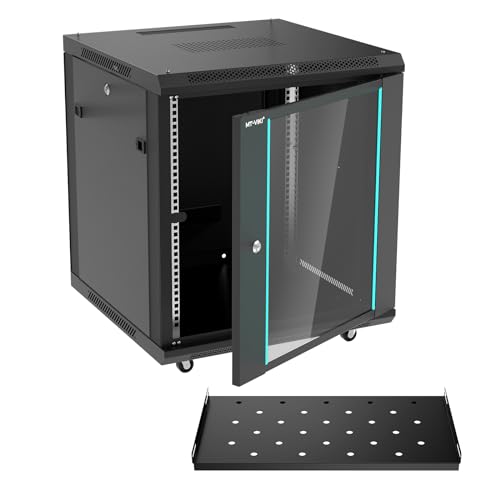
MT-VIKI 12U Server Cabinet Network Rack Vented Enclosure w/Moving Wheel, 0.8mm Thick Steel, 23.6‘’ Deep (600mm), for 19'' IT Equipment, Included 1pcs 12'' Depth Rack Shelf
- Size: 12U wall mount cabinet
- Material: 0.8mm thick cold-rolled steel
- Load Capacity: Supports up to 132lbs (60kg)
As an affiliate, we earn on qualifying purchases.
As an affiliate, we earn on qualifying purchases.
How The €200 Billion Breaks Down
InvestAI was framed by the European Commission as a major European response to the global AI race. The headline number is €200 billion, but the source material says the confirmed public component is €50 billion. From that amount, €20 billion is set aside for AI gigafactories.
The EuroHPC governing board approved the gigafactory effort in early June 2026, according to the source material. The planned facilities are meant to be much larger than the 19 AI Factories that use existing supercomputing capacity. The stated policy goal is to support European AI sovereignty by increasing domestic access to advanced compute.
The scale comparison is central to the debate. The source material cites a Financial Times review estimating that U.S. hyperscaler capital expenditure in 2026 alone could reach about $700 billion, with Amazon and Microsoft each near the $200 billion range. It also refers to the $500 billion Stargate project as another example of the scale now being discussed outside Europe.
“mobilize”
— European Commission

AI Systems Performance Engineering: Optimizing Model Training and Inference Workloads with GPUs, CUDA, and PyTorch
As an affiliate, we earn on qualifying purchases.
As an affiliate, we earn on qualifying purchases.
Private Money Remains Unpledged
It is not yet clear how much of the targeted €150 billion in private capital will be raised, when it would arrive, or which investors would provide it. The source material says that money has not been committed.
It is also unclear how many gigafactories will be built, where most of them will be located, what their final cost will be, and whether member states and private backers will provide the remaining funding needed under the EU model. The operating timetable could also shift once tenders, permitting, energy contracts and construction schedules are finalized.

The Data Center Engineering Handbook: A Practical Guide to Infrastructure Design, Power Systems, Cooling, Security, Compliance, and Operational Excellence
As an affiliate, we earn on qualifying purchases.
As an affiliate, we earn on qualifying purchases.
July Tender Opens The Test
The next milestone is the formal gigafactory call expected in July 2026. That process should show which countries, companies and investors are ready to back projects with money, sites and power supply.
Readers should watch for three measures: how much private capital is actually committed, how many facilities move from proposal to construction, and whether the first large sites can begin operating in 2027 or 2028. Until then, the €200 billion figure remains a policy target rather than confirmed spending.

The NVIDIA Rubin CPX GPU Architecture: Transforming AI Inference Infrastructure for High-Performance Computing and Generative Applications
As an affiliate, we earn on qualifying purchases.
As an affiliate, we earn on qualifying purchases.
Key Questions
Is the EU spending €200 billion directly on AI?
No. According to the source material, €50 billion is identified as public money, while €150 billion is expected from private investors.
What are the AI gigafactories?
They are planned large computing facilities intended to give European researchers, start-ups and companies access to advanced AI training infrastructure.
When will the new facilities be ready?
The formal call is expected in July 2026, and the facilities are projected to operate in 2027 or 2028. As of late June 2026, one site in Norway is described as under construction.
Why is the private funding question so important?
The largest part of the headline figure depends on private capital that has not yet been pledged. If that money does not arrive, the program’s practical impact would be much smaller than the €200 billion headline suggests.
Source: Thorsten Meyer AI