

Couples communication journals turn daily or weekly reflection into a habit that improves how partners listen, argue, and reconnect. After comparing 14 popular options, The Ultimate Questions For Couples Journal stands out as the best overall pick because its 52-week structure balances guided prompts with real skill-building, and it works for couples at any stage. The Couples Communication Workbook is the strongest choice for couples in active conflict who want a short, focused 12-day program, while One Question a Day for You & Me suits low-effort couples who want a multi-year keepsake rather than a workbook. The main tradeoff in this category is depth versus commitment: structured workbooks demand more time and honesty, while lighter prompt journals are easier to sustain but rarely change communication patterns on their own. Keep reading for the full breakdown, including which journals are worth the price and which ones fall flat.

Get gifts for the two of you delivered free with Prime
- Fast, free delivery on millions of items
- Prime Video, Amazon Music and more included
- Member-only deals all year
Key Takeaways
- Structured workbooks (The Couples Communication Workbook, Love More Fight Less) outperformed prompt-only journals for couples dealing with recurring conflict, because they teach concrete skills like reflective listening rather than just sparking conversation.
- Time commitment was the biggest differentiator across the lineup: options ranged from 20 minutes a day for 12 days to a single question per day over three years, and matching the format to your actual schedule mattered more than any single feature.
- Religious framing was a hidden variable — The Marriage Journal and BestSelf‘s Him & Her set carry traditional or faith-adjacent assumptions that may not fit every couple, so check the tone before buying.
- The longest-haul picks (One Question a Day for You & Me, Back and Forth Journal) function better as relationship keepsakes than communication tools; they build consistency but won’t resolve deeper conflict patterns.
- Several of the 14 journals overlapped heavily in prompt content, so price and build quality became the deciding factors — the standouts either offered a genuinely different structure or better physical durability at a similar cost.
| The Ultimate Questions For Couples Journal: 52 Weeks To Improve Communication, Rebuild Trust, And Increase Intimacy In Your Relationship |  | Best Overall | Format: Guided print journal | Program Length: 52 weeks | Structure: Weekly questions and prompts | VIEW LATEST PRICE | See Our Full Breakdown |
| Couples Communication Workbook: 20 Minutes a Day for 12 Days to Improve Listening, Resolve Conflicts, and Strengthen Your Relationship |  | Best Short-Term Program | Format: Print workbook | Program Length: 12 days | Daily Time Required: 20 minutes | VIEW LATEST PRICE | See Our Full Breakdown |
| The Relationship Check-In Journal: Couples Journaling for Meaningful Conversations and Routine Talks |  | Best for Maintaining Momentum | Format: Guided print journal | Structure: Conversation starters and check-in prompts | Primary Focus: Meaningful conversations and routine talks | VIEW LATEST PRICE | See Our Full Breakdown |
| Me, You, Us: A Book to Fill Out Together |  | Most Fun for Beginners | Format: Interactive fill-in book | Structure: Playful prompts to complete together | Primary Focus: Connection, fun, and mutual discovery | VIEW LATEST PRICE | See Our Full Breakdown |
| Tell Me More: A Guided Couples Journal for Spouses and Partners to Deepen Communication, Connection, and Love | 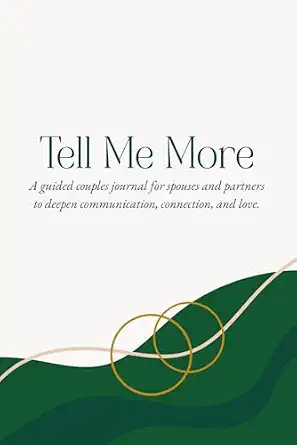 | Best for Emotional Intimacy | Format: Guided print journal | Structure: Guided prompts and activities | Primary Focus: Communication, emotional intimacy, connection | VIEW LATEST PRICE | See Our Full Breakdown |
| I Saw That: A Couples Relationship Journal with Guided Prompts for Better Communication, Building Appreciation, and Reconnecting |  | Best for Rebuilding Connection | Format: Guided journal with prompts | Primary focus: Communication, appreciation, reconnection | Audience: Couples | VIEW LATEST PRICE | See Our Full Breakdown |
| A Couple’s Love Journal: 52 Weeks to Reignite Your Relationship, Deepen Communication, and Strengthen Your Bond |  | Best Yearlong Structure | Format: Guided journal | Duration: 52 weeks | Primary focus: Communication, emotional connection, bonding | VIEW LATEST PRICE | See Our Full Breakdown |
| Love More, Fight Less: Communication Skills Every Couple Needs | 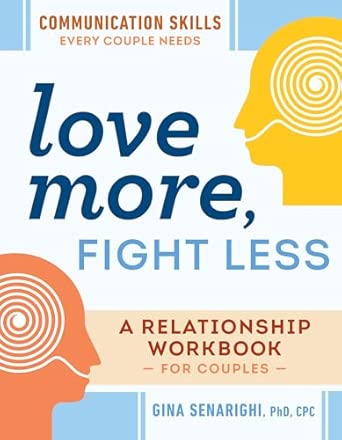 | Best for Conflict Resolution | Format: Communication skills workbook | Primary focus: Conflict resolution, understanding, healthier interactions | Content type: Practical exercises and strategies | VIEW LATEST PRICE | See Our Full Breakdown |
| The Marriage Journal – 52-Week Couples Journal |  | Best Faith-Based Pick | Number of weeks: 52 | Includes devotional: Yes | Shared calendar: Yes | VIEW LATEST PRICE | See Our Full Breakdown |
| One Question a Day for You & Me: A Three-Year Journal |  | Best Low-Effort Daily Habit | Format: Daily question journal | Duration: 3 years | Daily commitment: One question per day | VIEW LATEST PRICE | See Our Full Breakdown |
| BestSelf Relationship Journals – 13-Week Guided Workbook, Him & Her Set |  | Best Structured Program | Program Length: 13 weeks | Format: Two-journal set (one per partner) | Structure: Guided workbook with weekly exercises | VIEW LATEST PRICE | See Our Full Breakdown |
| Back and Forth Journal for Husband and Wife |  | Best Low-Pressure Pick | Format: Single shared journal, pass-back-and-forth style | Audience: Husband and wife / committed partners | Tone: Playful and conversational | VIEW LATEST PRICE | See Our Full Breakdown |
| Communication Skills for Couples |  | Best Skills-First Read | Type: Instructional guidebook (not a fill-in journal) | Core Topics: Communication skills, conflict resolution, intimacy, marriage strengthening | Approach: Practical strategies with discussion application | VIEW LATEST PRICE | See Our Full Breakdown |
| For His Eyes Only: A Couple’s Guided Journal for Love, Communication, and Emotional Intimacy |  | Best for Emotional Depth | Type: Guided couples journal | Focus Areas: Love, communication, emotional intimacy | Prompt Style: Reflective prompts with shared exercises | VIEW LATEST PRICE | See Our Full Breakdown |
| couples communication journal | Format | Primary Focus | Best Use | Structure |
|---|---|---|---|---|
| The Ultimate Questions For Cou | Guided print journal | Communication, trust, intimacy | Ongoing relationship practice | Weekly questions and prompts |
| Couples Communication Workbook | Print workbook | Listening, conflict resolution, relationship strength | Short-term skills intensive | Daily guided exercises |
| The Relationship Check-In Jour | Guided print journal | Meaningful conversations and routine talks | Ongoing relationship check-ins | Conversation starters and check-in prompts |
| Me | Interactive fill-in book | Connection, fun, and mutual discovery | Casual bonding activity or gift | Playful prompts to complete together |
| Tell Me More: A Guided Couples | Guided print journal | Communication, emotional intimacy, connection | Deepening emotional connection | Guided prompts and activities |
| I Saw That: A Couples Relation | Guided journal with prompts | Communication, appreciation, reconnection | — | — |
| A Couple’s Love Journal: 52 We | Guided journal | Communication, emotional connection, bonding | — | — |
| Love More | Communication skills workbook | Conflict resolution, understanding, healthier interactions | — | — |
| The Marriage Journal | Weekly guided journal | — | — | — |
| One Question a Day for You & M | Daily question journal | Daily reflection and emotional connection | — | — |
| BestSelf Relationship Journals | Two-journal set (one per partner) | — | Couples actively working on relationship growth | Guided workbook with weekly exercises |
| Back and Forth Journal for Hus | Single shared journal, pass-back-and-forth style | — | Casual connection between busy or conflict-averse couples | Prompted reflections with response space |
| Communication Skills for Coupl | Print book | — | Skill-building before or alongside journaling | — |
| For His Eyes Only: A Couple’s | Print journal for two partners | — | Reconnecting and deepening emotional bonds | — |
More Details on Our Top Picks
The Ultimate Questions For Couples Journal: 52 Weeks To Improve Communication, Rebuild Trust, And Increase Intimacy In Your Relationship
This pick earns the top spot because it commits to the long game: a full 52-week structure that builds week over week rather than offering scattered prompts. Compared with the Couples Communication Workbook, which wraps up in 12 days, this journal suits partners who want sustained habit-building rather than a quick sprint. The weekly cadence keeps conversations from stalling, and the explicit focus on rebuilding trust makes it stand out among journals that lean only on fun icebreakers. The tradeoff is real, though — a year-long commitment means partners who fall behind may feel guilty or abandon it halfway, and it demands more consistency than something like Me, You, Us, which you can pick up whenever. This pick makes the most sense for couples treating communication as an ongoing practice, not a one-time fix.
Pros:- Full-year structure builds a lasting communication habit
- Explicit focus on rebuilding trust, not just casual conversation
- Weekly cadence is easy to remember and plan around
- Questions deepen progressively rather than repeating surface-level prompts
Cons:- Requires serious long-term commitment from both partners
- Little flexibility — skipping weeks breaks the program’s momentum
Best for: Committed couples who want a year-long, structured communication habit and are working on trust repair
Not ideal for: Couples with unpredictable schedules or those who want quick wins — the 52-week format punishes inconsistency
- Format:Guided print journal
- Program Length:52 weeks
- Structure:Weekly questions and prompts
- Primary Focus:Communication, trust, intimacy
- Time Commitment:Weekly sessions
- Best Use:Ongoing relationship practice
Our verdict“If you and your partner are ready to commit to a full year of weekly conversations, this is the most complete communication journal of the bunch.”
Couples Communication Workbook: 20 Minutes a Day for 12 Days to Improve Listening, Resolve Conflicts, and Strengthen Your Relationship
Where most journals in this roundup ask for months of dedication, this workbook flips the script with a tightly scoped 12-day program of 20-minute exercises. That constraint is its superpower: busy couples can realistically finish it, unlike The Ultimate Questions For Couples Journal, which spans an entire year. The emphasis on listening skills and conflict resolution gives it a more skills-based, almost coaching-style feel compared with prompt journals like Tell Me More that focus on emotional connection. The obvious tradeoff is depth — twelve days can introduce better habits but can’t transform a relationship the way sustained practice can, and couples with deep-seated conflict may find it ends right when the work begins. Compared with Love More, Fight Less, which covers similar skills at greater length, this is the faster, lighter on-ramp.
Pros:- Short 20-minute daily exercises fit into busy schedules
- Skills-based approach teaches listening and conflict resolution, not just conversation
- Finite 12-day format creates a clear finish line and momentum
- Lower commitment barrier than year-long journals
Cons:- Limited depth — complex relationship issues need more than 12 days
- Workbook format leaves you without ongoing prompts once the program ends
Best for: Time-strapped couples who want a finishable, skills-focused program with concrete conflict-resolution techniques
Not ideal for: Couples seeking long-term transformation — 12 days is an introduction, not a complete overhaul
- Format:Print workbook
- Program Length:12 days
- Daily Time Required:20 minutes
- Primary Focus:Listening, conflict resolution, relationship strength
- Structure:Daily guided exercises
- Best Use:Short-term skills intensive
Our verdict“This is the right choice for couples who have tried longer journals and stalled, or who want a two-week reset on how they talk to each other.”
The Relationship Check-In Journal: Couples Journaling for Meaningful Conversations and Routine Talks
This option occupies a smart middle ground in this lineup: it’s less ambitious than the Ultimate Questions For Couples Journal‘s year-long trust-building arc, but more routine-driven than the playful fill-in pages of Me, You, Us. Its core value is the check-in format — conversation starters designed for regular, low-pressure talks rather than big emotional excavations. That makes it a strong pick for couples whose communication is fine but drifting, or who keep saying ‘we should talk more’ without a mechanism to actually do it. Compared with One Question a Day for You & Me, which offers a single daily question, this journal’s structure pushes toward routine relationship maintenance with more substantive prompts. The downside: couples in active conflict may find it too gentle, since it lacks the conflict-resolution focus of the Couples Communication Workbook.
Pros:- Check-in format builds sustainable conversation routines
- Prompts work for everyday talks, not just heavy emotional topics
- Low-pressure structure suits couples new to journaling together
- Good maintenance tool once bigger issues are resolved
Cons:- Too gentle for couples dealing with serious conflict or trust issues
- Benefits only materialize with consistent, regular use
Best for: Stable couples who want a low-pressure tool for regular check-ins and preventing communication drift
Not ideal for: Couples in active conflict — there’s little here for repairing ruptures or resolving fights
- Format:Guided print journal
- Structure:Conversation starters and check-in prompts
- Primary Focus:Meaningful conversations and routine talks
- Intensity:Low-pressure, maintenance-oriented
- Time Commitment:Regular short sessions
- Best Use:Ongoing relationship check-ins
Our verdict“Think of this as preventive care for a healthy relationship — a simple way to keep talking before problems start.”
Me, You, Us: A Book to Fill Out Together
Of everything in this roundup, this is the least intimidating entry point — and that’s exactly why it’s here. While Tell Me More and the Ultimate Questions For Couples Journal ask couples to go deep on communication and trust, this book turns shared reflection into a playful, fill-in-the-blank experience. The prompts are lighter, the tone is fun, and the finished product becomes a personalized keepsake you’ll actually want to keep on the shelf — something no other pick in this lineup offers. Compared with the Relationship Check-In Journal, it sacrifices structure and rigor for accessibility, which is the right trade for newer couples or those who find therapy-style workbooks off-putting. Just don’t expect it to fix anything: couples facing real communication breakdowns will need something more substantive, like the Couples Communication Workbook.
Pros:- Fun, low-pressure format that both partners will actually enjoy
- Creates a personalized keepsake of your relationship
- Great icebreaker for newer couples still learning about each other
- Beautifully designed, making it a strong gift option
Cons:- Prompts are light on substantive communication skill-building
- Once filled out, it’s done — no ongoing structure or program
Best for: New couples or journaling skeptics who want a fun, low-stakes way to learn about each other
Not ideal for: Couples seeking structured communication improvement or conflict-resolution work — this is entertainment with benefits, not a program
- Format:Interactive fill-in book
- Structure:Playful prompts to complete together
- Primary Focus:Connection, fun, and mutual discovery
- End Product:Personalized keepsake
- Intensity:Light and playful
- Best Use:Casual bonding activity or gift
Our verdict“Buy this as a fun shared activity or a gift, not as a communication intervention — it’s the easiest yes in the roundup.”
Tell Me More: A Guided Couples Journal for Spouses and Partners to Deepen Communication, Connection, and Love
This journal earns its slot by aiming squarely at emotional intimacy, where others in the lineup spread themselves thinner. The Relationship Check-In Journal keeps things routine-friendly and Me, You, Us keeps them fun, but this one asks couples to go beneath the surface with guided prompts designed to deepen connection between spouses and long-term partners. That focus makes it a strong follow-up after finishing the Couples Communication Workbook — once you’ve learned the skills, this is where you apply them to build closeness. The tradeoff is vulnerability: prompts like these only work when both partners actively participate, and an unwilling partner turns the journal into a source of friction rather than connection. Compared with For His Eyes Only, which serves a similar emotional-depth niche, this one is more balanced for both partners rather than tilted toward one.
Pros:- Prompts specifically target emotional intimacy, not just conversation
- Well suited to long-married couples who’ve run out of new things to ask
- Guided structure removes the awkwardness of initiating deep talks
- Balanced design works equally well for both partners
Cons:- Requires genuine participation from both partners to deliver value
- Less useful for couples who need conflict-resolution skills before intimacy work
Best for: Long-term couples and spouses who already communicate okay but feel emotionally distant and want deeper conversations
Not ideal for: Couples where one partner is reluctant to journal — the depth of these prompts requires full buy-in from both sides
- Format:Guided print journal
- Structure:Guided prompts and activities
- Primary Focus:Communication, emotional intimacy, connection
- Target Audience:Spouses and long-term partners
- Intensity:Reflective and emotionally deep
- Best Use:Deepening emotional connection
Our verdict“If your relationship needs more emotional depth rather than conflict repair, this is the journal built specifically for that job.”
I Saw That: A Couples Relationship Journal with Guided Prompts for Better Communication, Building Appreciation, and Reconnecting
This option stands out for couples who feel drifted apart rather than in active conflict — its prompts lean toward appreciation and noticing each other, which is a softer entry point than the skill-building exercises in Love More, Fight Less. Where that workbook teaches conflict tactics, this one rebuilds warmth first. The tradeoff is that couples dealing with recurring arguments or deeper resentments may find the prompts too gentle to move the needle. Compared with One Question a Day for You & Me, it demands more reflection per entry but offers richer payoff per session, making it better suited to couples who want substance over streak-keeping. It also requires both partners to genuinely engage — one-sided journaling here produces one-sided results.
Pros:- Prompts specifically target appreciation and noticing your partner
- Gentle, low-pressure format works for journaling newcomers
- Encourages meaningful conversations rather than checkbox exercises
- Well suited to reconnecting after busy or stressful seasons
Cons:- Too gentle for couples with entrenched conflict patterns
- Results depend entirely on both partners participating actively
Best for: Couples in a comfortable but disconnected rut who want to rebuild appreciation before tackling bigger issues
Not ideal for: Couples in frequent conflict who need structured conflict-resolution tools, not appreciation prompts
- Format:Guided journal with prompts
- Primary focus:Communication, appreciation, reconnection
- Audience:Couples
- Approach:Reflective exercises and conversation prompts
- Time commitment:Flexible, session-based
- Religious content:No
Our verdict“A strong pick for couples who still like each other but have lost touch — not for those mid-crisis.”
A Couple’s Love Journal: 52 Weeks to Reignite Your Relationship, Deepen Communication, and Strengthen Your Bond
The 52-week framework is the defining feature here, and it changes how a couple uses the book compared with shorter programs like the BestSelf Relationship Journals 13-week set. This pick makes the most sense for partners who want a sustained, low-intensity rhythm — one focused exercise a week rather than a concentrated sprint — because relationship habits form through repetition, not intensity. The obvious tradeoff: a year is a long commitment, and couples who miss weeks often abandon the book entirely around month three. Compared with The Marriage Journal, which also spans 52 weeks, this version skips the devotional angle, making it accessible to couples of any or no faith background. If either partner hates long-horizon commitments, a 12-day workbook will serve better.
Pros:- Week-by-week pacing prevents overwhelm and builds a lasting habit
- Secular content works for couples of any background
- Progressive structure deepens connection over time rather than repeating itself
- Low weekly time investment fits busy couples
Cons:- Yearlong commitment is unrealistic for many couples
- Weekly cadence may feel too slow for couples wanting faster results
Best for: Self-directed couples who thrive on routines and want gradual, sustained growth over a full year
Not ideal for: Couples with inconsistent schedules or short attention spans — a 52-week format is easy to abandon
- Format:Guided journal
- Duration:52 weeks
- Primary focus:Communication, emotional connection, bonding
- Pace:One exercise per week
- Audience:Couples at any stage
- Religious content:No
Our verdict“The right choice for steady, patient couples; impatient ones should look at shorter 12- or 13-day programs.”
Love More, Fight Less: Communication Skills Every Couple Needs
Unlike the reflective journals elsewhere in this roundup, this is a skills-based workbook — it teaches how to argue better, not just how to share feelings. That makes it the strongest option for couples whose main problem is recurring conflict, where I Saw That‘s appreciation prompts would feel beside the point. The exercises demand genuine effort: this is homework, not cozy journaling, and partners who want a low-effort nightly ritual will find it heavier than One Question a Day for You & Me. Compared with the Couples Communication Workbook, it goes deeper on skill-building rather than compressing everything into a two-week sprint. The payoff is durable communication habits — but only for couples willing to actually practice them.
Pros:- Teaches transferable communication skills, not just prompt responses
- Directly addresses conflict patterns rather than avoiding them
- Practical exercises produce usable tools for real arguments
- Publisher-backed content with proven therapeutic framing
Cons:- More demanding and less romantic than prompt-based journals
- Requires real commitment to complete the exercises
Best for: Couples stuck in repetitive arguments who want to learn concrete conflict-resolution skills, not just journal together
Not ideal for: Couples wanting a light, romantic shared journal — this is structured work that feels like a course
- Format:Communication skills workbook
- Primary focus:Conflict resolution, understanding, healthier interactions
- Content type:Practical exercises and strategies
- Approach:Skill-based learning
- Audience:Couples experiencing conflict
- Religious content:No
Our verdict“The best choice when fighting is the problem — skip it if you want cozy over clinical.”
The Marriage Journal – 52-Week Couples Journal
This is the clear choice for Christian couples, and no other entry in this lineup combines devotional reflections with practical tools the way this one does. The shared calendar is a genuinely useful differentiator — compared with A Couple’s Love Journal, which offers a similar 52-week arc in secular form, this adds schedule coordination that directly reduces the ‘you didn’t tell me’ friction many couples fight about. The tradeoff is real, though: the faith framing is woven throughout, so secular or interfaith couples will find large portions of the content miss the mark. Like other yearlong formats, it also lives or dies on both partners showing up weekly. For newlyweds or anniversary gifts within a faith context, it outclasses the alternatives.
Pros:- Combines devotional reflections with practical weekly prompts
- Shared calendar reduces scheduling conflicts and miscommunication
- Strong, gift-ready choice for weddings and anniversaries
- Balances emotional and spiritual intimacy in one format
Cons:- Faith-based content excludes non-religious couples
- Requires weekly participation from both spouses to work
Best for: Christian couples, newlyweds, or spouses celebrating an anniversary who want spiritual and emotional growth together
Not ideal for: Secular or interfaith couples — the devotional content is central, not optional
- Number of weeks:52
- Includes devotional:Yes
- Shared calendar:Yes
- Designed for:Husbands and wives, Christian couples, newlyweds, anniversaries
- Format:Weekly guided journal
- Religious content:Yes, Christian
Our verdict“The definitive pick for faith-centered marriages; everyone else should choose the secular alternatives here.”
One Question a Day for You & Me: A Three-Year Journal
This pick wins on friction reduction: one question a day takes under two minutes, which is exactly why couples actually stick with it — the same reason many abandon the heavier Love More, Fight Less workbook within weeks. The three-year format is its signature trick, letting partners see how their answers evolve side by side, something no other journal in this roundup offers. The tradeoff is depth: there are no exercises, no skills taught, no conflict frameworks — just questions. Compared with The Relationship Check-In Journal, which goes deeper per session, this one is breadth over substance. It suits busy or new couples building a connection habit more than partners working through serious issues, who will outgrow it quickly.
Pros:- Two-minute daily format is the easiest habit in this roundup to sustain
- Three-year span shows how answers and the relationship change over time
- Zero intimidation factor for journaling-averse partners
- Seeing old answers side by side sparks ongoing conversation
Cons:- Shallow by design — no exercises, skills, or conflict tools
- Requires three years of consistency to deliver its full value
Best for: Busy couples or new relationships wanting a tiny daily ritual that’s impossible to skip
Not ideal for: Couples working through real problems — daily questions can’t replace skills work or deeper guided exercises
- Format:Daily question journal
- Duration:3 years
- Daily commitment:One question per day
- Primary focus:Daily reflection and emotional connection
- Content type:Questions only — no exercises
- Religious content:No
Our verdict“The best gateway journal for habit-building couples; serious relationship work needs a different book.”
BestSelf Relationship Journals – 13-Week Guided Workbook, Him & Her Set
This option stands out for its clear 13-week framework, which is more focused than year-long picks like A Couple’s Love Journal: 52 Weeks. Instead of a full year of loose prompts, the BestSelf set delivers a defined finish line, which matters for couples who abandon open-ended journals after week three. The his-and-her format gives each partner a personal workbook before conversations happen together, a structure most single-volume journals skip. The tradeoff is commitment: this is a program, not a casual bedside book. Compared with The Couples Communication Workbook, which compresses its plan into 12 days, this one spreads exercises across three months — better pacing for busy couples, but slower results for anyone in crisis mode.
Pros:- Defined 13-week timeline creates accountability and a clear finish
- Separate him-and-her workbooks encourage individual reflection before joint discussion
- Thought-provoking prompts go deeper than one-question-a-day formats
- Attractive gift-worthy presentation for anniversaries and weddings
- Balanced pacing suits couples with busy schedules
Cons:- Requires consistent weekly commitment over three full months
- Only useful for couples genuinely motivated to work on the relationship
- Fixed heteronormative him/her framing doesn’t fit all couples
Best for: Couples who want a structured, time-boxed program with separate workbooks and a real end date
Not ideal for: Couples seeking quick conflict-resolution help — the 13-week arc moves too slowly for urgent issues
- Program Length:13 weeks
- Format:Two-journal set (one per partner)
- Structure:Guided workbook with weekly exercises
- Focus Areas:Communication, understanding, intimacy, memory keeping
- Time Commitment:Weekly exercises over roughly 3 months
- Best Use:Couples actively working on relationship growth
- Gift Suitability:High — popular for anniversaries and weddings
Our verdict“Buy this if you and your partner want a goal-oriented, curriculum-style journal you can actually finish together.”
Back and Forth Journal for Husband and Wife
Where the BestSelf set asks for a 13-week program, this journal asks for almost nothing except a pen and a few minutes. The back-and-forth exchange format — one partner writes, the other responds — makes it a gentler alternative to face-to-face conversation tools like The Relationship Check-In Journal, and a good fit for couples who freeze during direct talk. Think of it as a written conversation that lowers the emotional stakes. The obvious weakness: the publisher provides very little detail about prompt depth or page count, so buyers are trusting the concept more than the content. Compared with One Question a Day for You & Me, this one leans playful rather than reflective, which is exactly the point — it’s connection without homework.
Pros:- Exchange format makes hard topics easier to raise on paper
- Playful tone keeps it light rather than therapy-like
- Low time commitment — a few minutes per exchange
- Works even when partners’ schedules rarely overlap
Cons:- Minimal published detail on prompts, length, or content quality
- Benefits fade fast without regular back-and-forth effort
- Too unstructured for couples who want measurable progress
Best for: Couples who find verbal check-ins awkward and prefer trading written notes at their own pace
Not ideal for: Buyers who want a documented, week-by-week curriculum — this is casual and loosely structured
- Format:Single shared journal, pass-back-and-forth style
- Audience:Husband and wife / committed partners
- Tone:Playful and conversational
- Time Commitment:A few minutes per exchange, self-paced
- Structure:Prompted reflections with response space
- Best Use:Casual connection between busy or conflict-averse couples
Our verdict“Choose this if written exchanges sound easier than talking — but skip it if you need a structured program.”
Communication Skills for Couples
Every other product in this roundup is a journal; this is a book that teaches skills first and writes second. That distinction matters. If your fights follow the same loop every time, prompts alone won’t break the pattern — you need the conflict-resolution strategies this guide explains before you ever put pen to page. It pairs well with something like Love More, Fight Less, which covers similar communication ground, and it can serve as the why behind a workbook like The Couples Communication Workbook. The honest drawback: with no ratings history and no detailed edition information, it’s a gamble compared with established titles that have thousands of reviews. It’s also a read-and-discuss commitment, not a daily ritual.
Pros:- Teaches concrete communication and conflict-resolution techniques, not just prompts
- Addresses root causes of recurring arguments
- Covers intimacy and marriage-strengthening alongside communication
- Useful companion to any journal in this roundup
Cons:- No customer reviews or ratings to verify quality
- Little publisher detail on exercises, length, or edition
- Requires reading and discussion rather than quick daily entries
Best for: Couples stuck in repetitive conflict patterns who want to learn techniques before journaling
Not ideal for: Buyers who want a fill-in journal experience — this is instructional reading, not a prompt book
- Type:Instructional guidebook (not a fill-in journal)
- Core Topics:Communication skills, conflict resolution, intimacy, marriage strengthening
- Approach:Practical strategies with discussion application
- Format:Print book
- Time Commitment:Reading plus partner discussion
- Best Use:Skill-building before or alongside journaling
Our verdict“Pick this up when you need to fix how you argue — not when you want a journal to write in.”
For His Eyes Only: A Couple’s Guided Journal for Love, Communication, and Emotional Intimacy
This pick makes the most sense for couples who want vulnerability, not just conversation. Where the Back and Forth Journal keeps things playful, For His Eyes Only leans into emotional intimacy through reflective prompts — the kind of material that surfaces feelings couples rarely say out loud. Compared with Tell Me More, which balances conversation across many topics, this journal narrows its lens toward love and emotional openness, making it a strong choice after a rough patch or during a season of reconnecting. The tradeoff is real, though: deep prompts demand honest effort and emotional readiness, and the listing offers scant detail on page count or structure, so buyers can’t verify the volume of content before ordering.
Pros:- Prompts target emotional intimacy rather than generic conversation
- Guided structure makes vulnerability feel safer and more intentional
- Shared exercises create dialogue partners might avoid verbally
- Well suited for reconnecting after distance or conflict
Cons:- Limited published information on features, length, or page count
- Heavy prompts require genuine commitment to complete
- Intensity may overwhelm couples early in a relationship
Best for: Couples rebuilding emotional closeness who want prompts that push past surface-level conversation
Not ideal for: New couples or those wanting lighthearted fun — the reflective prompts assume emotional readiness
- Type:Guided couples journal
- Focus Areas:Love, communication, emotional intimacy
- Prompt Style:Reflective prompts with shared exercises
- Format:Print journal for two partners
- Tone:Introspective and emotionally focused
- Best Use:Reconnecting and deepening emotional bonds
- Time Commitment:Ongoing; requires sustained effort
Our verdict“Choose this when surface-level question books aren’t enough and you both want deeper emotional honesty.”

How We Picked
I evaluated each journal on four factors that directly affect whether a couple will actually finish it: structure and pacing (daily vs. weekly vs. open-ended formats, and whether the schedule is realistic), prompt quality (whether questions push past surface-level small talk and connect to real communication skills), and skill-building depth (whether the book teaches techniques like active listening or conflict de-escalation, or simply provides conversation starters). I also weighed physical quality and value, since these books get written in, passed back and forth, and revisited over months or years.
The ranking reflects a simple logic: journals that combine repeatable structure with genuine communication improvement ranked highest, while lighter prompt books placed lower unless they excelled at a specific niche, like low-commitment consistency or long-term keepsake value. I also flagged tone and audience fit — a workbook perfect for a couple in counseling may overwhelm a couple that just wants a fun nightly ritual, and the rankings call out those distinctions rather than pretending one format suits everyone.
Factors to Consider When Choosing Couples Communication Journals
Before choosing a couples communication journal, it helps to understand what separates a book that changes how you talk from one that ends up half-finished in a drawer. These are the factors that mattered most across the 14 options I compared.Daily, Weekly, or Open-Ended Structure
The single biggest predictor of success with a communication journal is whether its cadence matches your real schedule. Daily journals build momentum fast but fail hard — a couple that misses a week often abandons the book entirely, a pattern I saw repeatedly in the shorter programs like the 12-day workbook. Weekly formats such as the 52-week journals are more forgiving and better suited to busy couples or those with unpredictable routines. Open-ended books like Me, You, Us offer flexibility but shift the burden onto you to maintain the habit, which works only for couples who already have a shared ritual, like a Sunday coffee date. Be honest about your consistency as a couple before buying; the best structure on paper is worthless if neither of you will sit down for it.
Prompt Depth Versus Skill-Building
Not all questions are created equal, and this is where many buyers make their first mistake. Prompt-based journals generate pleasant conversation but rarely address the communication patterns causing friction — asking about your partner’s favorite memory will not fix how you argue about money. Skill-building workbooks include exercises, reflection frameworks, and conflict-resolution techniques drawn from approaches like the Gottman Method, and they demand more emotional effort in exchange. If recurring conflict is your reason for buying, prioritize a workbook even though it is less fun. If your relationship is solid and you want to stay connected, prompt journals deliver more enjoyment per page. The wrong match in either direction is the most common reason these books get abandoned.
Who the Book Is Really Written For
Several journals in this category carry assumptions about gender roles, faith, or marriage that are not always obvious from the cover. The Him & Her sets and certain marriage-branded journals frame exercises around traditional husband-and-wife dynamics, which may resonate deeply with some couples and feel exclusionary to others. Similarly, some books are written from a distinctly Christian perspective, while others keep everything secular. Read the product description and sample pages carefully for this tone, because a mismatch here often causes one partner to disengage — and a couples journal only works if both people buy in. This is the one factor that cannot be fixed by adapting how you use the book.
Longevity and Keepsake Value
Think about whether you want a communication tool or a relationship artifact, because the best products in each category look nothing alike. Three-year journals and back-and-forth style books become more valuable over time as they fill with your shared history, and many couples reread them on anniversaries. Skill workbooks, by contrast, are mostly consumed once — their value is in the habits you build, not the pages you fill. Some buyers expect both from a single purchase and end up disappointed. If keepsake value matters to you, prioritize acid-free paper, lay-flat binding, and enough writing space per entry, since cramped three-line prompts look cramped forever in a book you plan to keep for decades.
Handling Conflict Versus Building Connection
Couples buy communication journals for two very different reasons: to fight better or to feel closer, and confusing the two leads to the wrong purchase. Conflict-focused books include scripts for hard conversations, de-escalation exercises, and structured check-ins designed to surface resentment before it erupts. Connection-focused books emphasize appreciation prompts, gratitude practices, and playful questions. A couple in a rough patch given a lighthearted question book may feel trivialized; a happy couple given a conflict workbook may invent problems to work through. Honest diagnosis of where your relationship stands right now — not where you want it to be — should drive this choice, and it explains why I ranked the workbooks and prompt journals on entirely different axes rather than head-to-head.
Price, Format, and the Digital Temptation
Most quality couples journals sit between twelve and thirty dollars, and in this price range, physical quality varies more than content quality — flimsy binding and bleed-through paper are the most common complaints across the category. Resist the temptation to substitute a free prompt list or an app for a physical journal: research on habit formation and the consistent feedback across these products both suggest that a shared, tangible object on the nightstand outperforms digital alternatives for couples’ rituals. The physical book becomes a neutral third space where both partners meet, which a phone screen rarely replicates. That said, if you are unsure whether the habit will stick, start with a cheaper paperback rather than a premium hardcover, and upgrade once you have proof of commitment.
Frequently Asked Questions
Do couples communication journals actually work, or are they just a gimmick?
The honest answer depends on what you expect them to do. Guided journals cannot replace couples therapy for serious issues like infidelity or chronic contempt, but the structured formats — especially the skill-building workbooks — are grounded in legitimate techniques like reflective listening and scheduled check-ins that therapists actually use. The mechanism is simple: a journal creates a predictable, low-pressure container for conversations that couples otherwise postpone indefinitely. What consistently fails is buying the book and using it once. Couples who complete even half of a structured program report better conversations, which suggests the habit matters more than the specific prompts. Treat these books as training wheels for communication, not a cure.
Should we start with a workbook or a lighter prompt journal?
Start by diagnosing why you want the journal. If you and your partner fight repeatedly about the same issues or struggle to discuss hard topics without escalation, a workbook with communication exercises will do more in two weeks than a year of light prompts. If your relationship is fundamentally good and you want to stay connected or rebuild intimacy after a busy season, a prompt journal is more enjoyable and far easier to sustain. There is also a sequencing argument: some couples do a short intensive workbook first, then switch to a light daily journal to maintain the habit. The mistake to avoid is choosing the lighter option because the workbook looks like work, when the work is exactly what your relationship needs.
What if my partner isn’t enthusiastic about journaling together?
This is the most common failure point, and how you handle it determines whether the book helps or becomes a source of new conflict. Start with the lowest-commitment format available — a one-question-a-day journal requires under two minutes and feels more like a game than homework. Let your partner see you filling it out first rather than assigning it as a shared project. Avoid framing the journal as a fix for something they are doing wrong, which turns it into criticism with a pretty cover. Many reluctant partners come around after a few weeks because the format gives them a structured way to say things they did not know how to raise. If resistance stays firm after a month, a workbook will not fix that on its own, and a conversation — or a counselor — should come before any purchase.
Are the 52-week journals better value than shorter programs?
Longer journals usually cost about the same as short programs, so per-page value favors the 52-week books — but per-page value is the wrong metric if you quit in week three. Short programs like the 12-day workbook work because they end: there is a finish line, a sense of completion, and a natural point to evaluate whether the exercises changed anything. The 52-week formats are better for maintenance, giving couples a weekly rhythm that survives vacations, illness, and busy months. My suggestion is to match the duration to your confidence in the habit: if you have never journaled together, a short program proves the concept cheaply, and the year-long books reward couples who already know they will show up.
Can we use a couples journal if we are long-distance?
Yes, but the format matters more than for cohabiting couples. Back-and-forth journals are designed for exactly this: one partner fills a page, mails or hands over the book, and the other responds, which creates a slow, thoughtful exchange that texting cannot match. Daily question journals also work well over video calls as a shared ritual at the end of a call. Workbooks with paired exercises are the hardest to adapt long-distance, since many require sitting together for timed activities, though some couples do them side by side on video. If your situation is temporary, a shorter program may fit the timeline better than a three-year journal, which suits couples in stable, indefinite long-distance arrangements.
Conclusion
The right pick comes down to what stage your relationship is in and how much time you can honestly commit. Best overall goes to The Ultimate Questions For Couples Journal, which offers the best balance of structure, prompt depth, and flexibility for most couples. For best value, One Question a Day for You & Me delivers three years of daily prompts at a modest price and doubles as a keepsake. Couples who want a premium, therapy-adjacent experience should choose Love More, Fight Less or the BestSelf Relationship Journal set, where the higher cost reflects real skill-building content. For beginners or reluctant partners, Me, You, Us is the gentlest entry point, and couples in active conflict will get the most from the structured Couples Communication Workbook. Whatever you choose, remember that the journal is only the container — the communication habit you build inside it is the actual product.
Halloween Picks
halloween
As an affiliate, we earn on qualifying purchases.