
The best relationship advice book for most readers is The Seven Principles for Making Marriage Work, because it backs every recommendation with decades of research and gives couples concrete exercises instead of vague platitudes. Close behind are Attached, the strongest pick for daters who keep repeating the same patterns, and The 5 Love Languages, the most accessible starting point for couples who want a quick, shared vocabulary. The main tradeoff in this category is between research-heavy books that demand real effort and lighter, framework-driven books that are easy to read but less likely to change deep patterns. Price differences are minor here — the real cost is your time and whether a book’s approach matches your specific problem, whether that’s communication, attachment anxiety, or long-term marital drift. Keep reading for the full breakdown of all nine titles and who each one actually suits.

Get gifts for the two of you delivered free with Prime
- Fast, free delivery on millions of items
- Prime Video, Amazon Music and more included
- Member-only deals all year
Key Takeaways
- Research-backed titles (Seven Principles, Attached, The Relationship Cure) consistently offer more actionable depth than pop-framework books, but demand more from the reader.
- The 5 Love Languages and His Needs, Her Needs are the fastest reads but overlap heavily — you likely only need one of the two, and His Needs, Her Uses leans on more dated gender assumptions.
- Attachment theory emerged as the dominant theme: three of the nine books (Attached, Free Yourself from Anxious Attachment, How to Be an Adult in Relationships) approach love through attachment, but they serve different reader levels.
- Books with built-in exercises (Seven Principles, Love More Fight Less, Getting the Love You Want) work best when both partners read them; solo readers got more from the attachment and self-work titles.
- Getting the Love You Want is the most demanding pick — its guided imagery and workshop-style structure pay off for committed couples in crisis but feel excessive for casually dating readers.
| The 5 Love Languages: The Secret to Love That Lasts |  | Best Overall | Format: Paperback, Kindle, Audiobook | Primary audience: Couples and general readers | Core framework: Five love languages | VIEW LATEST PRICE | See Our Full Breakdown |
| The Relationship Cure: A 5-Step Guide to Strengthening Your Marriage, Family, and Friendships |  | Best for All Relationship Types | Format: Paperback, Kindle, Audiobook | Primary audience: General readers, parents, couples | Core framework: 5-step strengthening process | VIEW LATEST PRICE | See Our Full Breakdown |
| How to Be an Adult in Relationships: The Five Keys to Mindful Loving |  | Best for Personal Growth | Format: Paperback, Kindle, Audiobook | Primary audience: Individuals, solo readers | Core framework: Five keys to mindful loving | VIEW LATEST PRICE | See Our Full Breakdown |
| Getting the Love You Want: A Guide for Couples, Third Edition |  | Best for Couples Doing Deep Work | Format: Paperback, Kindle, Audiobook | Edition: Third edition | Primary audience: Committed couples | VIEW LATEST PRICE | See Our Full Breakdown |
| Free Yourself from Anxious Attachment: Your Guide to Secure Relationships |  | Best for Attachment Anxiety | Format: Paperback, Kindle | Primary audience: Anxiously attached individuals | Core framework: Attachment theory, trauma-informed healing | VIEW LATEST PRICE | See Our Full Breakdown |
| Love More, Fight Less: Communication Skills Every Couple Needs | 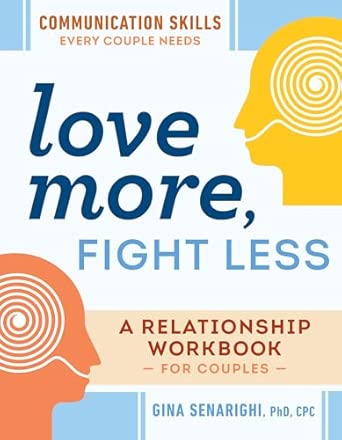 | Best Workbook Format | Format: Workbook with exercises | Focus: Couple communication and conflict resolution | Approach: Practical skill-building exercises | VIEW LATEST PRICE | See Our Full Breakdown |
| The Seven Principles for Making Marriage Work: A Practical Guide from the Country’s Foremost Relationship Expert |  | Best Research-Backed Pick | Format: Trade paperback guide | Focus: Marriage strengthening and divorce prevention | Approach: Research-based principles with exercises | VIEW LATEST PRICE | See Our Full Breakdown |
| His Needs, Her Needs: Making Romantic Love Last |  | Best for Long-Married Couples | Format: Paperback advice book | Focus: Ten emotional needs and sustaining romantic love | Approach: Clinical counselor framework | VIEW LATEST PRICE | See Our Full Breakdown |
| Attached: The New Science of Adult Attachment and How It Can Help You Find—and Keep—Love |  | Best for Understanding Your Patterns | Format: Trade paperback | Focus: Adult attachment styles and partner dynamics | Approach: Science-based theory with practical interpretation | VIEW LATEST PRICE | See Our Full Breakdown |
| relationship advice book | Format | Approach | Primary audience | Core framework |
|---|---|---|---|---|
| The 5 Love Languages: The Secr | Paperback, Kindle, Audiobook | Practical psychology with faith-influenced framing | Couples and general readers | Five love languages |
| The Relationship Cure: A 5-Ste | Paperback, Kindle, Audiobook | Research-based with practical exercises | General readers, parents, couples | 5-step strengthening process |
| How to Be an Adult in Relation | Paperback, Kindle, Audiobook | Mindfulness and emotional maturity | Individuals, solo readers | Five keys to mindful loving |
| Getting the Love You Want: A G | Paperback, Kindle, Audiobook | Structured couples exercises | Committed couples | Imago relationship therapy |
| Free Yourself from Anxious Att | Paperback, Kindle | Practical strategies for secure attachment | Anxiously attached individuals | Attachment theory, trauma-informed healing |
| Love More | Workbook with exercises | Practical skill-building exercises | — | — |
| The Seven Principles for Makin | Trade paperback guide | Research-based principles with exercises | — | — |
| His Needs | Paperback advice book | Clinical counselor framework | — | — |
| Attached: The New Science of A | Trade paperback | Science-based theory with practical interpretation | — | — |
More Details on Our Top Picks
The 5 Love Languages: The Secret to Love That Lasts
This pick earns the top spot because it solves the most common relationship problem — misread expressions of love — with a framework simple enough for any couple to apply the same week they read it. Compared with Getting the Love You Want, which asks couples to do structured therapeutic work together, this book functions more like a shared vocabulary you can reference in daily conversation. The five-language framework gives readers a fast diagnostic for why thoughtful gestures sometimes land flat. The tradeoff is depth: readers dealing with anxious attachment patterns will get more from Free Yourself from Anxious Attachment, and the book’s faith-adjacent framing and heterosexual default examples won’t resonate with everyone.
Pros:- Extremely accessible framework that both partners can learn quickly
- Immediately actionable — improves everyday communication without therapy
- Widely applicable to partners, kids, and family members
- Short enough to finish and discuss within a week
Cons:- Conceptually thin for deeper issues like attachment wounds or chronic conflict
- Examples lean traditional and won’t fit every couple’s dynamic
Best for: Couples in stable relationships who keep missing each other’s signals and want a quick, shareable framework
Not ideal for: Readers working through trauma or attachment anxiety — the framework is too light for that work
- Format:Paperback, Kindle, Audiobook
- Primary audience:Couples and general readers
- Core framework:Five love languages
- Approach:Practical psychology with faith-influenced framing
- Reading difficulty:Beginner-friendly
- Best used:Early-stage or stable couples wanting better daily connection
Our verdict“If you want one book that changes how you and your partner communicate this month, this is the one to start with.”
The Relationship Cure: A 5-Step Guide to Strengthening Your Marriage, Family, and Friendships
Most books in this roundup aim narrowly at romantic partners — His Needs, Her Needs and Getting the Love You Want both assume a couple. This one stands out for treating marriage, parenting, and friendship as skills built from the same foundation, which makes it the rare guide a whole family can use. The five-step process gives structure where competitors offer anecdotes, and its research grounding (the author’s bids-and-turns research) explains why small daily moments matter more than grand gestures. The compromise: compared with the punchier 5 Love Languages, parts of it feel more theoretical and slower to pay off, so impatient readers may stall mid-way.
Pros:- Applies to every relationship type, not just couples
- Structured 5-step method rather than vague principles
- Backed by decades of clinical research on connection
- Strong on everyday micro-interactions that other books overlook
Cons:- More theoretical pacing than hands-on workbooks like Love More, Fight Less
- Broad scope means less depth on any single relationship
Best for: Readers whose struggles span beyond romance — with parents, kids, coworkers, or friends
Not ideal for: Someone seeking a quick fix for a struggling marriage — the breadth dilutes the romantic focus
- Format:Paperback, Kindle, Audiobook
- Primary audience:General readers, parents, couples
- Core framework:5-step strengthening process
- Approach:Research-based with practical exercises
- Reading difficulty:Moderate
- Best used:Whole-family relationship improvement
Our verdict“This is the pick for readers who want one skill set that improves every relationship in their life, not just their marriage.”
How to Be an Adult in Relationships: The Five Keys to Mindful Loving
Where most entries here — Attached included — diagnose relationship patterns, this book asks the harder question: are you showing up as a mature partner? Its five keys center on mindfulness and emotional accountability, making this the strongest pick for solo readers rather than couples working together. Compared with The Relationship Cure, it goes deeper inward but covers fewer relationship types. The payoff is real for people who repeat the same conflicts; the cost is pacing. This is reflective, gradual reading — readers wanting scripts and exercises will find Love More, Fight Less more immediately useful, and the introspective tone can feel slow without a journaling habit.
Pros:- Frames relationship health as personal responsibility, not partner-blame
- Mindfulness-based approach differs from technique-heavy competitors
- Works for single readers without a partner to involve
- Durable principles that apply across life stages
Cons:- Slow, reflective pace — few quick wins or scripts
- Requires genuine self-honesty to deliver value
Best for: Individuals who recognize their own patterns sabotage relationships and want to do the inner work alone
Not ideal for: Couples in active crisis who need communication tools now, not months of self-reflection
- Format:Paperback, Kindle, Audiobook
- Primary audience:Individuals, solo readers
- Core framework:Five keys to mindful loving
- Approach:Mindfulness and emotional maturity
- Reading difficulty:Moderate to reflective
- Best used:Personal growth between or during relationships
Our verdict“Choose this if the common denominator in your failed relationships is a pattern you’re ready to examine.”
Getting the Love You Want: A Guide for Couples, Third Edition
This is the heavyweight of the batch. Built on Imago therapy, it digs into how childhood wounds shape partner selection and conflict — considerably deeper territory than The 5 Love Languages covers. The third edition updates the classic with a stronger emphasis on safety and connection, and its structured exercises are designed for both partners to work through together, unlike the solo focus of How to Be an Adult in Relationships. That’s also the tradeoff: this book underperforms if only one partner reads it, and the exercises demand real emotional commitment. Couples wanting lighter maintenance should start elsewhere; those ready to understand why they fight the same fight will find this transformative.
Pros:- Explains root causes of recurring conflict, not just symptoms
- Concrete partner exercises, not just theory
- Updated third edition reflects current therapeutic practice
- Decades of clinical success behind the Imago method
Cons:- Demands significant time and emotional effort from both partners
- Heavy for couples seeking light maintenance rather than repair
Best for: Committed couples who fight in repeating cycles and are both willing to do structured therapeutic exercises
Not ideal for: Singles or couples where one partner won’t participate — the method depends on mutual engagement
- Format:Paperback, Kindle, Audiobook
- Edition:Third edition
- Primary audience:Committed couples
- Core framework:Imago relationship therapy
- Approach:Structured couples exercises
- Reading difficulty:Moderate to intensive
- Best used:Long-term couples in repair mode
Our verdict“If you and your partner are both ready to dig into why your conflicts keep repeating, this is the most thorough couples manual here.”
Free Yourself from Anxious Attachment: Your Guide to Secure Relationships
Attached is the famous book on attachment theory, but it excels at explaining your style rather than changing it. This pick makes the list because it’s built for action: rebuilding trust, setting boundaries, and healing anxious patterns. Compared with How to Be an Adult in Relationships, it targets a narrower but sharper problem — the partner who over-texts, spirals over silence, and merges too fast — with concrete strategies for each behavior. The tradeoff is focus: readers without anxious attachment get little from it, and the healing-from-trauma sections add length that makes it a commitment rather than a quick read. It’s also newer, so it lacks the decades of reader validation behind the classics here.
Pros:- Directly targets anxious attachment with specific strategies
- Covers boundaries, trust, and trauma healing in one place
- More action-oriented than theory-first attachment books
- Emphasizes lasting personal change over partner selection
Cons:- Narrow scope — useless if anxiety isn’t your pattern
- Longer and denser than quick-read alternatives
- Newer title with less established track record than classics
Best for: People who identify as anxiously attached and want targeted strategies for security, boundaries, and trust
Not ideal for: Avoidantly attached readers or those wanting general relationship advice — the narrow focus won’t serve them
- Format:Paperback, Kindle
- Primary audience:Anxiously attached individuals
- Core framework:Attachment theory, trauma-informed healing
- Approach:Practical strategies for secure attachment
- Key topics:Boundaries, trust, confidence, trauma recovery
- Reading difficulty:Moderate
- Best used:Breaking anxious dating and relationship cycles
Our verdict“This is the choice if anxious attachment — not general communication — is what’s actually wrecking your relationships.”
Love More, Fight Less: Communication Skills Every Couple Needs
Love More, Fight Less stands out in this lineup for being the only option built entirely around doing rather than reading. Where The Seven Principles for Making Marriage Work explains the research behind conflict, this workbook hands you actual communication exercises to practice between arguments, which is what couples stuck in repeating fights usually need. Compared with The 5 Love Languages, which teaches a framework for understanding your partner, this one drills the skills themselves — how to phrase complaints, how to listen, how to de-escalate. The tradeoff is real: it demands active participation from both partners, so a reluctant spouse makes this book almost useless. It also sits lighter on research than the Gottman-backed picks, and thin format details mean you’re buying on faith somewhat. For couples who want homework instead of theory, it earns its spot.
Pros:- Exercise-driven format that turns reading into practice
- Directly targets recurring conflict patterns
- Accessible for couples with no prior relationship-book background
- Skills apply immediately rather than after finishing the whole book
Cons:- Requires consistent effort from both partners to work
- Lighter on scientific grounding than research-based alternatives
- Sparse format and length details make it hard to gauge depth before buying
Best for: Couples who repeat the same arguments and want structured exercises to practice together, not just concepts to read about
Not ideal for: Couples where one partner won’t participate — the exercises collapse without buy-in from both sides
- Format:Workbook with exercises
- Focus:Couple communication and conflict resolution
- Approach:Practical skill-building exercises
- Audience:Couples at any relationship stage
- Participation Required:Yes — both partners ideally
- Reading Style:Interactive, not narrative
Our verdict“Pick this if you and your partner will actually do the homework — it’s the most hands-on path to better communication in this roundup.”
The Seven Principles for Making Marriage Work: A Practical Guide from the Country’s Foremost Relationship Expert
Among all nine books in this roundup, The Seven Principles for Making Marriage Work carries the most research credibility, drawing on decades of observational studies of real marriages. Compared with His Needs, Her Needs, which relies more on clinical intuition, this one gives you principles grounded in what actually predicts divorce versus longevity — a meaningful difference for skeptical readers who want evidence, not anecdotes. It also goes broader than Love More, Fight Less, covering friendship, shared meaning, and repair attempts rather than communication drills alone. The drawbacks: it’s marriage-centric, so unmarried or dating readers will find less directly applicable material, and the density can feel more like a course than casual reading. Some couples also find the exercises assume a relatively functional baseline rather than a crisis.
Pros:- Grounded in decades of observational relationship research
- Covers friendship and connection, not just conflict tactics
- Practical exercises embedded throughout the principles
- Written by a widely recognized authority in the field
Cons:- Marriage-focused framing limits usefulness for dating readers
- Denser and longer than lighter picks like The 5 Love Languages
- Better suited to stable couples than those in active crisis
Best for: Married couples and engaged pairs who want evidence-based guidance and are willing to work through a substantial, structured book
Not ideal for: Casual readers wanting a light, quick read, or dating couples who don’t need marriage-specific framing yet
- Format:Trade paperback guide
- Focus:Marriage strengthening and divorce prevention
- Approach:Research-based principles with exercises
- Audience:Married and committed couples
- Author Background:Academic relationship researcher
- Depth:Substantial and structured
Our verdict“This is the pick for married couples who want expert-backed principles over pop-psychology shortcuts.”
His Needs, Her Needs: Making Romantic Love Last
His Needs, Her Needs fills a niche the other picks don’t: it’s specifically about rekindling romantic love in long marriages rather than fixing communication or understanding attachment. Its framework of ten emotional needs gives couples a concrete vocabulary for why passion fades — something Attached approaches only through theory and Love More, Fight Less skips entirely. Compared with The Seven Principles, it’s warmer and more accessible, less like a seminar and more like a conversation with a counselor. The honest tradeoffs: the heteronormative framing won’t land for every couple, and the advice leans on clinical experience rather than hard data, which readers who loved the Gottman book’s rigor may find frustrating. It also assumes both partners are willing to examine their own contributions, so one-sided readers get limited value.
Pros:- Gives couples a concrete vocabulary for unmet emotional needs
- Focused specifically on sustaining romantic passion, not just reducing conflict
- Approachable, counselor-style voice that’s easy to read together
- Directly addresses affairs of the heart common in long marriages
Cons:- Traditional gender framing limits relevance for many modern couples
- Relies on clinical anecdote rather than research data
- Both partners must engage for the framework to work
Best for: Long-married heterosexual couples who feel the romance has cooled and want a practical framework for rebuilding intimacy
Not ideal for: Same-sex couples or readers who want data-driven analysis — the framing and evidence base will both feel dated
- Format:Paperback advice book
- Focus:Ten emotional needs and sustaining romantic love
- Approach:Clinical counselor framework
- Audience:Established married couples
- Participation Required:Yes — both partners
- Tone:Warm and conversational
Our verdict“Choose this if you’re in a long marriage missing the spark and want a warm, practical roadmap — but check whether its framing fits your relationship.”
Attached: The New Science of Adult Attachment and How It Can Help You Find—and Keep—Love
Attached is the intellectual anchor of this roundup — the book that explains why you relate the way you do, not just what to do about it. Where Love More, Fight Less teaches skills and His Needs, Her Needs offers a needs checklist, this one maps your attachment style onto your relationship history, which many readers describe as genuinely reframing their love lives. It’s especially valuable for anxious daters stuck in push-pull dynamics; compared with Free Yourself from Anxious Attachment, it’s broader, covering secure, anxious, and avoidant types rather than one pattern. The tradeoffs are clear: it leans heavily on theory and classification, with fewer step-by-step exercises than the workbooks here, and the science sections can feel academic for readers who want quick fixes. It’s a diagnosis more than a treatment plan.
Pros:- Backed by decades of attachment research, not pop opinion
- Provides a genuine framework for understanding repeated relationship patterns
- Especially illuminating for anxious-avoidant couple dynamics
- Useful for singles choosing partners, not just existing couples
Cons:- Theory-heavy sections can feel academic for casual readers
- Fewer practical exercises than workbook-style competitors
- Some readers want more guidance on changing their style once identified
Best for: Analytically minded readers and anxious daters who keep repeating painful patterns and want to understand the root cause
Not ideal for: Readers who want immediate exercises and scripts — this explains patterns more than it coaches behavior
- Format:Trade paperback
- Focus:Adult attachment styles and partner dynamics
- Approach:Science-based theory with practical interpretation
- Audience:Singles and couples seeking self-understanding
- Framework:Secure, anxious, and avoidant attachment types
- Depth:Research-grounded and moderately dense
Our verdict“This is the book for readers who want self-understanding before self-help — identify your pattern here, then pick a workbook to act on it.”

How We Picked
My ranking logic starts with one question: does this book actually change behavior, or just describe problems? I weighted books with concrete exercises, scripts, and self-assessments above those that only offer theory, because readers of relationship advice tend to already know their relationship is struggling — they need tools, not diagnosis. I also judged evidentiary grounding: titles built on clinical research or large-scale observation (Gottman’s lab work, attachment science) ranked higher than books resting on a single author’s framework or anecdote.
The second tier of criteria was audience fit and accessibility. A book that works for a pre-commitment dater fails a married couple of twenty years, so I evaluated each title against a specific reader situation rather than scoring them all on one generic scale. Finally, I factored in readability and tone — dense clinical prose that never gets finished helps no one, but oversimplified pop frameworks earned lower marks for shelf-life. Books that balanced rigor with usability claimed the top spots.
| relationship advice book | Format | Primary audience | Reading difficulty | Best used |
|---|---|---|---|---|
| The 5 Love Languages: The Secr | Paperback, Kindle, Audiobook | Couples and general readers | Beginner-friendly | Early-stage or stable couples wanting better daily connection |
| The Relationship Cure: A 5-Ste | Paperback, Kindle, Audiobook | General readers, parents, couples | Moderate | Whole-family relationship improvement |
| How to Be an Adult in Relation | Paperback, Kindle, Audiobook | Individuals, solo readers | Moderate to reflective | Personal growth between or during relationships |
| Getting the Love You Want: A G | Paperback, Kindle, Audiobook | Committed couples | Moderate to intensive | Long-term couples in repair mode |
| Free Yourself from Anxious Att | Paperback, Kindle | Anxiously attached individuals | Moderate | Breaking anxious dating and relationship cycles |
| Love More | Workbook with exercises | — | — | — |
| The Seven Principles for Makin | Trade paperback guide | — | — | — |
| His Needs | Paperback advice book | — | — | — |
| Attached: The New Science of A | Trade paperback | — | — | — |
Factors to Consider When Choosing Relationship Advice Books
Choosing a relationship book is less about finding the “best” title and more about matching the book to your situation, your reading habits, and whether a partner will read alongside you. Before buying, think through the following factors.Match the Book to Your Actual Problem
The biggest mistake buyers make is grabbing the most famous title rather than the one that addresses their specific issue. A couple that fights constantly about money and chores needs a communication-skills book, not an attachment-theory deep-dive — and vice versa for someone who sabotages every relationship three months in. Ask yourself whether your problem is behavioral (how you argue), pattern-based (who you pick and why you leave), or structural (long-term drift and disconnection). These three problems call for entirely different books, and buying the wrong type is the most common reason a relationship book ends up half-finished on a nightstand. When in doubt, books with diagnostic questionnaires early on help you self-sort before you invest the reading hours.
Solo Reading vs. Couples Reading
Some books are designed as shared experiences with partner exercises and discussion prompts, and they lose most of their value when only one person reads them. Others — particularly the attachment and self-work titles — are written for the individual and can genuinely improve a relationship without your partner ever opening the cover. Be honest about whether your partner will actually read a book with you before buying a couples-workbook style title. If the answer is uncertain, start with a solo-oriented book so you’re not waiting on someone else’s participation to make progress. A common trap is buying a couples book, reading it alone, and then resenting a partner who never joined in — which creates the exact dynamic the book was meant to fix.
Research-Backed vs. Framework-Driven
Books in this category fall into two camps: those built on clinical data and longitudinal research, and those built around a memorable framework an author developed through practice. Framework books are faster to read, easier to discuss at dinner, and genuinely useful for building shared vocabulary. Research books take longer but tend to explain why relationships fail, which makes their advice more adaptable to situations the author never anticipated. Neither approach is inherently better — but if you’ve already read a framework book and still feel stuck, the answer is usually to move up the rigor ladder rather than buy another framework title. Check the author’s credentials and whether the book cites studies or relies on anecdotes from their practice.
Watch for Dated Gender Assumptions
Several best-selling relationship books were written decades ago, and some carry rigid, heteronormative assumptions about what men and women want. These frameworks can still contain useful ideas, but readers in same-sex relationships or non-traditional partnerships may find themselves constantly translating the advice to fit their situation, which dilutes its impact. Newer titles and updated editions tend to use more neutral language and attachment-based framing that applies across relationship types. If a book’s core argument depends on innate gender differences rather than attachment styles or communication patterns, treat it as one perspective rather than a rulebook. Reading publication date and edition number before buying tells you a lot about the framing you’ll encounter.
Commitment Level and Format Preferences
Be realistic about how much effort you’ll invest. Workshop-style books with nightly exercises and weekly check-ins only work for readers who will actually do the homework — an unfinished exercise book helps less than a completed short read. Similarly, consider whether you want prescriptive scripts (what to say in a fight), conceptual understanding (why you react the way you do), or reflective journaling. Audio editions work well for concept-driven books but poorly for exercise-heavy ones, where you’ll want the print version to write in. A cheap book you finish beats an expensive one you abandon, so weight format and length as heavily as reputation.
Frequently Asked Questions
Should I read Attached or Free Yourself from Anxious Attachment if I struggle with anxious attachment?
Attached is the better first read because it explains the full attachment framework — anxious, avoidant, and secure — so you understand not just your own pattern but your partners’ as well. That broader context helps you recognize dynamics in early dating, which is where anxious attachment does the most damage. Free Yourself from Anxious Attachment is narrower and more prescriptive, functioning almost like a workbook for people who already know their pattern and want targeted strategies rather than theory. If you’ve never read about attachment styles before, start with Attached; if you’ve read it and still feel stuck in the anxious loop, the narrower book is the logical next step. Reading them in that order avoids redundancy, since they cover overlapping ground.
Do both partners need to read the book for it to work?
It depends heavily on which book you choose. Exercise-driven titles like The Seven Principles for Making Marriage Work and Getting the Love You Want are structured around joint activities, so one partner reading them captures maybe half the value. However, self-work books like How to Be an Adult in Relationships are explicitly written for individual readers and can shift a relationship dynamic when only one person changes their responses. There’s also a middle path: one partner reads the book, applies the communication tools, and the visible change often draws the other partner in naturally. If your partner is resistant to the idea of “relationship books,” start with a solo title rather than presenting them with a couples homework assignment they’ll resent.
Is The 5 Love Languages worth reading if I already know my love language?
If you’ve taken the free online quiz and understand the five categories, you’ve absorbed the core concept — the book adds depth mainly through examples and the discussion of how mismatched languages create resentment. Where the book earns its price is as a shared reading experience: couples who read it together often report it gives them neutral vocabulary for expressing needs without accusation, which a quiz alone doesn’t do. As a solo read for someone already familiar with the framework, it’s largely redundant, and you’d get more from a research-based title covering new ground. If your partner won’t read it, you can capture most of the value by simply discussing each other’s quiz results together. Treat it as an entry point, not a destination.
Which book is best if we’re not married — just dating or engaged?
For daters, Attached is the clear front-runner because it focuses on partner selection and early-relationship dynamics rather than repairing an established marriage. Marriage-centric books like His Needs, Her Needs and The Seven Principles assume a committed long-term partnership, and much of their advice about repair and shared ritual won’t land if you’re still deciding whether this relationship should continue. Engaged couples benefit most from Getting the Love You Want or Love More, Fight Less, which build skills you’ll need immediately in marriage rather than diagnosing problems you don’t have yet. The general rule: the earlier the relationship stage, the more the book should focus on attachment and communication, and the later the stage, the more it should focus on maintenance and repair.
Are the older classics still relevant or should I only buy recent titles?
Age matters less than evidentiary basis. Attached and The Seven Principles hold up well because their foundations — attachment theory and observational research — have been validated repeatedly since publication. Books from the 1980s and earlier built around fixed gender roles age worse, not because their authors were wrong for their era, but because modern relationships rarely match their assumptions. A useful test: read a sample page and ask whether the advice would still make sense for a same-sex couple or a relationship with reversed traditional roles. If the answer is no, you can still extract value, but you’ll be translating constantly. Recent editions often soften dated language, so check whether you’re buying the original or a revision before deciding.
Conclusion
For best overall, The Seven Principles for Making Marriage Work earns the top spot for committed couples — it combines research credibility with practical exercises, and its advice holds up across decades of relationships. For best value, The 5 Love Languages delivers the most relationship insight per dollar and per hour of reading, provided you use it as a conversation starter rather than a complete fix. The best premium-level investment is Getting the Love You Want — its workshop-style depth costs real effort but offers the most thorough couples transformation on this list. For beginners, start with Attached if you’re dating or The 5 Love Languages if you’re partnered; both are gateway books that make denser titles easier to absorb later. For specific needs: choose Free Yourself from Anxious Attachment for anxious-pattern work, Love More, Fight Less for recurring conflict, The Relationship Cure for family and friendship repair beyond romance, How to Be an Adult in Relationships for solo emotional-growth work, and His Needs, Her Needs if you want a traditional, faith-adjacent framework. Whatever you pick, the book you actually finish and discuss beats the perfect one sitting unread.
Halloween Picks
halloween
As an affiliate, we earn on qualifying purchases.