Relationship communication tools come in three main formats — guided workbooks, skill-building books, and conversation card decks — and the right choice depends on how you and your partner actually learn. For most couples, Nonviolent Communication: A Language of Life stands out as the best overall pick because it teaches a transferable framework you can apply in any conflict, not just the exercises on the page. Couples who want structure without a therapist should look at the 12-Week Relationship Therapy Workbook, while partners who dread “homework” will connect more easily with The Skin Deep’s 199 question cards. The core tradeoff in this category is depth versus approachability: the most rigorous programs demand real time commitment, while the gentlest entry points may not resolve deeper conflict patterns. Continue reading for the full breakdown of all twelve tools and who each one suits best.

Get gifts for the two of you delivered free with Prime
- Fast, free delivery on millions of items
- Prime Video, Amazon Music and more included
- Member-only deals all year
Key Takeaways
- Books that teach a repeatable framework (Nonviolent Communication, The Talk Book) outperformed exercise collections for long-term change, because couples could apply the skills in real arguments rather than only during scheduled workbook time.
- Time commitment was the biggest differentiator: programs ranged from 10 minutes a day (Communication Skills for Couples Made Simple) to 12 weeks of structured work, and the best pick depends on how much consistency a couple can realistically sustain.
- Card decks like The Skin Deep Healing Edition solved the motivation problem that sinks most workbooks — no reading or writing required — but they work better for rebuilding emotional closeness than for changing how couples argue.
- Several workbooks overlapped heavily in content; the 8-week and 12-week therapy workbooks covered similar exercises, so choosing between them came down to pacing, tone, and depth rather than substance.
- Conflict-focused guides (Communicate Your Feelings Without Starting a Fight, Love More Fight Less) are better suited to couples in active conflict patterns, while empathy-focused picks suit couples who fight rarely but feel disconnected.
| The Skin Deep Healing Edition – 199 Question Cards to Heal Strained Relationships |  | Best Card-Deck Format | Number of Cards: 199 | Format: Physical question card deck | Purpose: Healing strained relationships, improving communication | VIEW LATEST PRICE | See Our Full Breakdown |
| 8-Week Couples Therapy Workbook: Essential Strategies to Connect, Improve Communication, and Strengthen Your Relationship |  | Best Structured Program | Format: Spiral-bound workbook | Program Length: 8 weeks | Focus: Connection, communication, relationship strength | VIEW LATEST PRICE | See Our Full Breakdown |
| Healthy Communication With Your Partner: Discover the Benefits of Communicating with Emotional Intelligence, Empathy & Effective Listening Skills to Turn Conflict into Connection |  | Best for Emotional Intelligence | Format: Book (reading-focused) | Core Topics: Emotional intelligence, empathy, effective listening | Primary Outcome: Turning conflict into connection | VIEW LATEST PRICE | See Our Full Breakdown |
| 12-Week Relationship Therapy Workbook for Couples | 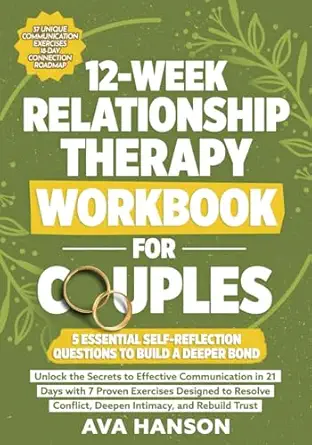 | Best for Rebuilding Trust | Format: Workbook | Program Length: 12 weeks with daily exercises | Core Focus: Communication, conflict resolution, intimacy, trust rebuilding | VIEW LATEST PRICE | See Our Full Breakdown |
| The Talk Book: With Six Prize-Winning Talk Tools That Strengthen Relationships and Repair Communication Breakdowns |  | Best Classic Framework | Format: Book (framework-based) | Core Content: Six prize-winning talk tools | Primary Outcome: Strengthening relationships, repairing communication breakdowns | VIEW LATEST PRICE | See Our Full Breakdown |
| Nonviolent Communication: A Language of Life |  | Best Foundational Framework | Format: Print and digital book | Approach: Compassionate communication framework (observations, feelings, needs, requests) | Structure: Concept-based chapters with example dialogues | VIEW LATEST PRICE | See Our Full Breakdown |
| The CBT Couples Toolbox: Over 45 Exercises to Improve Communication, Navigate Problems and Build Strong Relationships | 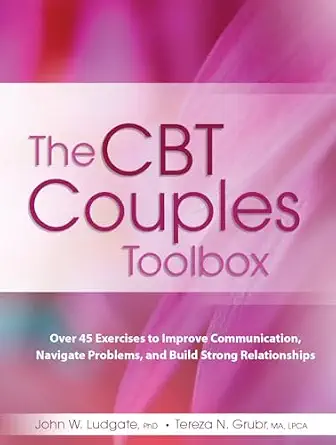 | Best Exercise Library | Format: Paperback workbook | Number of Exercises: 45+ | Approach: Cognitive-behavioral therapy techniques | VIEW LATEST PRICE | See Our Full Breakdown |
| Practical At-Home Couples Therapy Workbook |  | Best for Deep Repair Work | Format: Workbook | Approach: At-home therapy-style guided exercises | Focus Areas: Honest communication, intimacy restoration, conflict repair | VIEW LATEST PRICE | See Our Full Breakdown |
| Communication Skills for Couples Made Simple: 7-Step Workbook to Build Trust, Resolve Conflicts, Master Active Listening, and Create a Fulfilling Relationship in Just 10 Minutes a Day |  | Best for Busy Couples | Format: Workbook | Daily Time Required: 10 minutes | Structure: 7-step progressive program | VIEW LATEST PRICE | See Our Full Breakdown |
| Communicate Your Feelings (Without Starting a Fight): What to Say and What Not to Say to Your Partner |  | Best Quick-Reference Guide | Format: Print and digital book | Approach: Phrase-level communication coaching | Structure: What to say / what not to say guidance | VIEW LATEST PRICE | See Our Full Breakdown |
| Love More, Fight Less: Communication Skills Every Couple Needs | 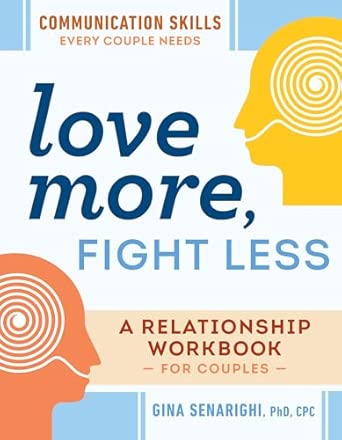 | Best Traditional Publisher Pick | Format: Print/digital workbook | Publisher: Trade publisher (mainstream imprint) | Focus: Communication skills, conflict resolution, intimacy | VIEW LATEST PRICE | See Our Full Breakdown |
| Couples Communication Workbook: 20 Minutes a Day for 12 Days to Improve Listening, Resolve Conflicts, and Strengthen Your Relationship |  | Best Short-Commitment Program | Format: Guided workbook | Program length: 12 days | Daily time required: 20 minutes | VIEW LATEST PRICE | See Our Full Breakdown |
| relationship communication tool | Format | Structure |
|---|---|---|
| The Skin Deep Healing Edition | Physical question card deck | — |
| 8-Week Couples Therapy Workboo | Spiral-bound workbook | — |
| Healthy Communication With You | Book (reading-focused) | — |
| 12-Week Relationship Therapy W | Workbook | — |
| The Talk Book: With Six Prize- | Book (framework-based) | — |
| Nonviolent Communication: A La | Print and digital book | Concept-based chapters with example dialogues |
| The CBT Couples Toolbox: Over | Paperback workbook | Modular, self-directed exercise library |
| Practical At-Home Couples Ther | Workbook | Guided progressive exercises |
| Communication Skills for Coupl | Workbook | 7-step progressive program |
| Communicate Your Feelings | Print and digital book | What to say / what not to say guidance |
| Love More | Print/digital workbook | Self-paced exercises and insights |
| Couples Communication Workbook | Guided workbook | Daily exercises with fixed schedule |
More Details on Our Top Picks
The Skin Deep Healing Edition – 199 Question Cards to Heal Strained Relationships
Most relationship communication tools on this list ask you to read and work through chapters, but The Healing Edition flips the format: 199 question cards that get you talking within minutes of opening the box. This pick makes the most sense for couples who have drifted apart and need prompts to reopen emotional doors — the cards cover shared memories, unspoken feelings, and future goals in a way that feels guided rather than forced. Compared with the 8-Week Couples Therapy Workbook, it demands far less structure and time commitment, though it sacrifices the depth a workbook’s exercises provide. The tradeoff is real: this deck asks for genuine vulnerability, and partners who aren’t ready to go deep may find the questions uncomfortable. It also won’t appeal to anyone shopping for a lighthearted game-night activity.
Pros:- Prompt-based format removes the awkwardness of initiating hard talks
- 199 cards span emotions, memories, and goals for varied conversations
- Works beyond romantic partners — friends and family can use it too
- No reading or homework required before starting
Cons:- Requires genuine willingness to be vulnerable from both people
- No structured framework or professional guidance behind the questions
- Less depth than workbook-based alternatives
Best for: Couples or family members working through strain or distance who want a low-prep, prompt-driven way to reopen difficult conversations
Not ideal for: Couples wanting casual, fun conversation starters — these questions are emotionally weighty by design
- Number of Cards:199
- Format:Physical question card deck
- Purpose:Healing strained relationships, improving communication
- Suitable For:Couples, friends, family
- Topics Covered:Emotions, shared memories, goals
- Time Commitment:Self-paced, per-session
Our verdict“Choose this deck if your relationship needs conversation restarted tonight, not a curriculum.”
8-Week Couples Therapy Workbook: Essential Strategies to Connect, Improve Communication, and Strengthen Your Relationship
Where The Healing Edition cards offer spontaneity, this workbook offers an eight-week roadmap — and that structure is its whole value proposition. Couples who keep starting repair attempts and losing momentum will find the week-by-week progression keeps both partners accountable in a way prompt cards can’t. The exercises target communication habits directly, and the spiral-bound format lays flat, a small detail that makes actually writing in it easier than a standard paperback like Healthy Communication With Your Partner. Compared with the 12-Week Relationship Therapy Workbook, it’s a shorter, less demanding commitment, which suits couples unsure whether they’ll stick with a full three-month program. The honest drawback: it only works if both partners engage. Buying it for a reluctant partner is a common way this purchase disappoints, and there’s little guidance included for what to do when an exercise stalls.
Pros:- Eight-week structure creates momentum and accountability
- Practical exercises rather than abstract theory
- Spiral binding makes it easy to write in during sessions
- Shorter commitment than 12-week alternatives
Cons:- Requires sustained buy-in from both partners over two months
- Limited supplementary materials or digital support
- No guidance for handling exercises that trigger conflict
Best for: Couples who want a clear, time-bound program they can follow together week by week without a therapist
Not ideal for: Couples where one partner is disengaged — the format collapses without joint participation
- Format:Spiral-bound workbook
- Program Length:8 weeks
- Focus:Connection, communication, relationship strength
- Content Type:Guided exercises and strategies
- User Level:Couples, self-directed
- Writing Space:In-book exercises
Our verdict“This is the pick for couples ready to do real weekly homework together with a finish line in sight.”
Healthy Communication With Your Partner: Discover the Benefits of Communicating with Emotional Intelligence, Empathy & Effective Listening Skills to Turn Conflict into Connection
This option stands out for its theory-first approach: instead of exercises or card prompts, it teaches the underlying skills — emotional intelligence, empathy, and active listening — that make communication work at all. That makes it a better starting point for readers who want to understand why their conversations go wrong, whereas workbooks like the 8-Week Couples Therapy Workbook assume you’ll learn through doing. Its central promise — turning conflict into connection — addresses the recurring-fight pattern that brings many couples shopping in the first place. The tradeoff is pacing: without structured exercises, readers must translate concepts into practice on their own, which takes self-discipline. It’s also best read solo and discussed later, so couples wanting a shared activity should look elsewhere. And the sprawling subtitle is a fair warning — this is a reading commitment, not a quick fix.
Pros:- Teaches root-cause skills like empathy and emotional intelligence
- Directly addresses turning recurring conflicts into connection
- Strong choice for individual growth within a relationship
- Concepts apply beyond romantic partnerships
Cons:- No structured exercises — application is left entirely to the reader
- Solo reading format doesn’t create shared couple time
- Dense material takes longer to pay off than card or workbook formats
Best for: Self-aware readers who want to understand the psychology of communication before practicing it with a partner
Not ideal for: Couples wanting a shared, hands-on activity — this is solo reading, not a joint workbook
- Format:Book (reading-focused)
- Core Topics:Emotional intelligence, empathy, effective listening
- Primary Outcome:Turning conflict into connection
- Usage Style:Individual reading and reflection
- Exercise Content:Strategy-based, minimal worksheets
- Best Pairing:Works well as a companion to a couples workbook
Our verdict“Read this first if you want to understand your communication patterns before fixing them with a partner.”
12-Week Relationship Therapy Workbook for Couples
This is the most ambitious program in the lineup — a twelve-week arc aimed at couples dealing with serious breaches: broken trust, chronic conflict, eroded intimacy. Compared with the 8-Week Couples Therapy Workbook, it goes deeper and longer, trading approachability for the kind of sustained work that trust repair genuinely requires. The daily exercise structure means progress happens between sessions too, not just during them, which separates it from book-format options like The Talk Book. This pick makes the most sense for couples who’ve already tried lighter tools — prompt decks, short workbooks — and found the problems persisting. The flip side is real: twelve weeks of engagement is a lot to ask, and half-finished programs can feel like another failed attempt, which carries its own emotional weight in a fragile relationship.
Pros:- Twelve-week depth suits serious trust and conflict repair
- Daily exercises keep momentum between weekly themes
- Covers communication, conflict, intimacy, and trust together
- More thorough than shorter 8-week or 12-day programs
Cons:- Large time and emotional commitment over three months
- Risk of another ‘failed attempt’ feeling if abandoned midway
- Better suited to couples already motivated, not ambivalent ones
Best for: Couples recovering from serious conflict or trust breakdowns who have already committed to long-term repair work
Not ideal for: Couples wanting a lighter tune-up — the length and intensity will feel excessive for minor friction
- Format:Workbook
- Program Length:12 weeks with daily exercises
- Core Focus:Communication, conflict resolution, intimacy, trust rebuilding
- Intensity Level:High — daily and weekly engagement
- Best Suited For:Couples in committed repair work
- User Level:Couples, self-directed
Our verdict“Reserve this for relationships that need deep repair, not routine maintenance.”
The Talk Book: With Six Prize-Winning Talk Tools That Strengthen Relationships and Repair Communication Breakdowns
In a roundup full of trendy workbooks, The Talk Book earns its place as the veteran pick — its six talk tools have been used long enough to prove they work beyond a marketing cycle. The framework-based approach differs from everything else here: rather than exercises or prompts, it teaches a small, memorable toolkit you can deploy mid-argument, which is exactly when most communication advice falls apart. Compared with Healthy Communication With Your Partner, which covers similar theory, this book’s advantage is practical memorability — six tools are recallable in the moment; thirty concepts are not. The tradeoffs are its age and lack of structure: there are no worksheets, no weekly plan, and some references feel dated next to modern workbooks like the 12-Week Relationship Therapy Workbook. Think of it as learning technique rather than following a program.
Pros:- Six-tool framework is simple enough to remember mid-conflict
- Proven track record over many years in print
- Specifically targets repairing communication breakdowns
- Works for relationships beyond couples, including family and work
Cons:- No exercises or program structure for couples wanting guided practice
- Older publication means dated examples and references
- Concepts require self-directed application
Best for: Readers who want a small, memorable set of communication techniques they can actually use during live arguments
Not ideal for: Couples who want guided structure and worksheets — this offers concepts, not a program
- Format:Book (framework-based)
- Core Content:Six prize-winning talk tools
- Primary Outcome:Strengthening relationships, repairing communication breakdowns
- Usage Style:Read and apply techniques in real conversations
- Exercise Content:None — concept-driven
- Publication History:Long-running backlist title
Our verdict“Pick this if you want a handful of durable techniques over a workbook curriculum.”
Nonviolent Communication: A Language of Life
Most workbooks in this category hand couples a set of exercises; this one teaches a complete language system that changes how conversations start in the first place. That difference matters: where the Couples Communication Workbook asks for 20 minutes a day of practice, this book builds a mental framework you carry into every interaction, at work and at home. Compared with Communicate Your Feelings, it goes deeper — less about specific phrases and more about the why behind conflict. The tradeoff is real: there are no fill-in-the-blank exercises, so couples who want structured homework may find it too abstract, and the philosophy can feel idealistic when emotions run high mid-argument.
Pros:- Teaches a transferable framework that applies to all relationships, not just romantic ones
- Backed by decades of use in mediation and therapy settings
- Explains the root causes of conflict, not just symptoms
- Accessible writing despite the depth of the ideas
Cons:- No structured exercises or worksheets for hands-on learners
- Language can feel stilted or unnatural until heavily practiced
Best for: Couples and individuals who want a deep, reusable communication philosophy rather than a short exercise program
Not ideal for: Couples in active crisis who need immediate, structured interventions — the ideas take time to internalize
- Format:Print and digital book
- Approach:Compassionate communication framework (observations, feelings, needs, requests)
- Structure:Concept-based chapters with example dialogues
- Best Use:Solo reading or shared discussion
- Skill Level:Beginner to advanced
- Scope:Personal and professional relationships
Our verdict“This is the pick for readers who want to understand communication at its roots rather than patch specific arguments.”
The CBT Couples Toolbox: Over 45 Exercises to Improve Communication, Navigate Problems and Build Strong Relationships
If the idea of a single linear workbook feels limiting, this 45+ exercise collection is the antidote. Rather than following one path — like the 8-Week Couples Therapy Workbook — it works as a toolbox you dip into based on what your relationship is struggling with this week. The cognitive-behavioral grounding gives it more clinical substance than lighter reads like Love More, Fight Less, which is a plus for couples who take problem-solving seriously. The flip side: a buffet requires appetite and discipline. Couples who don’t already know which skills they’re missing may feel overwhelmed by the sheer volume, and some exercises assume a willingness to do genuine reflective work between sessions.
Pros:- Enormous variety lets couples target their specific pain points
- CBT-based methods carry genuine therapeutic credibility
- Skippable structure means no pressure to work chronologically
- Strong emphasis on both communication and problem-solving skills
Cons:- Requires real commitment and follow-through to see results
- No single guided arc, which can leave uncertain couples unsure where to start
Best for: Self-directed couples who want targeted exercises they can match to specific recurring problems
Not ideal for: Overwhelmed or low-motivation couples — 45+ exercises with no guided sequence can stall momentum
- Format:Paperback workbook
- Number of Exercises:45+
- Approach:Cognitive-behavioral therapy techniques
- Structure:Modular, self-directed exercise library
- Focus Areas:Communication, conflict resolution, relationship strengthening
- Skill Level:Intermediate
Our verdict“Best for motivated couples who want depth and flexibility over a prescribed program.”
Practical At-Home Couples Therapy Workbook
Where Communication Skills for Couples Made Simple optimizes for speed, this workbook leans into the harder work: restoring intimacy and repairing conflict, not just improving day-to-day conversation. It reads like a therapy session broken into at-home steps, which sets it apart from lighter reads like Communicate Your Feelings — that book tells you what to say, while this one walks you through why disconnection happened and how to rebuild. Compared with the 12-Week Relationship Therapy Workbook, it’s less about a fixed timeline and more about honest, sometimes uncomfortable guided reflection. That’s exactly its tradeoff: couples expecting quick wins will find the pace demanding, and the exercises only pay off if both partners engage sincerely rather than coasting.
Pros:- Addresses intimacy and repair, not just conversation techniques
- Guided exercises replicate the feel of structured therapy sessions
- Works for couples who can’t access or afford formal counseling
- Honest-communication focus surfaces issues couples avoid
Cons:- Results demand sustained commitment from both partners
- Can feel heavy for relationships that only need light tuning
Best for: Couples working through real damage — distance, repeated conflict, or lost intimacy — who want therapy-style structure at home
Not ideal for: Couples wanting casual skill-building — this assumes significant issues and honest emotional effort from both people
- Format:Workbook
- Approach:At-home therapy-style guided exercises
- Focus Areas:Honest communication, intimacy restoration, conflict repair
- Structure:Guided progressive exercises
- Best Use:Couples working through strain or disconnection
- Skill Level:All levels, requires mutual buy-in
Our verdict“The right choice when the goal is repair, not just polish — provided both partners are all in.”
Communication Skills for Couples Made Simple: 7-Step Workbook to Build Trust, Resolve Conflicts, Master Active Listening, and Create a Fulfilling Relationship in Just 10 Minutes a Day
The 10-minute-a-day promise is the whole point here, and it’s a genuine differentiator. Compared with the Couples Communication Workbook‘s 20 minutes daily or the 8-Week Couples Therapy Workbook‘s longer program, this makes the lowest ask of any option in the roundup — the difference between a habit that survives a chaotic week and one that quietly dies. The 7-step structure gives anxious beginners a clear path, unlike the sprawling CBT Couples Toolbox. The tradeoff for brevity is depth: ten minutes covers active listening and basic conflict habits, but couples with entrenched patterns or deeper wounds will outgrow it fast and may need to graduate to a fuller workbook like the Practical At-Home Couples Therapy Workbook.
Pros:- Smallest daily time commitment of any workbook in this roundup
- Clear 7-step path removes guesswork for beginners
- Covers trust, conflict resolution, and active listening in one system
- Low-pressure format lowers the barrier to starting
Cons:- Brief sessions limit depth on any single topic
- Limited track record or review history to gauge real-world results
Best for: Time-strapped couples — new parents, dual-career households — who need a habit they can actually sustain
Not ideal for: Couples with deep-rooted conflict patterns — the format is too brief for serious repair work
- Format:Workbook
- Daily Time Required:10 minutes
- Structure:7-step progressive program
- Focus Areas:Trust, conflict resolution, active listening
- Best Use:Daily micro-practice for busy schedules
- Skill Level:Beginner
Our verdict“The best entry point for busy couples who need momentum more than mastery.”
Communicate Your Feelings (Without Starting a Fight): What to Say and What Not to Say to Your Partner
Not everyone wants a 12-week program — sometimes you just need to know what to say in the next conversation. This book is built for that moment: a phrase-level guide to expressing difficult feelings without triggering a blowup. Where Nonviolent Communication teaches a full philosophy, this cuts straight to do-say/don’t-say specifics, making it the fastest to deploy of anything in this roundup. It also works well as a companion — pairs nicely with the Practical At-Home Couples Therapy Workbook for between-session reference. The tradeoff: it treats symptoms, not causes. Readers hoping to understand why they shut down or lash out will need something with more scaffolding, and the conversational approach may feel surface-level for chronic, serious conflict.
Pros:- Immediate, usable scripts for real conversations
- Extremely fast read compared to full workbooks
- Directly targets the escalation problem most couples fight about
- Easy to revisit mid-conflict as a reference
Cons:- Phrase-level advice skips deeper emotional patterns
- Thin material for couples with serious or long-standing issues
Best for: Partners who freeze up or escalate during hard conversations and want ready-to-use phrasing tonight
Not ideal for: Couples seeking root-cause understanding or structured long-term work — this is tactical, not transformational
- Format:Print and digital book
- Approach:Phrase-level communication coaching
- Structure:What to say / what not to say guidance
- Focus Areas:Emotional expression, conflict avoidance
- Best Use:Quick reference before or during difficult conversations
- Skill Level:Beginner
Our verdict“A tactical phrasebook for the heat of the moment — grab it if you need words now, not a curriculum.”
Love More, Fight Less: Communication Skills Every Couple Needs
Among the workbooks in this roundup, this one stands out for its mainstream publishing pedigree, which typically means tighter editing, more polished exercise design, and a more consistent voice than self-published alternatives like the Couples Communication Workbook. Where Nonviolent Communication leans heavily into theory and philosophy, this option front-loads practical exercises, making it a better fit for couples who want to DO something rather than study a framework first.
The tradeoff is that it’s less prescriptive than the 12-day or 8-week programs elsewhere in this guide. There’s no day-by-day schedule, so couples who struggle with follow-through may drift. It also demand genuine participation from both partners — this isn’t a passive read, and buying it for a reluctant partner rarely works.
Pros:- Backed by a major publisher, so exercises are well-edited and professionally structured
- Practical, exercise-driven approach rather than dense theory
- Flexible pacing suits couples with unpredictable schedules
- Broader scope than single-focus books like Communicate Your Feelings (Without Starting a Fight)
Cons:- No set schedule or timeline, which can derail unmotivated couples
- Requires real buy-in and active participation from both partners
- Less depth on any single skill than specialized titles like Nonviolent Communication
Best for: Couples who want a well-edited, flexible workbook they can work through at their own pace rather than on a rigid schedule
Not ideal for: Couples who need strict structure and accountability — without a daily program, it’s easy to set this aside after week one
- Format:Print/digital workbook
- Publisher:Trade publisher (mainstream imprint)
- Focus:Communication skills, conflict resolution, intimacy
- Structure:Self-paced exercises and insights
- Audience:Couples at any relationship stage
- Approach:Practical exercises over theory
- Participation required:Both partners, active
Our verdict“This is the pick for couples who want a polished, professional-grade workbook they can tackle on their own terms.”
Couples Communication Workbook: 20 Minutes a Day for 12 Days to Improve Listening, Resolve Conflicts, and Strengthen Your Relationship
The 20-minutes-a-day-for-12-days format is this workbook’s entire identity, and it’s a smart one. Compared with the 8-Week Couples Therapy Workbook or the 12-Week Relationship Therapy Workbook in this guide, the commitment here is dramatically smaller — four total hours over two weeks versus months of homework. That makes it the least intimidating entry point for couples where one partner is skeptical about “doing a workbook at all.”
The tradeoff is depth. Twelve short sessions can introduce listening and conflict-resolution habits, but they can’t match the sustained practice of Love More, Fight Less or the clinical grounding of the CBT Couples Toolbox. It’s also a newer, thinly reviewed title with limited author and background information available, so buyers are taking something of a chance on quality.
Pros:- Total commitment of roughly four hours across 12 days — the lowest barrier in this roundup
- Daily structure builds momentum and makes follow-through easy
- Covers listening, conflict resolution, and connection in one compact package
- Short sessions fit easily into busy routines
Cons:- Very short program limits depth compared to 8- and 12-week alternatives
- Little available information on author credentials or content background
- Few customer reviews to validate quality
Best for: Busy or skeptical couples who want a low-commitment, time-boxed program they can finish before losing momentum
Not ideal for: Couples working through deep or long-standing conflict — the short format can’t replace a longer, more thorough program
- Format:Guided workbook
- Program length:12 days
- Daily time required:20 minutes
- Total time commitment:Approximately 4 hours
- Focus areas:Listening, conflict resolution, relationship strengthening
- Structure:Daily exercises with fixed schedule
- Audience:Couples, especially time-constrained ones
Our verdict“A low-risk starting point for couples who won’t commit to a months-long workbook but will show up for 20 minutes a day.”

How We Picked
I evaluated each tool against four buyer-relevant criteria: skill transferability (does it teach a framework couples can use mid-argument, or only during exercises), time demands (from 10 minutes a day to multi-week programs), accessibility for reluctant partners, and fit for different relationship states — rebuilding after a rupture versus maintaining an already-solid bond. A workbook with excellent content scores poorly if one partner will never open it, so approachability carried real weight.
I also compared redundancy across the lineup directly. Because at least six of these products cover overlapping ground — active listening, conflict de-escalation, repair strategies — the ranking rewards tools that differentiate meaningfully: a distinctive method, a lower barrier to entry, or a more realistic time commitment. Products that felt like interchangeable versions of the same workbook were ranked by execution quality and dropped lower when a stronger alternative covered the same territory.
Factors to Consider When Choosing Relationship Communication Tools
Before choosing a specific tool, it helps to understand what actually drives success with relationship communication products — and it is rarely the quality of the exercises alone.Match the Format to the Reluctant Partner
The most common failure point is not content quality — it is one partner disengaging. If either of you resists structured homework, a card deck will likely get more real use than a 12-week workbook, even if the workbook contains better material. Be honest about this before buying: couples routinely buy ambitious programs that sit unread, then conclude that “communication tools don’t work for us.” A mediocre tool both partners actually use beats an excellent tool one person abandons by week two. If you are the more motivated partner, choosing the gentler format is not settling — it is strategy.
Diagnose Your Problem Before Picking a Tool
“Communication problems” covers very different situations: frequent heated fights, emotional distance after a breach of trust, or a solid relationship that wants preventive maintenance. Conflict-heavy couples benefit most from scripts and de-escalation techniques — what to say and what not to say in the moment. Emotionally distant couples need questions that rebuild vulnerability and disclosure first. Couples who communicate fine but want insurance get more from a short skill-building book than an intensive therapy-style program. Buying the wrong category of tool is the second most common mistake in this space, after non-use.
Honest Time Budgeting
Manufacturers frame time commitments attractively — “10 minutes a day” — but real usage includes discussion time, disagreement about the exercises, and emotional processing afterward. A 20-minute daily exercise often becomes an hour-long conversation, which is the point, but only if your schedule allows it. Programs longer than 8 weeks have high drop-off rates, so unless you and your partner have already sustained a joint habit successfully, a shorter program you complete fully will outperform a longer one you abandon. Consider starting with a 12-day program as a trial before committing to a 12-week one.
Books That Teach Versus Workbooks That Guide
These two formats produce different outcomes. A book like Nonviolent Communication builds a mental model you carry into every conversation, including unplanned conflicts — the moment you actually need the skill. Workbooks build habits through repetition but often fail exactly when things get heated, because the structure is only present during exercise time. The strongest approach for many couples is one of each: a book for the underlying framework, a workbook or deck for structured practice. If you can only buy one, ask whether your fights are the problem (choose the book) or the disconnection between fights (choose the workbook).
When Self-Help Is Not Enough
No tool in this category replaces a licensed couples therapist, and knowing the limit matters. If there is active betrayal, contempt in arguments, or one partner has already emotionally checked out, a workbook can even delay needed professional help by creating a false sense of progress. The products here work best for couples with goodwill intact who lack skills — not couples lacking goodwill who have skills. A reasonable test: if you can complete two weeks of exercises together without a fight about the exercises themselves, self-guided tools are a sound bet. If not, that friction is information worth acting on.
Price Versus Depth in a Low-Cost Category
Most of these tools cost less than a single therapy copay, which changes the usual value calculus — the cheapest option is rarely the best value if it goes unused. That said, price differences within this lineup are small enough that fit should drive the decision, not savings. Where paying more does matter is bundled or premium-format products (expanded card decks, illustrated editions) that a reluctant partner is more likely to engage with. Spending a few extra dollars to raise the odds of actual use is the one place in this category where price meaningfully affects outcomes.
Frequently Asked Questions
Is a card deck or a workbook better for a partner who resists relationship exercises?
For a reluctant partner, a card deck is almost always the safer bet. It requires no reading, no writing, and no scheduled session — you can pull a card over coffee and have a conversation, which removes the two biggest friction points: feeling lectured and feeling assigned homework. The Skin Deep’s question cards work especially well here because answering a question feels like talking, not therapy. Workbooks like the 12-week program deliver deeper skill-building, but only if both people complete them, so the workbook’s advantage disappears when one partner stalls. A practical approach is to start with cards to build momentum, then move to a workbook once the habit of talking regularly is established.
Can these tools help if we’re already in serious conflict or near breakup?
Honestly, only sometimes. Self-guided tools work best when both partners still have goodwill and the problem is a skills gap — poor listening, escalation habits, avoiding hard topics. If there is contempt in your arguments, an active affair, or one partner has emotionally left, a workbook tends to delay real help and can even become another thing to fight about. That said, structured tools can still play a supporting role alongside therapy: many couples therapists assign exactly these kinds of exercises between sessions. If you are in crisis, treat these products as supplements, not solutions, and get professional support first.
How long do we need to commit before seeing real change?
Most couples notice a difference in how conversations feel within two to three weeks of consistent practice — calmer starts to disagreements, fewer escalations — but durable change in conflict patterns typically takes eight weeks or more. The shorter programs in this lineup, like the 12-day and 10-minutes-a-day formats, are designed for visible early wins rather than deep rewiring. That early-progress matters more than people expect, because seeing results in week two is what keeps couples going. The mistake to avoid is judging a program after two sessions and quitting. If a format has not produced any shift after a month of genuine use, switch formats rather than abandoning the effort entirely.
Should we do the exercises together or read separately?
Both approaches work, but they produce different outcomes, and the right choice depends on your dynamic. Doing everything together turns the tool into protected couples time, which is itself a relationship intervention — but it can create pressure and turn sessions into performances. Reading separately and discussing insights later often feels safer for conflict-avoidant couples, because each person processes privately before being vulnerable. The workbooks in this lineup generally assume joint sessions, while the framework books like Nonviolent Communication work well read solo. A hybrid works well for many couples: read alone, then discuss the one concept that struck you most.
Do we need to be in a bad place to benefit from these tools?
No — and couples in stable relationships often get the most out of them, because the skills land on receptive ground rather than inflamed conflict. Preventive use is arguably the smartest application: learning de-escalation and repair skills before you need them means they are available when stress inevitably hits. The shorter, lighter formats — the 12-day workbook or a card deck — suit this preventive use case well, since an intensive 12-week program can feel like an admission of failure for a couple that is doing fine. One caution: framing the purchase matters. Introducing a communication workbook to a happy partner can land as criticism, so present it as growth rather than repair.
Conclusion
Mapping these twelve tools to buyer types: for best overall, Nonviolent Communication wins because its framework applies to every conversation you will ever have, well beyond the exercises in any workbook. For best value, the Couples Communication Workbook: 20 Minutes a Day for 12 Days delivers a complete skill-building arc at a low price with a realistic commitment. For best premium pick, The Skin Deep Healing Edition offers a distinctive card-deck experience suited to couples rebuilding closeness — especially where one partner resists traditional workbooks. For beginners, Communication Skills for Couples Made Simple earns the spot with its 10-minute daily format, the lowest barrier to entry in the lineup. For specific needs: couples in frequent conflict should choose Communicate Your Feelings (Without Starting a Fight) for its in-the-moment scripts, while those wanting therapy-style depth without a therapist should commit to the 12-Week Relationship Therapy Workbook. Whatever you choose, the deciding factor is not which tool is objectively best — it is which one both of you will actually open.
Halloween Picks
halloween
As an affiliate, we earn on qualifying purchases.