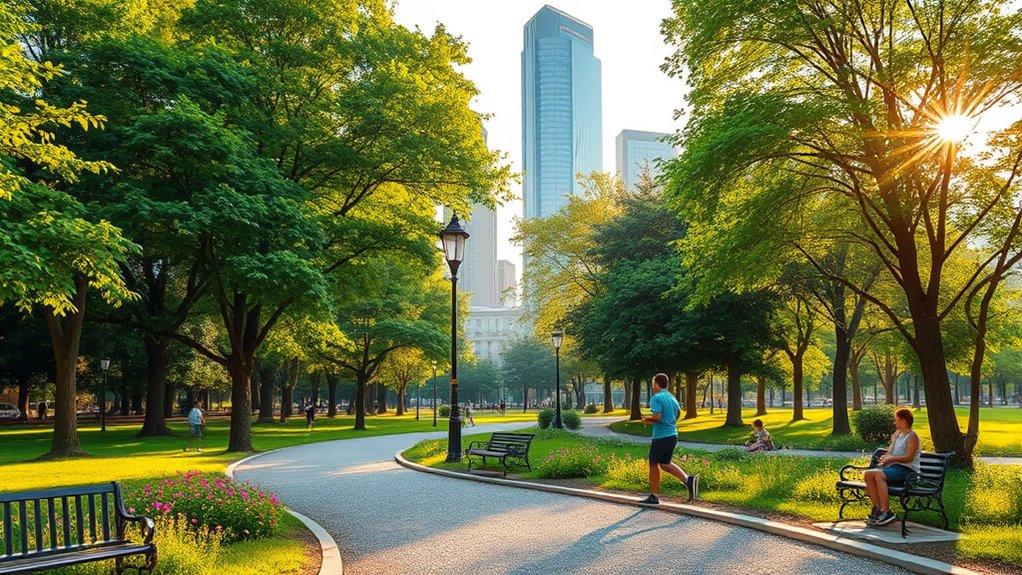

Spending time in green spaces in cities can greatly boost your mental health. Nature helps you relax by reducing stress, lowering cortisol levels, and calming your mind. It also strengthens your connection to the natural world, promoting mindfulness and curiosity. These environments provide a peaceful escape from urban chaos, supporting emotional stability and resilience. If you want to discover more about how nature can transform your mental well-being, there’s plenty more to explore.

Get gifts for the two of you delivered free with Prime
- Fast, free delivery on millions of items
- Prime Video, Amazon Music and more included
- Member-only deals all year
Key Takeaways
- Green spaces in cities improve mental health by reducing stress and providing calming natural environments.
- Urban biodiversity enhances connection to nature, promoting mindfulness and emotional resilience.
- Regular exposure to green areas lowers cortisol levels and helps manage anxiety and depression.
- Natural settings foster social interaction and community engagement, supporting overall well-being.
- Access to diverse ecosystems in urban areas encourages curiosity, wonder, and a sense of belonging.
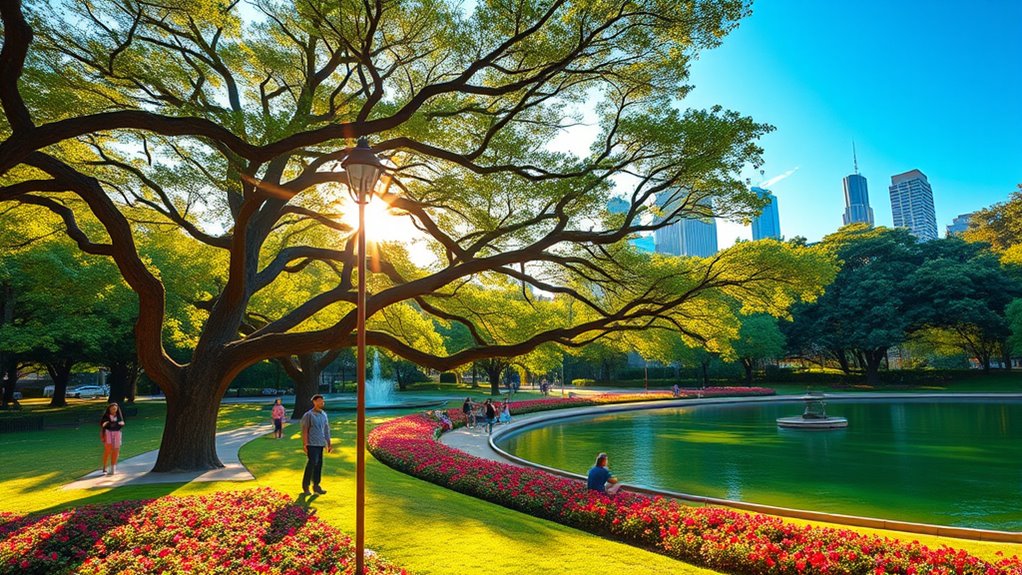
Spending time in green spaces can considerably boost your mental health. When you step into a park, garden, or any natural setting within the city, you’re not just enjoying a break from the urban grind—you’re engaging with an essential source of well-being. Urban biodiversity, which refers to the variety of plant and animal life in city environments, plays a fundamental role in this. The richer the biodiversity, the more you connect with nature’s complexity and resilience. These diverse ecosystems help create a calming atmosphere, making it easier for you to relax and unwind. As you observe birds, listen to rustling leaves, or spot colorful flowers, your mind shifts away from stressors, fostering a sense of peace. This natural variety isn’t just aesthetically pleasing; it actively contributes to your mental health by providing a dynamic environment that stimulates your senses and promotes mindfulness.
Green spaces are particularly effective at stress reduction. When you come into contact with nature, your body responds by lowering cortisol levels—the hormone associated with stress—helping you feel calmer and more centered. The presence of trees, grass, and water can create an immediate sense of tranquility, even in the busiest of cities. The act of simply walking through a park or sitting under a tree can slow your breathing and heart rate, easing tension accumulated from daily pressures. Furthermore, natural settings offer a break from digital devices and constant notifications, giving your brain a chance to reset. This mental respite is essential for maintaining emotional balance and preventing burnout.
The benefits extend beyond just feeling better in the moment. Regular exposure to green spaces enhances your overall resilience to stress over time. As you become more familiar with these environments, you develop a stronger connection to nature, which can serve as a mental refuge during challenging times. Urban biodiversity amplifies this effect by providing varied stimuli, keeping your mind engaged without overwhelming it. The presence of diverse plant and animal life fosters curiosity and a sense of wonder, helping you feel more grounded and connected. This connection isn’t just beneficial for your mental health; it can also inspire you to participate in conservation and community activities, further strengthening your sense of purpose and belonging.
urban green space meditation garden
As an affiliate, we earn on qualifying purchases.
As an affiliate, we earn on qualifying purchases.
Frequently Asked Questions
How Do Green Spaces Specifically Reduce Stress Levels?
Green spaces reduce your stress levels by offering a peaceful escape from urban noise, helping you relax and unwind. They improve air quality, making breathing easier and reducing physical stress. When you spend time in nature, your body releases endorphins, which boost your mood and lower cortisol levels. This combination of cleaner air and a quieter environment helps you feel calmer, more centered, and better equipped to handle daily stressors.
Can Urban Parks Improve Cognitive Function in Children?
Urban parks can substantially improve your child’s cognitive function through nature exposure, which fosters curiosity, attention, and problem-solving skills. When your children spend time outdoors, they engage in unstructured play and explore their environment, promoting healthy childhood development. Regular access to green spaces helps reduce mental fatigue and enhances focus, making it easier for your kids to learn and grow. So, encouraging park visits benefits their brain development in many ways.
What Are the Best Types of Plants for Mental Wellbeing?
You should choose indoor plants like snake plants, pothos, and peace lilies for mental wellbeing. They’re low maintenance greenery, making them perfect for busy lifestyles. These plants help reduce stress, boost mood, and create calming environments. By adding indoor plants with easy care requirements, you bring nature inside, improving your mental health and creating a more relaxing space. Opt for these types to enjoy the mental health benefits without extra effort.
How Much Green Space Is Needed for Mental Health Benefits?
You need at least 20-30% green space in your urban environment to reap mental health benefits, much like a well-tended garden nurtures your well-being. Studies show that increased urban biodiversity and green infrastructure reduce stress and boost mood. Imagine a city where parks and trees are plentiful—your mental clarity and happiness thrive in that lush, natural oasis, making city living healthier and more enjoyable.
Do Green Spaces Influence Community Social Interactions?
Yes, green spaces boost community bonding and social cohesion. When you visit parks or gardens, you’re more likely to meet neighbors, join events, or participate in activities that foster connections. These shared experiences create a sense of belonging and trust within your community. By encouraging outdoor gatherings, green spaces help build stronger, more unified neighborhoods, making city living more vibrant and supportive for everyone involved.
outdoor park stress relief products
As an affiliate, we earn on qualifying purchases.
As an affiliate, we earn on qualifying purchases.
Conclusion
Incorporating green spaces into city living is like giving your mind a revitalizing breath of fresh air. When you spend time in nature, you boost your mood and reduce stress, making your daily life more vibrant. Think of parks and gardens as your mental oasis—calm, restorative, and always there when you need a break. Embrace these natural escapes, and you’ll find your city life becomes brighter and more balanced, just like a well-tended garden.
nature sound machine for relaxation
As an affiliate, we earn on qualifying purchases.
As an affiliate, we earn on qualifying purchases.
As an affiliate, we earn on qualifying purchases.
Fall Picks
fall essentials
As an affiliate, we earn on qualifying purchases.