

Integrating smart home technology improves your comfort and saves energy by automating devices and using voice control to manage them effortlessly. You can easily turn off unused lights, adjust thermostats, and control appliances with simple commands, making your daily routines more convenient. Smart systems also sync with apps and automation routines, enhancing home responsiveness and efficiency. Keep exploring to discover how these features can transform your living space and boost your energy savings even further.

Get gifts for the two of you delivered free with Prime
- Fast, free delivery on millions of items
- Prime Video, Amazon Music and more included
- Member-only deals all year
Key Takeaways
- Voice control enables effortless management of home devices, enhancing convenience and accessibility for all household members.
- Smart thermostats and lighting systems optimize energy use, reducing utility bills through automated adjustments.
- Integration with apps and voice assistants allows seamless automation and customization of routines for increased comfort.
- Gradual system expansion simplifies home management and supports ongoing energy efficiency improvements.
- Automating daily tasks promotes sustainable living by conserving energy and creating a modern, responsive home environment.
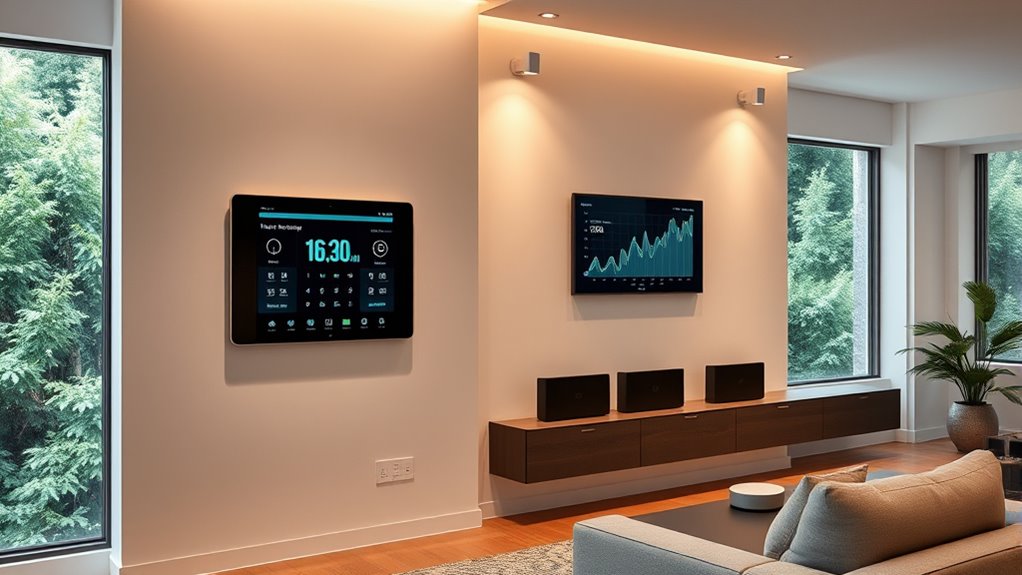
Have you ever wondered how smart homes can make your daily life easier and more efficient? The answer lies in the seamless integration of technology that allows you to control various devices effortlessly. Voice control is one of the most user-friendly features, enabling you to operate lights, thermostats, locks, and even appliances with simple voice commands. Imagine waking up and saying, “Good morning,” and your blinds open, the coffee starts brewing, and the room temperature adjusts—all without lifting a finger. This hands-free approach not only adds convenience but also helps you stay organized and focused on more important tasks.
Beyond just convenience, voice control significantly enhances energy management in your home. By speaking commands, you can easily turn off unused lights, adjust the thermostat, or power down appliances that are consuming unnecessary energy. For instance, if you forget to turn off the lights before leaving the house, a quick voice command can save you from wasting electricity. Smart thermostats learn your schedule and preferences, allowing you to set temperatures that optimize comfort and reduce energy consumption. When you’re away, you can simply tell your system to lower the heating or cooling, ensuring your home isn’t wasting energy while you’re gone. Over time, these small adjustments add up, leading to noticeable savings on your utility bills.
Integrating voice control and energy management isn’t complicated. Many smart home systems come with intuitive apps that sync with voice assistants like Alexa, Google Assistant, or Siri. You can customize routines that automatically adjust multiple devices based on your daily schedule, such as dimming the lights and lowering the thermostat at bedtime. This automation makes your home smarter and more responsive to your needs. Plus, it promotes sustainable habits by encouraging energy-efficient behaviors without requiring constant manual input.
The beauty of these features is that they’re scalable. You can start small with a few voice-controlled lights or a smart thermostat, then expand your system over time. As you add more devices, you’ll find it increasingly easier to manage your home’s energy use while enjoying the convenience of voice commands. This integration creates a home environment that adapts to your lifestyle, making daily routines smoother and more eco-friendly. In the end, embracing voice control and energy management in your smart home isn’t just about modernity; it’s about creating a space that works smarter for you, saving energy, and making your life more comfortable.
Additionally, understanding the importance of grocery savings strategies can contribute to overall household efficiency by helping you allocate financial resources effectively and reduce unnecessary expenses.
smart home voice control devices
As an affiliate, we earn on qualifying purchases.
As an affiliate, we earn on qualifying purchases.
Frequently Asked Questions
How Secure Are Smart Home Devices From Hacking?
Smart home devices can be vulnerable to hacking due to cybersecurity risks and data privacy concerns. You might face threats if you don’t secure your network properly or keep devices updated. To protect yourself, ensure strong passwords, enable two-factor authentication, and regularly update device firmware. Staying vigilant helps reduce cybersecurity risks and keeps your personal data private, making your smart home safer and more secure against potential hacking attempts.
Can Smart Home Systems Be Customized for Specific Needs?
Yes, smart home systems can be customized for your specific needs. You can explore various customization options to tailor the setup to your lifestyle. With personalized automation, you can program devices to respond to your routines, preferences, and schedules. This flexibility allows you to optimize comfort, energy efficiency, and security, making your smart home truly yours. Just make certain you regularly update software to keep your system secure and functioning smoothly.
What Is the Average Cost of Setting up a Smart Home?
Setting up a smart home typically costs around $2,000 to $5,000, depending on your choices. For example, a homeowner who invests in smart lighting, thermostats, and security cameras might spend about $3,500, including installation costs and device pricing. You can tailor your setup to fit your budget, starting small and expanding over time. Remember, initial expenses vary based on the brands and features you select.
How Do Smart Homes Impact Energy Consumption Long-Term?
Smart homes markedly reduce your energy consumption over time by optimizing heating, cooling, and lighting through automation. These energy savings lower your utility bills and lessen your environmental impact. By efficiently managing devices and appliances, you contribute to a greener environment while enjoying enhanced comfort. Over the long term, smart home technology helps you save money and reduce your carbon footprint, making your home more sustainable and eco-friendly.
Are Smart Home Devices Compatible Across Different Brands?
Yes, smart home devices can be compatible across different brands, but it depends on brand interoperability and device compatibility. You should look for devices that support common standards like Zigbee, Z-Wave, or Wi-Fi, which help different brands work together seamlessly. Always check the manufacturer’s specifications and compatibility lists before purchasing, ensuring your devices will integrate smoothly into your smart home ecosystem.
smart thermostats for energy saving
As an affiliate, we earn on qualifying purchases.
As an affiliate, we earn on qualifying purchases.
Conclusion
By embracing smart home technology, you’re not just adding convenience—you’re boosting energy efficiency and security. Did you know that smart thermostats can reduce energy bills by up to 12%? That’s a smart investment that pays off in comfort and savings. As you integrate these devices, you’ll enjoy a more connected, efficient home that adapts to your needs. Start small, stay curious, and watch your home become smarter and more comfortable every day.
smart lighting systems compatible with Alexa
As an affiliate, we earn on qualifying purchases.
As an affiliate, we earn on qualifying purchases.
As an affiliate, we earn on qualifying purchases.
Halloween Picks
halloween
As an affiliate, we earn on qualifying purchases.