
Your bedroom sound environment is more important than you might realize because it directly affects your sleep quality and overall health. Unwanted noise from outside or inside can disrupt your sleep cycles, leaving you tired and groggy. By controlling sounds with acoustic treatments or sound masking devices, you can create a calming atmosphere that helps you fall asleep faster and stay asleep longer. Keep going to discover simple ways to optimize your bedroom soundscape for better rest and well-being.

Get gifts for the two of you delivered free with Prime
- Fast, free delivery on millions of items
- Prime Video, Amazon Music and more included
- Member-only deals all year
Key Takeaways
- Sound environment directly affects sleep quality, impacting restfulness and overall health.
- External noises can fragment sleep, preventing deep, restorative stages crucial for recovery.
- Acoustic treatment minimizes disruptions, promoting deeper sleep and mental clarity during the day.
- Sound masking tools create a calming auditory environment, easing the transition into sleep.
- Prioritizing bedroom acoustics enhances relaxation, reduces stress, and improves overall well-being.
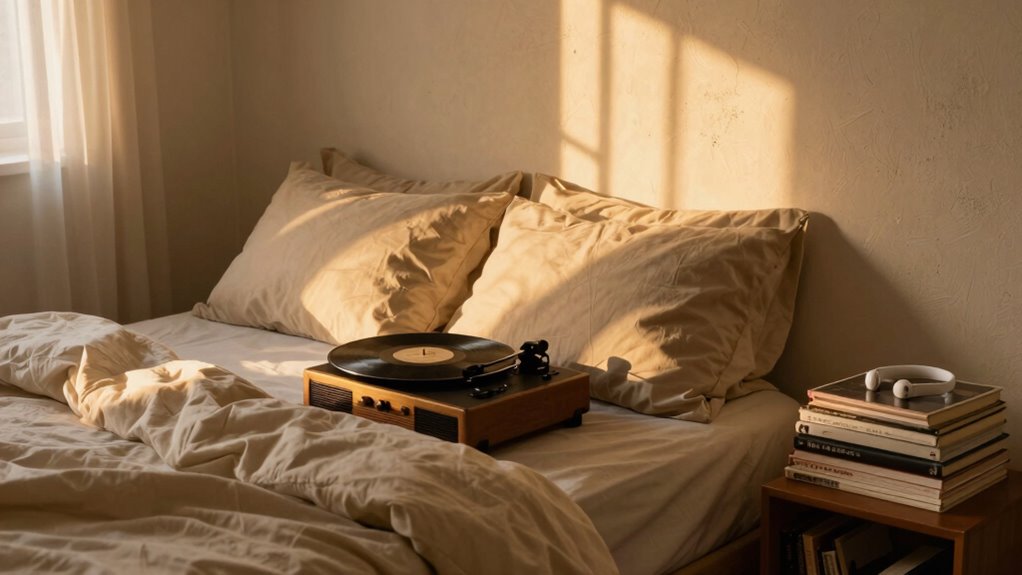
The sound environment in your bedroom plays a crucial role in determining your sleep quality and overall well-being. When you think about creating a perfect sleeping space, you probably focus on mattress comfort, room temperature, or lighting. But the sounds around you matter just as much, if not more. Unwanted noise can disrupt your sleep cycles, making you wake up feeling tired and groggy. That’s why paying attention to acoustic treatment is essential. Properly managing the sounds in your bedroom can lead to deeper, more restorative sleep and improve your mental clarity during the day.
Prioritizing your bedroom’s sound environment enhances sleep quality and supports mental clarity.
You might not realize how much noise intrudes into your sleep, whether it’s street noise, loud neighbors, or even household sounds. These disruptions can fragment your sleep, preventing you from reaching the deep stages necessary for physical and mental recovery. Acoustic treatment isn’t just about blocking noise; it’s about creating a balanced sound environment where external sounds are minimized, and any internal sounds—like your breathing or the hum of electronics—are controlled. Simple measures like adding soft rugs, thick curtains, or acoustic panels can absorb excess sound waves, reducing echo and background noise. When your bedroom is acoustically tuned, you notice fewer awakenings and a more consistent sleep pattern.
Your goal should be to craft a space where sound doesn’t pull you out of restful sleep. Using soundproofing techniques, like sealing gaps around windows and doors, can greatly reduce external noise infiltration. White noise machines or calming soundscapes also help mask disruptive sounds, allowing you to drift into sleep more easily. These tools work by creating an even, consistent auditory environment that your brain quickly adapts to, promoting a sense of calm and security. When you prioritize acoustic treatment, you’re actively shaping a sleep-friendly environment that supports your health and energy levels.
Sleep quality isn’t just about what happens when you’re asleep; it’s also about what you experience leading up to it. Minimizing noise distractions helps you wind down faster and stay asleep longer. Additionally, understanding the impact of soundscape on sleep can motivate you to invest in acoustic improvements. Creating a balanced sound environment can significantly enhance your overall sleep experience, reducing stress and promoting relaxation. Over time, this can improve your overall quality of life, making mornings less stressful and days more productive. Remember, your bedroom’s soundscape is a powerful, often overlooked factor in your sleep health. By paying attention to it and implementing effective acoustic treatment, you’re taking a straightforward step toward better sleep and enhanced well-being.
Products Worth Considering

Oral-B iO5 Rechargeable Electric Toothbrush with 5 Cleaning Modes and Travel Case, White

Bowflex SelectTech 840 Adjustable Kettlebell

Fitbit Charge 6 Fitness Tracker – Obsidian/Black
As an affiliate, we earn on qualifying purchases.
Frequently Asked Questions
How Does Bedroom Sound Affect Sleep Quality?
Your bedroom sound directly impacts your sleep quality by shaping your sleep environment and acoustic comfort. Noisy or disruptive sounds can disturb your rest, making it harder to fall asleep or stay asleep. Conversely, a quiet, peaceful environment promotes relaxation and deep sleep. You can improve sleep quality by reducing background noise and using calming sounds, ensuring your bedroom fosters a restful, comfortable atmosphere that supports restorative sleep.
Can Soundproofing Improve Overall Mental Health?
Yes, soundproofing can improve your mental health. Studies show noise pollution can increase stress and anxiety levels by up to 30%. By adding acoustic insulation and using sound therapy techniques, you create a calmer environment that reduces stress triggers. This not only enhances your mood but also boosts focus and relaxation. Investing in soundproofing helps you regain control over your surroundings, promoting overall mental well-being and a healthier mind.
What Are the Best Sounds for Relaxation?
You’ll find that nature melodies and white noise options are among the best sounds for relaxation. Nature sounds, like gentle rain or flowing streams, help calm your mind, reduce stress, and promote better sleep. White noise options create a consistent background that masks distracting noises, making it easier to unwind. Experiment with different sounds to discover what soothes you most, and incorporate them into your relaxation or bedtime routines for maximum calmness.
How Does Bedroom Noise Impact Concentration?
Think of your bedroom as a quiet pond; background noise acts like ripples that disturb its calm. When unwanted sounds invade, your concentration suffers as distraction takes hold, pulling your focus away like a shadow lengthening at dusk. These noises, subtle yet persistent, make it harder to stay on task, turning your peaceful space into a battleground against distraction. Protect your mental clarity by managing your bedroom’s sound environment.
Are There Specific Sounds to Reduce Anxiety?
Yes, certain sounds can help reduce anxiety, and you should try white noise or nature sounds. White noise creates a consistent background that blocks out sudden, stressful sounds, helping you feel calmer. Nature sounds, like flowing water or chirping birds, evoke peaceful feelings and lower stress levels. Incorporating these into your bedroom can create a soothing environment, making it easier to relax and manage anxiety effectively.
Conclusion
Remember, the sound environment in your bedroom isn’t just background noise—it shapes your sleep quality and overall well-being. When you pay attention to what you hear, you’re investing in better rest and a more refreshed you. Don’t let noise be a thorn in your side; instead, take control and create a peaceful sanctuary. After all, what you hear in your bedroom can make all the difference, so don’t overlook its true importance—you’re worth it.