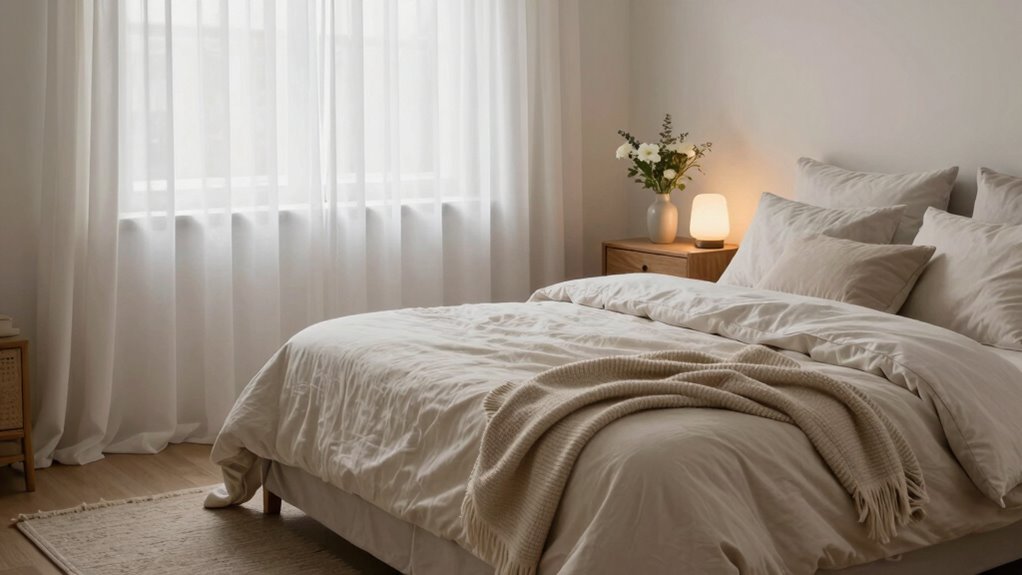

To make your bedroom more emotionally restful, choose soft, muted colors like pale blues or gentle greens that promote calm. Incorporate natural elements like plants and natural textures to create a peaceful environment. Use warm, dim lighting and add cozy textures to boost comfort. Incorporate calming scents like lavender or chamomile through diffusers or sprays. Gentle sounds or ambient music can deepen relaxation. Explore more ways to transform your space into a tranquil sanctuary.

Get gifts for the two of you delivered free — and shop member deals
- Fast, free delivery on millions of items
- Access to Prime Big Deal Days deals on October 6–7
- Prime Video, Amazon Music and more included
Key Takeaways
- Use soft, muted colors like pale blues and gentle greens to create a calming atmosphere.
- Incorporate natural elements such as plants and natural textures to enhance tranquility.
- Add calming scents like lavender or chamomile through diffusers or pillow sprays.
- Keep the space tidy and clutter-free to promote a sense of order and peace.
- Incorporate gentle sounds or ambient music to deepen relaxation and sensory comfort.
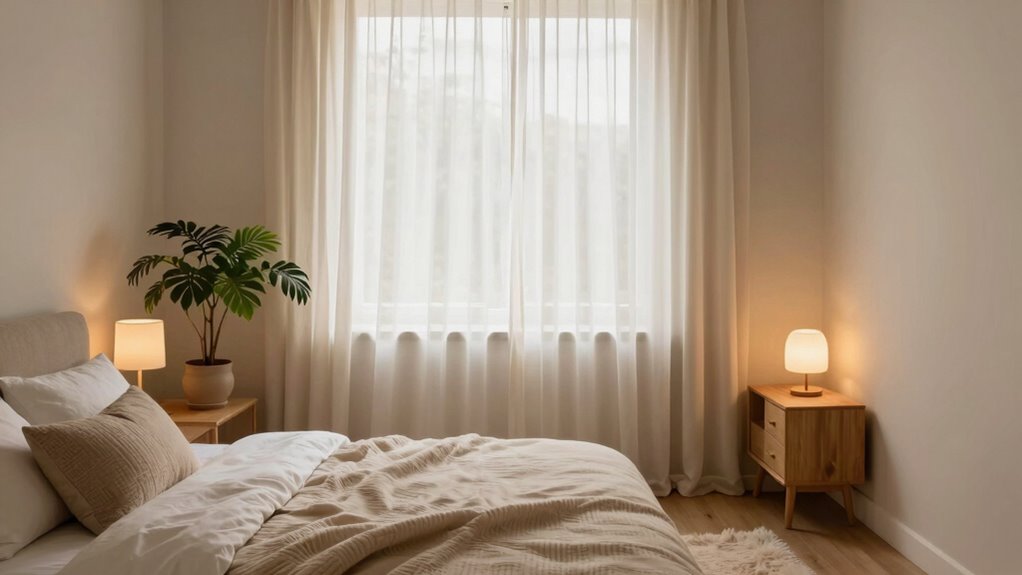
Your bedroom should be a sanctuary where you can truly relax and unwind, but sometimes it feels more stressful than soothing. One way to transform your space into a peaceful retreat is by paying attention to color psychology. The colors you choose can profoundly influence your mood and emotional state. Soft, muted tones like pale blues, gentle greens, or warm neutrals create a calming atmosphere, helping to lower stress and promote relaxation. Avoid overly bright or harsh colors, which can stimulate your mind and make it harder to unwind. Instead, opt for shades that evoke tranquility, making your bedroom a place where your mind can settle and your body can relax. Incorporating elements of biodiversity through natural materials or plant life can further enhance your environment’s calming effects by connecting you with nature. In addition to color, aromatherapy benefits can play an essential role in making your bedroom more emotionally restful. Scents like lavender, chamomile, or ylang-ylang are known for their calming properties. Incorporating essential oils into your space—whether through diffusers, sprays, or pillow inserts—can help reduce anxiety and improve sleep quality. Aromatherapy creates a sensory environment that signals your brain it’s time to relax, helping you shift from a busy day to a peaceful night. Consistent use of calming scents can condition your mind to associate these aromas with rest, making it easier to wind down each evening. Creating a peaceful environment through thoughtful choices can significantly impact your emotional well-being. Beyond colors and scents, consider the overall ambiance and sensory cues in your bedroom. Dim lighting or warm, soft lamps can help set a soothing mood, especially if you avoid harsh overhead lights before bed. Soft textures, like plush bedding or a cozy throw, add to the comfort and can contribute to a sense of emotional security. Removing clutter and keeping your space tidy reduces visual stress, allowing your mind to breathe easier. Creating a clutter-free environment can promote relaxation by minimizing distractions and fostering a sense of order. Paying attention to sensory cues like touch and sound can further enhance your sense of calm. The goal is to create a harmonious environment that engages your senses in a gentle, positive way, fostering emotional calmness. Incorporating calming sounds such as gentle nature noises or ambient music can help deepen your relaxation experience. Remember, your environment should support your emotional well-being, so tailor it to what makes you feel most at peace. Small adjustments, like changing wall colors or adding a diffuser with calming scents, can make a profound difference. By intentionally designing your bedroom to incorporate calming colors and aromatherapy benefits, you set the stage for a truly restful and emotionally soothing sanctuary.
calming bedroom diffuser lavender chamomile
As an affiliate, we earn on qualifying purchases.
As an affiliate, we earn on qualifying purchases.
Frequently Asked Questions
How Can Lighting Influence Emotional Restfulness in a Bedroom?
Lighting plays a vital role in creating emotional restfulness in your bedroom. By adjusting the lighting ambiance with soft, warm bulbs, you foster a calming environment. Incorporate mood lighting like dimmable lamps or string lights to gently soothe your senses. These choices help you unwind, reduce stress, and promote better sleep, making your bedroom a true sanctuary for emotional relaxation.
Are Specific Colors Better for Creating a Calming Bedroom Environment?
Think of your bedroom as a tranquil lake, where colors mirror calm waters. Soft blues and gentle greens, rooted in color psychology, are best for creating a calming environment. Your paint choices should reflect serenity, avoiding loud reds or bright yellows that stir energy. By selecting these soothing shades, you invite peace and emotional restfulness into your space, turning your bedroom into a peaceful retreat where your mind can unwind.
What Role Does Clutter Play in Emotional Relaxation?
Clutter accumulation can considerably hinder your emotional relaxation, as it creates visual chaos that overstimulates your mind. When your bedroom is cluttered, it’s harder to unwind and feel at peace. Clearing away unnecessary items helps reduce visual chaos, making your space feel more serene and welcoming. By maintaining a tidy environment, you promote a calmer atmosphere, allowing you to relax more fully and enjoy restful, restorative sleep.
Can Aromatherapy Improve Emotional Restfulness in the Bedroom?
Yes, aromatherapy can boost emotional restfulness in your bedroom. Using essential oils like lavender or chamomile in an aromatherapy diffuser creates a calming atmosphere, helping you unwind and reduce stress. Incorporate these diffusers into your space, and let the soothing scents fill the room. This simple addition can transform your bedroom into a peaceful retreat, making it easier to relax and enjoy restful sleep.
How Does Personalization Impact Emotional Comfort in Bedroom Design?
Personalization boosts emotional comfort in your bedroom by making it feel uniquely yours. Incorporate personalized decor like artwork or photos that resonate with you, creating a sense of familiarity and security. Keep sentimental items nearby, as they evoke positive memories and emotional warmth. When your space reflects your personality and history, it fosters a calming environment that promotes relaxation, making it easier to unwind and feel emotionally rested.
As an affiliate, we earn on qualifying purchases.
Conclusion
So, there you have it—transforming your bedroom into an emotional sanctuary isn’t rocket science, just good old-fashioned effort. Toss out the chaos, embrace serenity, and maybe even find a spare moment to breathe. Who knew that a little decluttering and thoughtful décor could turn your restless nights into blissful retreats? Just remember, if all else fails, a good nap might be the true secret ingredient—after all, who’s counting? Sweet dreams await!
As an affiliate, we earn on qualifying purchases.
ambient dimmable bedroom lighting
As an affiliate, we earn on qualifying purchases.
As an affiliate, we earn on qualifying purchases.
Fall Picks
fall essentials
As an affiliate, we earn on qualifying purchases.