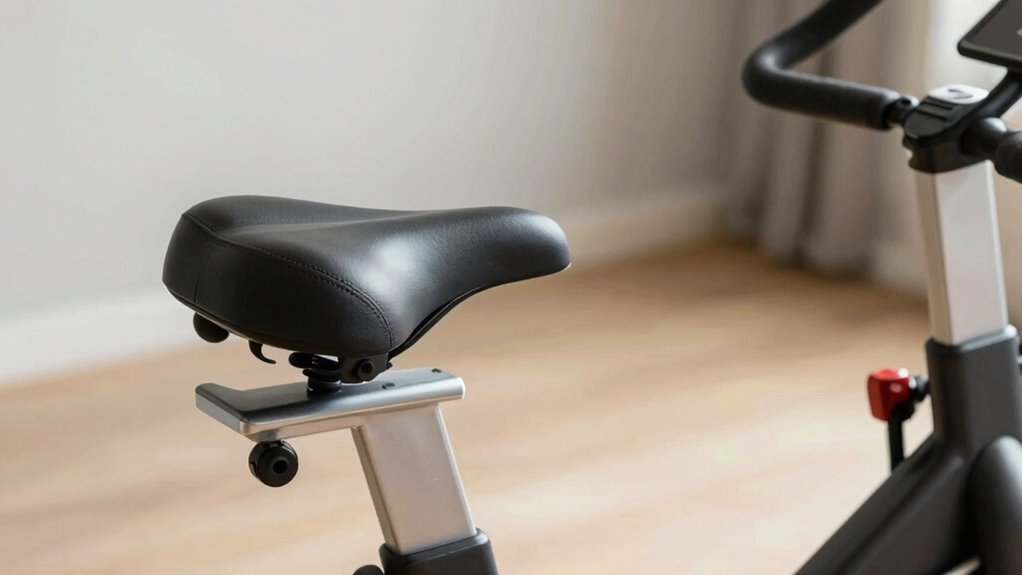
To ride your exercise bike without pain, you need to guarantee your seat is properly adjusted. Set the height so your leg is almost fully extended with a slight bend when your heel is on the pedal at its lowest point. Position the seat forward or back to align your knee with the pedal’s axle at 3 o’clock. Adjust the tilt for comfort, and make sure you’re not hunching or straining. Keep exploring for more tips to optimize your setup.
Key Takeaways
- Adjust saddle height so your heel is fully extended at the lowest pedal point, and your knee has a 25-35° bend at the top.
- Position the saddle forward or backward to ensure your knee aligns directly over the pedal axle at 3 o’clock.
- Set the handlebar height level with or slightly below the saddle to prevent hunching and wrist strain.
- Tilt the saddle level or slightly downward to avoid hip discomfort and maintain proper pelvis stability.
- Regularly fine-tune seat and handlebar positions, and use ergonomic accessories to maintain comfort and prevent pain.

BLUEWIND New Noseless Oversized Bike Seat, Wide Bicycle Saddle Novel Backrest Design for Electric Bike, Fits Most Exercise Bike or Road Stationary Bike Seat Cushion for Men & Women (Black)
New Version Bike Seat: Bluewind NEW Version Noseless oversized bike seat is 2X larger and cozy. Cushion size:…
As an affiliate, we earn on qualifying purchases.
As an affiliate, we earn on qualifying purchases.
Why a Proper Exercise Bike Seat Fit Matters for Comfort
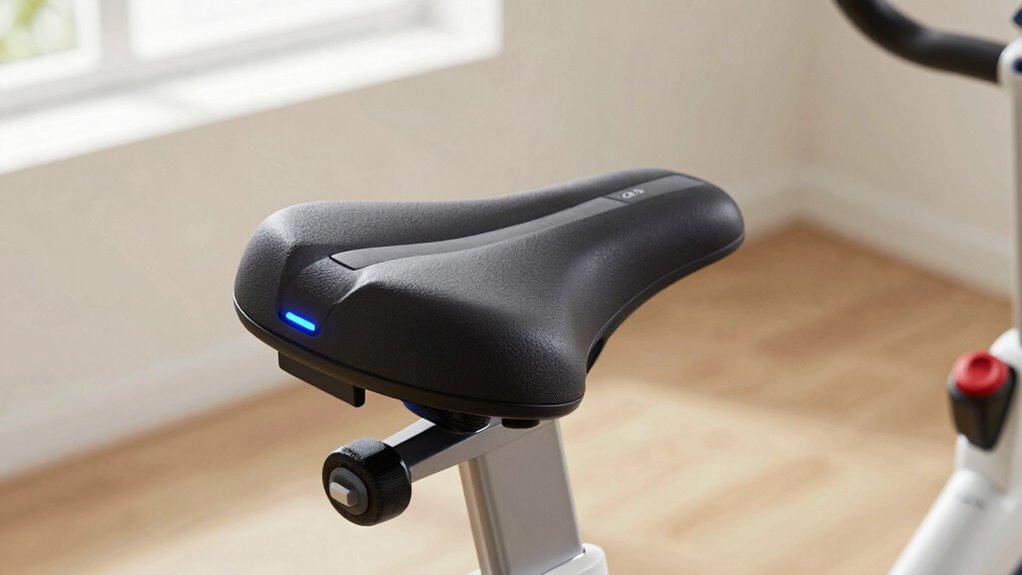
A proper exercise bike seat fit is essential because it directly influences your comfort and performance during workouts. An ergonomic design ensures the seat supports your body’s natural curves, reducing pressure points and preventing discomfort. Well-designed seat padding cushions your sit bones, minimizing soreness and fatigue over time. When your seat fits correctly, you can pedal more efficiently, maintain proper posture, and avoid strain on your hips, lower back, and knees. Proper fit, along with adjustable features, can help tailor the seat to your unique body shape and riding style. Additionally, understanding the role of adjustable features in seat setup can further enhance comfort and prevent discomfort during extended use. Properly adjusting your seat height and angle ensures optimal alignment and reduces the risk of strain. Taking the time to measure your inseam and set the seat accordingly can significantly improve your comfort and performance. Poor fit, on the other hand, can lead to pain, numbness, and even injury, discouraging regular use. Prioritizing a seat with an ergonomic design and adequate padding helps you stay comfortable throughout your workout, allowing you to focus on your fitness goals without unnecessary pain or distraction.

LINGMAI Universal Saddle Extender for FDX 2.0 and 3.0 Models – Adjustable Exercise Bicycle Seat Adapter – Solid Steel Welded Construction (B-Small Exercise Bicycle Seat Adapter)
Solid Steel with 3 screws
As an affiliate, we earn on qualifying purchases.
As an affiliate, we earn on qualifying purchases.
How to Adjust Your Seat Height for Better Pedaling
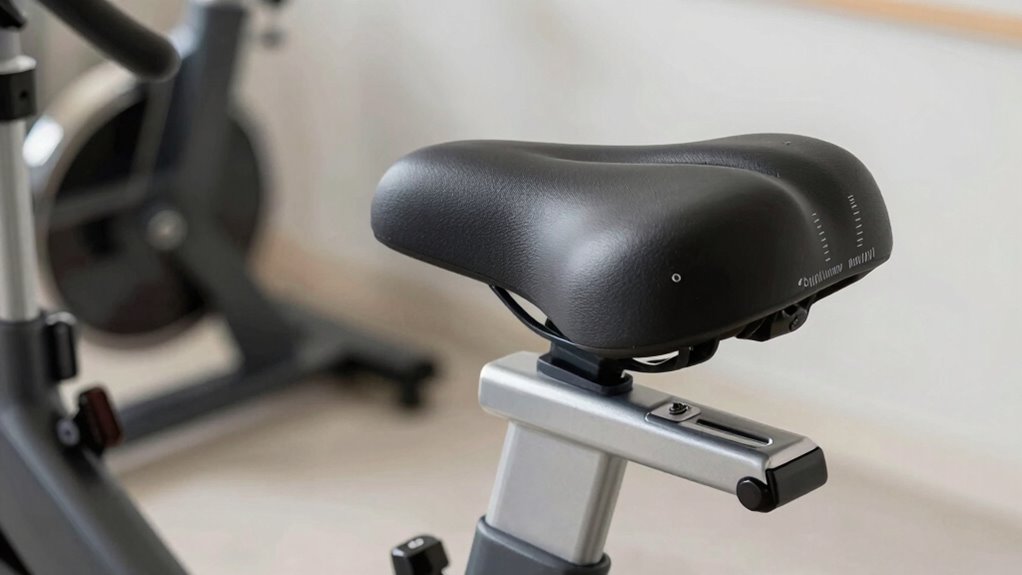
Wondering how to optimize your seat height for better pedaling? First, sit on your exercise bike and place your heel on the pedal at the lowest point. Your leg should be fully extended without locking the knee. This position ensures proper cycling posture and efficient power transfer. Adjust the saddle height so that when you move your foot to the pedal’s top position, your knee maintains a slight bend—about 25 to 35 degrees. Consider saddle materials too; cushioned saddles can help reduce discomfort, but firm ones offer better stability. Make small adjustments and test ride to find the sweet spot where you feel balanced, supported, and pain-free. Correct seat height maximizes comfort and performance, preventing strain and enhancing your workout. Additionally, choosing the right office gear can contribute to overall comfort during longer cycling sessions. Proper seat adjustment can also help prevent long-term joint issues and improve your overall riding experience. Regularly checking your bike setup ensures ongoing comfort and safety as you progress. Incorporating biking ergonomics into your routine can further optimize your position and reduce fatigue, especially when considering the importance of proper ergonomic design for sustained comfort.

Zacro Bike Seat Cushion – Gel Padded Cover for Men Women Comfort, Extra Soft Exercise Bicycle Compatible with Peloton, Stationary or Cruiser Seats
Best Gel Material: You cannot enjoy your bicycle leisure time when you are suffering pain
As an affiliate, we earn on qualifying purchases.
As an affiliate, we earn on qualifying purchases.
Setting Your Seat Position to Protect Your Knees and Boost Power
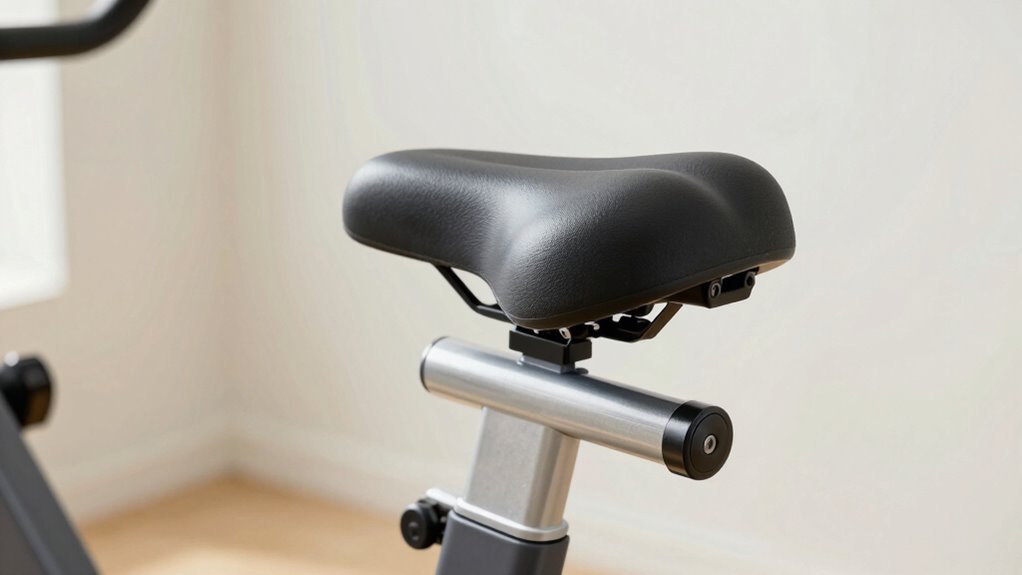
To protect your knees and increase your power, you need to get your saddle height and depth just right. Make sure your saddle isn’t too high or low, and adjust the handlebar position so it feels comfortable and efficient. Proper seat placement can make a big difference in how you ride and how you feel afterward. Additionally, ensuring your seat fit is correct helps prevent discomfort and promotes proper posture during your workout. Remember that spiritual alignment can also influence your overall well-being and motivation during exercise. Paying attention to ergonomic setup can improve comfort and help avoid strain over time. Regularly checking your setup and making small adjustments can also help maintain optimal ergonomic alignment for your unique body. Understanding the symbolism of clocks can also remind you to listen to your body’s signals during exercise and rest.
Proper Saddle Height and Depth
Setting your saddle height correctly is crucial for protecting your knees and maximizing power during your workout. To do this, adjust the saddle so that when you sit on it, your leg is almost straight at the bottom of the pedal stroke, with a slight bend in the knee. Proper depth ensures efficient pedaling and reduces strain. Consider saddle materials; softer materials can offer more comfort, especially during long rides, while durable bike seat covers provide extra cushioning. Make small adjustments and test your position, ensuring you avoid excessive forward or backward movement. Your saddle should feel stable yet comfortable, allowing you to maintain proper knee alignment. Correct saddle height and depth are key to a safe, effective, and pain-free cycling experience.
Optimal Handlebar Position
Have you positioned your handlebars correctly to maximize comfort and power? The right handlebar height and grip positioning are vital. A handlebar too high can cause you to hunch, straining your back and shoulders, while too low can increase knee stress. Aim for a handlebar height slightly below or at saddle level for a natural posture. Your grip should be firm but relaxed, with hands placed comfortably to avoid wrist strain. Use this guide to fine-tune your setup:
| Handlebar Height | Grip Positioning |
|---|---|
| Slightly below saddle | Hands centered on grips |
| Level with saddle | Wide or narrow grip options |
| Slightly above saddle | Relaxed, neutral wrist position |
| Adjust for comfort | Avoid excessive reaching |
Additionally, ensuring your ergonomic setup aligns with your body dimensions can help prevent discomfort and improve overall riding efficiency. Proper handlebar positioning is crucial for reducing strain and enhancing performance during your workout. Remember that correct handlebar height can also help prevent long-term joint issues. Regularly checking and adjusting your bike setup can prevent discomfort and ensure sustained comfort over time. Incorporating proper bike fit practices can further optimize your riding experience and reduce the risk of injury.

Suitable for Peloton Exercise Bike Seat and Handlebar Height Adjustment Handle Replacement – Alloy L Handle for Vertical Post, Exercise Bike Parts and Tools for Seat/Handlebar Up and Down Adjustment
【Upgraded Alloy Construction】 Durable replacement handle made of sturdy alloy, providing a stronger and longer-lasting alternative to the…
As an affiliate, we earn on qualifying purchases.
As an affiliate, we earn on qualifying purchases.
How to Tilt Your Exercise Bike Seat for Maximum Comfort
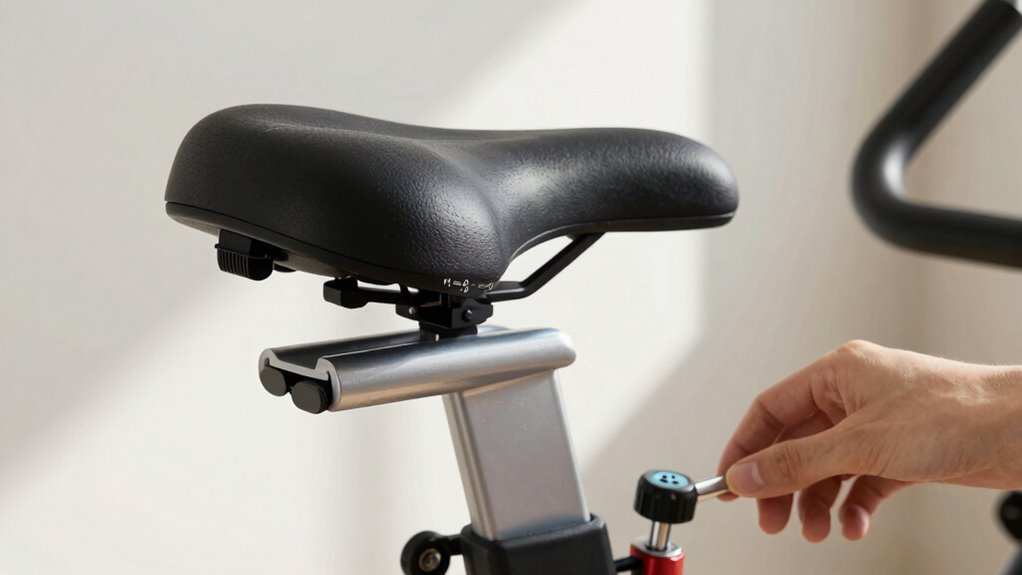
Adjusting the tilt of your exercise bike seat can substantially impact your comfort and riding efficiency. Start by setting the saddle tilt so that it’s level or slightly tilted downward. Too much tilt upward can cause pressure on your hips and lead to discomfort, while a slight downward tilt helps keep your pelvis stable. When adjusting, consider the foam padding under the saddle; it should be firm enough to support you but soft enough to prevent pressure points. Test the position by riding for a few minutes, then make small adjustments to find the sweet spot. Remember, the goal is to minimize strain on your hips and lower back, ensuring a comfortable, pain-free workout.
How to Move Your Seat Back and Forward for Better Balance
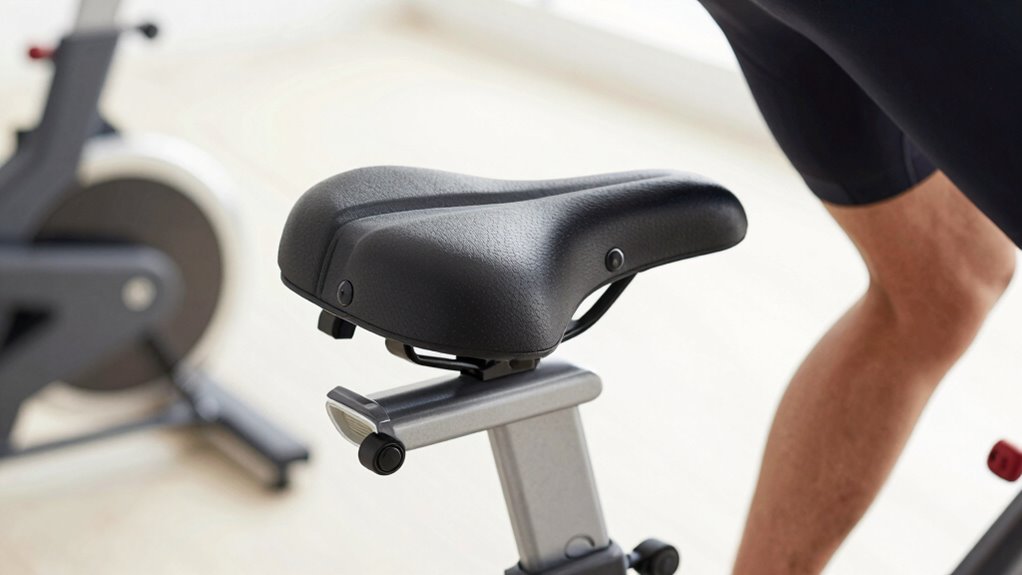
To improve your balance, start by adjusting the seat position to match your body. Make sure your reach distance feels comfortable and you can pedal without overextending. Keep your seat aligned properly to guarantee a smooth, efficient ride. Additionally, ensuring your proper bike setup can help prevent discomfort and injury during exercise. Proper ergonomic alignment is essential for maintaining good posture and reducing strain. Taking the time to consider workspace ergonomics can further enhance your comfort and overall workout experience. Adjustments that promote personalized comfort can also contribute to a more effective and enjoyable exercise session. Paying attention to design details such as seat height and handlebar position can make a significant difference in your overall comfort.
Adjust Seat Position
Wondering how to find the perfect seat position on your exercise bike? Start by adjusting the saddle forward or back to align with your hips. Your knee should be slightly bent at the bottom of the pedal stroke, ensuring proper cycling etiquette and reducing strain. To move the seat, loosen the adjustment lever or knobs, slide the saddle along the rail, then tighten securely. Proper seat positioning improves your comfort and prevents injuries, so check your bike maintenance regularly to keep everything working smoothly. Remember, a well-positioned seat helps you engage the right muscles and maintain balance. Take time to fine-tune the seat to your body’s needs, and avoid rushing this step. Proper setup makes your workout more enjoyable and pain-free.
Check Reach Distance
Ensuring your seat is in the right position is essential for maintaining proper balance on your exercise bike. To check your reach distance, sit on the saddle with your hands on the handlebars. Your knee should be slightly bent at the bottom of each pedal stroke. If you feel overreaching or cramped, adjust the seat forward or back. Pay attention to the seat padding and saddle materials—firm enough for support but comfortable enough to prevent numbness. Moving the saddle closer improves reach and control, while shifting it back can reduce strain on your hips and knees. Make small adjustments, then test ride until your reach feels natural and comfortable. Proper reach minimizes fatigue and helps you maintain a stable, balanced posture during your workout.
Maintain Proper Alignment
Adjusting your seat position helps improve your balance and comfort during workouts. Proper alignment guarantees your knees aren’t overextended or too bent and that you can pedal smoothly. To achieve this, move your saddle forward or back until your knee is directly over the pedal axle at the 3 o’clock position. Use ergonomic cushions or saddle pads for added support and comfort, especially if you experience pressure or soreness. When adjusting, consider these tips:
- Ensure your hips stay level and stable
- Keep your feet securely on the pedals
- Avoid excessive leaning forward or backward
- Check that your pelvis remains neutral
- Use saddle pads to prevent chafing and improve stability
Maintaining proper alignment minimizes strain and enhances your workout efficiency.
Tips to Fine-Tune Your Seat During Rides and Prevent Discomfort
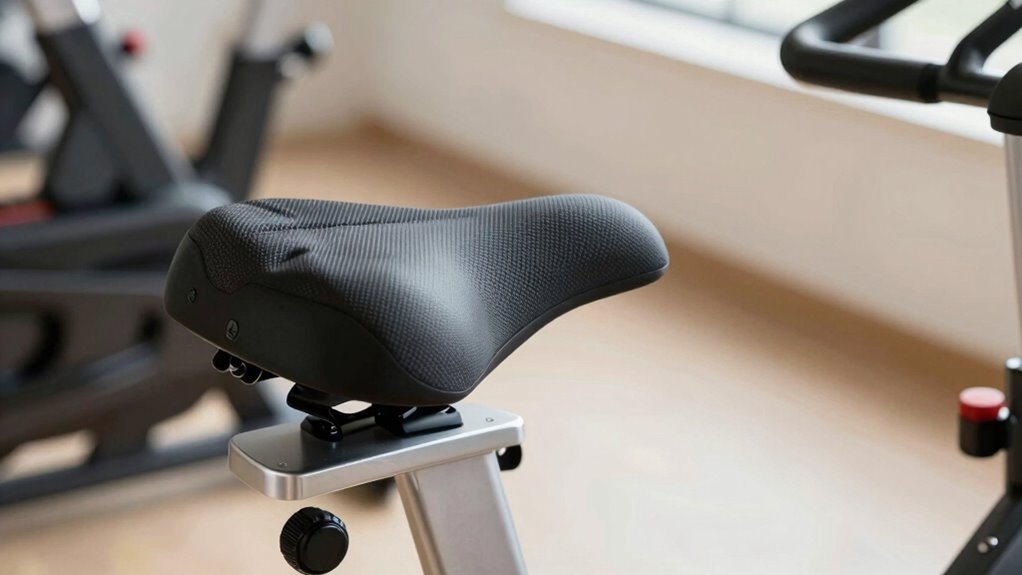
A proper seat position is essential for a comfortable and efficient ride, and making small adjustments during your workout can prevent discomfort and injury. Throughout your session, pay attention to how you feel and tweak your seat height or tilt as needed. Wearing comfortable cycling apparel can help you move freely and avoid chafing, while listening to motivating indoor cycling music keeps you focused and energized. If you notice pain or numbness, try shifting your seat slightly forward or backward, or adjust the saddle tilt to reduce pressure points. Hydrate and take short breaks if needed. Regularly fine-tuning your seat during rides guarantees you stay comfortable, maintain proper form, and enjoy a pain-free workout every time.
Common Mistakes to Avoid When Adjusting Your Bike Seat
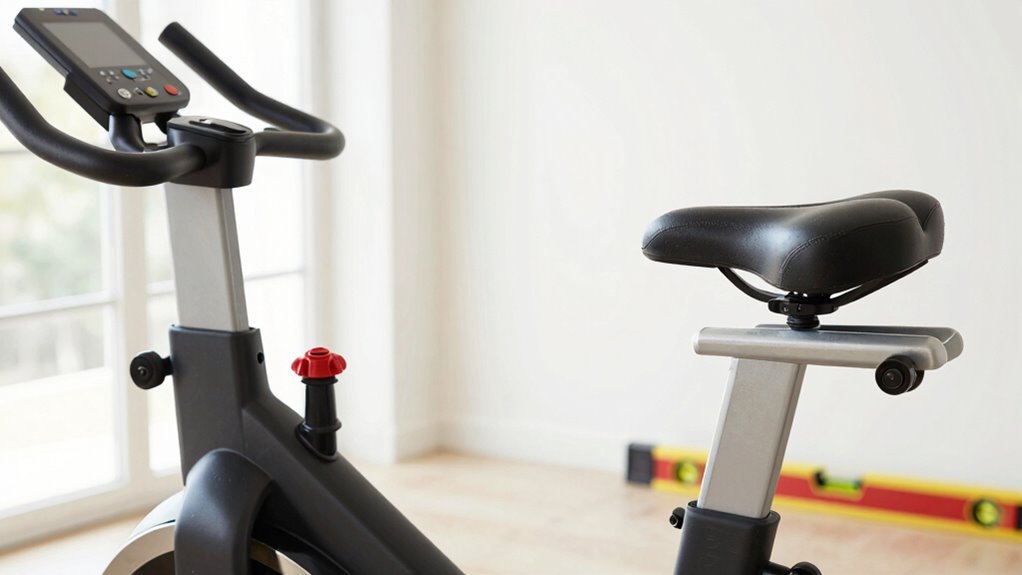
Many riders make common mistakes when adjusting their bike seat that can lead to discomfort or injury. One mistake is ignoring the importance of the seat pad’s position, which affects stability and pressure distribution. Another is setting the saddle height too high or low, causing knee strain. Using the wrong saddle material can also lead to discomfort, especially during long rides. Additionally, neglecting to check saddle tilt may result in sliding forward or backward. In the end, failing to consider your body’s unique anatomy—like hip width—can lead to improper setup. Avoid these errors by ensuring the seat pad is correctly aligned, the saddle material suits your comfort needs, and adjustments are made gradually for a proper fit. Proper setup prevents pain and enhances your riding experience.
Must-Have Tools and Accessories for a Comfortable Seat Setup
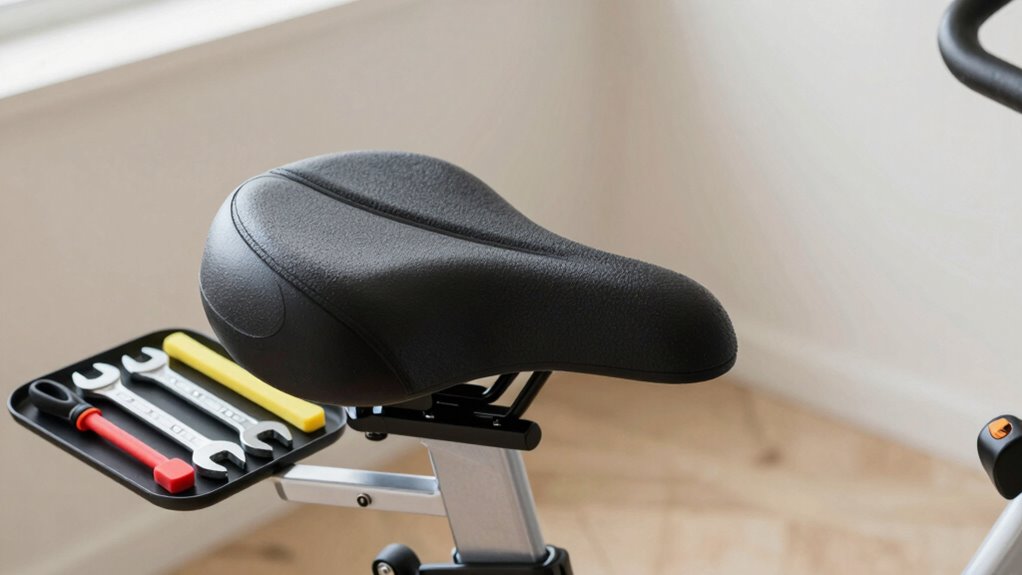
Having the right tools and accessories makes setting up your bike seat easier and guarantees a more comfortable ride. A adjustable wrench or Allen keys are essential for bike maintenance and making precise seat adjustments. A quality gel seat cover can reduce pressure points, improving comfort during long workout routines. A level or spirit bubble can help assure your bike is properly aligned, preventing unnecessary strain. A portable tape measure allows you to accurately set saddle height and position. Using these tools, you can fine-tune your setup for ideal comfort and performance. Investing in accessories like padded gloves or ergonomic grips can also enhance your workout routines, reducing fatigue. With the right tools, you’ll enjoy a pain-free riding experience and maximize your exercise sessions.
Frequently Asked Questions
How Often Should I Recheck My Exercise Bike Seat Adjustments?
You should recheck your exercise bike seat adjustments every few weeks or if you notice discomfort. The ergonomic design of your seat helps prevent pain, but seat material can wear over time, affecting comfort and support. Regularly inspecting and adjusting your seat ensures it stays properly aligned, maximizing comfort and reducing injury risk. Keep an eye on how you feel during rides, and make adjustments as needed to maintain ideal setup.
Can Seat Adjustments Improve Performance or Only Comfort?
Seat adjustments can definitely improve your performance by promoting ergonomic posture, which reduces fatigue and enhances efficiency. Proper seat height and angle optimize muscle engagement and power output. While comfort is a key benefit, the right setup also helps prevent injuries. Consider seat material, as a cushioned or breathable surface can maintain comfort during longer rides, supporting both your performance and overall riding experience.
What Signs Indicate My Seat Is Improperly Adjusted?
If your saddle height feels too high or low, or if your handlebar position causes discomfort or strain, your seat is probably improperly adjusted. You might notice knee pain, numbness, or difficulty maintaining a steady pedaling cadence. These signs indicate you should recheck and fine-tune your saddle height and handlebar position. Proper adjustments help prevent injury and improve comfort, ensuring you get the most out of your workout.
Are There Differences in Seat Setup for Beginners Versus Experienced Cyclists?
You’ll find that beginners often need a more forgiving seat setup, while experienced cyclists prefer fine-tuned adjustments. Start by setting your seat height so your leg nearly straight at the bottom of each pedal stroke, and position the saddle so it aligns with your hip for comfort. As you gain experience, you can tweak the seat height and saddle position for ideal efficiency, making your ride feel like gliding on air.
How Do I Choose the Right Seat Cushion or Padding?
When choosing the right seat cushion or padding, consider the cushion material—gel, foam, or gel-foam mixes—for comfort and support. Opt for padding thickness based on your riding duration; thicker padding offers more comfort for longer rides, while thinner cushions prevent excessive bulk. Test different options to find what feels best, ensuring the cushion absorbs pressure and reduces soreness. Your goal is a comfortable, secure fit that prevents pain during workouts.
Conclusion
Getting your exercise bike seat just right is like finding the perfect key to a lock—unlocking comfort and preventing pain. By carefully adjusting your seat height, position, tilt, and balance, you’ll ride with ease and confidence. Remember, small tweaks can make a big difference, so stay attentive during your rides. With the right setup, you’ll enjoy smooth, pain-free workouts—making your cycling experience as comfortable as slipping into your favorite pair of shoes.