
To choose low-impact cardio that keeps your routine consistent, pick activities you enjoy, such as brisk walking, cycling, or swimming, which are gentle on your joints but effective for your heart. Use supportive equipment like elliptical machines or resistance bands to add variety and challenge. Adjust the intensity to avoid discomfort and listen to your body. Focusing on enjoyable, sustainable movements helps prevent boredom and injury, so you’re more likely to stay committed—if you keep exploring, you’ll find even more ways to stay active.

Get gifts for the two of you delivered free with Prime
- Fast, free delivery on millions of items
- Prime Video, Amazon Music and more included
- Member-only deals all year
Key Takeaways
- Select activities you enjoy, like walking or swimming, to increase motivation and maintain consistency.
- Incorporate a variety of low-impact options to prevent boredom and promote long-term adherence.
- Use supportive equipment such as resistance bands or stability balls to make workouts engaging and joint-friendly.
- Adjust intensity based on your body’s signals to avoid discomfort and sustain a sustainable routine.
- Mix outdoor and indoor activities to match your preferences and ensure regular exercise regardless of weather.
Are high-impact workouts not your thing? If pounding the pavement or jumping on the trampoline leaves you feeling sore or discouraged, then low-impact cardio is exactly what you need to stay consistent. The good news is, there are plenty of ways to get your heart rate up without putting excessive stress on your joints. When choosing low-impact options, it’s helpful to explore high intensity options that still protect your body. For example, you can incorporate brisk walking, cycling, or swimming into your routine, all of which provide effective cardiovascular benefits without the jarring movements of high-impact exercises. These activities allow you to push yourself—raising your heart rate and building endurance—while minimizing discomfort and injury risk.
Low-impact cardio options like brisk walking, cycling, and swimming boost your heart health with less joint stress.
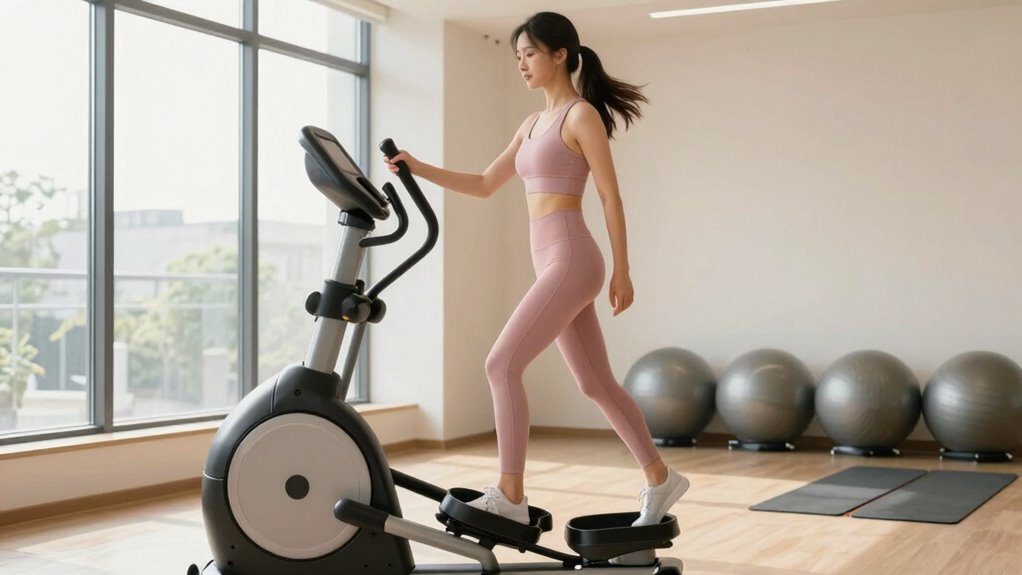
If you’re worried about the equipment, don’t fret. There are numerous equipment alternatives that can make your low-impact workouts more engaging and effective. Stationary bikes, ellipticals, and rowing machines are excellent choices because they offer adjustable intensity levels and support your joints. Plus, many gyms and home setups now include these machines, making it easier to tailor your sessions based on your fitness level. For even more variety, you can use resistance bands, stability balls, or even water weights to boost the intensity without adding strain. Using appropriate equipment can also help you maintain proper form and prevent injury, which is especially important for beginners or those with joint concerns. Incorporating joint-friendly exercises can help ensure your workouts are both safe and effective, thereby supporting long-term adherence. These equipment alternatives help keep your workout challenging and fun, which is essential for maintaining consistency over time.
When selecting your low-impact cardio, think about what you enjoy most. If you love being outdoors, cycling or walking in nature can be both invigorating and gentle on your body. If you prefer indoor workouts, an elliptical or swimming can provide a smooth, fluid motion that’s easy on your joints. The key is to choose activities that align with your preferences so you’re motivated to stick with them. Remember, consistency beats intensity when it comes to forming a sustainable routine. By focusing on activities that are low-impact but still get your heart pumping, you’re more likely to stay committed in the long run. Incorporating variety in workouts can also prevent boredom and help you stay engaged with your fitness journey.
Finally, listen to your body as you progress. If you notice discomfort or fatigue, dial back the intensity or try different equipment alternatives. The goal is to maintain a steady, enjoyable routine that improves your health without causing setbacks. Low-impact cardio isn’t just about protecting your joints; it’s about creating an accessible, adaptable way to stay active and achieve your fitness goals. With the right choices, you’ll find a sustainable rhythm that keeps you moving and feeling good every step of the way.
As an affiliate, we earn on qualifying purchases.
Frequently Asked Questions
Can Low-Impact Cardio Help With Weight Loss Effectively?
Yes, low-impact cardio can help with weight loss effectively. It still burns calories and boosts your metabolism without stressing your joints. While it might have a lower workout intensity compared to high-impact options, maintaining consistency allows you to burn calories steadily over time. This helps create a calorie deficit essential for weight loss. Plus, it’s easier to stick with, making it a sustainable part of your fitness routine.
How Often Should I Do Low-Impact Cardio for Best Results?
You should aim for low-impact cardio about 3 to 5 times a week, balancing workout duration and intensity. Studies suggest that moderate exercise duration—around 30 minutes—at a steady, manageable intensity yields consistent results. While some believe daily activity boosts benefits, overdoing it might lead to fatigue. Listen to your body, gradually increase exercise duration, and maintain moderate intensity to optimize your routine without risking burnout.
Is Low-Impact Cardio Suitable for Beginners?
Yes, low-impact cardio is perfect for beginners. It lets you build endurance without risking injury, making it easier to stay consistent. As you progress, you can explore high-impact alternatives or advanced workout options to challenge yourself further. Starting with low-impact exercises helps you develop good form and confidence, creating a solid foundation for more intense routines later on. Always listen to your body and gradually increase intensity.
Can Low-Impact Exercises Improve Cardiovascular Health?
Low-impact exercises definitely improve cardiovascular health, and they do so while prioritizing joint safety and injury prevention. By reducing stress on your joints, you can sustain consistent workouts without discomfort or risk of injury. This approach encourages regular activity, which is essential for heart health. So, if you focus on low-impact options, you can effectively boost your cardiovascular system while keeping your joints safe and minimizing injury chances.
What Equipment Is Needed for Low-Impact Cardio Workouts?
You don’t need much equipment for low-impact cardio workouts—just a few versatile options. A treadmill, elliptical, or stationary bike offers variety and easy workout modifications. Resistance bands or a step platform can add intensity or variety. Focus on equipment that supports your fitness level, guarantees comfort, and keeps workouts enjoyable. With the right gear, you can stay consistent and safely enjoy effective low-impact cardio sessions.
As an affiliate, we earn on qualifying purchases.
Conclusion
Choosing low-impact cardio can make sticking to your routine easier and more enjoyable. Imagine Jane, who struggled with joint pain from running but found swimming to be her perfect solution. She now exercises consistently, feeling energized without discomfort. By selecting activities that suit your body, you’ll build a sustainable habit that keeps you moving and motivated. Remember, the key is finding what works best for you—so stay flexible and enjoy your journey to better health.
As an affiliate, we earn on qualifying purchases.
As an affiliate, we earn on qualifying purchases.
Halloween Picks
halloween
As an affiliate, we earn on qualifying purchases.