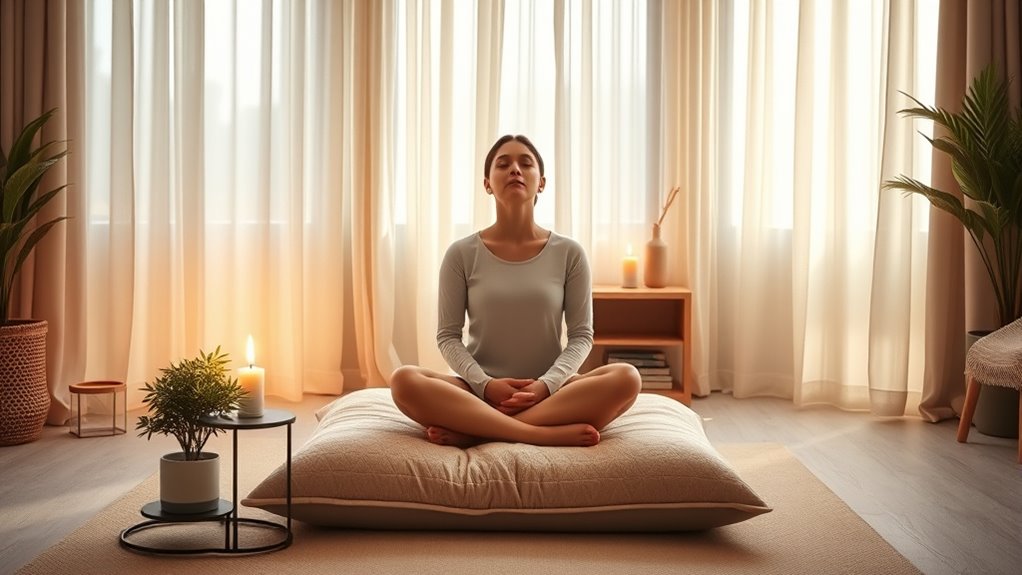

Starting a meditation practice is simple and accessible. Begin with mindful breathing—inhale slowly through your nose, hold briefly, then exhale gently, focusing on your breath’s sensation. Incorporate mindful eating by paying attention to textures, flavors, and smells during at least one meal daily. Use these techniques regularly to build habits that reduce stress and boost awareness. As you progress, you’ll discover even more ways to deepen your practice and experience lasting benefits.
Key Takeaways
- Begin with simple breathing exercises, inhaling slowly through the nose and exhaling gently to anchor in the present.
- Incorporate mindful eating into one meal daily, focusing on sensations, flavors, and chewing slowly.
- Practice meditation for a few minutes each day, gradually increasing duration as comfort grows.
- Maintain patience and consistency, understanding that mindfulness develops over time through regular practice.
- Use accessible techniques anywhere, anytime, without the need for special equipment or locations.
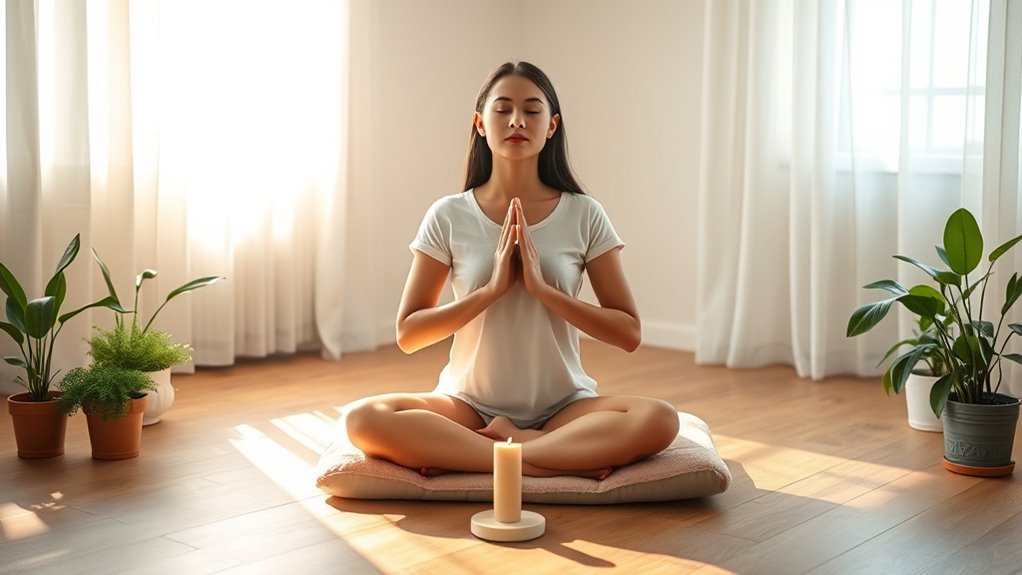
Have you ever wished for a simple way to reduce stress and stay present in the moment? Starting a meditation practice can seem intimidating at first, but focusing on mindful breathing and eating makes it approachable. These techniques help anchor you in the present, calming your mind and body. Breathing techniques are especially effective because they tap into your body’s natural relaxation response. When you notice your thoughts wandering, take a moment to inhale slowly through your nose, filling your lungs completely. Hold that breath for a second, then exhale gently through your mouth or nose. Repeat this process a few times, paying close attention to how each breath feels. This simple act can quickly ground you, reducing feelings of anxiety and helping you become more aware of your current state. The more you practice, the easier it becomes to access this calmness anytime, anywhere.
Incorporating mindful eating into your routine is another powerful way to cultivate mindfulness. Instead of rushing through meals or eating distractedly while watching TV or scrolling on your phone, focus fully on your food. Take a moment before you start eating to observe the colors, textures, and aromas of your meal. As you take each bite, really taste the flavors and notice the sensations in your mouth. Chew slowly and deliberately, paying attention to how the food feels and tastes. This practice not only enhances your enjoyment but also helps you connect with your body’s signals of hunger and fullness. Mindful eating encourages you to slow down and appreciate your nourishment, which can improve digestion and prevent overeating.
Both breathing techniques and mindful eating serve as accessible entry points into mindfulness. They require no special equipment or location, just your attention and intention. Start small—dedicate a few minutes each day to practice breathing exercises, and try to incorporate mindful eating into at least one meal daily. Over time, these habits will become second nature, helping you develop a more consistent meditation practice. The key is consistency and patience; mindfulness isn’t about achieving perfection but about being present and gentle with yourself as you learn. As you continue, you’ll notice increased awareness, reduced stress, and a greater sense of calm, making it easier to navigate life’s challenges with clarity and resilience.

Meditations
FINGERPRINT with FP logo
As an affiliate, we earn on qualifying purchases.
As an affiliate, we earn on qualifying purchases.
Frequently Asked Questions
Can Mindfulness Help With Chronic Pain Management?
Yes, mindfulness and meditation can help with chronic pain relief. When you practice mindfulness, you learn to observe your pain without judgment, which can reduce stress and emotional suffering. Meditation helps you develop a calmer mindset, making pain feel less overwhelming. Regularly incorporating mindfulness into your routine can improve your ability to manage chronic pain, providing a sense of relief and increased emotional resilience over time.
How Long Should Beginners Meditate Daily?
You should aim for about 5 to 10 minutes of meditation daily as a beginner. Start with a manageable meditation duration, focusing on consistency rather than length. As you become more comfortable, gradually increase your daily practice length to 15 or 20 minutes. The key is to establish a regular routine that fits into your schedule, helping you develop mindfulness without feeling overwhelmed.
Is Meditation Suitable for Children and Teens?
Yes, meditation is suitable for children and teens. You can introduce child-friendly meditation techniques that are simple and engaging, helping them develop focus and emotional regulation. For teens, try teen mindfulness exercises that promote stress relief and self-awareness. Keep sessions short—around five to ten minutes—and make it fun. Encouraging regular practice can foster lifelong benefits, making meditation an accessible and valuable tool for young minds.
What Are Common Obstacles When Starting Mindfulness Practice?
When starting your mindfulness practice, you might face common obstacles like mindful distractions that pull your attention away and patience challenges as you wait for results. You may find your mind wandering or feel frustrated when progress seems slow. To overcome these, gently acknowledge distractions without judgment and remind yourself that patience is key. Consistent practice helps you build focus and develop a more resilient, peaceful mindset over time.
Can Mindfulness Improve Mental Health Conditions?
Think of mindfulness as a mental reset button. It can markedly improve your mental health by reducing stress and aiding emotional regulation. For example, many find that regular meditation helps them handle anxiety better and improve mood. Scientific studies support this, showing mindfulness decreases symptoms of depression and anxiety. By practicing consistently, you’ll strengthen your mind’s resilience, making it easier to navigate life’s challenges with calm and clarity.

Retrospec Sedona Zafu Meditation Cushion with Buckwheat Hull Fill – Adjustable Yoga & Pilates Equipment Support – 17in Crescent Cotton Cover
NATURAL COMFORT & SUPPORT: Filled with sustainable buckwheat hulls, this meditation cushion elevates your practice by aligning your…
As an affiliate, we earn on qualifying purchases.
As an affiliate, we earn on qualifying purchases.
Conclusion
Now that you’re starting your mindfulness journey, remember that patience is key; Rome wasn’t built in a day. Stick with your practice, even if it feels challenging at first. With consistent effort, you’ll find your mind becoming calmer and more present. Think of it as planting seeds—you won’t see the full bloom overnight, but with time and care, your meditation skills will flourish. Keep going, and watch your awareness grow stronger each day.

Mindsight 'Breathing Buddha' Guided Visual Meditation Tool for Mindfulness | Slow Your Breathing & Calm Your Mind for Stress & Anxiety Relief | Perfect for Adults & Kids (Multicolor, Sloth (Sound))
🧠 Introducing (6) Ambient Nature Sounds: the addition of crashing waves, birds chirping or a strong breeze can…
As an affiliate, we earn on qualifying purchases.
As an affiliate, we earn on qualifying purchases.

Mindful Eating Portion Control Flatware – for weight loss bariatric diet
Serrated knife makes cutting easier
As an affiliate, we earn on qualifying purchases.
As an affiliate, we earn on qualifying purchases.