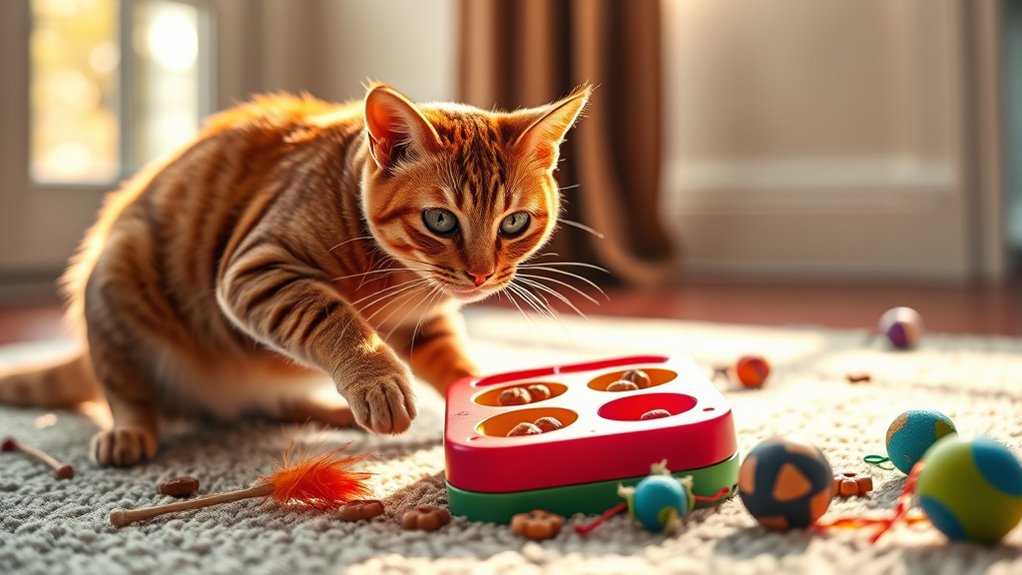

To keep your pet entertained and mentally stimulated, choose interactive toys like puzzles and treat dispensers that challenge their problem-solving skills. These toys encourage your pet to use their paws, nose, or thinking abilities while rewarding them with treats. Regularly rotating toys and introducing new challenges can prevent boredom and promote confidence. Continuing to explore different types of toys and tips can help you guarantee your pet stays happy and engaged longer.

Get gifts for the two of you delivered free with Prime
- Fast, free delivery on millions of items
- Prime Video, Amazon Music and more included
- Member-only deals all year
Key Takeaways
- Use paw puzzles and treat dispensers to challenge your pet’s problem-solving skills and keep them mentally active.
- Gradually introduce new toys and rotate them regularly to prevent boredom and maintain engagement.
- Fill treat dispensers with healthy treats to motivate and reward your pet during play.
- Reinforce positive interactions with toys through praise and demonstrations, making playtime enjoyable.
- Consult a veterinarian or pet behaviorist for tailored advice on selecting suitable interactive toys for your pet.
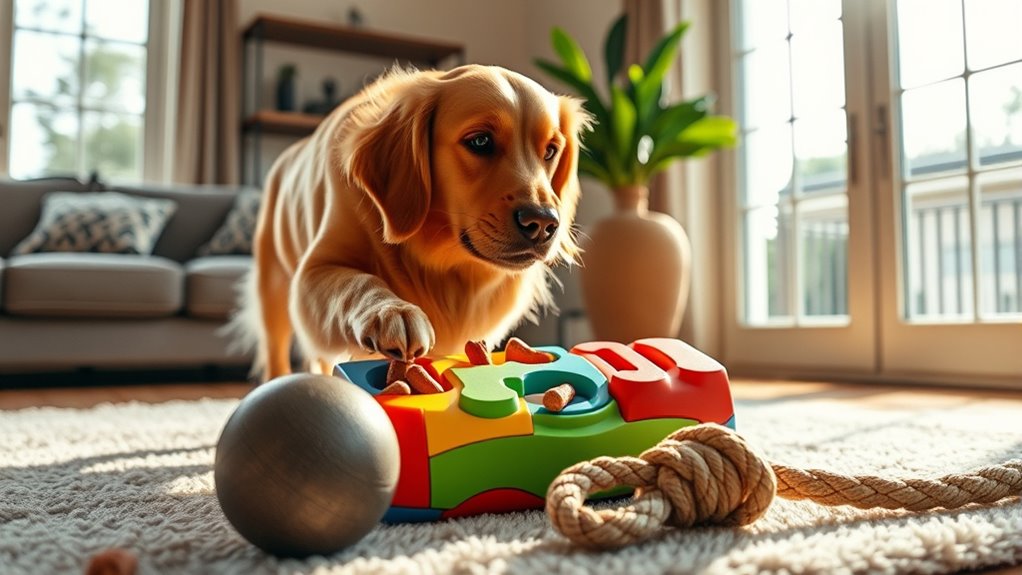
Keeping your pet mentally stimulated is essential for their happiness and well-being, especially when they spend time alone. When your furry friend has access to engaging activities, they’re less likely to develop behavioral issues caused by boredom. One effective way to keep them entertained is by introducing interactive toys like a paw puzzle. These puzzles are designed to challenge your pet’s problem-solving skills, encouraging them to use their paws and nose to uncover hidden treats or move pieces around. Paw puzzles come in various difficulty levels, so you can choose one that matches your pet’s intelligence and experience. As they work to solve the puzzle, they stay mentally active and stimulated, which can reduce anxiety and destructive behaviors.
Another popular interactive toy that can serve as both entertainment and mental exercise is a treat dispenser. Treat dispensers are simple devices that release treats when your pet interacts with them correctly. They encourage your pet to think and figure out how to get to their reward, promoting cognitive development. Plus, treat dispensers can be used during your absence, giving your pet a purpose and a reason to stay engaged. When selecting a treat dispenser, look for one that’s sturdy and easy to clean, ensuring it withstands your pet’s enthusiasm and is hygienic for regular use. Filling the dispenser with healthy treats or kibble adds an extra layer of motivation, making the activity even more rewarding for your pet.
Using these interactive toys not only keeps your pet occupied but also helps build their confidence and problem-solving skills. It’s important to introduce them gradually, especially if your pet is new to puzzles or treat dispensers. Show them how the toy works without forcing it, and praise them when they succeed in getting a treat. Over time, your pet will learn to enjoy these mental challenges, which can lead to a more balanced and contented animal. Remember to rotate different toys to keep things fresh and prevent boredom. The key is consistency and making playtime a positive experience that stimulates their mind and satisfies their natural instincts. Consulting a veterinarian or a pet behaviorist can provide additional insights into suitable toys and activities for your specific pet. By investing in a paw puzzle and a treat dispenser, you’re giving your pet valuable mental exercise that enhances their overall happiness and quality of life.
As an affiliate, we earn on qualifying purchases.
Frequently Asked Questions
How Do I Choose the Right Interactive Toy for My Pet?
To choose the right interactive toy, start by considering your pet’s personality—active pets need stimulating toys, while calmer ones prefer gentle options. Make certain safety and durability by selecting high-quality materials that withstand chewing or rough play. Observe how your pet interacts with different toys to find what excites them most, and always supervise playtime to prevent accidents. This way, you’ll pick engaging, safe toys that keep your pet happy and entertained.
Can Mental Stimulation Replace Physical Exercise for Pets?
Mental stimulation can’t replace physical exercise, but it complements it by delivering cognitive benefits and behavioral improvements. You might think puzzles and toys are enough, yet your pet needs active movement to stay healthy and happy. Combining mental challenges with regular physical activity ensures balanced development, preventing boredom and destructive behaviors. So, while mental engagement is essential, it shouldn’t be the sole form of exercise for your pet’s overall well-being.
Are There Age-Specific Toys for Different Pets?
Yes, there are age-specific toys designed for different pets. You should choose age-appropriate toys that match your pet’s developmental stage, ensuring safety and engagement. For example, puppies and kittens benefit from softer, smaller toys, while adult pets enjoy more challenging options. Breed-specific toys also cater to size and activity levels, helping your pet stay entertained and mentally stimulated while preventing boredom and promoting healthy development.
How Often Should I Rotate My Pet’s Toys?
You should rotate your pet’s toys every one to two weeks to prevent boredom and keep their interest high. Regular toy rotation engages their mind, preventing boredom and encouraging activity. By swapping out toys, you introduce novelty, making playtime exciting again. Keep an eye on your pet’s preferences and remove worn or unsafe toys, replacing them with fresh options to maintain mental stimulation and guarantee safe, engaging play sessions.
What Are Signs My Pet Is Bored or Under-Stimulated?
Think of your pet like a car engine; if it’s idling too long, it stalls. Boredom indicators include excessive scratching, chewing furniture, or hiding. Mental engagement cues are when they stare at toys or seem disinterested in play. If your pet shows these signs, they’re under-stimulated. You can tell they’re bored when they lose interest quickly or become restless—keeping them engaged helps prevent this.
As an affiliate, we earn on qualifying purchases.
Conclusion
By enriching your pet’s daily routine with interactive toys and mental challenges, you create a world where boredom has no foothold. Imagine watching your furry friend’s eyes light up with curiosity and joy, like a child uncovering a hidden treasure. These moments strengthen your bond and keep your pet happy and healthy. So, embrace these playful puzzles—because a stimulated pet isn’t just entertained, they’re thriving in a world of endless discovery.
As an affiliate, we earn on qualifying purchases.
As an affiliate, we earn on qualifying purchases.
Halloween Picks
halloween
As an affiliate, we earn on qualifying purchases.