

To introduce pets without panic, start by creating a calm environment with barriers like baby gates, allowing them to smell each other safely. Watch for signals like wagging tails or stiff postures to gauge comfort. Keep initial interactions short and positive, gradually increasing exposure. If stress arises, calmly separate the animals and try again later. Patience is key—by consistently using gentle guidance and positive reinforcement, you’ll help build trust smoothly. Learn more about calming techniques for successful pet introductions.

Get gifts for the two of you delivered free with Prime
- Fast, free delivery on millions of items
- Prime Video, Amazon Music and more included
- Member-only deals all year
Key Takeaways
- Use barriers like baby gates to allow pets to see and smell each other safely before direct contact.
- Observe behavioral cues carefully, such as tail wagging or growling, to assess comfort levels during introductions.
- Keep initial interactions short, positive, and supervised to prevent stress and build confidence gradually.
- Redirect any signs of stress or aggression and avoid punishment to promote calm behavior.
- Reinforce calm, friendly behaviors with treats and praise to encourage positive associations.
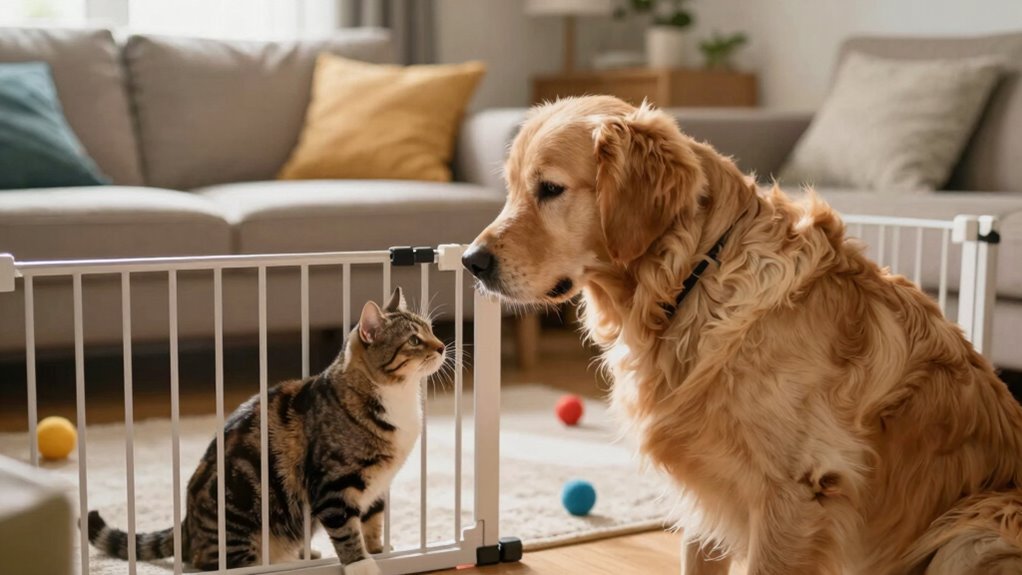
Wondering how to introduce pets to each other without chaos? The key is to plan ahead and stay calm, so your pets feel safe and secure during the process. When you’re preparing for the first introduction, focus on pet training and understanding behavioral cues. Recognizing these cues helps you gauge your pets’ comfort levels and prevents misunderstandings that could lead to conflict. For example, a wagging tail doesn’t always mean friendliness, so pay attention to other signals like growling, hissing, or stiff posture. By observing these signs, you can intervene early if things start to go awry. Additionally, understanding the importance of biodiversity in animal behavior can help you better interpret their natural responses and reactions. Start by creating a controlled environment where your pets can see each other but aren’t forced into close contact right away. Use a baby gate or keep them separated in different rooms with a door cracked open. Allow them to smell each other through the barrier, which is a natural way for animals to gather information. During this time, reinforce positive behavior with treats and praise—this is essential for pet training. When your pets are calm and curious, you can gradually increase their exposure by supervised visits. Remember, patience is vital. Rushing this step can cause anxiety or aggressive responses. When you do introduce them directly, keep initial meetings short and positive. Use commands they already know, like “sit” or “stay,” to keep the situation under control. If either pet shows signs of stress or aggression—such as growling, lunging, or baring teeth—immediately separate them and try again later. It’s crucial to respect their behavioral cues and never punish animals for their reactions; instead, redirect their attention and reward calmness. Incorporating animal communication can further improve your ability to interpret and respond to your pets’ signals effectively. Developing an understanding of species-specific behaviors can also help tailor your approach during introductions.
Incorporating patience and consistency into your approach will also foster a sense of security for your pets and help build trust.
Products Worth Considering

Garmin Forerunner 165 GPS Running Smartwatch, 43 mm, Black

Levoit Core 400S-P Smart Air Purifier for Large Rooms

Hyperice Normatec Elite Wireless Compression Boots Recovery – Standard Size
As an affiliate, we earn on qualifying purchases.
Frequently Asked Questions
How Long Should Initial Supervised Meetings Last?
You should keep initial supervised meetings between your pets to about 10 to 15 minutes. Use calming techniques like speaking softly and offering treats, and incorporate pet scent swapping beforehand to ease the changeover. Observe their body language closely, and if either pet shows signs of stress, calmly separate them and try again later. Gradually increase the time as they become more comfortable, ensuring each meeting remains positive.
What Are Signs of Aggression During Introductions?
During introductions, watch for signs of aggression like stiff body language, growling, or raised hackles. For example, if your dog snarls and lunges, it indicates territorial behaviors and fear. These signals show your pet feels threatened and might escalate. Recognizing these signs early helps you intervene and prevent conflict. Keep an eye on pet body language, and step back if aggressive behaviors emerge to guarantee a safe, positive meeting.
Should I Feed Pets Together Initially?
You shouldn’t feed pets together initially, as it can lead to territorial disputes. Instead, stick to separate feeding routines to prevent conflicts. To help them get familiar, practice scent swapping—swap bedding or toys between them so they associate each other’s scent positively. Gradually, you can introduce supervised joint feeding times once they’re comfortable with each other’s scent and show no signs of aggression.
How to Handle a Sudden Fight Between Pets?
A sudden fight can feel like a volcano erupting, but stay calm and act fast. Separate your pets quickly, using a barrier if needed. Observe their pet personalities and environmental factors, like stress or territory issues, that might have triggered the conflict. Reintroduce them gradually, ensuring each pet feels safe. Address underlying causes, and always stay patient—most fights are fixable with consistent, gentle handling and understanding.
When Is the Right Time to Fully Introduce Pets?
You should fully introduce pets once their pet behavior indicates comfort and curiosity, not fear or aggression. Guarantee the environment setup promotes calmness—use a neutral space, keep introductions short, and supervise closely. Observe their reactions, and if they remain relaxed, gradually extend interactions. Rushing the process can cause stress, so take your time, and always prioritize creating a safe, positive environment for both pets to adjust comfortably.
Conclusion
Introducing pets peacefully requires patience, understanding, and consistency. Remember, patience teaches, understanding comforts, and consistency reassures. As you navigate this process, stay calm, stay committed, and stay positive. When you foster trust, you foster harmony. With each step you take, you build a bond not just between your pets but between your heart and theirs. Ultimately, the goal isn’t just peaceful coexistence but a shared happiness that lasts a lifetime.