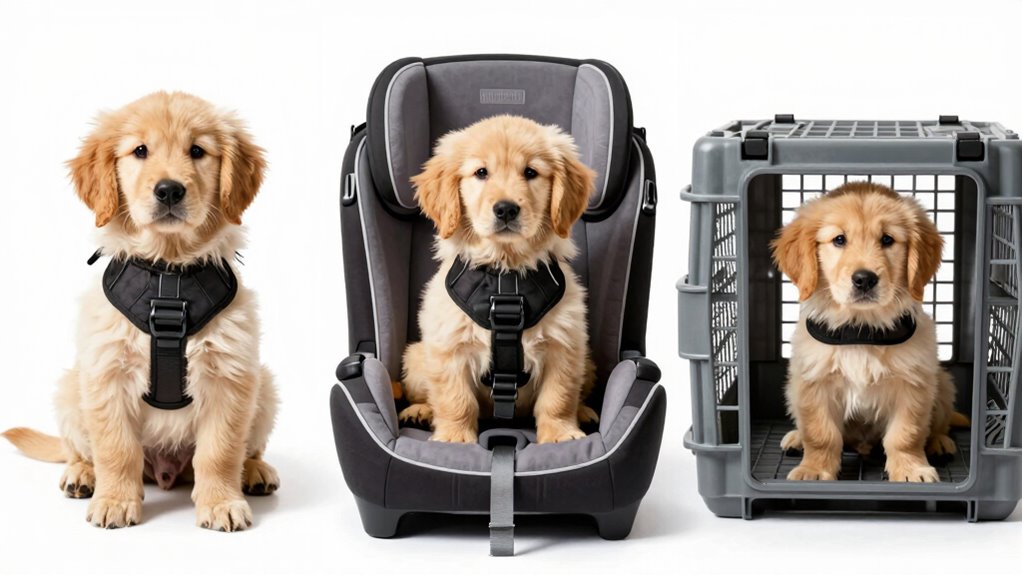

Crash-tested pet safety shows that car seats and harnesses provide better impact protection than crates. They distribute forces across your pet’s body and absorb crash energy, reducing injury risk. Crates often fail to restrain pets securely and may become dangerous projectiles during collisions. Proper installation and choosing certified restraints are key to safety. To find out which options offer the best protection and how to properly secure your pet, keep exploring the details ahead.
Key Takeaways
- Crash-tested pet car seats generally provide superior impact absorption and protection compared to harnesses and crates.
- Properly installed harnesses can reduce injury risk but may interfere with airbags if not designed for vehicle safety.
- Pet crates with impact-resistant features and secure fastening offer better crash safety than poorly secured or flimsy crates.
- Standardized crash testing evaluates restraint effectiveness by measuring impact forces and injury outcomes across different devices.
- Choosing certified, crash-tested restraints—car seats, harnesses, or crates—significantly enhances pet safety during collisions.

Pawsincar Crash-Tested Small Dog Car Seat (Test with FMVSS 213b – U.S. Child Restraint System)| Enclosed Dog Car Seats for Small Dogs, Cat, Pet Up To 15lbs | Lab-tested Carrier for Strong Protection |
CRASH-TESTED : Our dog car seat has been independently crash-tested in the USA by the Center for Pet…
As an affiliate, we earn on qualifying purchases.
As an affiliate, we earn on qualifying purchases.
How Are Pet Safety Crash Tests Conducted?
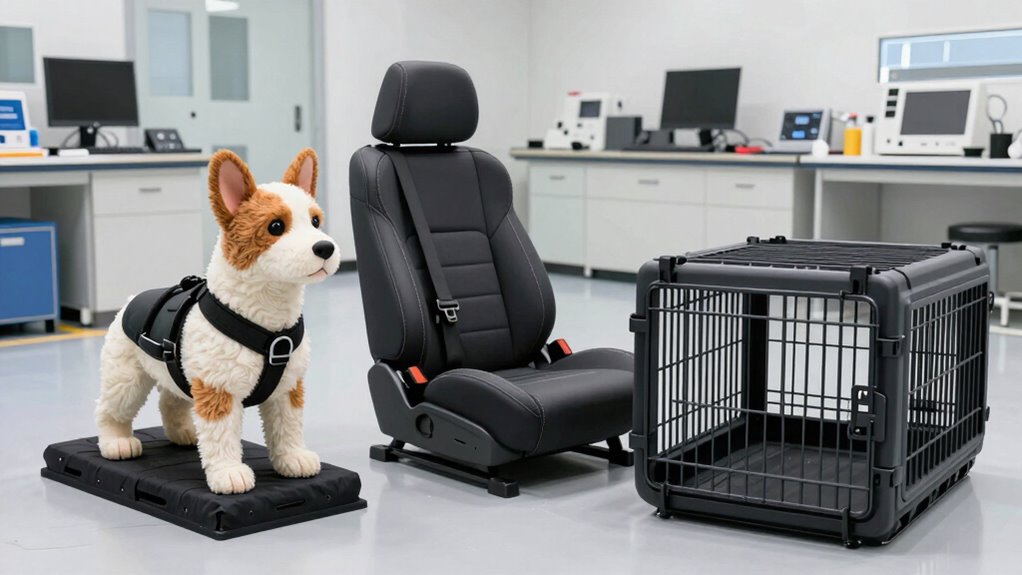
Pet safety crash tests are carefully designed to evaluate how well different restraint systems protect your pet during a collision. During crash testing, experts simulate car accidents using crash test dummies that resemble pets in size and weight. These tests measure how restraints like harnesses, car seats, or crates absorb impact forces and prevent injury. High-speed cameras and sensors monitor the dummy’s movement and forces exerted on its body. The goal is to identify weaknesses in restraint designs and improve pet safety standards. By analyzing these tests, manufacturers can develop more effective devices that minimize injury risk. Additionally, understanding the importance of proper restraint selection can significantly enhance your pet’s safety in unforeseen accidents. The results from crash tests also help establish safety benchmarks, guiding better standards and consumer choices. These benchmarks are essential for setting regulatory guidelines that ensure consistent safety levels across products. Ultimately, crash testing provides essential information that helps you choose safer options for keeping your pet secure during a crash. Regularly reviewing testing procedures ensures that safety measures keep pace with technological advancements and increased awareness.
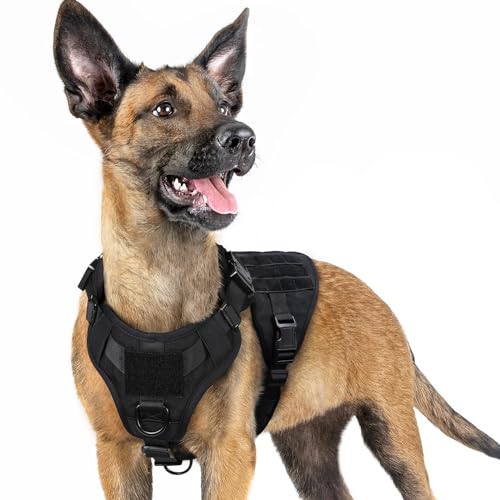
rabbitgoo Tactical Dog Harness for Small, Heavy Duty Pet Harness with Handle, No-Pull Service Vest Small Breed, Adjustable Military Dog Vest for Training Hunting Walking, Black, S
Small Dog Molle Vest: Neck Girth: 18.5” – 21.7” (47 – 55.1cm), Chest Girth: 26.5” – 30.7” (67…
As an affiliate, we earn on qualifying purchases.
As an affiliate, we earn on qualifying purchases.
Which Restraints Are Most Effective in Impact Tests?
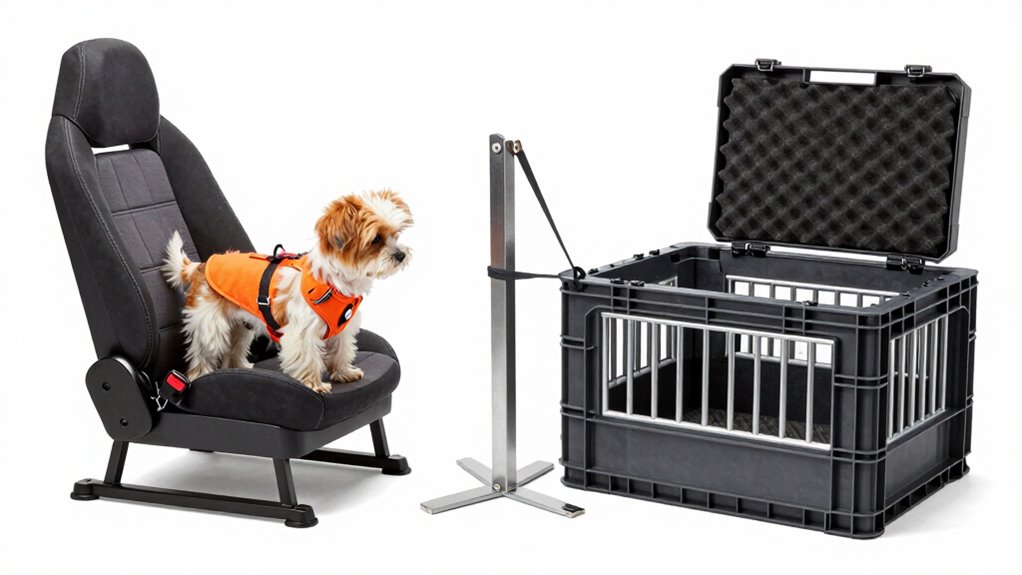
When it comes to impact tests, harnesses and car seats consistently outperform crates in protecting your furry friend. These restraints demonstrate higher restraint effectiveness by securely controlling movement during sudden stops or collisions. Impact tests show that harnesses distribute force across the chest and shoulders, reducing injury risk. Car seats provide a stable, enclosed environment that absorbs crash forces and prevents excessive movement. Crates, however, often fail to keep pets securely restrained, increasing the chance of injury or ejection. Restraint effectiveness is essential for safety, and impact test results clearly favor harnesses and car seats. Proper restraint installation is crucial to ensure maximum protection during a crash. Ensuring the correct fit of the restraint can significantly improve its effectiveness and your pet’s safety. Using the right restraint type can make a substantial difference in crash scenarios, as different restraints have varying performance levels. Choosing the right restraint means better protection and peace of mind, especially in high-impact scenarios. Your pet’s safety depends on selecting the restraint that performs best in crash conditions. Additionally, restraint material can influence durability and impact absorption, further enhancing safety. Incorporating impact-resistant materials into the restraint design can provide additional safety benefits during collisions.

Sherpa Forma Frame Crash-Tested Travel Pet Carrier, Airline Approved & Guaranteed On Board – Black, Medium
AIRLINE APPROVED: The Sherpa Forma Frame Pet Carrier is airline approved and part of our Guaranteed On Board…
As an affiliate, we earn on qualifying purchases.
As an affiliate, we earn on qualifying purchases.
Crash-Test Results for Pet Car Seats and Harnesses
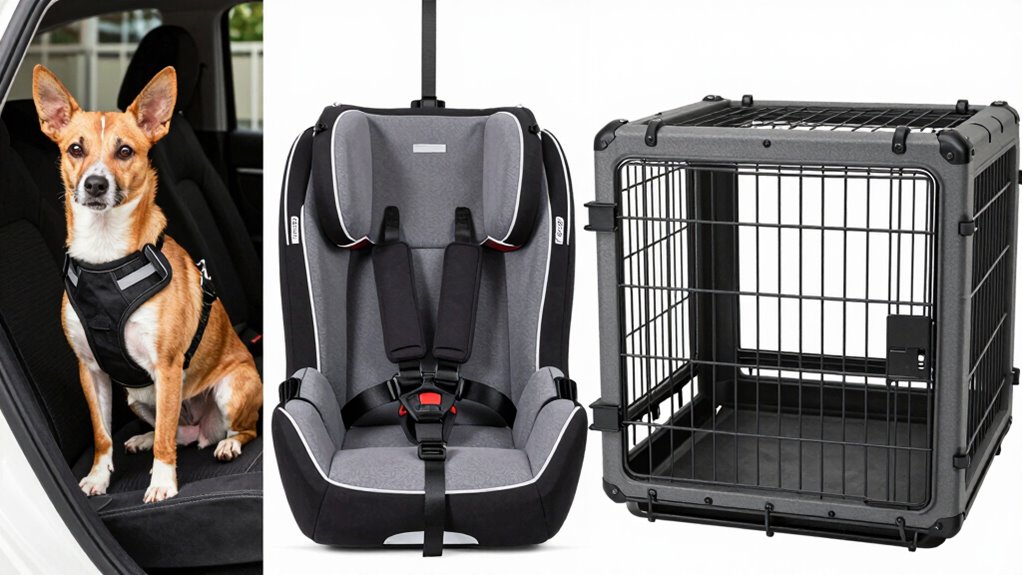
Crash-test standards and methods determine how pet restraints are evaluated, ensuring consistent safety benchmarks. When you look at the results, you’ll see how effective different car seats and harnesses are at preventing injuries during accidents. These tests highlight which systems truly protect your pet and help you make safer choices. Understanding the history of safety testing can also provide valuable insight into how these standards have evolved over time. Additionally, being aware of testing protocols can help you compare products more accurately and confidently. Knowing about affiliate disclosures also underscores the importance of choosing products based on thorough safety assessments rather than solely on marketing claims. Staying informed about essential oils for safety can offer additional ways to support your pet’s well-being during stressful situations. Incorporating advanced testing methods can further enhance your understanding of a product’s safety performance.
Crash-Test Standards and Methods
To evaluate the safety of pet car seats and harnesses, standardized crash-test procedures are employed that simulate real-world collision scenarios. These tests account for animal behavior and vehicle design, guaranteeing realistic outcomes. The testing methods typically include:
- Impact simulations that replicate frontal, side, and rear collisions to assess restraint system performance.
- Use of crash test dummies crafted to mimic pet size, weight, and movement, reflecting animal behavior during accidents.
- Evaluation of how vehicle design influences restraint effectiveness and occupant safety.
These standards help manufacturers improve products and ensure they provide reliable protection. By understanding how different restraint systems perform under strict testing conditions, you can make informed choices to keep your pet safe during unexpected crashes.
Restraint System Effectiveness
Evaluating how well pet car seats and harnesses perform during collisions provides valuable insights into their protective capabilities. Crash-test results reveal that properly installed harnesses can reduce injury risk, but their effectiveness depends on vehicle compatibility. Some harnesses may interfere with airbag deployment, increasing injury potential during an accident. Conversely, car seats designed for crash safety often offer superior protection by absorbing impact forces. The following table summarizes crash-test outcomes:
| Restraint Type | Impact Force Absorbed | Vehicle Compatibility | Airbag Interaction | Injury Risk Level |
|---|---|---|---|---|
| Pet Harness | Moderate | Variable | Potential interference | Moderate |
| Pet Car Seat | High | Designed for compatibility | No interference | Low |
| Crate | Low | Limited compatibility | No interference | High |
| Travel Harness | Variable | Variable | Possible interference | Moderate |
| Booster Seat | High | Vehicle-specific | No interference | Low |
Choosing the right restraint depends on vehicle design and safety features. Additionally, understanding crash-test outcomes can help pet owners make informed decisions about safety equipment. Being aware of vehicle safety standards can further guide owners toward more effective restraint choices. Recognizing proper installation techniques is also crucial to maximize safety performance. Moreover, consulting manufacturer guidelines ensures that restraints are used correctly for optimal safety. Furthermore, staying updated on latest safety research can lead to better protection for pets during travel.
Injury Prevention Success
Pet car seats and harnesses play a essential role in preventing injuries during vehicle accidents, with crash-test results highlighting their effectiveness. These safety devices help secure your pet, reducing the risk of injury from sudden stops or collisions. Proper use guarantees compatibility with seatbelts and minimizes interference with airbag deployment, which is fundamental for passenger safety. Additionally, selecting top-rated smart locks and office gear can enhance overall security protocols for your home or workplace. Key injury prevention benefits include: 1. Keeping your pet securely restrained to avoid projectiles. 2. Maintaining seatbelt compatibility for effective restraint. 3. Reducing the risk of injury during airbag deployment, which can be dangerous for unprotected pets. Crash tests confirm that combined restraint systems considerably improve your pet’s safety, making them a wise investment for peace of mind on the road. Furthermore, understanding support breakfast options can contribute to a balanced routine for pet owners balancing safety and nutrition.

BWOGUE Pet Dog Cat Seat Belts, Car Headrest Restraint Adjustable Safety Leads Vehicle Seatbelt Harness (1 Pack)
HIGH QUALITY: Made of high quality nylon fabric to ensure safety, features the solid zinc alloy swivel snap…
As an affiliate, we earn on qualifying purchases.
As an affiliate, we earn on qualifying purchases.
Are Pet Crates Safe During Collisions? What the Data Shows
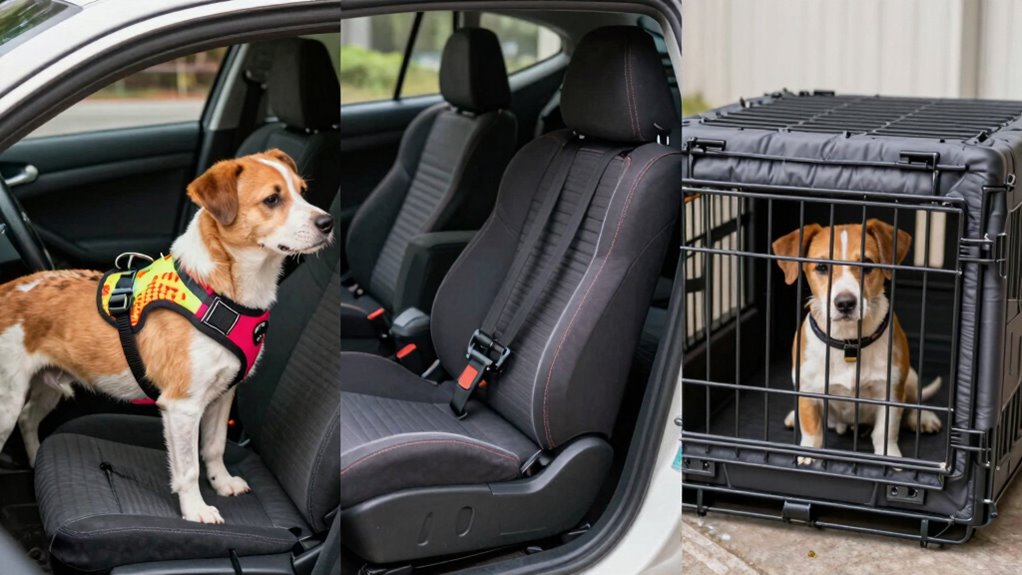
When a collision occurs, the impact resistance of your pet crate becomes critical for their safety. Poorly secured crates can increase injury risks for your pet and others in the vehicle. Using proper securing techniques helps guarantee the crate stays intact and protects your pet during accidents. Additionally, selecting a crate with impact-resistant features can further reduce injury risks during collisions. Understanding vehicle crash safety standards for pet products can help you make informed choices about the best crate for your pet’s protection. Incorporating crash testing protocols into your decision-making process can provide added assurance of a crate’s safety performance in real-world scenarios.
Impact Resistance of Crates
Although many pet crates claim to be secure, their ability to protect your animal during a collision varies considerably. The impact resistance of crates depends heavily on material durability and impact absorption qualities. Well-designed crates use sturdy materials that withstand force without breaking apart. To guarantee better protection:
- Look for crates made from high-durability plastics or metals.
- Check if the crate has shock-absorbing features or padding.
- Review crash-test results and safety certifications.
These factors determine how well a crate can absorb impact energy and prevent injury. A crate’s impact resistance isn’t just about strength; it’s about how effectively it manages collision forces to keep your pet safe. Investing in a crate with proven impact absorption capabilities offers peace of mind during travel.
Injury Risk Factors
While many pet crates are marketed as safe, actual injury risks during collisions depend on several factors. Your dog’s behavior plays a vital role—an anxious or restless pet can increase the chances of injury if the crate isn’t secured properly. Proper vehicle maintenance is equally important; worn brakes or loose seat belts can compromise safety and worsen collision outcomes. Crates that aren’t properly anchored can become projectiles or fail to protect your pet during impact. Additionally, the quality of the crate itself influences injury risk—crates tested for crashworthiness offer better protection. Ultimately, understanding how your dog’s behavior and vehicle condition affect safety helps you make informed decisions about pet restraint during travel.
Proper Securing Techniques
Securing your pet crate properly is essential to guarantee safety during collisions. A secure installation minimizes movement and reduces injury risk. To achieve this, focus on these key points:
- Use the vehicle’s seat belts or anchors to firmly secure the crate, preventing it from shifting.
- Ensure the crate is the right size— snug enough to prevent sliding but not so tight that it causes damage.
- Proper harnessing inside the crate or car seat helps keep your pet restrained and prevents sudden ejections or injuries.
Interpreting Crash Data to Find the Safest Pet Restraint
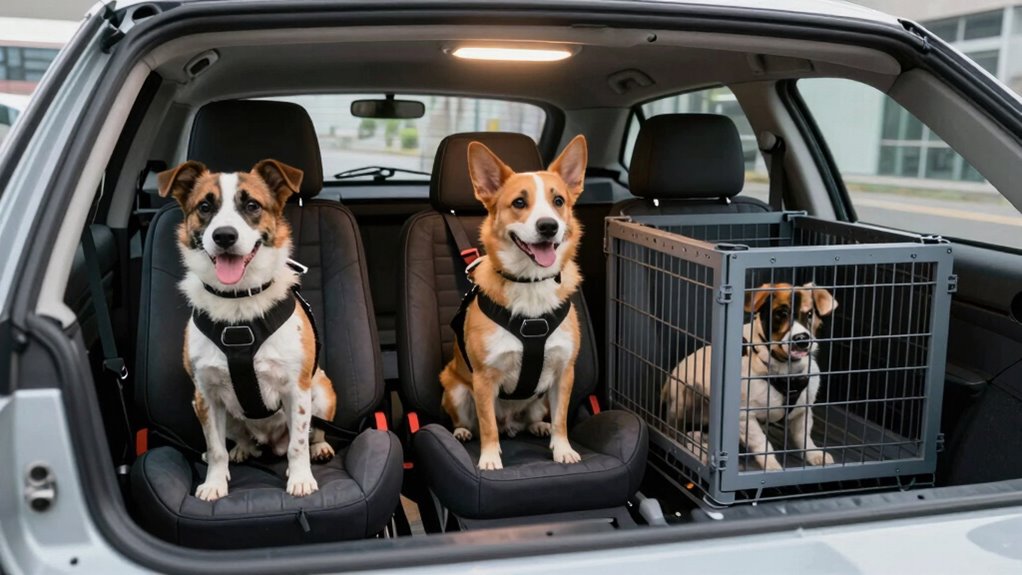
To identify the safest pet restraint, you need to carefully analyze crash test data that compares different products. Focus on how each restraint performs under simulated crash conditions, paying attention to metrics like impact forces and injury rates. Reliable crash testing results can reveal which products provide better pet safety by minimizing movement and injury during a collision. Look for standardized tests that evaluate restraint effectiveness across various crash scenarios. Don’t just rely on manufacturer claims—examine independent testing data. Clear, consistent results indicate higher safety levels. By understanding how to interpret this data, you can select a pet restraint proven to protect your furry friend best in real-world accidents, ensuring peace of mind during travel.
Tips for Choosing the Most Reliable Pet Travel Restraint
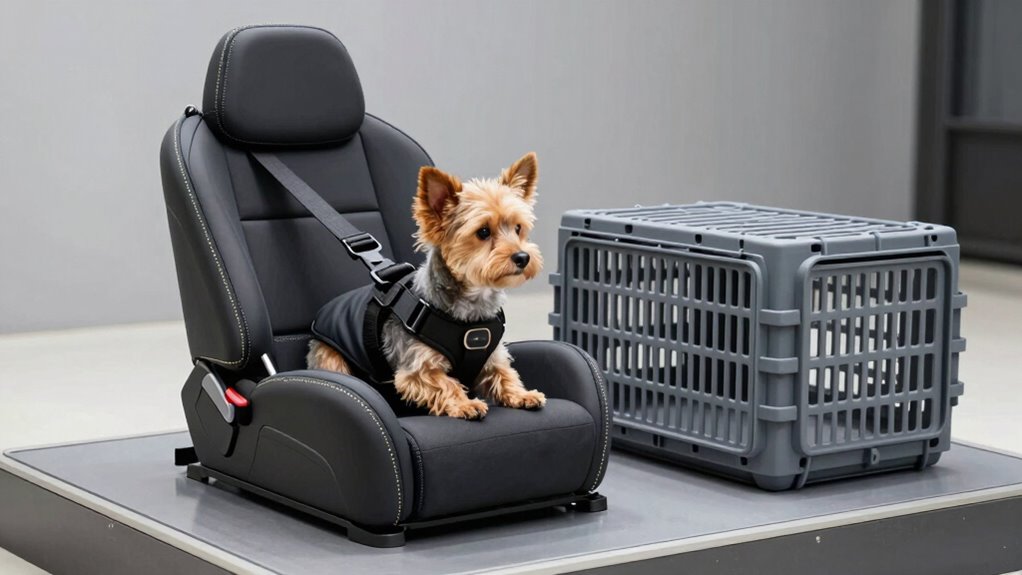
Choosing a reliable pet travel restraint is essential for your pet’s safety and your peace of mind on the road. To select the best option, consider these tips:
Prioritize crash-tested, adjustable pet restraints for safety and peace of mind during travel.
- Check that the restraint, like pet seat belts, is crash-tested and meets safety standards.
- Ensure harness installation is straightforward and secure, providing a snug fit without restricting movement.
- Look for adjustable features to accommodate your pet’s size and comfort, ensuring they stay secure in sudden stops or accidents.
Prioritize products with strong, durable materials and clear safety certifications. A reliable pet restraint minimizes distractions and keeps your pet safe, no matter the situation. Making informed choices now helps prevent injuries and guarantees peace of mind during every trip.
Common Mistakes to Avoid When Securing Your Pet in the Car
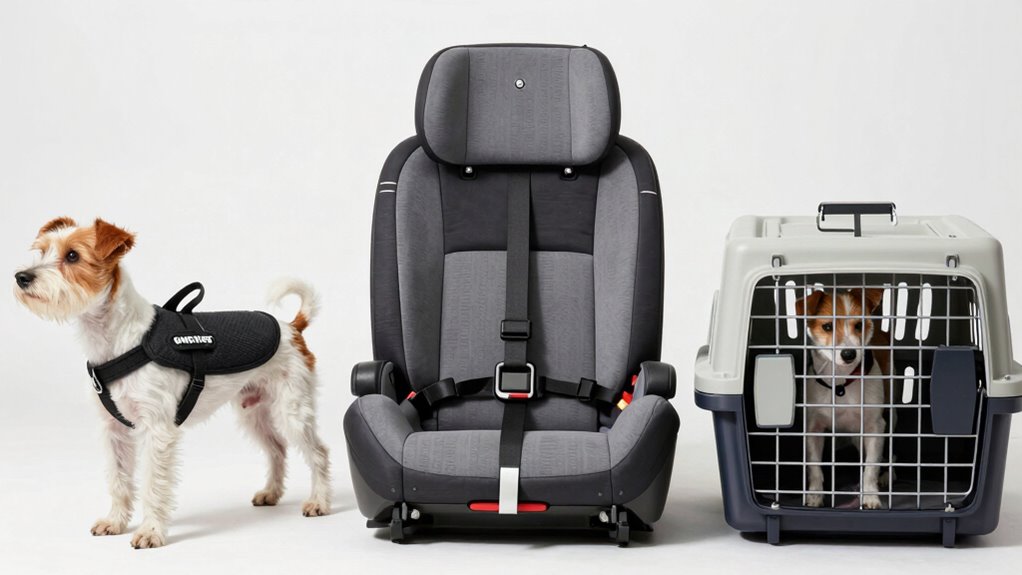
Even the best pet restraints can be ineffective if they aren’t utilized correctly. One common mistake is improperly securing pet harnesses, which can lead to injury during a crash or sudden stop. Always verify the harness fits snugly without restricting movement or breathing. Avoid using damaged or cheap pet harnesses, as their durability and safety are questionable. When using a crate, ensure proper crate ventilation; blocked vents can cause overheating or stress. Also, don’t leave your pet loose in the vehicle, as this increases the risk of injury. Double-check all restraints before driving, and make sure your pet is comfortable and secure. Properly securing your pet not only keeps them safe but also prevents distractions while driving.
Future Innovations That Could Improve Pet Vehicle Safety
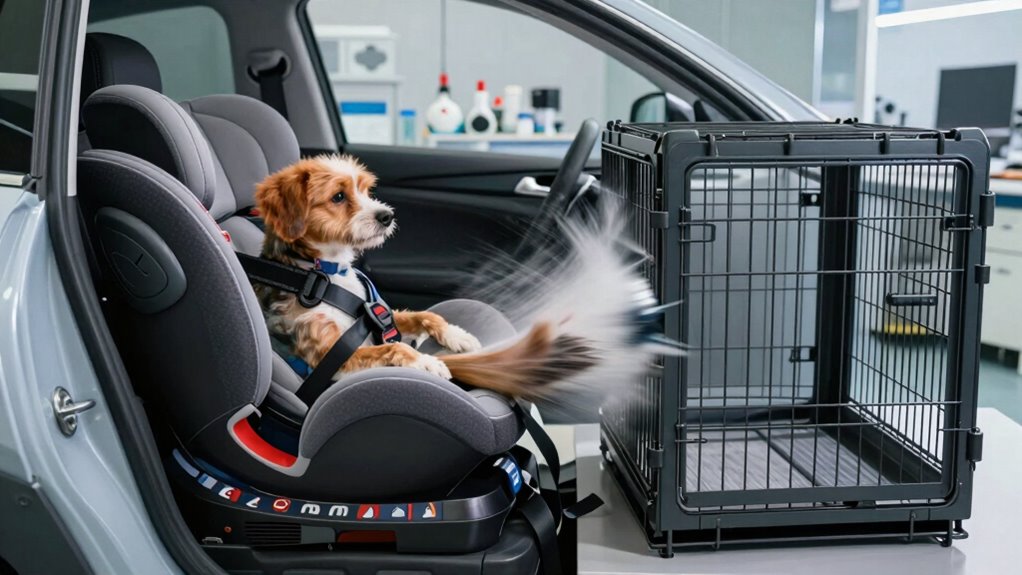
Advancements in technology are paving the way for smarter, more effective pet safety solutions in vehicles. Future innovations like smart harnesses could monitor your pet’s essential signs and adjust tension automatically, ensuring comfort and security during travel. Inflatable crates are also promising, offering lightweight, portable protection that inflates instantly upon impact to cushion your pet. Here are some key innovations to watch for:
Future pet safety tech includes smart harnesses and inflatable crates for safer, more comfortable travel.
- Integration of sensors in harnesses for real-time health monitoring
- Inflatable crates that combine ease of use with crash protection
- Smart systems that communicate with your vehicle’s safety features for coordinated responses
These technologies could considerably reduce injury risks and make traveling with your pet safer and more convenient.
Frequently Asked Questions
How Do Different Pet Sizes Affect Crash Test Results?
Your pet’s size greatly affects crash test results, as larger pets experience greater crash impact forces, increasing injury risk. Smaller pets tend to fare better because their weight and size result in lower crash impact forces. Proper restraint choices, like harnesses or car seats designed for your pet’s size, help mitigate injury during a crash. Always select safety gear appropriate for your pet’s size to guarantee the best protection.
Are There Standards for Pet Safety in Commercial Vehicles?
You should know that pet safety regulations for commercial vehicles are still evolving, but industry standards are starting to emerge. Some regulations mandate secure restraints, like harnesses or crates, to protect your pet during transit. While thorough laws vary by region, it’s vital to follow best practices and stay informed about any updates to guarantee your pet’s safety. Always prioritize secure and approved restraints to comply with evolving industry standards.
How Do Pet Restraint Options Compare in Real-World Accident Scenarios?
In real-world accidents, your pet’s safety hinges on effective restraint placement, like anchoring a lifeline during rescue techniques. Harnesses keep pets close, minimizing injury risk, while car seats cradle them securely, reducing movement and impact. Crates act as barriers, offering containment. Each option’s performance varies, but proper restraint use is essential. Always choose the best fit, ensuring your pet remains protected, whether in sudden stops or collisions.
Can Using Multiple Restraints Improve Overall Pet Safety?
Using multiple restraints enhances your pet’s safety by providing layered protection, known as multi restraint benefits. Combining strategies like a harness and car seat or crate guarantees your pet stays secure during sudden stops or crashes. This approach minimizes movement and reduces injury risk, giving you peace of mind. Always choose the right combination tailored to your pet’s size and behavior, maximizing overall safety in any driving situation.
What Training Is Recommended for Pet Owners to Ensure Proper Restraint Use?
Imagine you’re in the 1920s, learning to drive—today, you need proper harness and crate training for your pet. To guarantee correct restraint use, start with gentle crate training, making your pet comfortable inside. Practice fitting and adjusting the harness correctly, rewarding good behavior. Regularly review safety tips and seek guidance from a professional trainer if needed. This proactive approach keeps your furry friend safe and secure during every ride.
Conclusion
When it comes to your pet’s safety, don’t settle for anything less than the best. The right restraint can mean the difference between a minor bump and a catastrophe that could change everything. So, choose wisely, secure firmly, and never underestimate the power of proper safety measures. Because in the world of pet travel, a little precaution can prevent a disaster of epic proportions—saving your furry friend’s life and your peace of mind!