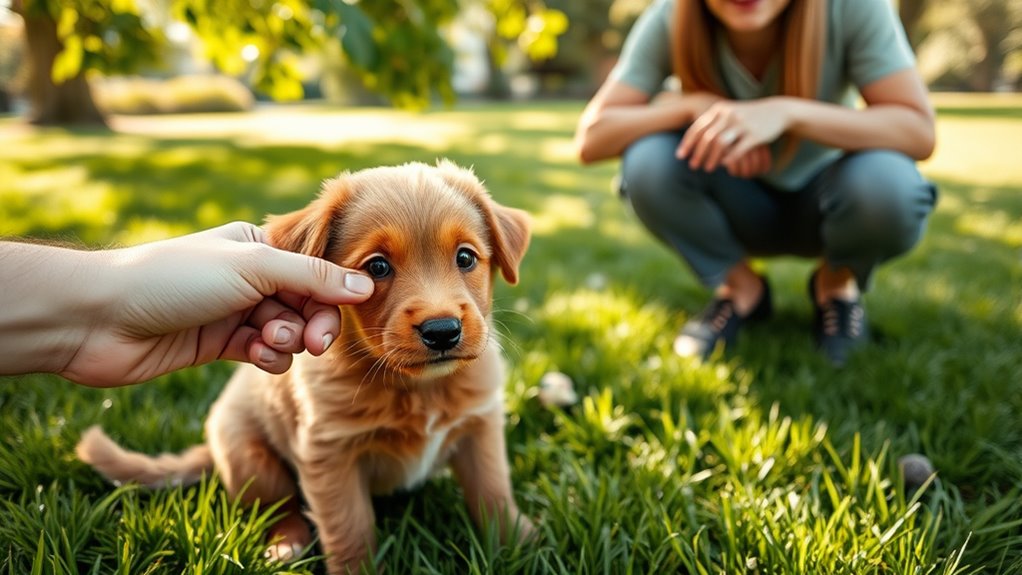

To teach your puppy essential commands, start with basics like sit, stay, come, and down, using short, positive sessions. Use treats and praise to reinforce good behavior, keeping commands consistent and clear. Be patient and practice regularly to build your puppy’s confidence and trust. Remember, consistency and positive reinforcement help instill good habits. Keep going, and you’ll discover simple steps to ensure your puppy becomes well-behaved and happy.

Get gifts for the two of you delivered free with Prime
- Fast, free delivery on millions of items
- Prime Video, Amazon Music and more included
- Member-only deals all year
Key Takeaways
- Teach basic commands like “sit,” “stay,” and “come” using short, positive training sessions with treats and praise.
- Be consistent with command words and routines to help the puppy understand expectations.
- Use positive reinforcement immediately when the puppy responds correctly to build confidence and trust.
- Incorporate training sessions into daily routines to reinforce commands and establish good habits.
- Practice patience and persistence, gradually increasing difficulty to ensure lasting understanding of essential commands.

Starting to train your puppy early sets the foundation for a well-behaved and happy dog. The first step is mastering housebreaking techniques, which are essential for teaching your puppy where and when to do their business. Consistency is key—take your puppy outside frequently, especially after eating, drinking, or waking up. Use a designated spot and praise them enthusiastically when they go there. This positive reinforcement helps your puppy associate going outside with good things, speeding up the housebreaking process. Remember, accidents happen, so be patient and avoid punishment. Instead, gently redirect your puppy to the right spot and praise them when they succeed. Over time, these techniques will reinforce good habits and keep your home clean.
Along with housebreaking techniques, socialization tips play a crucial role in raising a well-rounded puppy. Early socialization helps your puppy become comfortable around other animals, people, and various environments. Introduce your puppy to different sights, sounds, and smells gradually, always ensuring these experiences are positive. Arrange controlled meetings with vaccinated dogs or friendly humans to build confidence and good manners. Socialization isn’t just about exposure; it’s about creating positive associations that prevent fear or aggression later in life. Be mindful of your puppy’s comfort level—if they seem overwhelmed, give them a break and try again later. The more positive experiences they accumulate, the more adaptable and well-behaved they’ll become.
Training commands like sit, stay, come, and leave it are also fundamental. Keep training sessions short and engaging—about five to ten minutes—to hold your puppy’s attention. Use treats, praise, and gentle tone to encourage learning. Establish a routine so your puppy knows what to expect, which makes training more effective. Consistency in commands and responses helps your puppy understand what you want from them. For example, always use the same word for a command, and immediately reward compliance. This active approach speeds up learning and builds trust between you and your puppy. Remember, patience and persistence are essential. Every small success builds your puppy’s confidence and strengthens your bond.
As an affiliate, we earn on qualifying purchases.
Frequently Asked Questions
How Long Does It Typically Take to Train a Puppy?
Training a puppy varies, but generally, it takes patience and consistent effort over several months. You should expect some progress within the first few weeks, but full obedience may take 6 to 12 months. Remember, puppy patience and training consistency are key. Stay patient, keep sessions short and positive, and celebrate small victories. Every puppy learns at its own pace, so stay committed and persistent for the best results.
What’s the Best Age to Start Training a Puppy?
Imagine bringing home a tiny puppy at 8 weeks old; that’s an ideal age to start training. Early socialization helps your pup get comfortable with people and other animals. You can also introduce crate training tips now, making future training smoother. Starting at this age sets a solid foundation for obedience, confidence, and good behavior, ensuring your pup grows into a well-adjusted adult.
How Do I Handle Stubborn or Uncooperative Puppies?
When dealing with stubborn or uncooperative puppies, stay calm and patient. Use positive reinforcement to reward good behavior, making training enjoyable for your pup. Be consistent with commands and routines, so they understand what’s expected. Remember, patience is key; some puppies take longer to learn. Keep sessions short and positive, and avoid punishment. Over time, your puppy will respond better as they associate training with rewards and consistency.
What Are Common Mistakes to Avoid During Training?
Think of your puppy’s training like planting a garden—small, consistent efforts grow strong, joyful bonds. Avoid common mistakes like using punishment or inconsistent commands. Instead, focus on positive reinforcement and stay consistent in your training routines. This approach nurtures trust and confidence, helping your pup learn faster and feel secure. Remember, patience and persistence are your best tools; they turn everyday training into a beautiful, rewarding journey.
How Can I Reinforce Commands Effectively at Home?
To reinforce commands effectively at home, use positive reinforcement like treats or praise immediately when your puppy responds correctly. Keep routines consistent so your pup knows what to expect, making learning easier. Practice commands daily in a quiet environment, gradually increasing distractions. Be patient and persistent, always rewarding good behavior. This combination of positive reinforcement and consistent routines helps your puppy understand and remember commands faster.
As an affiliate, we earn on qualifying purchases.
Conclusion
Now that you’ve learned these essential commands, your puppy is on the path to becoming a well-behaved companion. But remember, training is an ongoing journey—each command mastered opens the door to new challenges and surprises. Will your puppy master the next trick? Stay patient, consistent, and keep practicing. The bond you’re building today will lead to unforgettable moments tomorrow. Are you ready to see what your puppy can achieve next?
As an affiliate, we earn on qualifying purchases.
As an affiliate, we earn on qualifying purchases.
Halloween Picks
halloween
As an affiliate, we earn on qualifying purchases.